Bank SBI Jepang Perluas Dorongan Kripto Dengan Program Reward BTC, ETH, XRP Untuk Penabung

bitcoinistPublicado a 2026-06-10Actualizado a 2026-06-10

Resumen

Anak perusahaan perbankan raksasa keuangan Jepang SBI Holdings, SBI Shinsei Bank, akan meluncurkan program hadiah kripto bagi nasabah penyimpan dana musim gugur ini. Program ini memberikan voucher kripto senilai 20% dari bunga deposito, yang dapat ditukar dengan Bitcoin (BTC), Ethereum (ETH), atau XRP. Kampanye percobaan tiga bulan akan dimulai 10 Juni untuk deposito berjangka dan tabungan. Langkah ini bertujuan menarik nasabah baru ke bisnis kripto grup tersebut, SBI VC Trade. SBI Group terus memperluas bisnis aset digitalnya, termasuk meluncurkan layanan pinjaman USDC ritel, kartu kredit Visa yang mengubah hadiah belanja menjadi kripto, serta mengembangkan reksa dana kripto dan ETF berbasis kripto. Grup ini juga berencana mengakuisisi saham di bursa kripto Bitbank dan telah meluncurkan stablecoin yang didukung yen (JPYSC).

Unit perbankan dari raksasa keuangan Jepang SBI Holdings dilaporkan akan meluncurkan program reward kripto untuk para penabung sebagai bagian dari upaya yang lebih luas untuk mengembangkan bisnis aset digitalnya.

SBI Shinsei Luncurkan Reward BTC, ETH, XRP

SBI Shinsei Bank, unit perbankan dari SBI Group Jepang, dilaporkan akan meluncurkan program musim gugur ini yang memberikan reward kepada para penabung dengan voucher kripto, berdasarkan saldo rekening mereka, menurut laporan pertama Nikkei pada hari Senin.

Menurut outlet berita lokal, para penabung akan menerima voucher bursa senilai 20% dari pembayaran bunga deposit mereka, yang dapat ditukarkan dengan Bitcoin (BTC), Ethereum (ETH), atau XRP "dalam periode tertentu," dengan konversi berdasarkan harga pasar pada saat pelaksanaan.

Bank akan mengadakan kampanye percobaan selama tiga bulan mulai 10 Juni. Kampanye ini dilaporkan akan berlaku untuk deposito berjangka dan rekening tabungan dengan jatuh tempo mulai dari tiga bulan hingga lima tahun.

Deposit sebesar 300.000 yen akan menerima voucher senilai sekitar 500 yen, sementara deposit 30 juta yen atau lebih akan mendapatkan voucher senilai kira-kira 20.000 yen. SBI Shinsei berencana untuk mengambil masukan pelanggan untuk membentuk struktur akhir layanan ini, mengevaluasi pembukaan dan penggunaan rekening sebelum memutuskan peluncuran permanen musim gugur ini.

Meskipun menawarkan aset digital sebagai produk deposit permanen sangat tidak biasa, program ini bertujuan untuk menarik pelanggan baru ke bisnis kripto grup tersebut, SBI VC Trade, menggunakan deposit bank sebagai titik masuk.

Patut dicatat, jumlah rekening deposit individu saat ini tercatat sekitar 4,33 juta, tambah laporan tersebut, dan pelanggan dilaporkan akan diharuskan membuka akun SBI VC Trade untuk menukarkan voucher mereka.

Pada bulan Februari, SBI Shinsei Bank dan SBI VC Trade menjalankan kampanye yang menawarkan hingga 20.000 yen dalam voucher bursa XRP, berdasarkan jumlah total yang didepositokan dalam deposito berjangka yen Power Direct.

SBI Group Perluas Dorongan Kripto

SBI Group telah mempercepat ekspansi kriptonya, meluncurkan produk-produk baru sambil memperdalam jejaknya di layanan perdagangan dan investasi. Pada bulan Maret, SBI VC Trade memperkenalkan layanan pinjaman USDC ritel, memungkinkan pengguna meminjamkan stablecoin di bawah perjanjian berjangka tetap sebagai imbalan hasil.

Pada bulan Mei, SBI VC Trade, APLUS, dan Visa Worldwide Jepang memperkenalkan SBI Visa Crypto Card, yang mengubah reward pengeluaran menjadi BTC, ETH, atau XRP. Kartu ini terintegrasi dengan layanan investasi SBI Securities, memungkinkan akumulasi kripto otomatis yang terkait dengan aktivitas investasi bulanan.

SBI Securities, bersama Rakuten Securities, sedang mengembangkan reksa dana investasi kripto untuk dijual langsung kepada investor perorangan. Sementara itu, SBI telah bermitra dengan Startale Group untuk membangun blockchain untuk saham yang ditokenisasi dan meluncurkan JPYSC, sebuah stablecoin yang didukung yen.

Grup tersebut juga telah bergerak untuk mengkonsolidasikan posisinya di pasar bursa kripto Jepang, secara resmi mengajukan surat niat untuk mengakuisisi saham di Bitbank, salah satu bursa teregulasi teratas di Jepang, untuk menjadikannya anak perusahaan terkonsolidasi, setelah mengintegrasikan Bitpoint Japan ke dalam SBI VC Trade.

Selain itu, SBI telah menguraikan rencana untuk meluncurkan reksa dana yang diperdagangkan di bursa (ETF) berbasis kripto, mengajukan permohonan untuk ETF gabungan Bitcoin dan XRP di Bursa Saham Tokyo, dengan target aset sebesar $32 miliar dalam tiga tahun, dan ETF "Digital Gold Crypto" yang akan mengalokasikan 51% ke emas dan 49% ke aset digital.
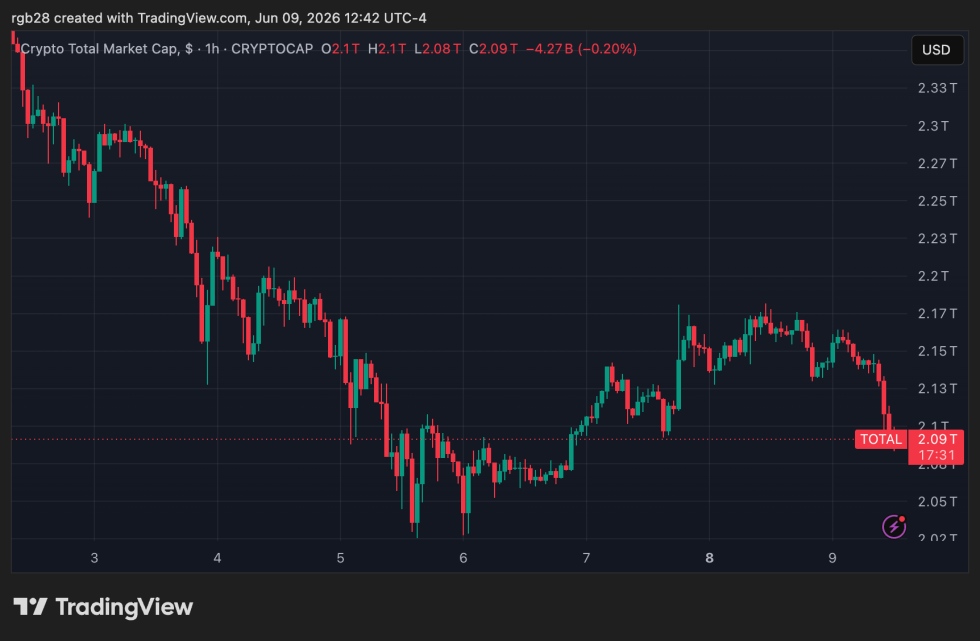
Kapitalisasi pasar kripto total berada di $2,09 triliun dalam grafik satu minggu. Sumber: TOTAL di TradingView

Preguntas relacionadas

QApa yang diluncurkan oleh SBI Shinsei Bank untuk para deposan, dan kapan program tersebut dimulai?

ASBI Shinsei Bank meluncurkan program yang memberikan voucher kripto sebagai hadiah kepada para deposan, berdasarkan saldo akun mereka. Program uji coba tiga bulan dimulai pada 10 Juni, dengan rencana peluncuran permanen pada musim gugur ini.

QKripto apa saja yang dapat diperoleh deposan melalui program hadiah SBI Shinsei Bank?

ADeposan dapat menukarkan voucher hadiah mereka untuk mendapatkan Bitcoin (BTC), Ethereum (ETH), atau XRP. Konversi dilakukan berdasarkan harga pasar pada saat penukaran.

QBerapa nilai voucher yang didapat untuk deposit 300.000 yen dan 30 juta yen dalam program SBI Shinsei?

ADeposit sebesar 300.000 yen akan menerima voucher senilai sekitar 500 yen. Sementara itu, deposit 30 juta yen atau lebih akan mendapatkan voucher senilai kira-kira 20.000 yen.

QApa tujuan SBI Group dalam memperluas bisnis aset digitalnya, menurut artikel?

ATujuan SBI Group adalah untuk menarik pelanggan baru ke bisnis kriptonya, SBI VC Trade, dengan menggunakan deposit bank sebagai titik masuk. Ekspansi ini juga mencakup peluncuran produk baru seperti kartu kripto, layanan pinjaman stablecoin, dan pengembangan ETF berbasis kripto.

QApa saja inisiatif terbaru lain dari SBI Group di sektor kripto yang disebutkan dalam artikel?

ASelain program hadiah deposan, inisiatif SBI Group termasuk meluncurkan SBI Visa Crypto Card yang mengubah hadiah belanja menjadi kripto, mengembangkan reksa dana kripto untuk investor perorangan, membangun blockchain untuk saham yang ditokenisasi, meluncurkan stablecoin JPYSC, merencanakan ETF berbasis kripto, dan berencana mengakuisisi saham di bursa kripto Bitbank.

Lecturas Relacionadas

Fed's Internal Doves Flock to Hawkish Stance, Warsh's Debut "Between a Rock and a Hard Place"

U.S. Federal Reserve officials who previously advocated for rate cuts, including Governor Christopher Waller, have recently shifted their stance, with many now not ruling out the possibility of future rate hikes. This sets a challenging stage for new Fed Chair Kevin Warsh's first policy meeting. Appointed by President Trump based on his dovish views, Warsh now faces a committee where the debate has pivoted from "when to cut" to "whether to hike," driven by persistent inflation above 3%, a strong labor market, and supply-side pressures from AI infrastructure demands and geopolitical tensions. Key figures illustrate the shift. Governor Waller, once concerned about employment, now says data has pushed him toward considering rate increases. Even moderate voices like Governor Lisa Cook, while expecting inflation to ease, have indicated readiness to hike if it fails to do so. Long-time hawks such as regional Fed presidents Beth Hammack, Lorie Logan, and Neel Kashkari have grown more vocal, arguing that the real policy rate is effectively falling and that action may soon be needed. The upcoming Fed meeting is expected to keep rates steady but will likely remove the "easing bias" from its statement, signaling a neutral stance between cuts and hikes. The quarterly "dot plot" is anticipated to show most officials projecting no cuts this year, with some potentially indicating hikes. Chair Warsh, a critic of the Fed's reliance on forward guidance like the dot plot, must navigate communicating this pivot using tools he has questioned, all while steering policy in a direction counter to the preferences of the president who appointed him. The consensus suggests the Fed's next move could well be a rate increase.

marsbitHace 9 min(s)

Fed's Internal Doves Flock to Hawkish Stance, Warsh's Debut "Between a Rock and a Hard Place"

marsbitHace 9 min(s)

The Trillion-Yuan Market Cap 'Yi Zhong Tian': Who is the True Value King?

The article analyzes the three leading Chinese optical module companies, collectively nicknamed "Yi Zhong Tian": Xinyisheng, Zhongji Innolight, and TFC Optical Communication. It evaluates their "cost-performance" not by current stock price, but through three lenses: PEG ratio (growth vs. valuation), earnings quality, and premium/discount for certainty. Xinyisheng shows the most attractive PEG ratio and high profitability, but its valuation reflects discounts for risks like high customer concentration and reliance on overseas markets. Zhongji Innolight, the most expensive, commands a premium for its market leadership, dominant share in key products like 800G/1.6T modules, and higher earnings certainty, though it faces geopolitical risks. TFC Optical, as an upstream component supplier ("water seller"), has the highest gross margin and bets on the long-term CPO/NPO architecture trend, but trades at a high valuation with more stable, less explosive growth. The core argument is that while these companies dominate module assembly, the true profit pool and technological moat lie upstream in laser and switch chips, currently controlled by U.S. firms like Lumentum and Coherent. The long-term "cost-performance" for these Chinese leaders hinges on whether the domestic industry, exemplified by companies like Yuanjie Technology, can successfully move up the value chain into high-power laser chips. Otherwise, their high growth may remain confined to the lower-margin assembly segment.

marsbitHace 19 min(s)

The Trillion-Yuan Market Cap 'Yi Zhong Tian': Who is the True Value King?

marsbitHace 19 min(s)

Has the Crypto Market Bottomed? Here's What Institutions Think

The crypto market is in a period of significant debate, with leading institutions offering differing views on whether a bottom has been reached. Three prominent firms have published detailed analyses: * **Galaxy Digital** argues Bitcoin has **not yet bottomed**. Their analysis of 13 historical indicators across six dimensions (valuation, profit-taking, miner pressure, etc.) shows only four are fully met. They project a potential bottom range between $30k and $54k. * **NYDIG** states a bottom is **possible but not likely**. While metrics are close to historic bear market extremes, they note the absence of a classic panic-selling event. They also suggest increased institutional adoption may have structurally altered the market cycle, potentially leading to a shallower downturn. * **Standard Chartered Bank** asserts the **bottom has already occurred** at around $59k. They cite two key factors: potential US-Iran diplomatic progress and the anticipated SpaceX IPO, which they believe absorbed capital and caused ETF selling pressure that is now subsiding. They forecast a year-end price target of $100k. Despite the surface-level disagreement, the reports share critical common ground more valuable for long-term investors: 1. All three believe the market bottom will form **within this year**. 2. All agree the current price is **closer to the bottom than to previous highs**. 3. All maintain a **bullish long-term outlook** for Bitcoin and a new cycle. The core takeaway is that while the exact bottom price ($40k, $50k, or $60k) is debated, the consensus is that a bottom is imminent. For long-term holders, the primary focus should not be pinpointing the absolute low, but on the future potential for prices to reach $100k, $200k, or higher. The fundamental thesis for Bitcoin—sovereign debt accumulation, inflation, declining trust in centralized institutions, global digitization, and improved accessibility—remains intact and is arguably strengthening. The overall landscape is viewed as more favorable than in previous crypto winters.

marsbitHace 30 min(s)

Has the Crypto Market Bottomed? Here's What Institutions Think

marsbitHace 30 min(s)

The 'Chip' Challenge and Breakthroughs in China's Optical Industry Chain

China's Photonics Industry: Bottlenecks and Breakthroughs In the global AI race, computing chips dominate the narrative, but the underlying bottleneck increasingly defining the scale of AI clusters is light—or more specifically, optical connectivity. Optical modules, which translate electrical signals to light and vice versa, are crucial for connecting thousands of GPUs in AI data centers, preventing data congestion and ensuring efficient model training. High-speed modules (800G, 1.6T) are now standard, with performance hinging on advanced DSP (Digital Signal Processor) chips. This is where a critical dependency lies. Two US giants—Marvell and Broadcom—collectively dominate over 90% of the high-end DSP chip market. Chinese optical module leaders like Zhongji Innolight and Eoptolink rely on these chips to manufacture modules for overseas AI customers, primarily in North America. While this creates a supply chain vulnerability, complete decoupling is difficult. Marvell derives over half its revenue from Greater China, and the US firms depend on Chinese partners for chip packaging and optical components. The risk from laser chips (e.g., from Lumentum), another key component, is considered more manageable due to multiple global suppliers and faster progress in domestic alternatives from companies like YOFC and Accelink. To mitigate risks, China's industry is pursuing a multi-pronged strategy: diversifying supply chains and locking in long-term orders; fostering a domestic market ecosystem to adopt homegrown DSPs from firms like Huawei HiSilicon and CETC; accelerating R&D in high-speed DSPs and advanced packaging; and investing in next-gen technologies like silicon photonics and Co-Packaged Optics (CPO) to reduce reliance on discrete DSPs. The ultimate solution lies not in short-term博弈 but in persistent advancement of domestic high-end chip R&D and manufacturing. While challenges remain in performance, certification, and ecosystem building, China's vast domestic market and manufacturing base provide a crucial buffer, buying time for the industry to achieve greater technological independence.

marsbitHace 43 min(s)

The 'Chip' Challenge and Breakthroughs in China's Optical Industry Chain

marsbitHace 43 min(s)

Behind SpaceX's $2 Trillion Market Cap: Why Does Musk Always Have the Next Move Planned?

On June 12th, SpaceX debuted on the Nasdaq, reaching a valuation that briefly touched $2 trillion. This marked the culmination of a 24-year journey from its founding in 2002, driven by Elon Musk's frustration at the high cost of buying rockets. The company's path was defined by early failures, with its first three Falcon 1 launches ending in explosions before a successful 2008 flight opened the era of commercial spaceflight. Key to its model was a fixed-price NASA contract, incentivizing cost reduction. SpaceX mastered rocket reusability, first achieving a Falcon 9 landing in 2015, which drastically cut launch costs. This enabled its profitable Starlink satellite internet constellation, envisioned years before reusability was proven, to create an internal market for frequent launches. Similarly, the next-generation Starship rocket was in development long before its first flight, with its business case evolving from Mars colonization to supporting the emerging concept of in-orbit data centers for AI—a story now central to its valuation. The company's recent IPO, a reversal of its long-standing "no IPO" stance, is funding this ambitious "space-based compute" vision. While major tech players like Google, Blue Origin, and others are investing heavily, significant technical and cost hurdles remain. Ultimately, SpaceX's history is one of creating its own demand: first with Starlink and now with space-based AI compute, betting that its next rocket will enable its next giant market.

marsbitHace 46 min(s)

Behind SpaceX's $2 Trillion Market Cap: Why Does Musk Always Have the Next Move Planned?

marsbitHace 46 min(s)

Trading

Spot
Futuros

Artículos destacados

Cómo comprar PUSH

¡Bienvenido a HTX.com! Hemos hecho que comprar Push Protocol (PUSH) sea simple y conveniente. Sigue nuestra guía paso a paso para iniciar tu viaje de criptos.Paso 1: crea tu cuenta HTXUtiliza tu correo electrónico o número de teléfono para registrarte y obtener una cuenta gratuita en HTX. Experimenta un proceso de registro sin complicaciones y desbloquea todas las funciones.Obtener mi cuentaPaso 2: ve a Comprar cripto y elige tu método de pagoTarjeta de crédito/débito: usa tu Visa o Mastercard para comprar Push Protocol (PUSH) al instante.Saldo: utiliza fondos del saldo de tu cuenta HTX para tradear sin problemas.Terceros: hemos agregado métodos de pago populares como Google Pay y Apple Pay para mejorar la comodidad.P2P: tradear directamente con otros usuarios en HTX.Over-the-Counter (OTC): ofrecemos servicios personalizados y tipos de cambio competitivos para los traders.Paso 3: guarda tu Push Protocol (PUSH)Después de comprar tu Push Protocol (PUSH), guárdalo en tu cuenta HTX. Alternativamente, puedes enviarlo a otro lugar mediante transferencia blockchain o utilizarlo para tradear otras criptomonedas.Paso 4: tradear Push Protocol (PUSH)Tradear fácilmente con Push Protocol (PUSH) en HTX's mercado spot. Simplemente accede a tu cuenta, selecciona tu par de trading, ejecuta tus trades y monitorea en tiempo real. Ofrecemos una experiencia fácil de usar tanto para principiantes como para traders experimentados.

218 Vistas totalesPublicado en 2024.12.13Actualizado en 2026.06.02

Cómo comprar PUSH

Discusiones

Bienvenido a la comunidad de HTX. Aquí puedes mantenerte informado sobre los últimos desarrollos de la plataforma y acceder a análisis profesionales del mercado. A continuación se presentan las opiniones de los usuarios sobre el precio de PUSH (PUSH).

活动图片