From Madison Square Garden to Kalshi: Prediction Markets Break into the NBA Finals

marsbitPublicado a 2026-06-06Actualizado a 2026-06-06

Resumen

From Madison Square Garden to Kalshi: Prediction Markets Break into the NBA Finals Prediction markets are playing a significant role in the 2026 NBA Finals, particularly around the New York Knicks' unexpected 2-0 series lead. Platforms like Kalshi and Polymarket have seen massive trading volumes, exceeding hundreds of millions of dollars on championship and related markets. Their influence extends beyond online trading. Kalshi's official partnership with Madison Square Garden has given it prominent physical branding at the arena. Furthermore, local businesses like The Jeffrey bar are using prediction market contracts to hedge the risk of game-result-based promotions, turning potential losses into manageable costs—a concept similar to the famous "Mattress Mack" strategy from traditional sports betting. These markets differentiate themselves by offering a wider, more entertainment-focused range of "event contracts" beyond typical game outcomes, such as predicting celebrity attendance. They also have broader accessibility across the U.S. compared to age- and location-restricted traditional sportsbooks. However, their rapid integration into sports raises regulatory and ethical questions. The NBA is cautiously engaging, discussing integrity frameworks with regulators like the CFTC. While the league permits minor investments like Giannis Antetokounmpo's stake in Kalshi, it advocates for strict rules to prevent insider trading. Many fans express concern on platforms like Reddit,...

Author: Zen, PANews

On June 6th, the visiting New York Knicks narrowly defeated the San Antonio Spurs 105-104 in Game 2 of the NBA Finals. The Knicks, who were not favored before the series began, had already upset the Spurs 105-95 on the road in Game 1. Winning both road games to start the series was an unexpected outcome for virtually everyone.

For a franchise returning to the Finals for the first time since 1999 and last winning a championship in 1973, this dream 2-0 start, bringing the series back to their home court at Madison Square Garden, has undoubtedly pushed generations of New York fans' fervor to its peak.

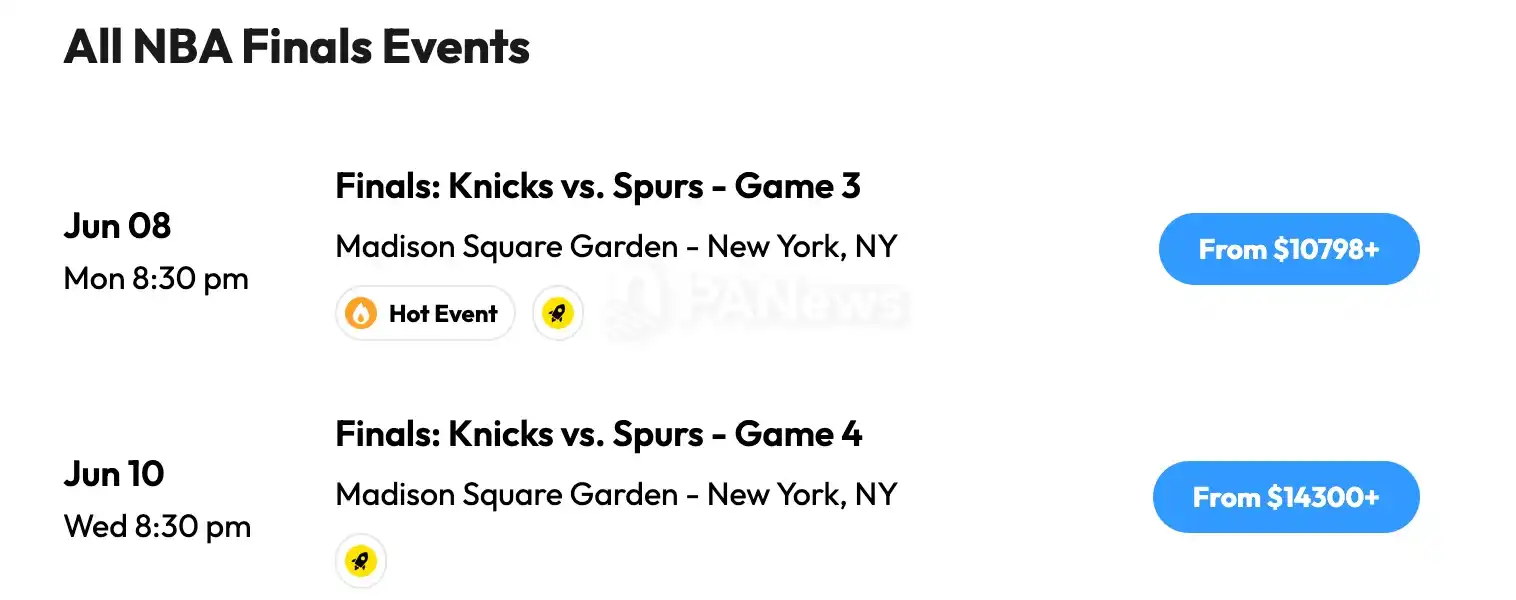
According to the latest data from ticket site TickPick, after Game 2, the lowest price for a ticket to Game 3 at Madison Square Garden has exceeded $10,000, with Game 4 prices soaring above $14,000. With the first NBA championship in 52 years seemingly within reach, the frenzy in the 'World's Capital,' New York, has been completely ignited, making this Finals series one of the most expensive live sporting events in NBA history.
What's different this time is the increasingly visible presence of prediction markets in this New York celebration. From prediction market platform Kalshi partnering with Madison Square Garden as an official partner, gaining massive exposure, to widespread fan and merchant participation in betting around probabilities, attention, and entertainment consumption. This NBA Finals is not just a major sporting event; it's also a celebration for prediction market platforms.

Prediction Markets Enter Arenas, Bars, and Fans' Daily Lives

After the Finals began, prediction markets themselves became part of the game's hype. As of June 6th, Polymarket's '2026 NBA Champion' market page shows a cumulative trading volume exceeding $413 million, with a daily volume of around $2 million. Kalshi's trading volume for NBA Finals-related markets reached approximately $274 million. Additionally, derivative markets around Finals MVP, series score, player statistics, celebrity attendance, etc., continue to attract traders.
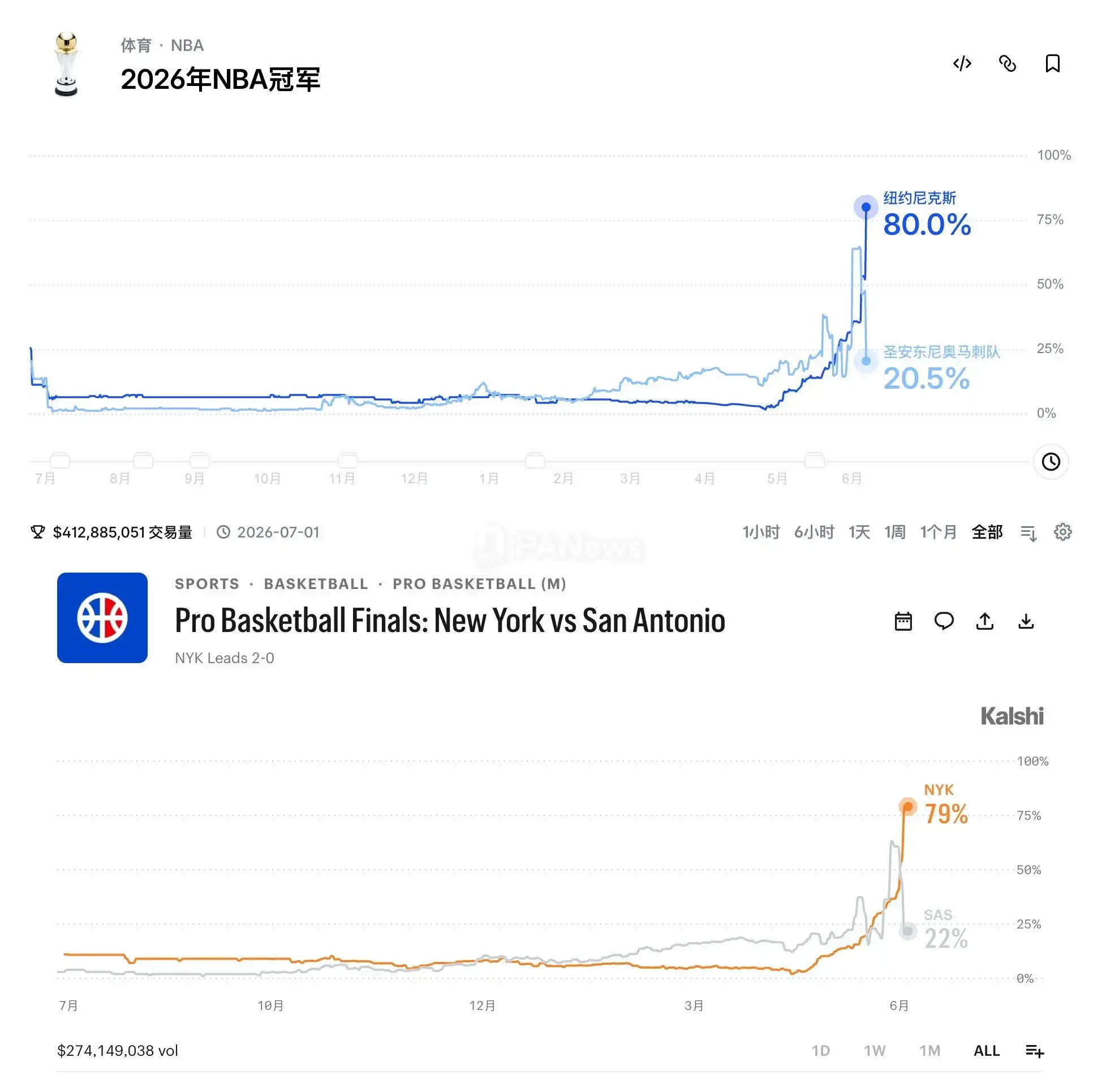
The influence of prediction markets isn't limited to online. As the Knicks' playoff run heated up, prediction markets also entered bars, arenas, and offline viewing scenarios, becoming new tools for businesses to design promotions and manage cost risks. Before Game 1 of the Finals, the Upper East Side Manhattan bar The Jeffrey launched a promotion: if the Knicks won, drinks for customers that night would be on the house.

For a small business, fulfilling such a major promotion could create significant cost pressure. The Jeffrey's approach was to buy $5,000 worth of Knicks-related contracts on Kalshi. If the Knicks won, the contract payout would cover the cost of the free drinks. Conversely, if the Knicks lost, the bar wouldn't have to provide free drinks, and the customer traffic attracted by the promotion, along with increased consumption, could offset or even cover the cost of the wager.

From an industry perspective, this case demonstrates that prediction markets aren't just tools for fans to trade on game outcomes; they can also serve as a means for businesses to manage event risk. The Jeffrey tied post-win fan enthusiasm and increased traffic to the cost of free drinks, while the Kalshi contract transformed the uncertainty of the promotion into a quantifiable, hedgeable risk. It doesn't change or rely on the game's outcome but alters how businesses design promotions around the game. It also shows the "insurance"-like utility of prediction markets.
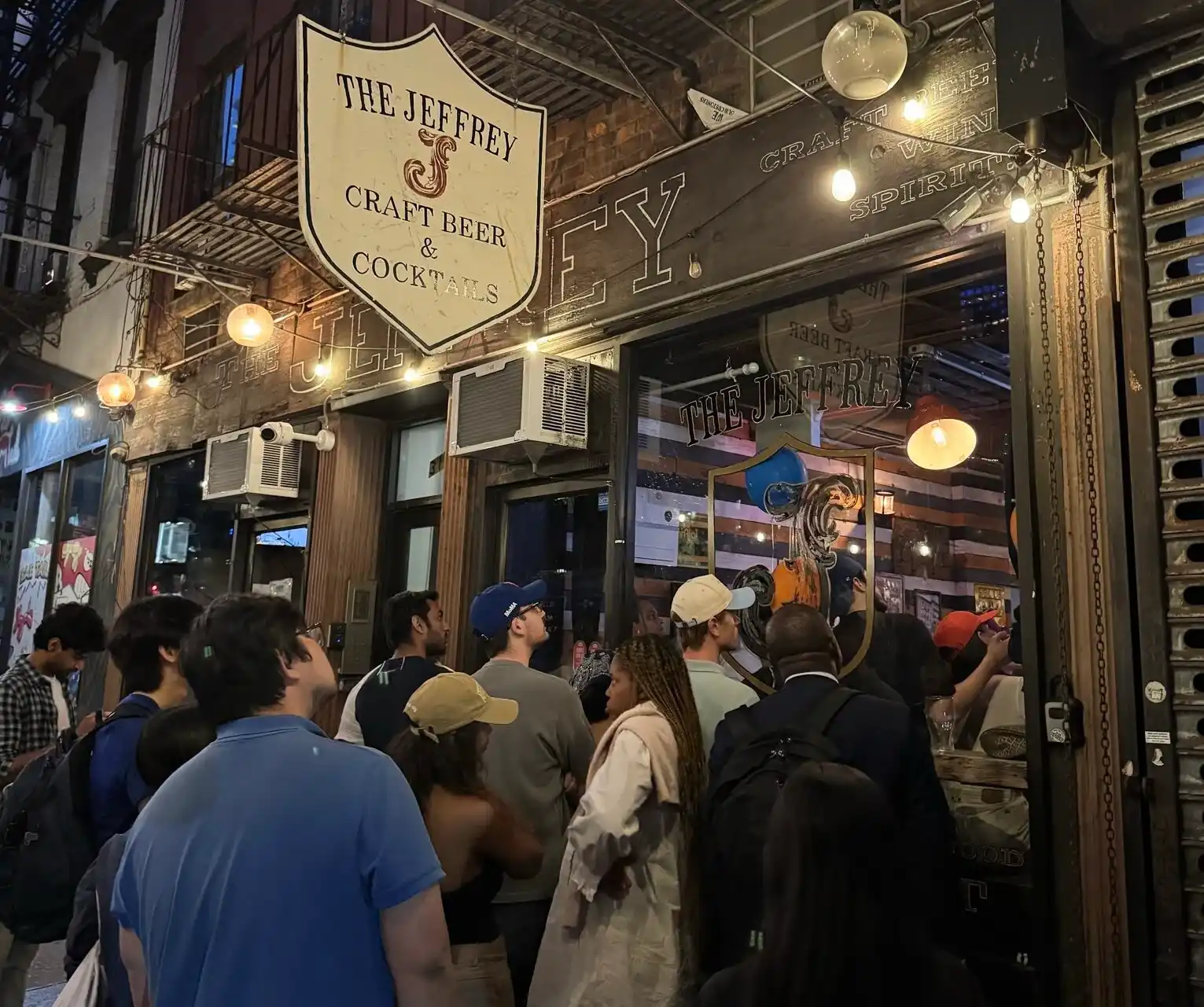
The Jeffrey's marketing strategy attracted a large number of customers

Beyond indirect marketing by small businesses, Kalshi's official partnership with Madison Square Garden has placed prediction market platforms in an even more prominent position.

In early May, Kalshi and Madison Square Garden (MSG) announced a multi-year partnership, making Kalshi the official prediction markets partner. Additionally, the MSG Concourse on the 6th floor was named the "Kalshi Concourse," and Kalshi gained exposure on in-arena and out-of-home digital screens, in-arena LEDs, MSG Networks advertising, and branded content.
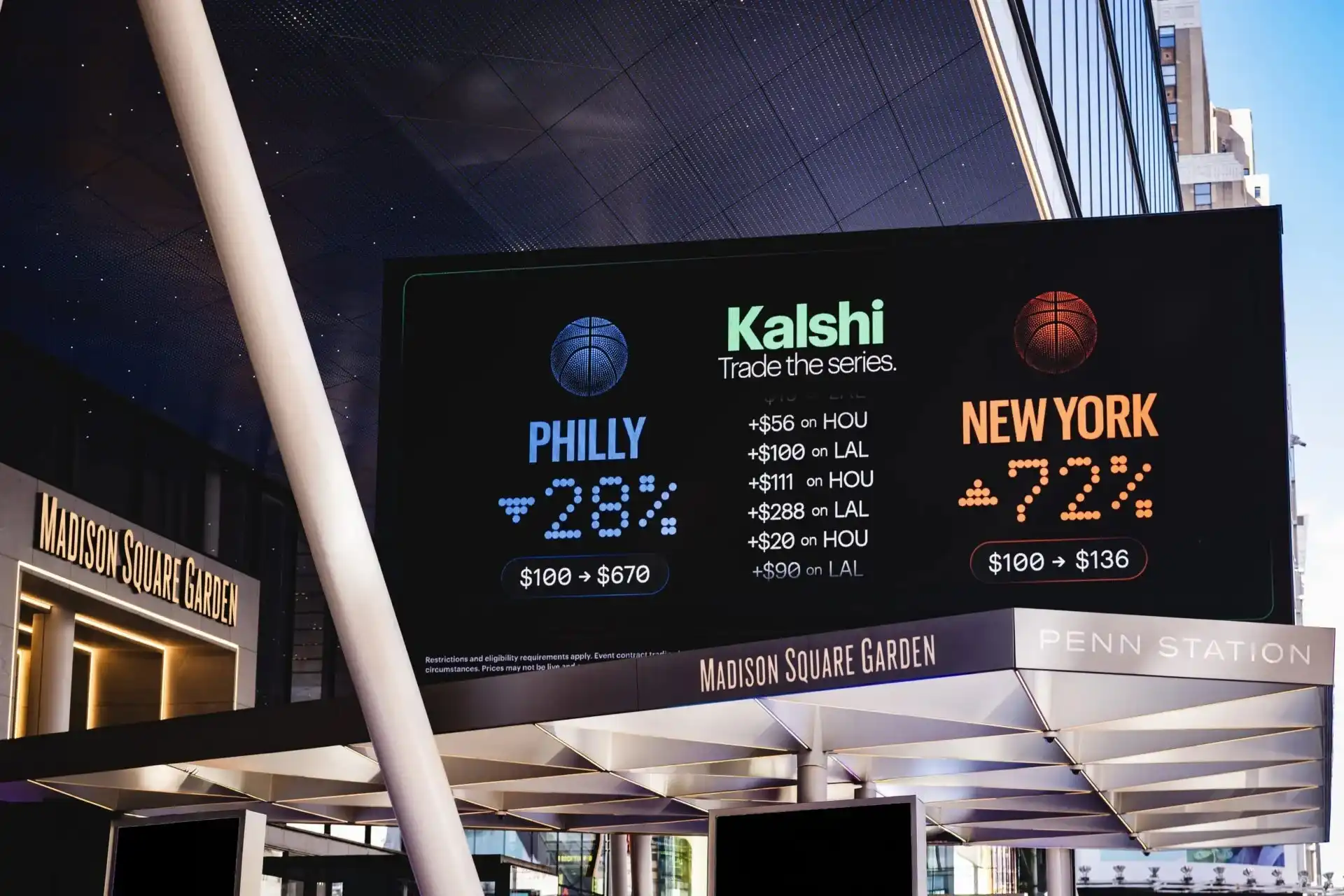
Kalshi, whose core business is predicting future events, seems to have also 'called' its own offline expansion this time. Securing the MSG partnership rights just weeks ago has now, with the Knicks reaching the Finals, rapidly become a highly representative offline branding investment. Kalshi almost perfectly timed its move. When Madison Square Garden became the focal point of national sports media and the epicenter of New York City's emotions, Kalshi had already secured a position in one of America's most iconic sports venues, moving from online trading pages to a higher-density offline exposure environment.

The Boundaries of Sports Betting Are Being Pushed Further by Prediction Markets

In reality, turning sports hype into a commercial hedging tool is not an original idea from prediction markets.

The most classic precedent is Houston furniture merchant Jim McIngvale, known as "Mattress Mack." His promotional tactic is to offer customers a refund on furniture purchases above a certain amount if a local Houston team wins a championship. Before the games, he places large bets on traditional sportsbooks supporting his hometown team.
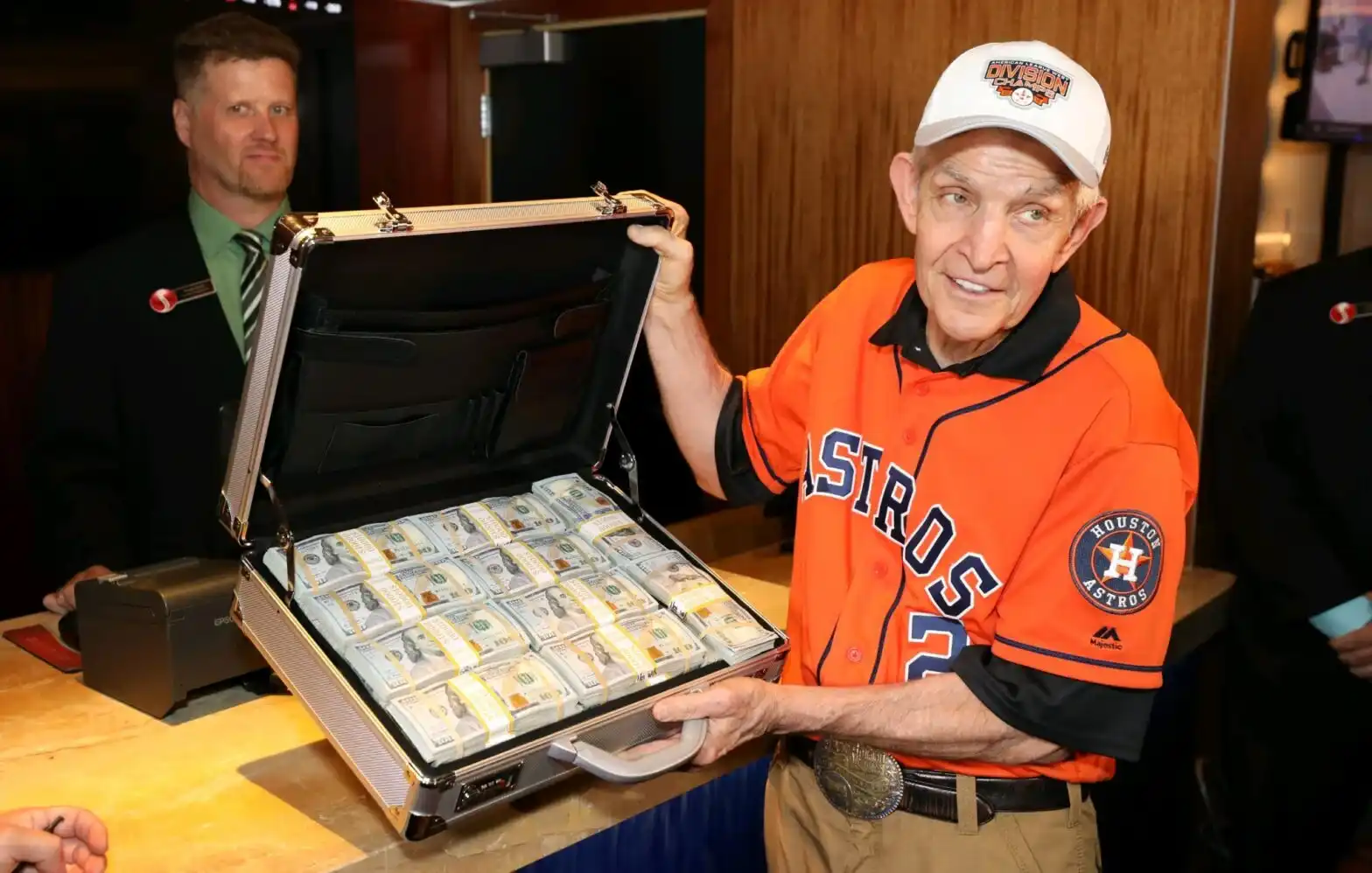
"Mattress Mack" carrying a suitcase with $3.5 million to bet on the Houston Astros

The logic behind bar The Jeffrey and Mattress Mack is essentially the same. If the team wins, Mattress Mack refunds customers, but the sportsbook payout covers that cost. If the team loses, he loses his bet, but no refunds are issued for furniture sales, and the promotion itself has already generated sales and media exposure. When the Astros won the World Series in 2022, Mattress Mack received a payout of approximately $75 million, making this model a classic case in American sports marketing.

Compared to traditional sportsbooks, prediction markets also expand the ways fans can engage with games.

Sports markets on Polymarket and Kalshi allow fans to trade around the broader narratives spilling out from a game, covering more entertaining, fragmented topics. Of course, traditional sports betting doesn't only offer win/loss markets. For example, platforms like FanDuel and DraftKings release numerous novelty bets around the Super Bowl each year, including "entertainment props" like the length of the national anthem or songs performed during the halftime show. However, restrictions on such markets vary by state, with some legal sports betting jurisdictions prohibiting them.

The difference with prediction markets is that they further expand this fun, entertainment-focused play. Traditional sportsbooks typically still revolve around the game itself and official statistics; even with novelty props, they're concentrated around a few mega-events like the Super Bowl.

Prediction markets are better at breaking down "verifiable real-world events" into contracts, making "any event priceable." For example, whether Trump will attend NBA Finals Game 3, or whether actor 'Timothee Chalamet' will attend all Knicks home games, clearly pushes the boundaries of novelty markets.
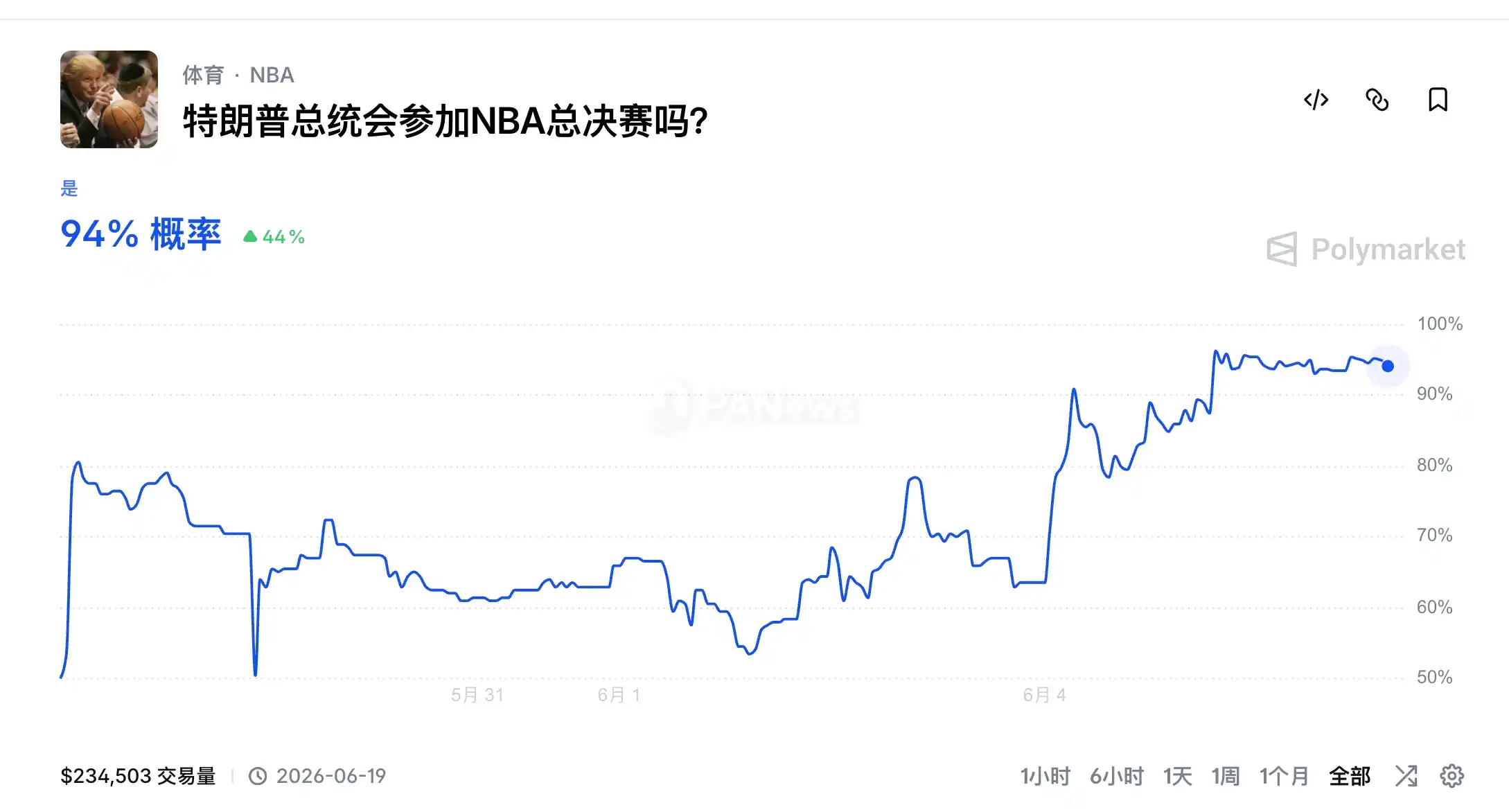
Beyond the variety of events, there are also differences in geographic and user demographic reach between the two types of platforms. Prediction markets in the U.S. can reach users 18 and older, while traditional sports betting typically requires users to be 21+. Simultaneously, prediction markets are available in all 50 states, while sports betting is currently legal in only 39 states. To some extent, the expansion of prediction markets in sports isn't just due to richer market offerings but also their ability to reach demographics and geographies that traditional sportsbooks cannot.

This is also a source of regulatory controversy. Prediction market platforms emphasize they are trading event contracts, with users buying and selling among themselves, a form closer to derivatives trading. Critics argue that when these contracts revolve around the NBA, NFL, elections, or celebrity events, the user experience is already highly similar to gambling. Especially when platforms attract younger users through social media, memes, and sports marketing, the boundaries between financial trading, entertainment, and gambling become increasingly blurred.

Players Get Involved First, NBA League Approaches Cautiously

With the rise of prediction markets, the NBA league has recognized that these platforms are becoming a new variable beyond traditional sports betting. Therefore, for the commercially-driven NBA, its attitude towards prediction markets has historically been ambiguous, characterized by cautious engagement.

At the player level, Giannis Antetokounmpo, who has become a Kalshi shareholder and will participate in the platform's marketing and offline activities, is the most representative case. This has sparked controversy. Fans worry that when an NBA superstar becomes a shareholder in a prediction market platform that can create markets around player trades, team performance, and game outcomes, even if the player themselves cannot trade NBA-related contracts, ethical boundaries are continually being nudged.

Related reading: "After $23.3 Million Bet on His Future, Why Did NBA Star Giannis Investing in Kalshi Spark Outrage?"

At the official league level, the NBA has engaged in in-depth discussions with the CFTC regarding an integrity framework for prediction markets. In its filing to the CFTC, the NBA emphasized that sports event contracts require comprehensive regulation to protect game integrity and public trust. The NBA also argued that athletes, referees, league and team personnel should be prohibited from trading contracts related to their league's games and events, that platforms should provide specific trader identities to the league during suspicious transaction investigations, and that official league data should be used for settlement.

NBA Commissioner Adam Silver's public statements reflect this stance. Discussing Giannis's investment in Kalshi during All-Star Weekend, he said the league is viewing prediction markets similarly to how it views sportsbooks. He noted that under the collective bargaining agreement, players can make minimal investment percentages in sports betting companies, and the league applies this rule to prediction markets. Silver further stated that Giannis's investment in Kalshi, being below 1%, did not violate relevant rules. However, he acknowledged that prediction markets are developing rapidly, and their ultimate permissible form may depend on courts and Congress.
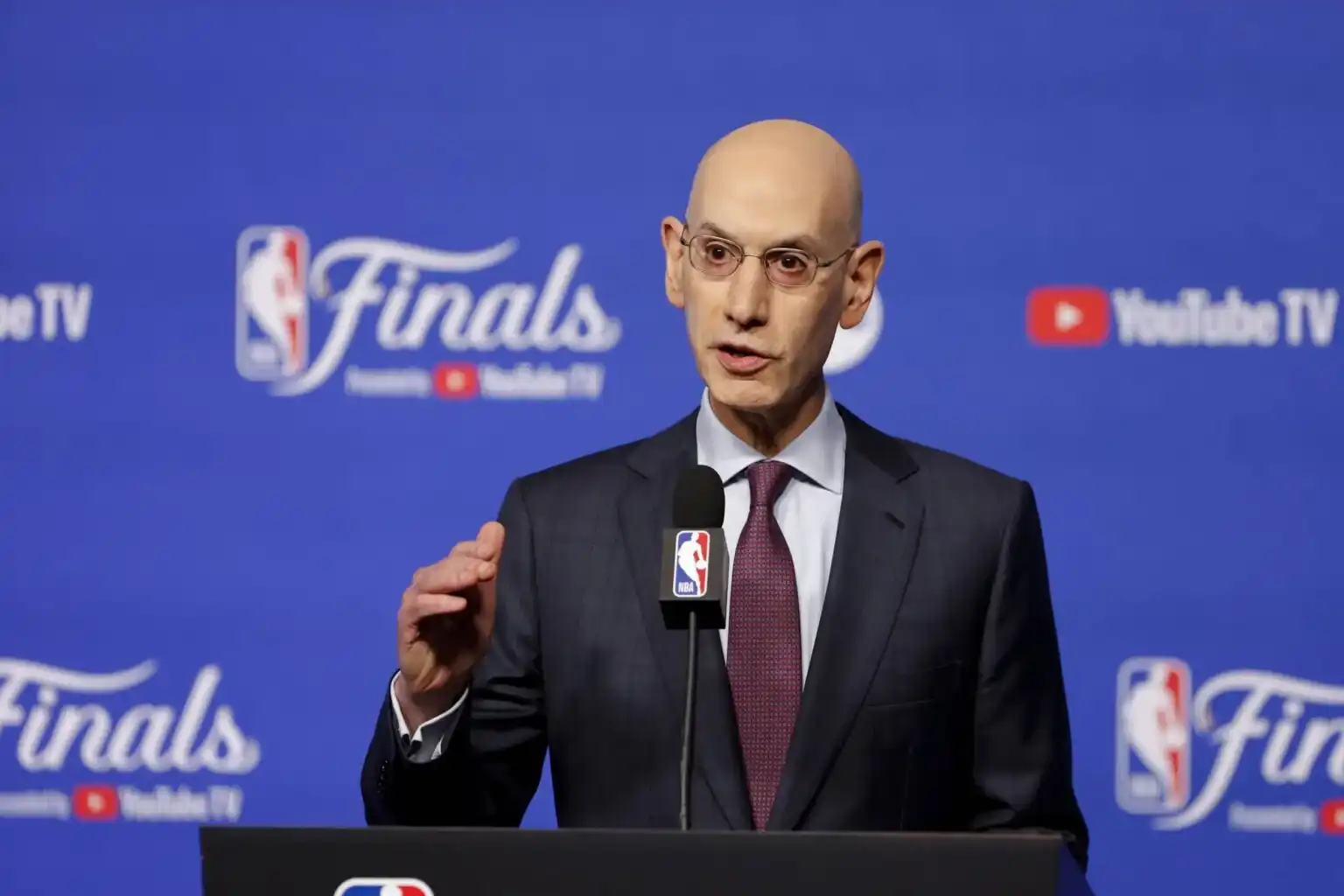
NBA Commissioner Adam Silver tried to quell controversy over Giannis becoming a Kalshi shareholder, calling the investment "minuscule"

But among fan communities, the NBA's increasingly close ties with prediction markets have drawn strong opposition. On the r/nba subreddit, numerous posts about the potential for insider trading risks involving Kalshi, Polymarket, and the NBA have sparked extensive discussion and criticism.

Many fans believe that if player investment or endorsement of prediction markets becomes normalized, future games could become "untrustworthy" due to insider trading and conflicts of interest. Many users also express concerns about league commercialization, younger user addiction, and game integrity. Comments on news about Giannis now almost invariably include fan jabs suggesting he'll participate in betting on prediction markets.
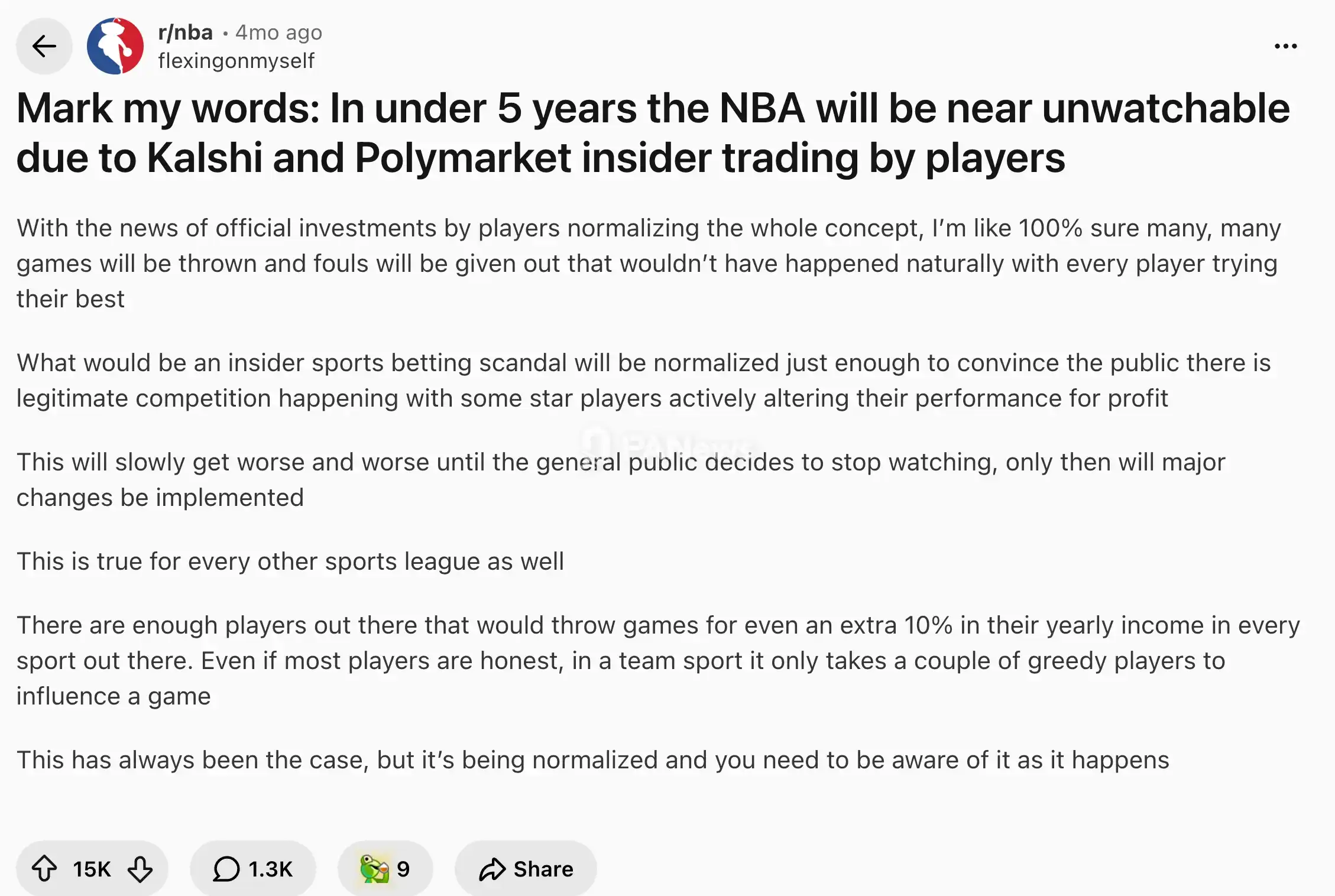
These Reddit discussions don't represent all NBA fans, but they reflect a very real sentiment. Many fans aren't just objecting to 'betting'; they worry that the NBA's official, extensive cooperation with betting companies and prediction markets might increasingly influence games and players through odds and trading contracts.

This concern isn't entirely unfounded. Recently, former U.S. Representative George Santos was investigated for allegedly engaging in suspicious trading on Kalshi related to whether he would attend the State of the Union address. While not a sports case, it highlights the most sensitive risk of prediction markets: when event outcomes can be influenced by a few insiders, market trading is no longer just 'prediction' but can become an incentive for the behavior itself.

And the NBA Finals are becoming a stress test for prediction markets entering mainstream sports. For both the platforms and the NBA, this represents both a new commercial opportunity and a new test of trust.


Preguntas relacionadas

QWhat are the main examples of how prediction markets are being used during the 2026 NBA Finals, according to the article?

APrediction markets like Kalshi and Polymarket are being used in several ways: first, Kalshi is the official partner of Madison Square Garden, gaining major offline exposure. Second, venues like the bar The Jeffrey use prediction market contracts to hedge the financial risk of promotional offers tied to the Knicks' performance. Third, the platforms themselves have attracted billions in trading volume on outcomes like the champion and Finals MVP. Finally, prediction markets offer more diverse and accessible entertainment-focused contracts than traditional sportsbooks, such as betting on celebrity appearances at games.

QHow did the bar 'The Jeffrey' use a prediction market to manage the risk of its promotion?

ABefore Game 1, The Jeffrey offered a promotion: if the Knicks won, drinks for the night would be free. To hedge the potential cost of this promotion, the bar purchased $5,000 worth of Knicks-related contracts on Kalshi. If the Knicks won, the payout from the contracts would cover the free-drinks cost. If the Knicks lost, the bar wouldn't have to offer free drinks, and the increased traffic and sales from the promotion would likely offset the cost of the initial contract purchase.

QWhat is a key regulatory and public perception concern regarding prediction markets in sports, as mentioned in the article?

AA key concern is the blurring line between financial trading, entertainment, and gambling, especially regarding the integrity of the game. Critics argue that when contracts are based on NBA games or player-related events, it closely resembles sports betting. There is particular worry about conflicts of interest if players, like Giannis Antetokounmpo (a Kalshi investor), have a stake in these markets, even if they don't bet on NBA events directly. The article cites the case of former Congressman George Santos, whose alleged trading on his own attendance at an event shows the risk of 'insider' actions influencing market outcomes.

QWhat is the traditional marketing model that 'Mattress Mack' represents, and how does it compare to The Jeffrey's use of prediction markets?

AJim 'Mattress Mack' McIngvale represents the traditional model of using sports betting to hedge business promotions. He would offer customers refunds on furniture purchases if a local Houston team won a championship. Simultaneously, he would place large bets on that team winning with traditional sportsbooks. The payout from a win would cover the refund costs; a loss meant he lost his bet but kept the sales revenue. The Jeffrey's model is similar in concept but uses prediction market contracts instead of traditional sportsbooks to hedge its promotional risk, demonstrating a new tool for achieving the same risk management goal.

QWhat advantages do prediction markets like Kalshi and Polymarket have over traditional sports betting platforms in the US, according to the article?

APrediction markets have two main advantages over traditional sports betting platforms in the US. First, they offer greater accessibility: they are available to users 18 and older (vs. 21+ for most sports betting) and are accessible in all 50 states (vs. only 39 states where sports betting is legal). Second, they offer a wider and more granular range of event contracts. While traditional sportsbooks may offer novelty bets for mega-events like the Super Bowl, prediction markets can create contracts on virtually any verifiable real-world event, such as whether a specific celebrity will attend a game, expanding the boundary of entertainment-focused 'bets'.

Lecturas Relacionadas

Xpeng and NIO Compete on Computing Power, Li Auto Shifts Architecture

On June 15, 2026, Li Auto unveiled details of its self-developed chip, Mahe M100, for its new L9 Livis model. CTO Xie Yan stated the goal was not just a faster chip, but a fundamentally different one, targeting the chip architecture itself. While competitors like NIO, Xpeng, and Huawei highlight TOPS (computing power) figures for their self-developed chips, Li Auto’s Mahe M100 focuses on redesigning the underlying architecture. It employs a "dynamic data flow architecture" to address memory bandwidth bottlenecks in large model inference, claiming up to 3x the effective computing power of Nvidia's Thor U for its specific workloads and a 40% reduction in latency. The chip's design was peer-reviewed and accepted at ISCA 2026. However, this performance is highly optimized for Li Auto's own VLA2.1 algorithm, meaning it may not generalize as well to other tasks. Li Auto aims to achieve full-stack in-house development with Mahe M100, covering chip, compiler, OS, AI algorithms, and domain controller—a level of vertical integration few competitors match. Beyond the chip, CEO Li Xiang introduced a new strategic narrative: the "embodied intelligent vehicle," defined as an integration of an EV, a professional driver, an AI computer, and a life assistant. This shifts competition from features like large screens to systemic AI capabilities. A key commitment was that Li Auto's Mahe VLA autonomous driving model will match Tesla's FSD V14 by Q4 2026, with specific OTA milestones set for July, September, and December. Financially, Li Auto faces pressure with declining revenue and vehicle gross margins since Q4 2025, while maintaining high R&D investment (approx. ¥12B in 2026, 50% AI-related). Its 2026 sales target is 550,000 vehicles, up from 406,000 in 2025. The new L9 Livis garnered over 10,000 pre-orders in two weeks. The effectiveness of these strategic moves—new products, OTAs, and the novel chip architecture—will begin to show in Q3 2026 financial results, with the year-end FSD V14 benchmark being the ultimate test.

marsbitHace 27 min(s)

Xpeng and NIO Compete on Computing Power, Li Auto Shifts Architecture

marsbitHace 27 min(s)

The Year of AI Applications: Saying 'Yes' While Ignoring Risks? A Comprehensive Open Source Log of Software Development's Journey

The Year of AI Applications: Blindly Saying "Yes" While Ignoring Risks? A Software Development Log Goes Fully Open Source. AI-generated code harbors risks hidden within seemingly correct programs, potentially leading to data leaks or asset loss. The open-source project "Narwhal AI Code Risks," from Peking University's Narwhal-Lab, compiles real-world cases, early warning signs, and typical risk pathways. Its goal is to help developers identify potential hazards early and avoid repeating past mistakes. In 2026, code is generated faster than ever but deployed with less scrutiny. The danger often lies not in glaring errors, but in code that appears normal—syntactically correct, passing all checks—yet introduces subtle but critical flaws like non-existent dependencies, excessive permissions, or exposed databases. A stark example is the Moonwell cbETH oracle incident. A configuration file error, where a cryptocurrency price was set to ~$1.12 instead of ~$2,200, slipped through 28 checks and a pull request signed by both AI (Claude, Copilot) and human developers. This "semantic deviation" resulted in a loss of $1.78 million. The risk is that AI can produce functionally valid code that is semantically wrong for the business context. As AI moves beyond simple code completion to modifying configurations, installing dependencies, and operating via autonomous agents, it traverses longer, less traceable paths within software engineering, blurring traditional boundaries and oversight points. The Narwhal AI Code Risks project structures information into three layers: `/cases` for documented real-world incidents, `/inferred` for early warning signals, and `/scenarios` for clear, generalized risk patterns not yet tied to specific events. This aims to create a lasting, public record to prevent collective amnesia about past AI-coding pitfalls. Risks are categorized into seven areas: Software Supply Chain (e.g., recommending fake packages), Code-Level Vulnerabilities (e.g., reintroducing path traversal bugs), Cloud & Infrastructure Misconfiguration (e.g., overly permissive settings), Agent Risks (from autonomous tool execution), Vertical Domain Risks (e.g., in finance, healthcare), Intellectual Property & Compliance issues, and Human Factors (like over-reliance on AI output). The project's core value is transforming isolated incidents into reusable knowledge—a foundational resource for developers to spot similar issues, for security researchers to build upon, for toolmakers to create detection rules, and for the community to contribute new findings. As AI integration accelerates, this open-source "logbook" serves as a crucial navigational aid, charting past errors to help future projects steer clear of the same traps.

marsbitHace 27 min(s)

The Year of AI Applications: Saying 'Yes' While Ignoring Risks? A Comprehensive Open Source Log of Software Development's Journey

marsbitHace 27 min(s)

The Foundation of SpaceX's Trillion-Dollar Valuation: Who is Dividing Up Musk's Annual Tens of Billions in Capital Expenditure?

SpaceX's trillion-dollar valuation is built on its three core businesses: Starlink (profitable, 60% of revenue), rockets (driving down launch costs), and AI (a major investment area). This creates a financial cycle: Starlink funds rocket development, which enables low-cost launches for AI hardware, generating future revenue. This cycle fuels annual capital expenditures of tens of billions, flowing to a vast supply chain. Suppliers are categorized by their replaceability. The first group includes irreplaceable players like NVIDIA (GPU/CUDA ecosystem), Eutelsat (critical radio spectrum), Filtronic (specialized amplifiers), Materion (strategic beryllium), and STMicroelectronics (antenna chips). The second group consists of hard-to-replace suppliers due to high switching costs, such as Honeywell (flight control), Carpenter Technology (specialty alloys), Hexcel (carbon fiber), Broadcom (data exchange), and Linde (industrial gases). The third group comprises high-volume, cost-critical suppliers for mass-produced items like Starlink terminals. Key names include Wistron NeWeb (primary manufacturer) and several A-share companies like Shenzhen Sunway (connectors), Pies New Materials (forgings), Western Superconducting (alloys), and Yingliu (castings). Other niche players include Trimble (timing), Astronics (power distribution), and CTS (thermal management). The article argues that investing in these suppliers, rather than SpaceX stock directly, offers an alternative opportunity. The rationale is threefold: procurement is just beginning to scale, SpaceX's IPO brings new transparency to its supply chain, and the situation mirrors early stages of past "super terminal" ecosystems like Apple or Tesla. While risks exist (commodity cycles, geopolitical factors, technology shifts), the core thesis is that SpaceX's massive, ongoing procurement will translate into reliable revenue for its key suppliers, regardless of its own stock price volatility.

marsbitHace 1 hora(s)

The Foundation of SpaceX's Trillion-Dollar Valuation: Who is Dividing Up Musk's Annual Tens of Billions in Capital Expenditure?

marsbitHace 1 hora(s)

SpaceX's Trillion-Dollar Valuation Base: Who's Sharing in Musk's Annual Tens of Billions in Capital Expenditure?

**Title: The Foundation of SpaceX's Trillion-Dollar Valuation: Who Benefits from Musk's Annual $100 Billion Capital Expenditure?** This article argues that investors seeking to benefit from SpaceX's growth might find greater opportunities in its supply chain rather than directly investing in the company itself, drawing parallels to historical successes with Apple, Tesla, and NVIDIA suppliers. **SpaceX's Business Model & Cash Flow:** SpaceX generates revenue from three main areas: 1. **Starlink:** Its profitable core, earning $11.3B in 2023 (60% of revenue), funding other ventures. 2. **Rockets (Falcon/Starship):** Requires $3B+ in annual R&D but achieves the world's lowest launch costs. 3. **AI:** Currently unprofitable (-$6B+ in 2023), investing heavily in ground-based supercomputers (220,000 GPUs) and future orbital data centers. The cycle is: Starlink profits → fund cheaper rockets → low-cost launches deploy AI hardware → AI compute rentals generate future revenue. This cycle drives annual procurement spending of tens of billions of dollars. **The Supply Chain Beneficiaries:** Suppliers are categorized by their replaceability: **1. Nearly Irreplaceable (High Barriers to Entry):** * **NVIDIA:** Powers the Colossus supercomputer; its CUDA ecosystem creates immense switching costs. * **Eutelsat (SATS):** Controls critical radio spectrum for satellite communications; holds a ~3% stake in SpaceX. * **Filtronic (FTC):** Supplies millimeter-wave signal amplifiers for Starlink satellites; SpaceX constitutes 83% of its revenue. * **Materion (MTRN):** Global leader in beryllium production, a strategic material used in Starship structures. * **STMicroelectronics (STM):** Supplies phased-array antenna chips for Starlink satellites. **2. Replaceable, but Switching Cost is Prohibitively High:** * **Honeywell (HON):** Provides flight control and inertial navigation systems with decades of certification. * **Carpenter Technology (CRS):** Manufactures ultra-pure specialty steel alloys for Raptor engines. * **Hexcel (HXL):** Supplies custom carbon fiber composites developed over a decade with SpaceX. * **Broadcom (AVGO):** Manages high-speed data switching. * **Linde Group:** Supplies industrial gases (liquid oxygen/nitrogen) from facilities built near SpaceX launch sites. **3. High-Volume, Cost-Critical Manufacturing:** Focuses on mass-producing components like Starlink user terminals (target: 30 million units). * **Key Players:** Wistron NeWeb (6285, primary terminal manufacturer), several Chinese A-share companies (e.g., Sunway Communication, PAX New Materials, Western Metal Materials, Yingliu Co.), and smaller US firms like Trimble (TRMB, timing systems). **Why Now?** Three factors make the supply chain opportunity timely: 1. **Volume Ramp-Up:** SpaceX plans 100 launches in 2026, aims for 30 million Starlink terminals, and will deploy AI data centers, meaning procurement will accelerate. 2. **Increased Transparency:** The IPO provides public financial data, allowing investors to track supplier order growth. 3. **Historical Precedent:** The current phase is likened to Tesla's early mass-production stage (circa 2018), suggesting a long growth runway for suppliers. **Conclusion:** The article posits that while investing in SpaceX stock is betting on Elon Musk's ambitious vision at a high valuation, investing in its established suppliers is a bet on the tangible, recurring revenue from its massive procurement budget, which is largely decoupled from day-to-day stock price volatility.

链捕手Hace 1 hora(s)

SpaceX's Trillion-Dollar Valuation Base: Who's Sharing in Musk's Annual Tens of Billions in Capital Expenditure?

链捕手Hace 1 hora(s)

Trading

Spot
Futuros

Artículos destacados

Cómo comprar ZEN

¡Bienvenido a HTX.com! Hemos hecho que comprar Horizen (ZEN) sea simple y conveniente. Sigue nuestra guía paso a paso para iniciar tu viaje de criptos.Paso 1: crea tu cuenta HTXUtiliza tu correo electrónico o número de teléfono para registrarte y obtener una cuenta gratuita en HTX. Experimenta un proceso de registro sin complicaciones y desbloquea todas las funciones.Obtener mi cuentaPaso 2: ve a Comprar cripto y elige tu método de pagoTarjeta de crédito/débito: usa tu Visa o Mastercard para comprar Horizen (ZEN) al instante.Saldo: utiliza fondos del saldo de tu cuenta HTX para tradear sin problemas.Terceros: hemos agregado métodos de pago populares como Google Pay y Apple Pay para mejorar la comodidad.P2P: tradear directamente con otros usuarios en HTX.Over-the-Counter (OTC): ofrecemos servicios personalizados y tipos de cambio competitivos para los traders.Paso 3: guarda tu Horizen (ZEN)Después de comprar tu Horizen (ZEN), guárdalo en tu cuenta HTX. Alternativamente, puedes enviarlo a otro lugar mediante transferencia blockchain o utilizarlo para tradear otras criptomonedas.Paso 4: tradear Horizen (ZEN)Tradear fácilmente con Horizen (ZEN) en HTX's mercado spot. Simplemente accede a tu cuenta, selecciona tu par de trading, ejecuta tus trades y monitorea en tiempo real. Ofrecemos una experiencia fácil de usar tanto para principiantes como para traders experimentados.

231 Vistas totalesPublicado en 2024.12.12Actualizado en 2026.06.02

Cómo comprar ZEN

Discusiones

Bienvenido a la comunidad de HTX. Aquí puedes mantenerte informado sobre los últimos desarrollos de la plataforma y acceder a análisis profesionales del mercado. A continuación se presentan las opiniones de los usuarios sobre el precio de ZEN (ZEN).

活动图片