By Yike Shangye | Author: Qian Liu | Editor: Yi An
According to a report by the Financial Times in early May, the China Integrated Circuit Industry Investment Fund is negotiating to lead the first round of financing for DeepSeek, with a post-investment valuation locked at $45 billion, equivalent to approximately RMB 307.8 billion. Within just a few weeks, this figure jumped from $10 billion to $20 billion, then to $45 billion – nearly a fivefold increase.
Previously, The Information reported that founder Liang Wenfeng intended to personally invest up to RMB 20 billion for a stake of around 40%. In April, Reuters first exposed that DeepSeek was initiating external financing, with a valuation still "only" exceeding $10 billion.
A company founded less than three years ago, with only 160 to 200 employees – how is it worth RMB 300 billion?
Ask this question about DeepSeek, then about Zhipu, MiniMax, and Kimi, and the answers are largely the same.
According to Hong Kong Stock Exchange data, Zhipu's latest market capitalization has exceeded HKD 500 billion (approx. RMB 430 billion), having skyrocketed nearly tenfold from HKD 52.8 billion at its listing four months ago. According to the Shanghai Securities News, MiniMax's latest market cap is over HKD 250 billion (approx. RMB 223.5 billion), rising nearly fourfold in four months since listing.
As reported by LatePost, Kimi's latest $2 billion financing round was led by Meituan Longzhu, valuing the company at over $20 billion (approx. RMB 136 billion). It has raised over $3.9 billion cumulatively within half a year, becoming the best-funded large model startup in China.
Combined, the valuations of these four companies exceed RMB 1 trillion.
This is not a solo performance by one company, but a capital tsunami sweeping across the entire Chinese AI industry. The national-level fund leading DeepSeek's investment, China Mobile participating in Kimi's funding – state-owned capital is densely entering the arena. To put it bluntly, this is no longer just a VC/PE game, but a strategic bet at the national level.
Meanwhile, internet giants like Tencent, Alibaba, and Meituan are also voting with hard cash, afraid of missing this train. Tencent is in talks to invest in DeepSeek, Alibaba has invested in Kimi multiple times, and Meituan Longzhu invested over $200 million alone – while burning money to develop their own models, these giants are also "buying tickets" through investments.
Interestingly, a research report released by J.P. Morgan on April 22nd provided a judgment: the window period for "the only path to position for China AI" is about 6 to 12 months. Once companies like Kimi and Stepfun go public, the scarcity premium for Zhipu and MiniMax will structurally decline. In plain language: if you don't buy now, this position might not be available later.
What exactly are investors buying? This question deserves careful examination.
1. Trillion-Yuan Valuation: Investors Vying for the 'Right to Define'
First, look at a striking set of data.
According to Zhipu's annual report and MiniMax's IPO prospectus, Zhipu's 2025 revenue was RMB 7.24 billion, a year-on-year increase of 131.85%. Its net loss attributable to shareholders was RMB 4.698 billion, with R&D expenditure of RMB 3.18 billion, meaning it burned RMB 4.4 on R&D for every RMB 1 earned.
MiniMax's 2025 revenue was $790.38 million, up 158.9% year-on-year, with a loss of $1.872 billion, a loss margin increase of 302.3%.
Although Kimi hasn't disclosed full financials, its parent company Moonshot AI has raised over RMB 37.6 billion cumulatively, suggesting a rapid cash burn rate.
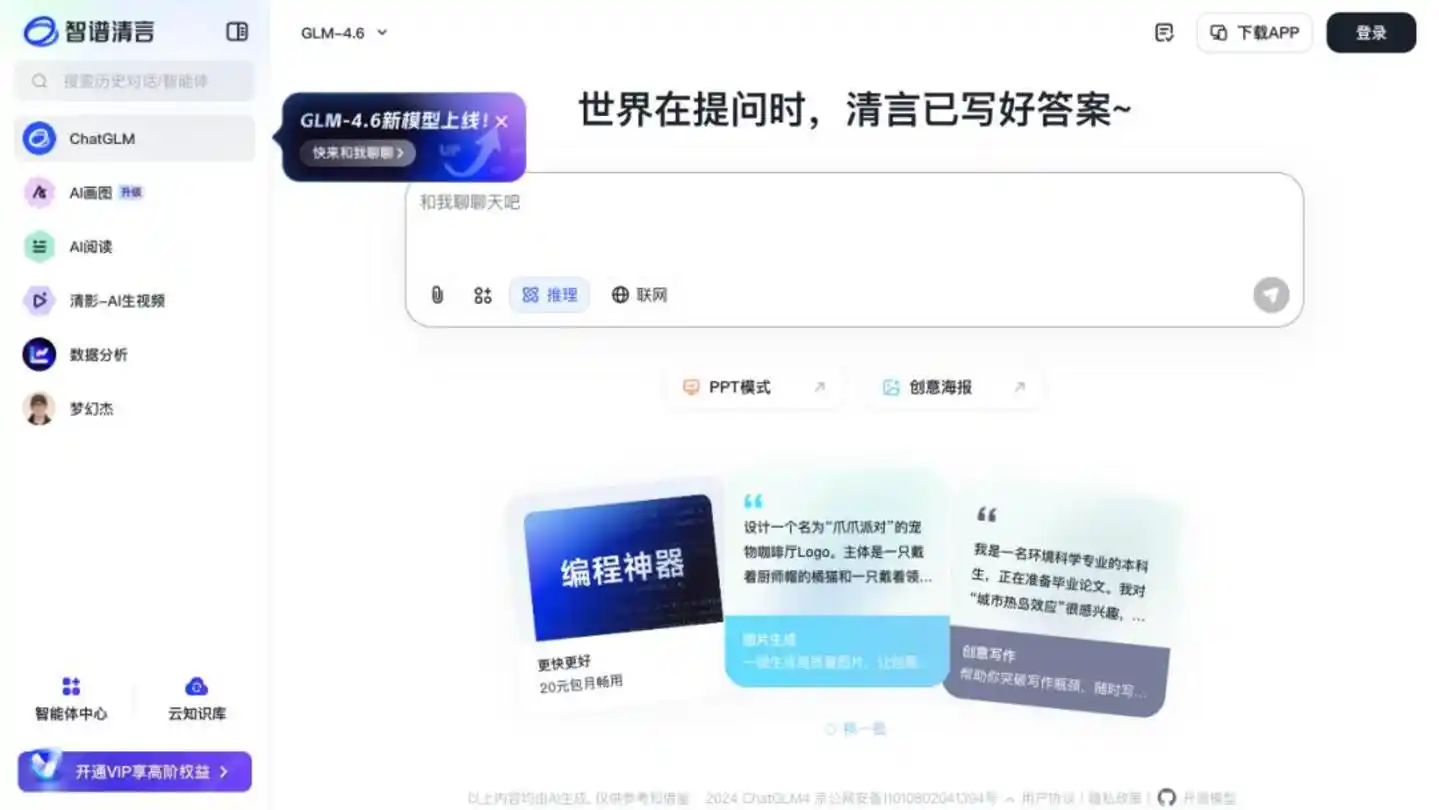
Interface of Zhipu Qingyan AI Assistant product, Image/Zhipu AI official website
Interestingly, according to iFLYTEK's annual report, its 2025 revenue was RMB 27.1 billion with a net profit of RMB 839 million, and a total market cap of about RMB 118.7 billion. A company earning RMB 800 million annually is worth less than RMB 120 billion; while a company losing RMB 4.7 billion is worth over RMB 500 billion.
How does this math work?
To be honest, traditional valuation models are largely ineffective here. Tools like DCF (Discounted Cash Flow) are like using an abacus to calculate a rocket's trajectory – the tool itself isn't the problem, but it's applied to the wrong scenario. Investors aren't buying today's revenue, or even next year's profits, but an option on the 'right to define the future.'
A core judgment in that J.P. Morgan report: the scarcity premium for AI large models has a window period, about 6 to 12 months. It cited a precedent – Cambricon was once the only pure-play AI chip listed company in the A-share market, with its stock price around RMB 1500 in late November 2025. Subsequently, Moore Threads, MetaX, and Biren Technology went public. Although Cambricon's revenue and profit forecasts were revised upwards, its stock price has still fallen about 2% since the beginning of the year, with its valuation multiple contracting 25% to 30%. Once competitors go public, scarcity vanishes.
This logic applies equally to the 'Four Dragons.' Zhipu and MiniMax are currently the only two pure-play cutting-edge AI large model listed companies globally. Their premium isn't based on 'performance,' but on 'uniqueness.' Once Kimi goes public, once DeepSeek opens financing, this scarcity will be diluted. So the frantic investment now isn't about certainty, but about 'staking a claim.'

Image/MiniMax official website
Simply put, this trillion-yuan valuation frenzy is essentially an auction for the 'right to define the future.' Whoever can define technical standards, business models, and user habits in the AI era has the potential to become the next Microsoft or Google. What the Four Dragons are doing now is using massive funding to burn their way into a position of their own before the window closes.
2. From 'PPT Companies' to 'Having Revenue': Advancing in Both Technology and Monetization
In 2023, large model companies were mockingly called 'PPT companies' – stories were told with great fanfare, but revenue was essentially zero. Two years later, the situation has changed.
According to a People's Daily report, in March 2026, China's daily Token usage exceeded 140 trillion, whereas at the beginning of 2024 this number was only 100 billion – a growth of over a thousand times in two years. Tokens are the smallest units of information processed by large models and the core pricing unit for industry commercialization. Simply put, the multiple by which Token usage increases reflects the rise in the industry's water level.
This water level is directly reflected in each company's income statement.
According to Wang Xinyu, Partner at Meituan Longzhu, after the K2.5 model update, Kimi's ARR (Annual Recurring Revenue) exceeded $100 million in March this year and increased to $200 million in April. Four financing rounds in half a year, raising over $3.9 billion cumulatively – the most funded domestic large model startup – this in itself is market recognition of its commercialization capabilities. The K2.6 model supports 300 parallel sub-Agents and 4000 collaborative steps, taking a significant leap forward in coding ability and Agent cluster capabilities.
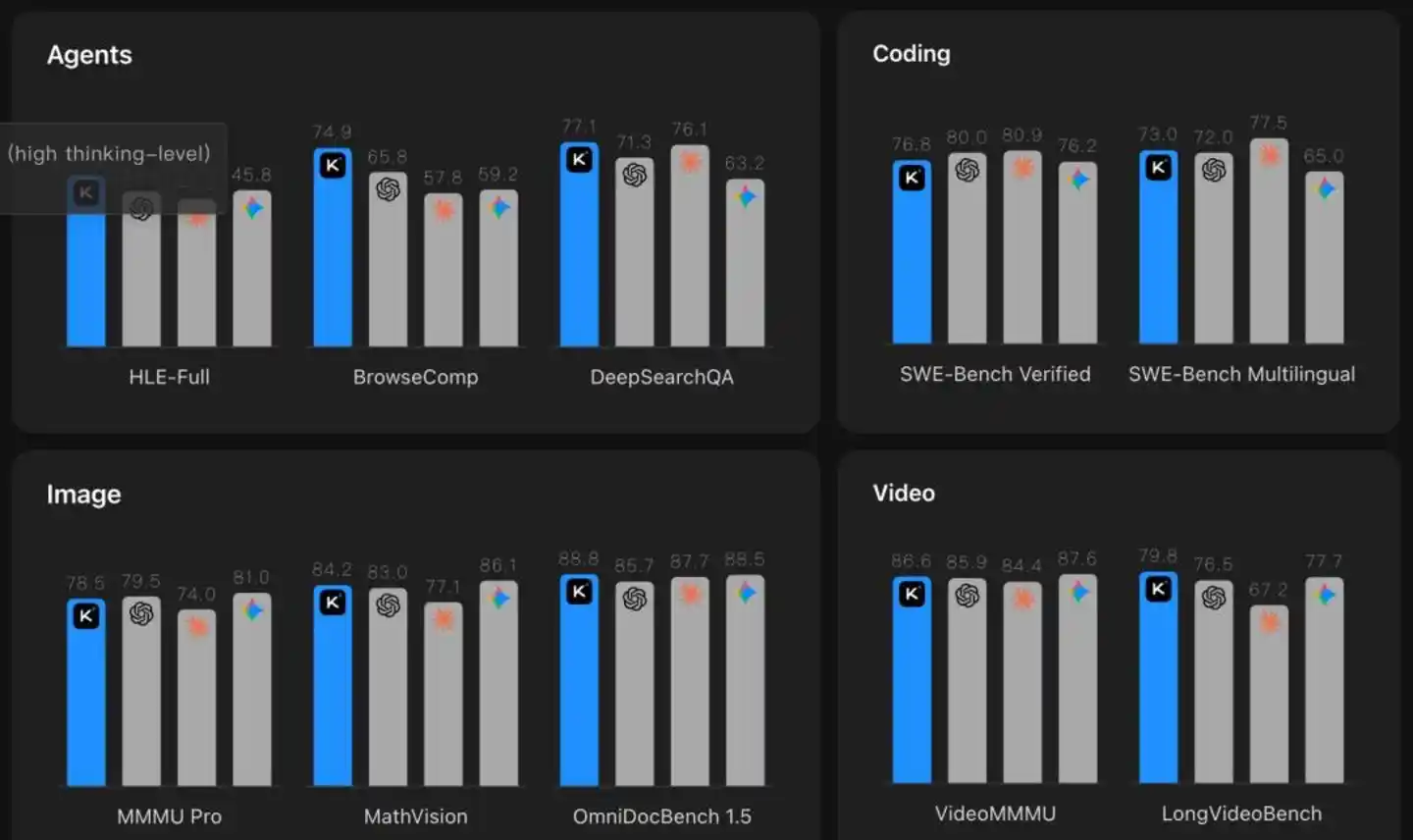
Image/Kimi official website
Zhipu's data is even more staggering. According to company disclosures, the ARR of its MaaS platform API is about RMB 1.7 billion (approx. $250 million), a 60-fold year-on-year increase and a 6.4-fold increase since the beginning of the year. Within 24 hours of the GLM-5 release, major platforms like ByteDance's TRAE, Alibaba's Qoder, Tencent's CodeBuddy, Meituan's CatPaw, Kuaishou's Wangin, Baidu Intelligent Cloud, and WPS Office all officially integrated GLM models. Nine of the top ten internet companies in China are deeply calling the GLM models.
As of March 2026, registered enterprises and users on Zhipu's platform have exceeded 4 million, serving over 218 countries and regions globally. In February 2026, Zhipu actively increased API prices by 30% and canceled first-purchase discounts, yet demand still outstrips supply – a rare signal in the global AI industry: it shows customers are willing to pay for more certain productivity. According to J.P. Morgan's research report observation, Zhipu's API pricing power is becoming "much more solid," with a much healthier pricing environment than a year ago.
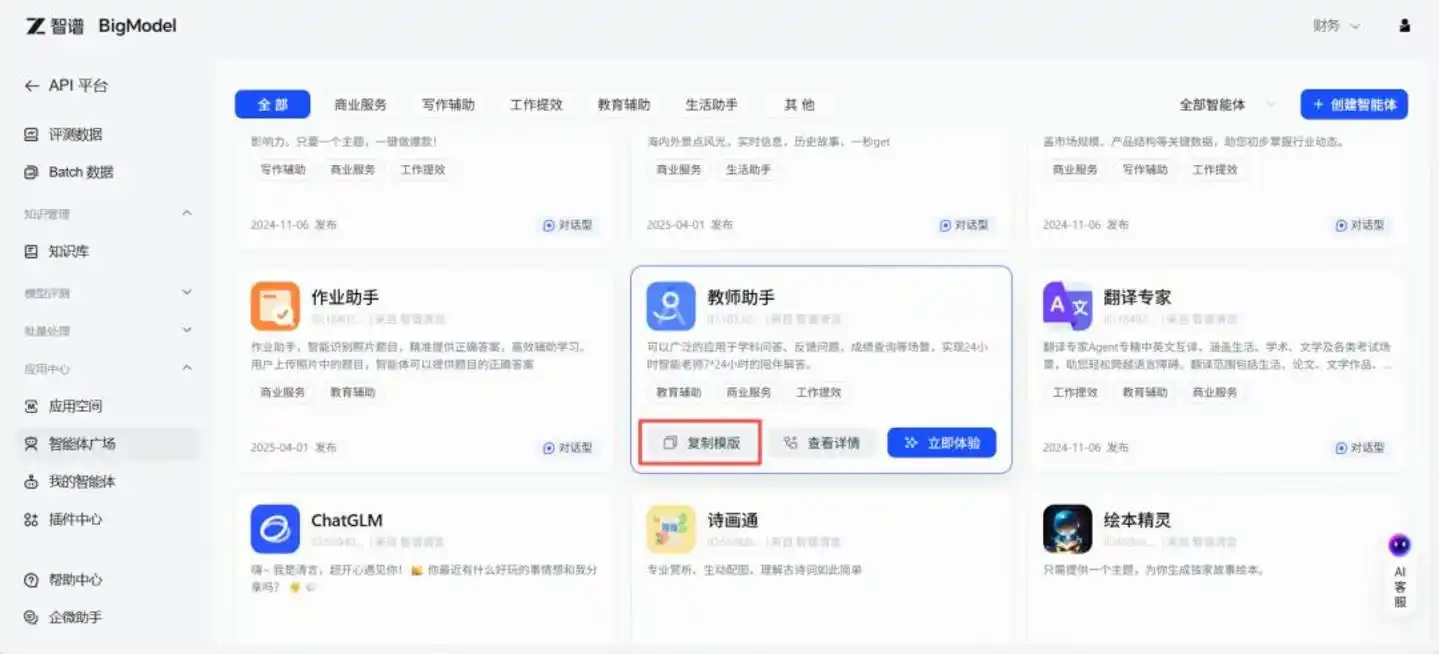
Zhipu AI BigModel Open Platform, Image/Zhipu AI official website
MiniMax takes a different path. According to its annual report, 2025 revenue was $790.38 million, with overseas revenue accounting for over 70%. Its gross margin has turned positive to 25.4%. It has launched two globalized C-end products – Talkie and Conch AI – following an "AI-native application" route. By the end of 2025, MiniMax products had cumulatively served about 236 million users, with over 214,000 enterprise clients and developers. Founder Yan Junjie publicly stated that Token consumption is expected to see explosive growth of one to two orders of magnitude, and the company's ARR is expected to enter the $1 billion range.

MiniMax Conch Video APP interface, Image/MiniMax official website
Progress at the technological level is the underlying support for the revenue explosion.
DeepSeek V4 ranked first in open-source and ninth globally in code capability on the Vals AI evaluation, achieving about a 10x performance leap compared to the previous V3.2. In the Agentic Coding evaluation, V4-Pro's delivery quality approached Claude Opus 4.6's non-thinking mode, with a user experience better than Sonnet 4.5. More importantly is the cost – V4 Flash output costs only $0.28 per million tokens, about 1% of Claude Opus. According to developer community calculations, the monthly usage cost for V4 Flash could be as low as $504, whereas the cost for equivalent usage on Kimi is about 8 times higher, and GLM about 4 times higher. This level of cost advantage is almost crushing in API pricing wars.
However, third-party evaluations also show that DeepSeek V4 still lags behind global top-tier models. In the Arena.ai comprehensive ranking, V4 ranks 14th, still distant from frontier models like GPT-5.4 and Claude Opus 4.6. Its text capability ranks 20th, and multimodal capability is a particular shortcoming for V4. As the developer community commented: "Being number one in open-source is no longer a surprise; what everyone hopes to see is DeepSeek competing with the strongest AI from the top three."
Simply put, the Four Dragons are simultaneously doing two things: catching up on model capability, and driving down inference costs. The former determines whether customers are willing to use it, the latter determines how much customers can afford to use. If both are achieved, revenue is not a question of 'if,' but 'how fast' it grows.
Of course, the problem is that losses are also expanding simultaneously. Zhipu's 2025 R&D expenditure accounted for 439% of its revenue. MiniMax's adjusted net loss was $250 million. For most companies, this level of cash burn is unsustainable – but the Four Dragons are precisely that special sample outside of 'most.' Their logic is simple: first, run ahead in technological generation gap; second, build a cost advantage; finally, it's time to do the math.
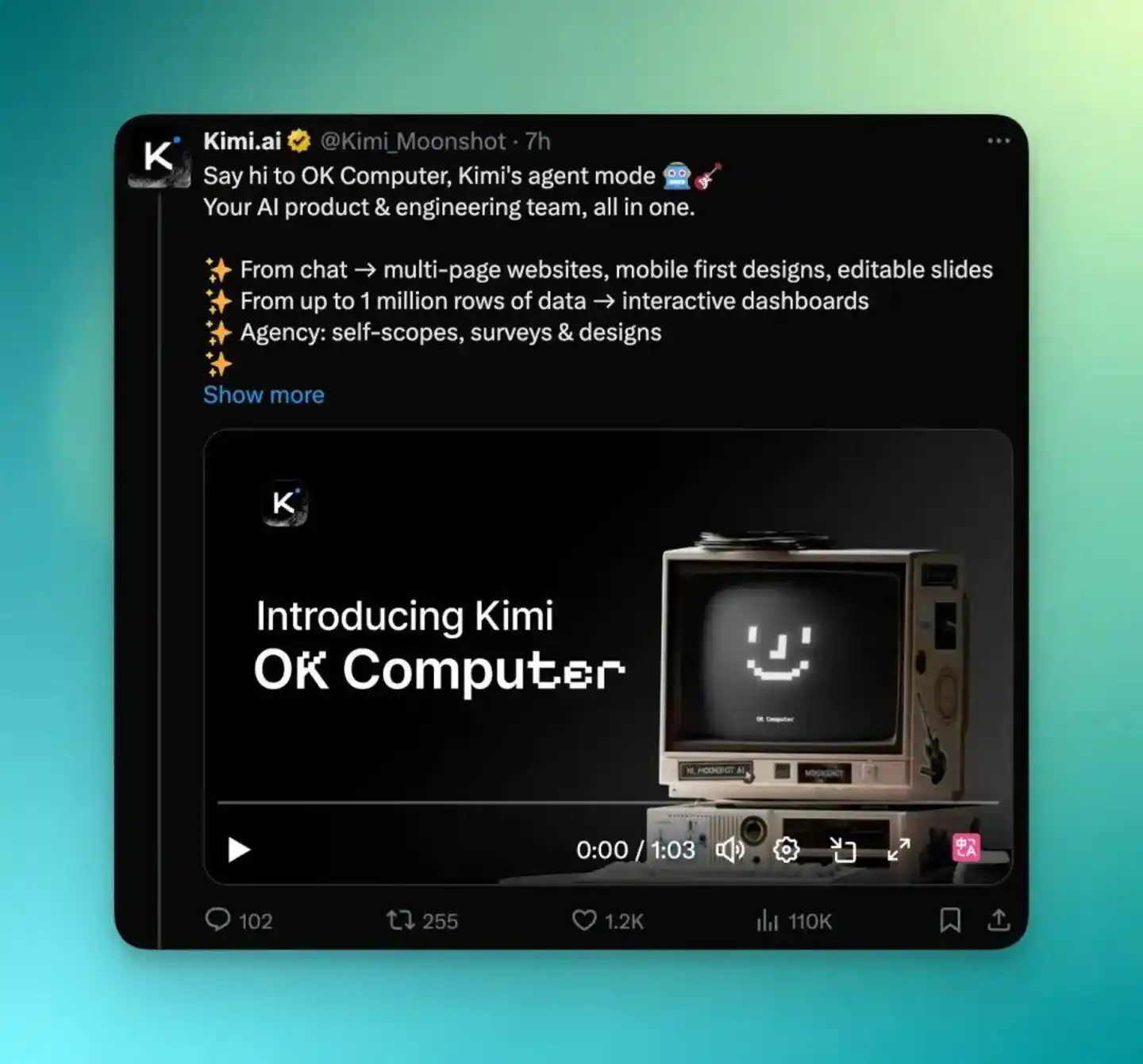
Kimi OK Computer Agent product launch, Image/Moonshot AI official website
3. Mixed Battle Between Giants and Startups: Cold Thoughts Behind the Carnival
As the valuations of the Four Dragons soar higher, the mood of internet giants is somewhat complex.
On May 13, 2026, Tencent held its shareholders' meeting. According to the Daily Economic News, when asked about AI business progress, Pony Ma (Ma Huateng) said this: "A year ago we thought we had boarded the ship, then later found that ship was leaking. Now we feel we've stepped onto it, but still can't sit down. We still hope the ship can go faster." On the same day, Alibaba released its quarterly earnings report. CEO Eddie Wu (Wu Yongming) stated on the earnings call: "The first quarter of 2026 was for Alibaba a quarter of 'sowing seeds' far more than 'harvesting.'"
Two big bosses, one said "the ship leaks," the other said "more sowing than harvesting." In other industries, investors might not view such statements favorably. But in the AI race, the market responded with understanding applause – because everyone knows this is a battle that cannot be lost.
Tencent invested RMB 18 billion in new AI products in 2025, planning to at least double that in 2026. In Q4 FY2026 (calendar year Q1 2026), Alibaba's adjusted EBITA plummeted 84%, Non-GAAP net profit almost vanished, with money poured into AI infrastructure. What did the massive investments by these two giants buy? Triple-digit AI revenue growth in cloud business, exponential growth in model calls – but there is clearly still a distance from a real 'harvest.'
Ma Huateng's metaphor of the "leaking ship" accurately summarizes Tencent's journey over the past year. When DeepSeek exploded in early 2025, Tencent quickly integrated external models into its AI assistant 'Yuanbao,' briefly topping the App Store free charts. But after the clamor subsided, problems emerged: early Hunyuan model's comprehensive landing capabilities were insufficient; Yuanbao App's 30-day retention rate was only 18.7%. The RMB 18 billion invested in 2025 was mainly used for revenue, costs, and expenses of new AI products, reducing Tencent's operating profit by RMB 8.8 billion in Q1 2026. Tencent's "ship" indeed leaked, but now it has changed to a new ship and set sail again.
For the Four Dragons, the anxiety of the giants is precisely an opportunity. Tencent is in talks to invest in DeepSeek, Alibaba has repeatedly invested in Kimi, Meituan Longzhu led Kimi's latest round – while burning money to build their own models, giants are also 'buying tickets' through investments. This 'double insurance' strategy illustrates one problem: nobody knows for sure. Giants don't know if their own models will succeed, so they hedge risks by investing in the Four Dragons; the Four Dragons also don't know if they can independently reach the finish line, so they gladly accept the giants' money and resources. Both sides get what they need. But how long this delicate co-opetition can last, no one is sure.
But behind this carnival, there are several warning signs worth noting.
The first signal is that the scarcity window is closing. J.P. Morgan explicitly judged in its report that if Kimi and Stepfun go public, the impact on Zhipu and MiniMax would be similar to Cambricon's experience – short-term IPO activity brings capital inflow, but each company's scarcity premium will structurally decline. Translation: part of the current sky-high valuation is because 'there is no choice.' When there are more choices, prices will naturally return to rationality.
The second signal is the compute power bottleneck. According to People's Daily data, China's daily Token usage exceeds 140 trillion, but all major LLM suppliers indicate that inference computing cannot keep up with demand growth. This leads to a counterintuitive conclusion: the ARR growth rates currently seen are actually the lower limit, not the upper limit – once the compute power bottleneck is lifted, pent-up demand can directly convert into confirmed revenue. Alibaba Cloud announced a 34% increase in AI computing prices on April 18th; Zhipu's API prices have almost doubled since the beginning of the year – rising prices with demand still robust indicates pricing power is indeed shifting towards model providers, but also means compute costs will eventually become a tightening constraint for the entire industry.
The third signal is the most subtle: DeepSeek's low-cost route is essentially a form of 'dimensionality reduction strike.' For most companies, relying on deep optimization of a single link to save compute power is effective short-term, but the ceiling is clearly limited in the long run. DeepSeek V4 Flash's cost is only 1/4 to 1/8 of competitors'. This advantage stems from engineering optimization and domestic chip adaptation, not an infinite supply of computing resources. Once the compute supply chain fluctuates, or competitors catch up in engineering optimization, the cost advantage will be weakened.
The story of the Four Dragons is, ultimately, four versions of the same story: using massive funding to support high-intensity R&D, using technological iteration to drive revenue growth, using revenue growth to support higher valuations, then using higher valuations to leverage more funding. Once this cycle runs through, it's the next Microsoft; once it collapses, it's the next WeWork.
The difference is that this time, state power is deeply involved. The national-level fund leading DeepSeek's investment, China Mobile participating in Kimi's funding – state-owned capital is no longer a 'spectator' but a 'protagonist.' This means the survival of the Four Dragons is no longer just a commercial issue, but a strategic one.
The carnival continues, but the bill will come due eventually. For investors, the question now is: when the scarcity window closes and the scarcity premium disappears, can these highly valued companies rely on their own revenue to sustain their market capitalization?
The answer may become clear within the next year.