A Decade's Bet on Cerebras: How the 'Wafer-Scale AI Chip' Reached NASDAQ

marsbitPublicado a 2026-05-15Actualizado a 2026-05-15

Resumen

"Cerebras, a pioneering AI chip company, successfully debuted on NASDAQ (CBRS) on May 14, 2026, with its stock price surging approximately 68% on the first day. This marks a significant milestone following a decade-long journey, as recounted by early investor Steve Vassallo. The story begins not in 2016, but with the deep, 19-year relationship between Vassallo and founder Andrew Feldman, which started with Feldman’s previous company, SeaMicro (acquired by AMD in 2012). In 2016, Feldman and a core team of chip and system experts sought to challenge the emerging consensus. At a time when AI’s practical utility was still debated and GPUs were becoming the default hardware, they envisioned a fundamentally new computer architecture purpose-built for AI workloads. They identified memory bandwidth, not raw compute power, as the critical bottleneck for neural networks. Defying industry inertia, Cerebras pursued a radical, wafer-scale chip design—58 times larger than the biggest existing chips. This meant confronting and solving a cascade of unprecedented engineering challenges: power delivery, thermal management, and maintaining electrical continuity across tens of thousands of connections. It required reinventing nearly every aspect of modern computing—semiconductors, systems, data structures, software, and algorithms. The path was fraught with setbacks, including a prototype that caught fire on its first power-up. Progress was marked by intense, iterative problem-solving, with t...

Editor's Note: On May 14th, Cerebras officially listed on the NASDAQ under the ticker symbol CBRS. Its closing price on the first day rose approximately 68% above the issue price, making it one of the most notable AI hardware IPOs since 2026.

This article is written by Steve Vassallo, an early investor in Cerebras, who recounts his nearly nineteen-year partnership with Andrew Feldman, spanning from SeaMicro to Cerebras. On the surface, the article tells the venture capital story from term sheet to IPO. In essence, it chronicles how a frontier hardware company bet on the fundamental reconstruction of AI computing architecture during a period when consensus was skeptical: From wafer-scale chips and memory bandwidth bottlenecks to a series of engineering challenges in power supply, heat dissipation, and electrical continuity, what Cerebras faced was not a single-point technological challenge, but the re-invention of an entire modern computing system.

The most noteworthy aspect is not that Cerebras ultimately created a wafer-scale chip 58 times larger than traditional chips, but that from the outset, this company chose a direction contrary to industry inertia: When GPUs became the default answer for AI training, it attempted to redefine "what a computer designed for AI truly is." Behind this lies not only technical judgment but also the patience of capital, and, crucially, the long-term, non-transactional trust relationship between investors and the founding team.

For today's AI hardware competition, the significance of Cerebras lies in reminding the market that the compute revolution isn't just about stacking more GPUs; it may also come from re-imagining the computing architecture itself.

The following is the original text:
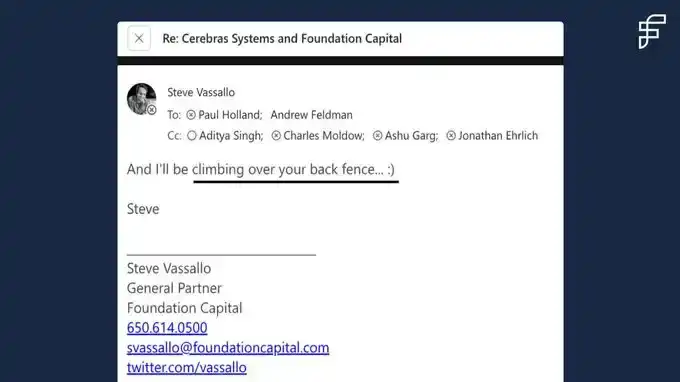
Friday, April 1st, 2016. I sent Andrew Feldman an email, telling him I would climb over the fence in his backyard and hand-deliver our term sheet for investing in Cerebras to him.

It was April Fools' Day, but I wasn't joking.
Strictly speaking, this wasn't standard operating procedure for a venture capital firm. But by then, I had known Andrew for nine years and had been discussing his next company with him for nearly two years. I couldn't afford to miss this deal over some sentence in the term sheet that was still being revised on a Saturday afternoon.

I first met Andrew in October 2007. At that time, he and Gary Lauterbach had just founded SeaMicro. I didn't invest in that round, but we really clicked, especially admiring their first-principles approach to problem-solving. I've been following them ever since.

Truly valuable relationships need time to mature. The same is true for truly valuable companies. Today, viewed from the outside, Cerebras is a ten-year-old company about to go public. But in my view, this is the culmination of a nineteen-year relationship, finally reaching the bell-ringing moment.
Deep Relationships, and Unreasonable Ambition

When AMD acquired SeaMicro in 2012, I had a hunch: Andrew wouldn't stay long in a big corporation. He possesses a strong unwillingness to lose and a rebellious heart. By early 2014, he was already looking for opportunities to leave, and we began meeting frequently to discuss what could be next.

At that time, two things were far from consensus: First, that AI would actually become useful; second, that GPUs were not the optimal computing architecture for AI.

Regarding the first question, many smart people I knew also disagreed. After AlexNet emerged in 2012, some corners of the research community had already begun achieving near-magical results with convolutional neural networks. But in the broader software industry, AI was still somewhere between a marketing buzzword and a research project.

The second question, the hardware question, had hardly been seriously raised. GPUs had become the default choice for neural network training, mainly because researchers accidentally discovered they were "less bad" compared to CPUs. Building a new computing system specifically for AI workloads meant challenging the mainstream architecture then being used by researchers worldwide.

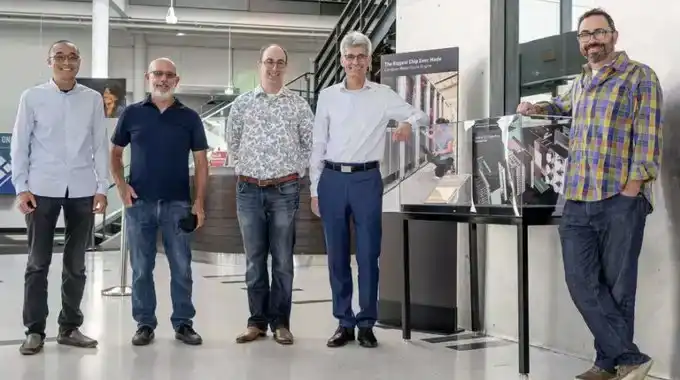
But Andrew, Gary, and their co-founders Sean, Michael, and JP saw a different path. They each brought decades of experience in chips and systems: Gary's background stemmed from pioneering work on dataflow and out-of-order execution in the 1980s; Sean focused on advanced server architecture; Michael handled software and compilers; JP was deeply versed in hardware engineering. They were an exceptionally rare group: individually outstanding; collectively, their capabilities multiplied. They could imagine an entirely new kind of computer.

They believed that if AI truly unlocked its potential, the resulting market size would far exceed the sum of all existing computing paradigms.

They also saw the essence of the GPU: It was originally a chip designed for graphics processing, just temporarily promoted as an AI training tool on a new battlefield. It was indeed better at parallel processing than CPUs, but if one designed from scratch for AI workloads, no one would create an architecture like the GPU. What truly limited neural network capabilities was not raw compute power, but memory bandwidth. This meant the chip they aimed to create would not primarily optimize matrix multiplication in isolated cores, but rather how data flows efficiently throughout the entire computational structure.

Internally, investing in Cerebras was far from a consensus decision. Several of my partners had seen the previous round of semiconductor investments resulting in mostly losses, and they were very candid about their concerns. But ultimately, we agreed as a team. That weekend in April 2016, we clearly told Andrew: We wanted to be the first to give him a term sheet.

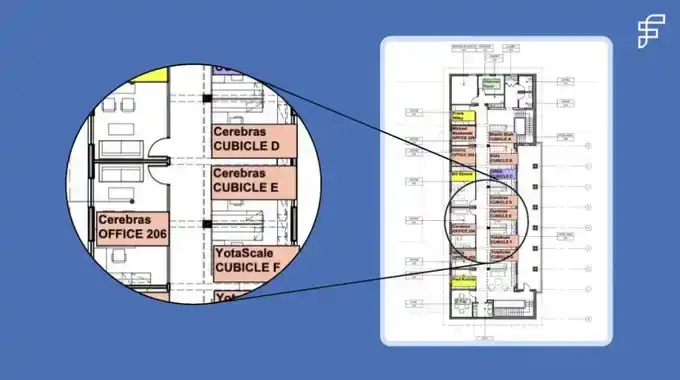
A few weeks later, Andrew, Gary, Sean, Michael, and JP moved into our EIR office space on the second floor at 250 Middlefield. I still have the floor plan the office manager drew back then. On that map, Cerebras sat next to a founder from Foundation, just a few doors away from Bhavin Shah, who later founded Moveworks. It was a good floor for startup growth.
Knowing Which Rules Can Be Bent, Which Must Be Broken

Before Cerebras, the largest chip in computing history was roughly 840 square millimeters, about the size of a postage stamp. The chip Cerebras created measures 46,000 square millimeters, 58 times larger than its predecessor.

Choosing a wafer-scale chip also meant choosing all the downstream design challenges that came with it. In the nearly 80-year history of computing, no one had truly accomplished this before. It also meant that no one had systematically solved these problems: How to power such a massive chip? How to cool it? How to maintain electrical continuity across tens of thousands of connection points?

To achieve wafer-scale computing, Cerebras essentially had to simultaneously reinvent nearly every facet of modern computing: semiconductors, systems, data structures, software, and algorithms. Each direction alone could be a startup. Andrew and his team chose to tackle the most difficult technical problems first. Through their intense, almost tireless efforts, these problems were tackled one by one.

Every six to eight weeks, we'd have a board meeting. They would walk us through what they had tried since the last meeting: a new variant of system design, a new power delivery scheme, or a thermal management adjustment. By repeatedly confronting systemic challenges head-on from every angle, they developed a hard-won clarity in articulation. They would explain where they thought things went wrong and what they planned to try next.

We would ask questions, then dive deep with the team, mobilizing the people, resources, and connections needed to help them find new approaches. Six to eight weeks later, when we met again, the story would repeat with another technical frontier: another boundary that needed exploring. Each solution would reveal the next problem that had to be solved.

Their first prototype wafer literally smoked the first time they powered it on. The team called it a "thermal event"—what you call a fire when you don't want to scare the board or the landlord.

I had been calculating power consumption per square millimeter, partly out of curiosity, partly because the numbers seemed too high to be true. So, we brought in engineers from Exponent, a failure analysis firm whose former company name was, aptly, Failure Analysis. They confirmed that the power numbers were indeed as audacious as they appeared and helped us think through options that didn't challenge the second law of thermodynamics. After all, that was one law Andrew was smart enough not to argue with.

The discipline of an engineer lies in knowing which rules can be broken, which can be bent, and which must be respected. Andrew and his team had a practiced intuition for that distinction. They knew when they were challenging convention—which they intended to do—and when they were challenging physics—which they did not.

When you're building frontier technology, failure is inevitable. The only way through it is discipline, persistence, and most importantly, trust: trust in the mission, trust in each other, and trust in the idea that when the first prototype self-destructs, you'll all be back in the lab the next morning for the next iteration.

There's no transactional version of this work. There's only the long-term version: staying in the room, through the incomplete solutions and patient explanations, so that when it finally works, you are there to see it.

That moment arrived in August 2019. Andrew, Sean, and their team stood in the lab, watching a new computer they had designed from scratch run for the first time. To an outsider, it superficially didn't seem to be doing anything interesting. According to Andrew, it was probably about as exciting as watching paint dry. The difference this time was: no bucket of "paint" like this had ever dried before. They stood there together for 30 minutes, then went back to work.

Who You Build With, Matters

Some people choose problems based on what they know they can solve. Andrew's criteria for choosing problems is what he believes is worth solving. Incremental iteration doesn't excite him; he wants 1000x leaps. From day one, he wanted to build Cerebras into a generational, one-of-a-kind company.

Part of that drive comes from his personality. Andrew describes it as a computer architect's "disease"—being haunted by an idea for decades. But to me, it's more broadly a founder's "disease." He looks at a problem and first asks himself: Can I make something that causes a step-function improvement? Then he asks: If I succeed, will anyone care? If the answer to both is yes, he will commit the next decade of his life to it.

Another part of that drive comes from his upbringing. Andrew grew up surrounded by geniuses as naturally as most kids grow up watching TV. His father was a pioneering evolutionary biology professor who played rotating doubles tennis every Sunday with six other people. Three of those six later won Nobel Prizes, and one won a Fields Medal.

According to Andrew, these giants would patiently explain their work in physics, mathematics, and molecular biology to him in language a child could understand. He formed a deep impression of what true intelligence looks like and also understood, as his mother said, that being smart doesn't mean you have to be a jerk.

I've come to realize this is one of Andrew's core traits, as important as his rebellious ambition and his almost phototropic instinct for truly worthy problems. He deeply believes that the most exceptional people he's encountered are also often extraordinarily kind.

This belief shaped how his team came together to accomplish incredibly hard things. The first 30 people Cerebras hired had all worked with him before; some had been with him since 1996. Today, Cerebras has about 700 employees, and roughly 100 of them have followed him across multiple companies.
The important thing is, kindness and competitiveness are not mutually exclusive. Andrew has an intense desire to win. He likes to say he's a professional version of David, fighting Goliath. Goliath is slow-moving and always guarding against frontal attacks, which leaves room for every other move. David's advantage lies in showing up in ways and places Goliath cannot.

At SeaMicro, Andrew's largest channel partner in Japan was NetOne. NetOne's primary supplier was Cisco, which would entertain partners with private jets and yachts worth more than most houses in Palo Alto. Andrew's budget was far more modest, so he invited NetOne's CEO to his backyard for a barbecue. Later, the CEO told him he had done business with Cisco for decades but had never been invited to anyone's home. That seemingly small, very human gesture—something a Goliath would never think to do—cemented their relationship.

From the First Term Sheet to IPO
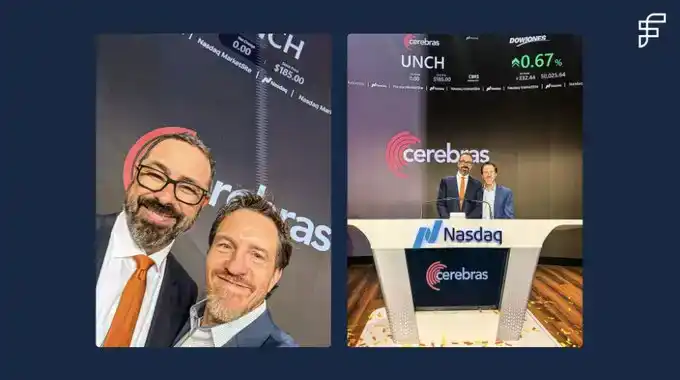
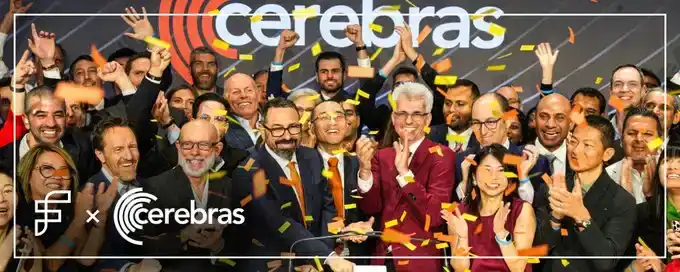
This morning, Andrew rang the opening bell at NASDAQ. I stood next to him. It's been ten years and 2600 miles since it all began in our 250 Middlefield office.

Today, there are still rare founders doing what Andrew did: sketching on whiteboards at 3 a.m., wrestling with technical problems not yet solved. They also harbor a strong unwillingness to lose and a rebellious heart. They are trying to find a partner who is truly willing to work side-by-side: willing to dive in and help solve the problem when the first prototype won't power on; and who will stay until it finally runs.

These are precisely the founders I want to back: those who choose problems worth solving, imagine a solution 1000x better than the status quo, and persistently hone and persevere through the inevitable challenges along the way.

For founders like Andrew, Gary, Sean, Michael, and JP, I'm willing to climb over a backyard fence on a Saturday afternoon to hand-deliver a term sheet.

Preguntas relacionadas

QWhat was the core technical challenge and architectural vision that Cerebras pursued, as opposed to the industry consensus?

ACerebras challenged the industry consensus that GPUs were the optimal architecture for AI training. While GPUs became the default due to their superior parallel processing compared to CPUs, the Cerebras team believed they were not designed for AI from first principles. Their core architectural vision was to design a computer specifically for AI workloads by fundamentally addressing the memory bandwidth bottleneck, not just raw compute power. This led them to invent the wafer-scale chip, a system 58 times larger than the largest previous chips, which required re-inventing nearly every aspect of modern computing—semiconductors, power delivery, cooling, and software—to enable efficient data flow across the entire compute structure.

QHow does the article characterize the relationship between the investor (Steve Vassallo) and the founder (Andrew Feldman), and why was it crucial for Cerebras's journey?

AThe article characterizes the relationship as a deep, long-term, non-transactional partnership built on trust over nearly two decades. This relationship was crucial because building Cerebras involved tackling a series of unprecedented engineering failures (like the first prototype catching fire) and systemic challenges over many years. The investor's patience, willingness to engage deeply with technical setbacks during bi-monthly board meetings, and commitment to providing resources and relationships allowed the founder and team to persist through iterative failures without pressure for short-term results. This trust-based support system was essential for navigating the 'inevitable' failures of frontier technology development.

QAccording to the article, what are the key personality traits and background influences that shaped Andrew Feldman as a founder?

AAndrew Feldman is described as having a strong不服输 (refusal to accept defeat) and a rebellious heart. He is driven by a desire for 1000x leaps rather than incremental improvements and is drawn to solving problems he believes are truly worth solving. Key traits include: a 'founder's disease' of being obsessed with a transformative idea; a competitive spirit, seeing himself as a 'professional David' against Goliaths; and a core belief that the most brilliant people are also kind, a value instilled by his mother. His background growing up surrounded by intellectual giants (including future Nobel laureates) who were patient and kind gave him a model of excellence coupled with decency, which influenced how he built and led his teams with loyalty and humanity.

QWhat does the Cerebras story suggest about the nature of innovation in AI hardware beyond simply using more GPUs?

AThe Cerebras story suggests that true innovation in AI hardware requires a fundamental re-imagination of computing architecture itself, not just scaling existing solutions like GPUs. It demonstrates that a compute revolution can come from addressing foundational bottlenecks like memory bandwidth and designing a system from the ground up for a specific workload (AI), rather than adapting a tool designed for another purpose (graphics). This path involves tackling a holistic set of interdependent engineering challenges—power, cooling, electrical continuity, software—that constitute 're-inventing the modern computing system.' It underscores that such innovation demands long-term capital patience, technical judgment, and a willingness to pursue a direction contrary to industry inertia.

QWhat symbolic and practical significance did the act of delivering the term sheet over a backyard fence hold, as described in the article?

AThe act of delivering the term sheet by climbing over Andrew Feldman's backyard fence on a Saturday held both symbolic and practical significance. Symbolically, it represented the investor's exceptional commitment, personal dedication, and willingness to go beyond standard venture capital protocols for a founder and a vision he deeply believed in. Practically, it underscored the urgency and importance of securing the deal—the investor did not want to miss the opportunity due to last-minute term sheet edits. This gesture foreshadowed the long-term, hands-on, and trust-based partnership that would be essential for navigating Cerebras's decade-long journey of overcoming seemingly impossible technical hurdles.

Lecturas Relacionadas

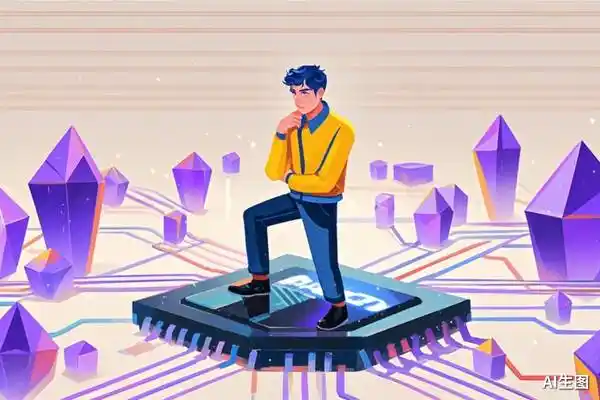
Just Now, Ilya Drops Another Mind-Blowing Image ‘The Thinker’: What’s on His Mind in the Ocean of AI Chips?

Shortly after going quiet, Ilya Sutskever, AI's enigmatic spiritual leader, posted a mysterious sketch titled "The Thinker" on Instagram. The drawing depicts Rodin's iconic sculpture perched on a cliff, contemplating a vast, purple microscopic universe made of transistors and digital circuits—a chip die shot—signed "IS 2026." This cryptic image, saying "nothing yet everything," ignited widespread speculation in Silicon Valley. Some see it as a search for sacred meaning in silicon, others as a silent critique of brute-force compute scaling. It echoes Ilya's past influence, like the original OpenAI logo he once doodled on a wall. The post coincided with a triple announcement from OpenAI, intensifying the frenzy. First, an internal reasoning model discovered new geometric constructions, challenging a long-standing conjecture and impressing Fields Medalist Tim Gowers. Second, Codex for Mac introduced "Appshots," allowing it to access application windows—even text outside the view—and gained features like Goal Mode, a built-in browser, and plugin capabilities, evolving from a coding assistant into a persistent "resident engineer." Third, reports surfaced that OpenAI is preparing for a confidential IPO filing with banks like Goldman Sachs and Morgan Stanley, potentially eyeing a fall public listing. Together, these moves signal that AGI (Artificial General Intelligence) is not a distant slogan but an active force reshaping science, software engineering, and capital markets. Ilya's art hints at a paradigm shift where the boundary between human thought and silicon computation blurs. As OpenAI insiders excitedly say, "Feel the AGI," it suggests a tangible breakthrough may be imminent—one our generation is likely to witness.

marsbitHace 15 min(s)

Just Now, Ilya Drops Another Mind-Blowing Image ‘The Thinker’: What’s on His Mind in the Ocean of AI Chips?

marsbitHace 15 min(s)

Vitalik on the Future of the Ethereum Foundation: A Smaller, More Distinct, but Longer-Lasting Ship

Vitalik discusses the future direction of the Ethereum Foundation (EF), emphasizing a shift towards a smaller, more focused, and longer-lasting organization. He clarifies this is his personal view and that his own influence within EF is diminishing, which he welcomes. The key driver is aligning EF's actions with its stated values of decentralization, privacy, and being a "sanctuary technology," addressing criticism that its operations haven't fully reflected these ideals. He argues that EF should not be the "center" of Ethereum but one node among many with a specific mandate. With limited resources (holding only ~0.16% of all ETH), EF must focus its remaining efforts on long-term, mission-critical activities that wouldn't happen without its push, particularly those reinforcing Ethereum's core CROPS values (Censorship-Resistance, Resilience, Openness, Privacy, Security). This means making hard choices, potentially spinning out even respected projects to attract external capital, and cultivating a distinct cultural stance. The core technical vision is for Ethereum to be "amazing" not by chasing maximal throughput, but by excelling in the CROPS dimension. Key goals include: a provably bug-free Ethereum via AI-assisted formal verification; high-availability chain consensus combining the best of BFT and Bitcoin-style security; and minimization of intermediaries in transaction sending and user experience. These "unreasonable" ambitions aim to make Ethereum profoundly impressive in its core values, which also support ETH as a robust asset. The future EF will be a smaller, more opinionated ship built for longevity and meaningful impact.

链捕手Hace 21 min(s)

Vitalik on the Future of the Ethereum Foundation: A Smaller, More Distinct, but Longer-Lasting Ship

链捕手Hace 21 min(s)

Leading Players in Large Models Drain the Primary Market

The AI industry is witnessing an unprecedented concentration of capital into a handful of leading players, signaling what insiders call the "eve of a final shakeout." A staggering funding surge exceeding $7 billion hit just three Chinese companies in May alone—Kimi, StepFun (接近完成融资), and DeepSeek—with the latter's valuation reaching $45-$50 billion. Globally, giants like OpenAI, Anthropic, and SpaceX (set to merge with xAI) are preparing for public listings, collectively eyeing valuations over $3 trillion. This capital is no longer fueling a broad "hundred-model war" but is being funneled to "refuel" the final few contenders, following a sector-wide attrition rate exceeding 90%. This frenzy is driven by a fundamental shift in industry logic. The focus has moved from比拼模型智商 (competing on model intelligence) to "token factory economics." The explosion of long-context AI agents has massively increased token consumption per task. With token supply constrained by bottlenecks in HBM memory and power infrastructure—key factors in production costs—dominance now hinges on owning and efficiently operating large-scale compute resources. Major tech firms are investing hundreds of billions annually in this AI "power grid." Consequently, competition pivots to three core areas: 1) **Monetization** as the "AGI premium" cools, forcing a shift from user growth to revenue; 2) **Cost efficiency**, where reducing inference costs becomes the ultimate KPI as model capabilities commoditize; and 3) **Strategic path divergence** between enterprise-focused AI (prioritizing integration and reliability) and consumer-facing applications (betting on scale and user engagement). The message is clear: the final capital injections are determining the endgame lineup. Success will depend not just on technical prowess, but on transforming technology into a sustainable, profitable business model with demonstrable return on massive compute investments.

marsbitHace 30 min(s)

Leading Players in Large Models Drain the Primary Market

marsbitHace 30 min(s)

AI Giants Queueing Up for IPOs: Is This the 'Last Dance' for the U.S. Stock Market?

A massive wave of IPOs from AI giants like OpenAI, Anthropic, and SpaceX is taking shape, potentially reshaping the U.S. stock market. OpenAI is reportedly preparing for a historic IPO, targeting a valuation over $1 trillion and raising roughly $60 billion, which would dwarf previous records. Anthropic is also advancing its own IPO plans, projecting significant revenue growth and achieving quarterly operating profit. However, their financial profiles starkly differ. While Anthropic is nearing profitability with a focus on enterprise clients, OpenAI continues to report substantial losses, with a negative operating margin and expectations for positive cash flow only by 2029-2030. Analysts warn these listings could trigger a major "passive fund reshuffle," forcing index funds to sell holdings in established tech giants to make room for the new entrants, potentially pressuring the broader market. Some observers view the IPO rush as a "risk transfer," allowing early private investors to cash out at peak valuations while passing future financial uncertainty to public market investors. The divergent paths of Anthropic's near-term profitability versus OpenAI's long-term, high-cost growth narrative present a critical choice for investors. The outcome of these IPOs is seen as a major swing factor for risk assets in 2026, testing whether this surge marks a new cycle or a potential peak.

marsbitHace 38 min(s)

AI Giants Queueing Up for IPOs: Is This the 'Last Dance' for the U.S. Stock Market?

marsbitHace 38 min(s)

Trading

Spot
Futuros

Artículos destacados

Qué es $S$

Entendiendo SPERO: Una Visión General Completa Introducción a SPERO A medida que el panorama de la innovación continúa evolucionando, la aparición de tecnologías web3 y proyectos de criptomonedas juega un papel fundamental en la configuración del futuro digital. Un proyecto que ha atraído la atención en este campo dinámico es SPERO, denotado como SPERO,$$s$. Este artículo tiene como objetivo reunir y presentar información detallada sobre SPERO, para ayudar a entusiastas e inversores a comprender sus fundamentos, objetivos e innovaciones dentro de los dominios web3 y cripto. ¿Qué es SPERO,$$s$? SPERO,$$s$ es un proyecto único dentro del espacio cripto que busca aprovechar los principios de descentralización y tecnología blockchain para crear un ecosistema que promueva la participación, la utilidad y la inclusión financiera. El proyecto está diseñado para facilitar interacciones de igual a igual de nuevas maneras, proporcionando a los usuarios soluciones y servicios financieros innovadores. En su esencia, SPERO,$$s$ tiene como objetivo empoderar a los individuos al proporcionar herramientas y plataformas que mejoren la experiencia del usuario en el espacio de las criptomonedas. Esto incluye habilitar métodos de transacción más flexibles, fomentar iniciativas impulsadas por la comunidad y crear caminos para oportunidades financieras a través de aplicaciones descentralizadas (dApps). La visión subyacente de SPERO,$$s$ gira en torno a la inclusividad, buscando cerrar brechas dentro de las finanzas tradicionales mientras aprovecha los beneficios de la tecnología blockchain. ¿Quién es el Creador de SPERO,$$s$? La identidad del creador de SPERO,$$s$ sigue siendo algo oscura, ya que hay recursos públicos limitados que proporcionan información de fondo detallada sobre su(s) fundador(es). Esta falta de transparencia puede derivarse del compromiso del proyecto con la descentralización, una ética que muchos proyectos web3 comparten, priorizando las contribuciones colectivas sobre el reconocimiento individual. Al centrar las discusiones en torno a la comunidad y sus objetivos colectivos, SPERO,$$s$ encarna la esencia del empoderamiento sin señalar a individuos específicos. Como tal, comprender la ética y la misión de SPERO sigue siendo más importante que identificar a un creador singular. ¿Quiénes son los Inversores de SPERO,$$s$? SPERO,$$s$ cuenta con el apoyo de una diversa gama de inversores que van desde capitalistas de riesgo hasta inversores ángeles dedicados a fomentar la innovación en el sector cripto. El enfoque de estos inversores generalmente se alinea con la misión de SPERO, priorizando proyectos que prometen avances tecnológicos sociales, inclusión financiera y gobernanza descentralizada. Estas fundaciones de inversores suelen estar interesadas en proyectos que no solo ofrecen productos innovadores, sino que también contribuyen positivamente a la comunidad blockchain y sus ecosistemas. El respaldo de estos inversores refuerza a SPERO,$$s$ como un contendiente notable en el dominio de proyectos cripto que evoluciona rápidamente. ¿Cómo Funciona SPERO,$$s$? SPERO,$$s$ emplea un marco multifacético que lo distingue de los proyectos de criptomonedas convencionales. Aquí hay algunas de las características clave que subrayan su singularidad e innovación: Gobernanza Descentralizada: SPERO,$$s$ integra modelos de gobernanza descentralizada, empoderando a los usuarios para participar activamente en los procesos de toma de decisiones sobre el futuro del proyecto. Este enfoque fomenta un sentido de propiedad y responsabilidad entre los miembros de la comunidad. Utilidad del Token: SPERO,$$s$ utiliza su propio token de criptomoneda, diseñado para servir diversas funciones dentro del ecosistema. Estos tokens permiten transacciones, recompensas y la facilitación de servicios ofrecidos en la plataforma, mejorando la participación y la utilidad general. Arquitectura en Capas: La arquitectura técnica de SPERO,$$s$ apoya la modularidad y escalabilidad, permitiendo la integración fluida de características y aplicaciones adicionales a medida que el proyecto evoluciona. Esta adaptabilidad es fundamental para mantener la relevancia en el cambiante paisaje cripto. Participación de la Comunidad: El proyecto enfatiza iniciativas impulsadas por la comunidad, empleando mecanismos que incentivan la colaboración y la retroalimentación. Al nutrir una comunidad sólida, SPERO,$$s$ puede abordar mejor las necesidades de los usuarios y adaptarse a las tendencias del mercado. Enfoque en la Inclusión: Al ofrecer tarifas de transacción bajas e interfaces amigables para el usuario, SPERO,$$s$ busca atraer a una base de usuarios diversa, incluyendo a individuos que anteriormente pueden no haber participado en el espacio cripto. Este compromiso con la inclusión se alinea con su misión general de empoderamiento a través de la accesibilidad. Cronología de SPERO,$$s$ Entender la historia de un proyecto proporciona información crucial sobre su trayectoria de desarrollo y hitos. A continuación se presenta una cronología sugerida que mapea eventos significativos en la evolución de SPERO,$$s$: Fase de Conceptualización e Ideación: Las ideas iniciales que forman la base de SPERO,$$s$ fueron concebidas, alineándose estrechamente con los principios de descentralización y enfoque comunitario dentro de la industria blockchain. Lanzamiento del Whitepaper del Proyecto: Tras la fase conceptual, se lanzó un whitepaper completo que detalla la visión, los objetivos y la infraestructura tecnológica de SPERO,$$s$ para generar interés y retroalimentación de la comunidad. Construcción de Comunidad y Primeras Interacciones: Se realizaron esfuerzos de divulgación activa para construir una comunidad de primeros adoptantes y posibles inversores, facilitando discusiones en torno a los objetivos del proyecto y obteniendo apoyo. Evento de Generación de Tokens: SPERO,$$s$ llevó a cabo un evento de generación de tokens (TGE) para distribuir sus tokens nativos a los primeros seguidores y establecer liquidez inicial dentro del ecosistema. Lanzamiento de la dApp Inicial: La primera aplicación descentralizada (dApp) asociada con SPERO,$$s$ se puso en marcha, permitiendo a los usuarios interactuar con las funcionalidades centrales de la plataforma. Desarrollo Continuo y Alianzas: Actualizaciones y mejoras continuas a las ofertas del proyecto, incluyendo alianzas estratégicas con otros actores en el espacio blockchain, han moldeado a SPERO,$$s$ en un jugador competitivo y en evolución en el mercado cripto. Conclusión SPERO,$$s$ se erige como un testimonio del potencial de web3 y las criptomonedas para revolucionar los sistemas financieros y empoderar a los individuos. Con un compromiso con la gobernanza descentralizada, la participación comunitaria y funcionalidades diseñadas de manera innovadora, allana el camino hacia un paisaje financiero más inclusivo. Como con cualquier inversión en el espacio cripto que evoluciona rápidamente, se anima a los posibles inversores y usuarios a investigar a fondo y participar de manera reflexiva con los desarrollos en curso dentro de SPERO,$$s$. El proyecto muestra el espíritu innovador de la industria cripto, invitando a una mayor exploración de sus innumerables posibilidades. Mientras el viaje de SPERO,$$s$ aún se desarrolla, sus principios fundamentales pueden, de hecho, influir en el futuro de cómo interactuamos con la tecnología, las finanzas y entre nosotros en ecosistemas digitales interconectados.

72 Vistas totalesPublicado en 2024.12.17Actualizado en 2024.12.17

Qué es $S$

Qué es AGENT S

Agent S: El Futuro de la Interacción Autónoma en Web3 Introducción En el paisaje en constante evolución de Web3 y las criptomonedas, las innovaciones están redefiniendo constantemente cómo los individuos interactúan con las plataformas digitales. Uno de estos proyectos pioneros, Agent S, promete revolucionar la interacción humano-computadora a través de su marco agente abierto. Al allanar el camino para interacciones autónomas, Agent S busca simplificar tareas complejas, ofreciendo aplicaciones transformadoras en inteligencia artificial (IA). Esta exploración detallada profundizará en las complejidades del proyecto, sus características únicas y las implicaciones para el dominio de las criptomonedas. ¿Qué es Agent S? Agent S se presenta como un marco agente abierto innovador, diseñado específicamente para abordar tres desafíos fundamentales en la automatización de tareas informáticas: Adquisición de Conocimiento Específico del Dominio: El marco aprende inteligentemente de diversas fuentes de conocimiento externas y experiencias internas. Este enfoque dual le permite construir un rico repositorio de conocimiento específico del dominio, mejorando su rendimiento en la ejecución de tareas. Planificación a Largo Plazo de Tareas: Agent S emplea planificación jerárquica aumentada por la experiencia, un enfoque estratégico que facilita la descomposición y ejecución eficiente de tareas complejas. Esta característica mejora significativamente su capacidad para gestionar múltiples subtareas de manera eficiente y efectiva. Manejo de Interfaces Dinámicas y No Uniformes: El proyecto introduce la Interfaz Agente-Computadora (ACI), una solución innovadora que mejora la interacción entre agentes y usuarios. Utilizando Modelos de Lenguaje Multimodal de Gran Escala (MLLMs), Agent S puede navegar y manipular diversas interfaces gráficas de usuario sin problemas. A través de estas características pioneras, Agent S proporciona un marco robusto que aborda las complejidades involucradas en la automatización de la interacción humana con las máquinas, preparando el terreno para una multitud de aplicaciones en IA y más allá. ¿Quién es el Creador de Agent S? Si bien el concepto de Agent S es fundamentalmente innovador, la información específica sobre su creador sigue siendo elusiva. El creador es actualmente desconocido, lo que resalta ya sea la etapa incipiente del proyecto o la elección estratégica de mantener a los miembros fundadores en el anonimato. Independientemente de la anonimidad, el enfoque sigue siendo en las capacidades y el potencial del marco. ¿Quiénes son los Inversores de Agent S? Dado que Agent S es relativamente nuevo en el ecosistema criptográfico, la información detallada sobre sus inversores y patrocinadores financieros no está documentada explícitamente. La falta de información disponible públicamente sobre las bases de inversión u organizaciones que apoyan el proyecto plantea preguntas sobre su estructura de financiamiento y hoja de ruta de desarrollo. Comprender el respaldo es crucial para evaluar la sostenibilidad del proyecto y su posible impacto en el mercado. ¿Cómo Funciona Agent S? En el núcleo de Agent S se encuentra una tecnología de vanguardia que le permite funcionar de manera efectiva en diversos entornos. Su modelo operativo se basa en varias características clave: Interacción Humano-Computadora Similar a la Humana: El marco ofrece planificación avanzada de IA, esforzándose por hacer que las interacciones con las computadoras sean más intuitivas. Al imitar el comportamiento humano en la ejecución de tareas, promete elevar las experiencias de los usuarios. Memoria Narrativa: Empleada para aprovechar experiencias de alto nivel, Agent S utiliza memoria narrativa para hacer un seguimiento de las historias de tareas, mejorando así sus procesos de toma de decisiones. Memoria Episódica: Esta característica proporciona a los usuarios una guía paso a paso, permitiendo que el marco ofrezca apoyo contextual a medida que se desarrollan las tareas. Soporte para OpenACI: Con la capacidad de ejecutarse localmente, Agent S permite a los usuarios mantener el control sobre sus interacciones y flujos de trabajo, alineándose con la ética descentralizada de Web3. Fácil Integración con APIs Externas: Su versatilidad y compatibilidad con varias plataformas de IA aseguran que Agent S pueda encajar sin problemas en ecosistemas tecnológicos existentes, convirtiéndolo en una opción atractiva para desarrolladores y organizaciones. Estas funcionalidades contribuyen colectivamente a la posición única de Agent S dentro del espacio cripto, ya que automatiza tareas complejas y de múltiples pasos con una intervención humana mínima. A medida que el proyecto evoluciona, sus posibles aplicaciones en Web3 podrían redefinir cómo se desarrollan las interacciones digitales. Cronología de Agent S El desarrollo y los hitos de Agent S pueden encapsularse en una cronología que resalta sus eventos significativos: 27 de septiembre de 2024: El concepto de Agent S fue lanzado en un documento de investigación integral titulado “Un Marco Agente Abierto que Usa Computadoras Como un Humano”, mostrando las bases del proyecto. 10 de octubre de 2024: El documento de investigación fue puesto a disposición del público en arXiv, ofreciendo una exploración profunda del marco y su evaluación de rendimiento basada en el benchmark OSWorld. 12 de octubre de 2024: Se lanzó una presentación en video, proporcionando una visión visual de las capacidades y características de Agent S, involucrando aún más a posibles usuarios e inversores. Estos marcadores en la cronología no solo ilustran el progreso de Agent S, sino que también indican su compromiso con la transparencia y la participación comunitaria. Puntos Clave Sobre Agent S A medida que el marco Agent S continúa evolucionando, varios atributos clave destacan, subrayando su naturaleza innovadora y potencial: Marco Innovador: Diseñado para proporcionar un uso intuitivo de las computadoras similar a la interacción humana, Agent S aporta un enfoque novedoso a la automatización de tareas. Interacción Autónoma: La capacidad de interactuar de manera autónoma con las computadoras a través de GUI significa un salto hacia soluciones informáticas más inteligentes y eficientes. Automatización de Tareas Complejas: Con su metodología robusta, puede automatizar tareas complejas y de múltiples pasos, haciendo que los procesos sean más rápidos y menos propensos a errores. Mejora Continua: Los mecanismos de aprendizaje permiten a Agent S mejorar a partir de experiencias pasadas, mejorando continuamente su rendimiento y eficacia. Versatilidad: Su adaptabilidad en diferentes entornos operativos como OSWorld y WindowsAgentArena asegura que pueda servir a una amplia gama de aplicaciones. A medida que Agent S se posiciona en el paisaje de Web3 y criptomonedas, su potencial para mejorar las capacidades de interacción y automatizar procesos significa un avance significativo en las tecnologías de IA. A través de su marco innovador, Agent S ejemplifica el futuro de las interacciones digitales, prometiendo una experiencia más fluida y eficiente para los usuarios en diversas industrias. Conclusión Agent S representa un audaz avance en la unión de la IA y Web3, con la capacidad de redefinir cómo interactuamos con la tecnología. Aunque aún se encuentra en sus primeras etapas, las posibilidades para su aplicación son vastas y atractivas. A través de su marco integral que aborda desafíos críticos, Agent S busca llevar las interacciones autónomas al primer plano de la experiencia digital. A medida que nos adentramos más en los reinos de las criptomonedas y la descentralización, proyectos como Agent S sin duda desempeñarán un papel crucial en la configuración del futuro de la tecnología y la colaboración humano-computadora.

455 Vistas totalesPublicado en 2025.01.14Actualizado en 2025.01.14

Qué es AGENT S

Cómo comprar S

¡Bienvenido a HTX.com! Hemos hecho que comprar Sonic (S) sea simple y conveniente. Sigue nuestra guía paso a paso para iniciar tu viaje de criptos.Paso 1: crea tu cuenta HTXUtiliza tu correo electrónico o número de teléfono para registrarte y obtener una cuenta gratuita en HTX. Experimenta un proceso de registro sin complicaciones y desbloquea todas las funciones.Obtener mi cuentaPaso 2: ve a Comprar cripto y elige tu método de pagoTarjeta de crédito/débito: usa tu Visa o Mastercard para comprar Sonic (S) al instante.Saldo: utiliza fondos del saldo de tu cuenta HTX para tradear sin problemas.Terceros: hemos agregado métodos de pago populares como Google Pay y Apple Pay para mejorar la comodidad.P2P: tradear directamente con otros usuarios en HTX.Over-the-Counter (OTC): ofrecemos servicios personalizados y tipos de cambio competitivos para los traders.Paso 3: guarda tu Sonic (S)Después de comprar tu Sonic (S), guárdalo en tu cuenta HTX. Alternativamente, puedes enviarlo a otro lugar mediante transferencia blockchain o utilizarlo para tradear otras criptomonedas.Paso 4: tradear Sonic (S)Tradear fácilmente con Sonic (S) en HTX's mercado spot. Simplemente accede a tu cuenta, selecciona tu par de trading, ejecuta tus trades y monitorea en tiempo real. Ofrecemos una experiencia fácil de usar tanto para principiantes como para traders experimentados.

870 Vistas totalesPublicado en 2025.01.15Actualizado en 2025.03.21

Cómo comprar S

Discusiones

Bienvenido a la comunidad de HTX. Aquí puedes mantenerte informado sobre los últimos desarrollos de la plataforma y acceder a análisis profesionales del mercado. A continuación se presentan las opiniones de los usuarios sobre el precio de S (S).

活动图片