Resolv exploit triggers USR depeg after $80M uncollateralized mint

ambcryptoPublicado a 2026-03-23Actualizado a 2026-03-23

Resumen

Resolv protocol was exploited due to a private key compromise, leading to an unauthorized mint of approximately $80M in unbacked USR stablecoins. This inflated the total supply by 71M tokens, causing a severe depeg—USR fell 56% to around $0.19. The team paused contracts, burned 9M of the attacker’s tokens, and confirmed that underlying collateral remains intact with only $0.5M in losses from redemptions. Recovery efforts include allowlisted redemptions and tracing illicit tokens. The incident highlights risks from over-reliance on off-chain controls in DeFi minting mechanisms.

Resolv has paused its protocol after a private key compromise enabled a malicious actor to mint approximately $80M in uncollateralized USR. This triggered a sharp depeg and raised concerns about the stablecoin’s integrity.

In an update shared, the team said the attacker gained unauthorized access to its infrastructure and minted new USR tokens without backing. Smart contracts were quickly paused, and around 9M USR held by the attacker has since been burned.

Resolv stated that its underlying collateral was not directly compromised. Also, the only confirmed loss so far is roughly $0.5M in redemptions processed before the pause.

Exploit inflates USR supply rather than draining funds

Unlike typical DeFi exploits that drain protocol funds, the Resolv incident centers on supply inflation.

Before the incident, around 102M USR was in circulation. Following the exploit, an additional ~71M USR was minted without collateral. This effectively diluted the backing of the stablecoin.

This pushed total supply far above the value of the protocol’s assets, altering the relationship between supply and collateral.

The team said the exploit resulted from a compromised private key tied to infrastructure access, rather than a failure of its underlying collateral system.

Design assumptions exposed in minting process

While Resolv attributed the breach to unauthorized access, the incident has drawn attention to how minting authority was structured.

The exploit was made possible because a privileged role could authorize token issuance without sufficient on-chain validation of collateral backing.

This meant that once access was obtained, large amounts of USR could be minted without checks tied to deposited assets.

Such architecture relies on trusted off-chain controls to enforce limits — an assumption that can break down if those controls are compromised.

USR loses peg as market confidence drops

Market reaction to the exploit was swift, with USR losing its dollar peg.

At the time of writing, USR was trading near $0.19, down more than 56% over 24 hours, according to CoinMarketCap data. The sharp decline reflects a repricing of the token as supply expanded beyond its collateral base.
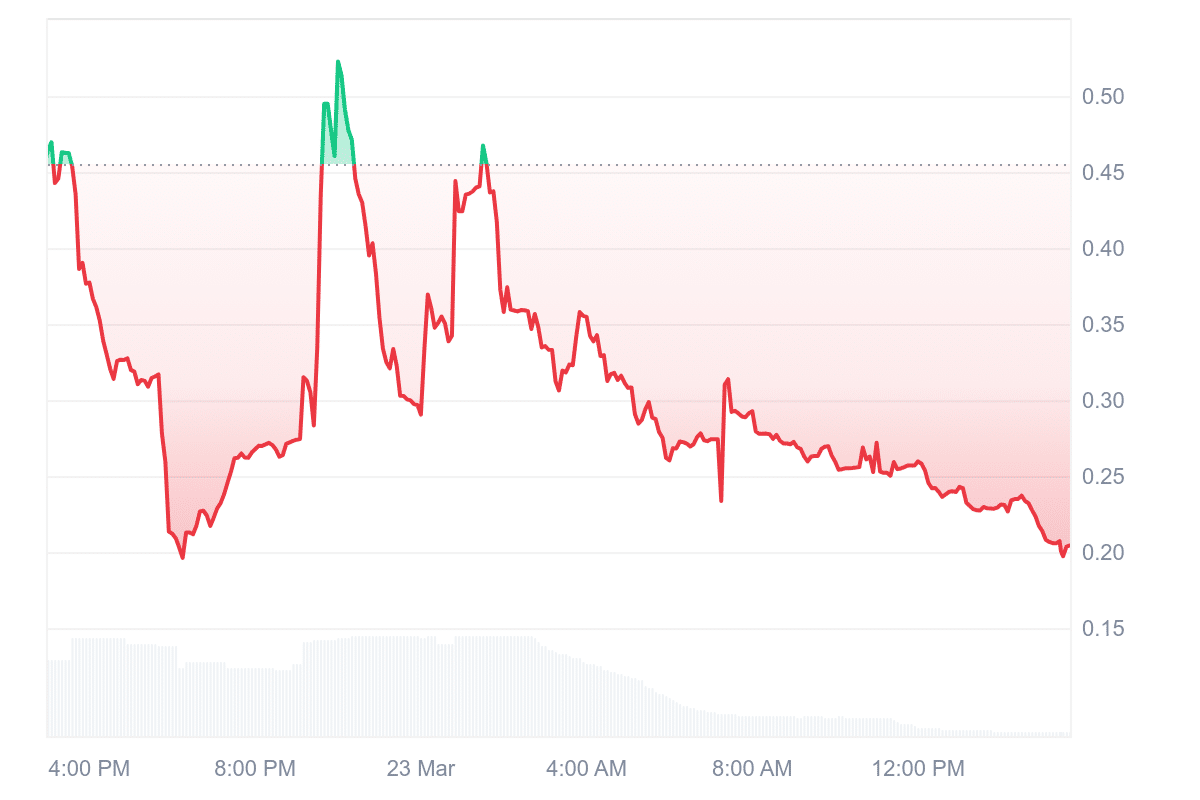
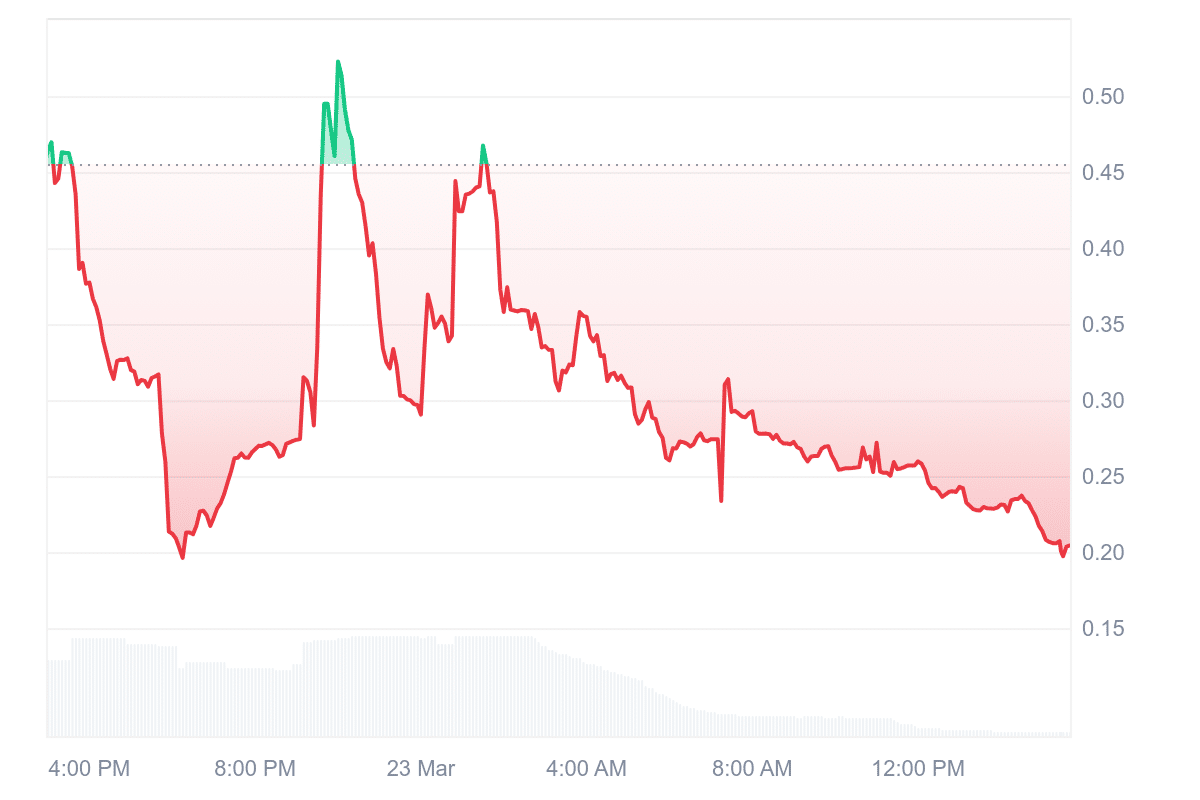
Source: CoinMarketCap

Trading activity has also weakened significantly, with volumes dropping as users exit positions or avoid exposure during the recovery process.

Recovery efforts underway as redemptions planned

Resolv said it is preparing to enable redemptions for pre-incident USR holders, starting with allowlisted users.

The protocol currently holds approximately $141M in assets, and the team is working with partners, analytics firms, and law enforcement to trace and contain illicitly minted tokens.

Users have been advised not to trade USR or related assets during the recovery phase. Post-exploit activity could impact the outcome of the process.

Stablecoin integrity under scrutiny

The incident highlights a broader risk in DeFi systems where critical safeguards depend on off-chain controls rather than enforced on-chain limits.

Although Resolv’s collateral pool remains intact, the ability to mint unbacked tokens has undermined confidence in the system’s accounting.

As the situation unfolds, the key challenge will be restoring trust in USR’s backing and stabilizing its supply.


Final Summary

  • The Resolv exploit inflated USR supply by $80M without draining collateral, exposing risks tied to off-chain control mechanisms.
  • USR’s sharp depeg reflects a loss of market confidence, with recovery now dependent on isolating illicit supply and restoring backing integrity.


Criptos en tendencia

Preguntas relacionadas

QWhat was the primary method used by the attacker to exploit the Resolv protocol?

AThe attacker gained unauthorized access to Resolv's infrastructure through a compromised private key, which allowed them to mint approximately $80M in uncollateralized USR tokens.

QHow did the exploit mechanism in this incident differ from a typical DeFi attack?

AUnlike typical DeFi exploits that drain protocol funds, this incident centered on supply inflation by minting new, unbacked tokens rather than stealing existing collateral.

QWhat was the immediate market consequence of the exploit on the USR stablecoin?

AThe USR stablecoin lost its dollar peg, trading near $0.19 at the time of writing, which represents a decline of more than 56% over 24 hours.

QWhat key vulnerability in the protocol's design did this exploit expose?

AThe exploit exposed a vulnerability where a privileged role could authorize token issuance without sufficient on-chain validation of collateral backing, relying instead on trusted off-chain controls.

QWhat are the main steps Resolv is taking for recovery according to the article?

AResolv has paused the protocol, burned approximately 9M USR held by the attacker, is preparing to enable redemptions for pre-incident holders, and is working with partners and law enforcement to trace illicitly minted tokens.

Lecturas Relacionadas

Goldman Sachs: July Smashes Through Crowded Trades, U.S. Stock Bull Market Not Broken but Harder to Navigate

Goldman Sachs: July Sees Crowded Trades Unwound, U.S. Bull Market Intact but Getting Tougher. The U.S. stock market in July did not see an index-level crash, but rather a significant unwinding of speculative positions. While the S&P 500 remained stable—trading within a narrow 3.5% range and staying within 2% of its high—underlying market dynamics were volatile. Heavily crowded trades, particularly in high-momentum tech, AI-linked stocks, and Asian strategies, faced severe pressure and forced deleveraging. Data indicates this was a meaningful cleanse, not a minor adjustment. Global tech exposure saw its largest sell-off in over five years, leverage in Korean equity ETFs plummeted, and Goldman's prime brokerage recorded the largest gross exposure reduction since late 2022. Leverage on momentum factors among fundamental long/short clients fell to the 28th percentile of its one-year range. The AI trade narrative shifted from pure potential to a focus on tangible returns. While Meta failed to show clear AI monetization, Microsoft and Amazon provided evidence that massive capital expenditure is translating into scalable revenue and product growth, preventing a blanket sell-off of the AI sector. The Federal Reserve's more opaque communication style and volatility in long-end Treasury yields have introduced new friction, particularly for rate-sensitive growth and tech stocks. The broader outlook for U.S. equities remains favorable, supported by a strong economy, robust earnings, and substantial AI capital expenditure. However, risk/reward is no longer cheap, and the market's upward elasticity has weakened. The Nasdaq 100's trajectory—up 12% year-to-date despite significant pullbacks—illustrates that the bull trend persists but the path is becoming more difficult. The key lesson from July is that the market no longer rewards crowded, highly leveraged trades, requiring more disciplined and liquid portfolio approaches.

marsbitHace 2 hora(s)

Goldman Sachs: July Smashes Through Crowded Trades, U.S. Stock Bull Market Not Broken but Harder to Navigate

marsbitHace 2 hora(s)

Interview with Robinhood Executive: Meme + Tokenized US Stocks as "Barbell" Customer Acquisition Strategy, All Business Lines Achieve Hundreds of Millions in Revenue

Interview with Robinhood executive Johann Kerbrat reveals the company's "barbell" customer acquisition strategy for its new Robinhood Chain, combining meme tokens with tokenized stocks. Three weeks after mainnet launch, the chain has seen over $3B in weekly DEX volume and 105M transactions. Kerbrat explains the logic behind the permissionless chain: meme tokens attract DeFi users, while tokenized real-world assets (RWA), currently over 90 US stocks and ETFs accessible in 120+ countries, serve global users. The goal is to bring Robinhood's 27 million funded accounts on-chain by simplifying DeFi with a user-friendly interface, exemplified by features like Robinhood Earn which offers yield without requiring wallet management. Built on Arbitrum's technology stack for its speed, low cost, and Ethereum's security, the chain focuses on financial products like Earn, spot trading, and perpetuals. Kerbrat downplays direct competition with platforms like Base, emphasizing the goal of expanding the overall market for on-chain assets. He details selective partnerships (e.g., Morpho, Lighter) based on compliance, unique UX, and differentiation. While regulatory clarity is pending for US perpetuals, the expansion continues via Bitstamp in Europe. Finally, Kerbrat positions Robinhood as a "super app" integrating stocks, options, crypto, banking, and AI trading, with all major business lines generating hundreds of millions in revenue. For the chain, current priority is driving adoption over maximizing gas fee revenue.

marsbitHace 4 hora(s)

Interview with Robinhood Executive: Meme + Tokenized US Stocks as "Barbell" Customer Acquisition Strategy, All Business Lines Achieve Hundreds of Millions in Revenue

marsbitHace 4 hora(s)

Trading

Spot

Artículos destacados

Cómo comprar RESOLV

¡Bienvenido a HTX.com! Hemos hecho que comprar Resolv (RESOLV) sea simple y conveniente. Sigue nuestra guía paso a paso para iniciar tu viaje de criptos.Paso 1: crea tu cuenta HTXUtiliza tu correo electrónico o número de teléfono para registrarte y obtener una cuenta gratuita en HTX. Experimenta un proceso de registro sin complicaciones y desbloquea todas las funciones.Obtener mi cuentaPaso 2: ve a Comprar cripto y elige tu método de pagoTarjeta de crédito/débito: usa tu Visa o Mastercard para comprar Resolv (RESOLV) al instante.Saldo: utiliza fondos del saldo de tu cuenta HTX para tradear sin problemas.Terceros: hemos agregado métodos de pago populares como Google Pay y Apple Pay para mejorar la comodidad.P2P: tradear directamente con otros usuarios en HTX.Over-the-Counter (OTC): ofrecemos servicios personalizados y tipos de cambio competitivos para los traders.Paso 3: guarda tu Resolv (RESOLV)Después de comprar tu Resolv (RESOLV), guárdalo en tu cuenta HTX. Alternativamente, puedes enviarlo a otro lugar mediante transferencia blockchain o utilizarlo para tradear otras criptomonedas.Paso 4: tradear Resolv (RESOLV)Tradear fácilmente con Resolv (RESOLV) en HTX's mercado spot. Simplemente accede a tu cuenta, selecciona tu par de trading, ejecuta tus trades y monitorea en tiempo real. Ofrecemos una experiencia fácil de usar tanto para principiantes como para traders experimentados.

334 Vistas totalesPublicado en 2025.06.11Actualizado en 2026.06.02

Cómo comprar RESOLV

Discusiones

Bienvenido a la comunidad de HTX. Aquí puedes mantenerte informado sobre los últimos desarrollos de la plataforma y acceder a análisis profesionales del mercado. A continuación se presentan las opiniones de los usuarios sobre el precio de RESOLV (RESOLV).

活动图片