Arthur Hayes compra 72.000 dólares en ETHFI 5 horas antes de su listado en Upbit: El mercado toma nota

ambcryptoPublicado a 2026-03-19Actualizado a 2026-03-19

Resumen

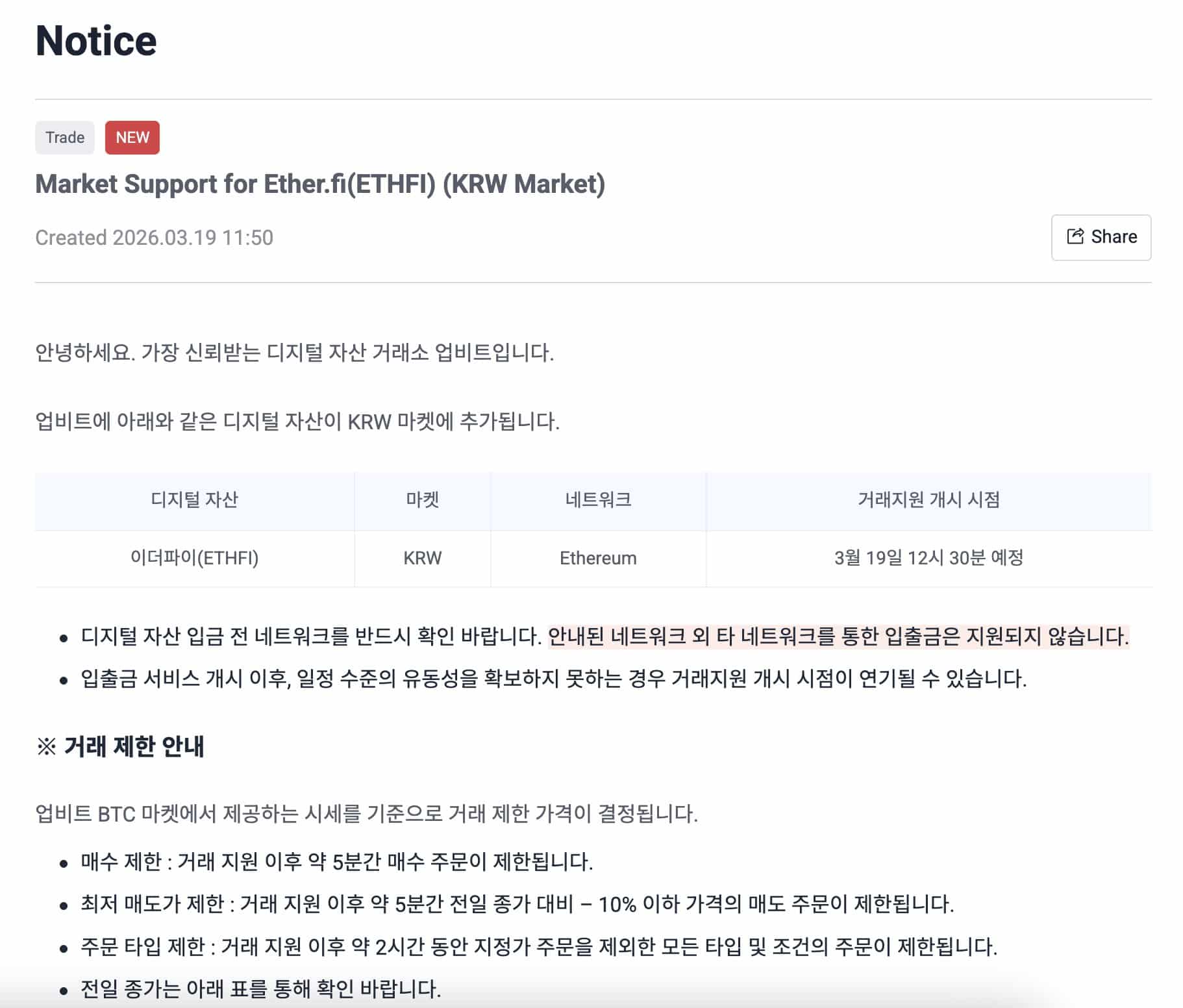
Arthur Hayes, cofundador de BitMEX, compró 132.730 tokens ETHFI (valorados en ~72.800 dólares) apenas cinco horas antes de que el exchange surcoreano Upbit anunciara su listado en el mercado de wones. La transacción, realizada a través de Anchorage Digital, ha avivado las acusaciones de trading con información privilegiada, dada la influencia de Upbit y la fuerte participación minorista en Corea del Sur. Previamente ya había invertido millones en tokens DeFi, incluido ETHFI. Upbit implementó controles temporales de trading tras el listado, congelando compras y limitando órdenes de venta a bajo precio.

EthereumFi [ETHFi] está atrayendo miradas tras un importante listado en exchange y una operación bien sincronizada.

Horas antes de que el exchange surcoreano Upbit anunciara el listado de ETHFi, se vio a Arthur Hayes comprando el token. Para contextualizar, este listado es bastante significativo, dada la fuerte participación minorista de Corea del Sur y su preferencia por las altcoins.

Hayes y las acusaciones de trading con información privilegiada

Arthur Hayes, cofundador de BitMEX y CIO de Maelstrom, acumuló ETHFI poco antes de un listado clave en el mayor exchange de Corea del Sur, Upbit.
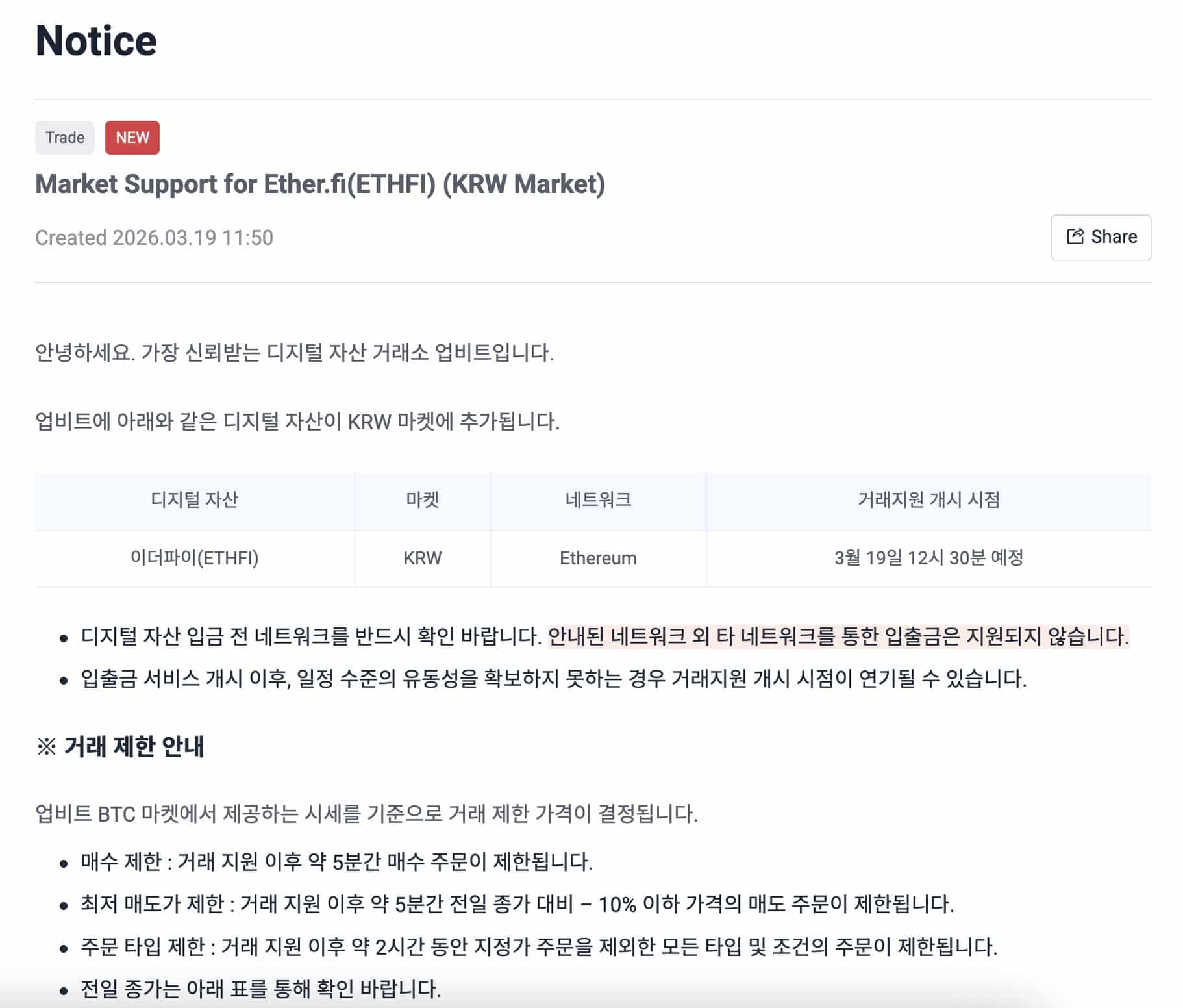
Fuente: X

Según datos de Lookonchain, Hayes recibió 132.730 ETHFI (aproximadamente 72.800 dólares) de Anchorage Digital aproximadamente cinco horas antes de que el exchange confirmara la adición del token a su mercado de wones surcoreanos (KRW).

La sincronización, por supuesto, ha echado leña al fuego de la narrativa de trading con información privilegiada.
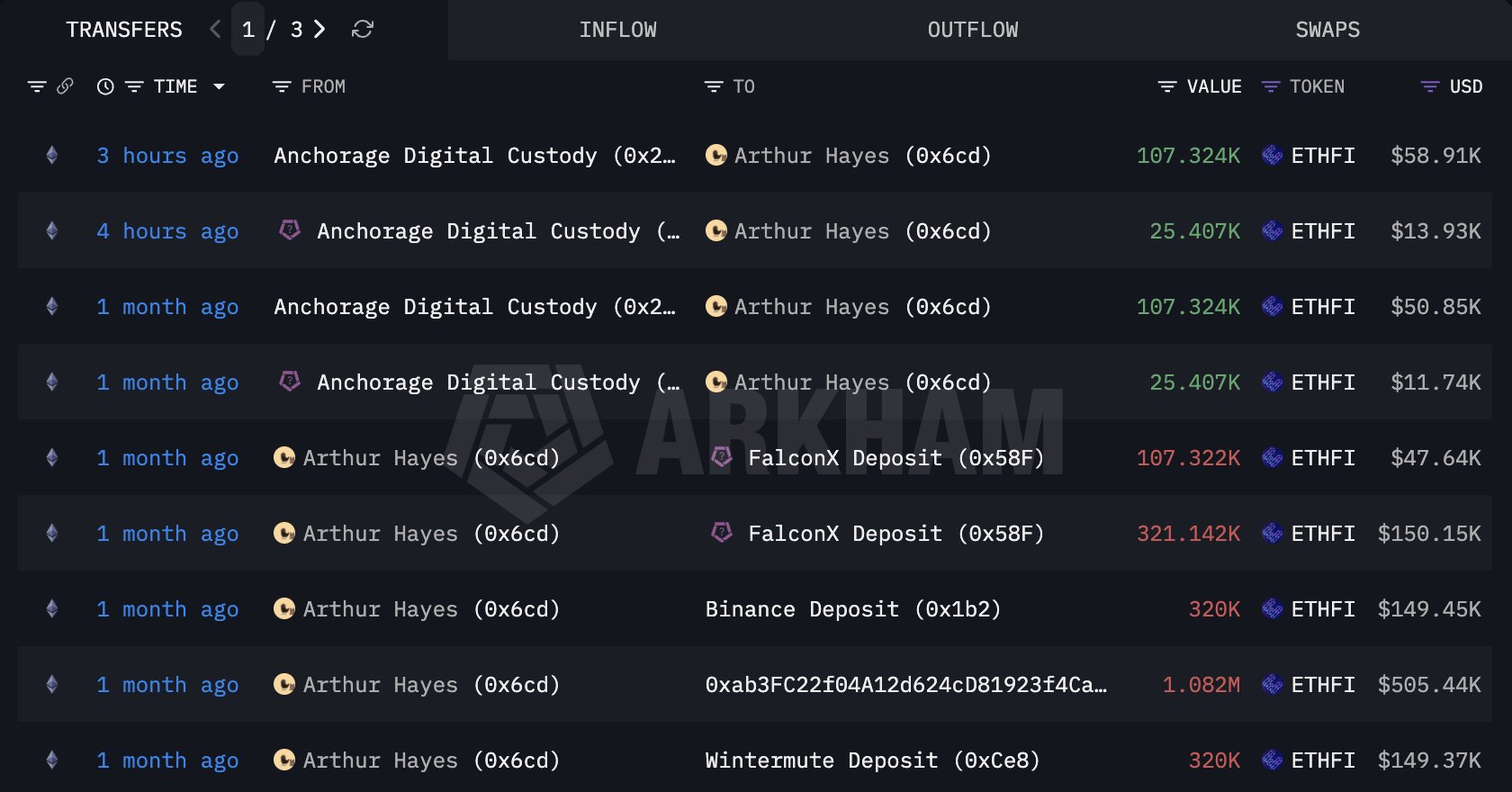
Fuente: X

A principios de este año, desplegó más de 3,4 millones de dólares en múltiples tokens DeFi, incluido ETHFi. Los datos también revelaron que aproximadamente un mes antes, Hayes movió 2,15 millones de ETHFI a alrededor de 0,47 dólares, lo que podría ser actividad de distribución anterior.

La última adquisición ocurrió cerca de los 0,55 dólares por token.

Es notable que, como parte de los controles estándar de listado, Upbit restringió temporalmente las órdenes. Esto incluyó una breve congelación de compras y límites en órdenes de venta a precios bajos, mientras se aplicaba trading solo por límite durante la fase inicial.


Una mirada al panorama general

Criptos en tendencia

Preguntas relacionadas

Q¿Quién compró ETHFI justo antes de que Upbit anunciara su listado?

AArthur Hayes, cofundador de BitMEX y CIO de Maelstrom, compró 132,730 ETHFI aproximadamente cinco horas antes del anuncio.

Q¿Cuál es la importancia del listado de ETHFI en Upbit?

AEl listado en Upbit es significativo debido a la fuerte participación de inversores minoristas en Corea del Sur y su preferencia por las altcoins.

Q¿Qué cantidad de ETHFI compró Arthur Hayes y a qué precio aproximado?

ACompró 132,730 ETHFI a un precio de aproximadamente $0.55 por token, con un valor total de alrededor de $72,800.

Q¿Por qué la operación de Hayes ha generado acusaciones de insider trading?

APorque el momento de la compra, justo antes del anuncio del listado en una de las mayores exchanges de Corea del Sur, sugiere que podría haber tenido información privilegiada.

Q¿Qué medidas tomó Upbit como parte de los controles estándar de listado?

AUpbit restringió temporalmente las órdenes, incluyendo una breve congelación de compras y límites en órdenes de venta a precios bajos, además de imponer trading solo con límites durante la fase inicial.

Lecturas Relacionadas

10 Billion Repurchase Fails to Halt HYPE's Decline, Are Core Members and Multicoin Quietly Selling Tokens?

Foresight News reports that despite a massive $1 billion buyback program by the Assistance Fund, the HYPE token has fallen from its July high of $70 to around $52.40. Analyst MLM tracked data showing that since team token vesting began in December 2025, approximately 4.93 million HYPE (worth ~$270M) were allocated to core contributors. Of these, 1.19 million (~$32.5M) were sold on the open market, and 3.14 million (~$132M) were transferred to OTC desks. However, the report argues that direct team selling is not the primary driver of the price decline. In the same period, the protocol's Assistance Fund used 99% of trading fees to repurchase about 9.8 million HYPE for approximately $364 million, a rate more than double the team's selling pressure. The analysis points to other significant factors: major venture capital firms like Multicoin Capital and a16z have been unstaking and moving substantial amounts of HYPE to exchanges, with some confirming sales for portfolio management. Additionally, HYPE spot ETFs have experienced consistent daily net outflows since early July, reversing the strong inflows seen in May and June. The report concludes that while protocol buybacks absorb team selling, declining trading volume reduces this buyback power, and combined selling pressure from large investors and ETFs has significantly impacted the price.

marsbitHace 2 min(s)

10 Billion Repurchase Fails to Halt HYPE's Decline, Are Core Members and Multicoin Quietly Selling Tokens?

marsbitHace 2 min(s)

Wall Street Morning News: V-shaped Rebound at Month-end, but Nasdaq Suffers Worst July in 12 Years; Funds Accelerate Concentration Towards Cloud Giants

Despite a V-shaped rebound at the end of July, the Nasdaq posted its worst July since 2004, while the S&P 500 had its worst July since 2014. Markets were jolted by geopolitical shifts, as President Trump canceled a planned strike on Iran, leading WTI crude to plunge over 8%. This, alongside OPEC+ announcing a supply increase, reversed crude's sharp July gains. Treasury yields surged, with the 10-year yield rising over 30 basis points in July—its largest July increase since 2005. In a rare move, the US and Japan jointly intervened to weaken the USD/JPY, aiming to prevent potential Japanese sales of US Treasuries. While the tech sector faced deleveraging pressure throughout July, cloud giants staged a massive rally on strong earnings. Microsoft, Amazon, and Google collectively added nearly $1.5 trillion in market value last week. Amazon soared over 15% on accelerating AWS growth, Microsoft extended historic gains, Google fully recovered post-earnings losses, and Meta ended an 11-day losing streak. In contrast, Apple tumbled over 7% on supply chain and guidance concerns, ceding its "world's most valuable company" title to Nvidia. The memory and storage sector corrected sharply. Gold edged up 0.91% in July, with analysts viewing the ~30% pullback from January highs as a potential basing period, supported by long-term central bank demand. Key events to watch this week include earnings from Palantir, AMD, SpaceX (its first post-IPO report), and memory giants like Western Digital. The US July non-farm payrolls report on Friday will be critical for gauging the Fed's policy path. SpaceX also faces a significant lock-up expiration, testing market liquidity.

marsbitHace 47 min(s)

Wall Street Morning News: V-shaped Rebound at Month-end, but Nasdaq Suffers Worst July in 12 Years; Funds Accelerate Concentration Towards Cloud Giants

marsbitHace 47 min(s)

Rubin Ultra Makes Major Cuts, Even Nvidia Can't Handle Memory Price Hikes?

NVIDIA's Rubin Ultra, the top-tier variant of the newly announced Rubin AI accelerators, has reportedly seen significant specification downgrades, according to an industry report from SemiAnalysis. Initially designed with four compute dies (4-die), the Rubin Ultra is now said to be reduced to a 2-die design. Key changes highlighted in the report include: * **No increase in peak theoretical compute performance**, remaining at 35 PFLOPs like the standard Rubin. * **Severe reduction in memory capacity** to 192GB using 8-Hi HBM stacks, which is less than the standard Rubin's 288GB using 12-Hi stacks. * **Negligible memory bandwidth improvement** of only 1 TB/s. * **Slightly higher chip-level power consumption**. * The **primary upgrade is a massive increase in scale-up interconnect capacity**, supporting connections for up to 576 GPUs via NVLink, compared to 72 for the standard Rubin. The report suggests the redesign is primarily a cost-optimization move driven by the sharp rise in HBM (High-Bandwidth Memory) prices. By reducing the expensive HBM content and shifting investment towards enhanced system-scale networking, NVIDIA aims to maintain the platform's value for large-scale AI training clusters while managing soaring material costs. The news reportedly triggered a sell-off in South Korean memory stocks, with SK Hynix and Samsung shares falling around 8%, as markets grew concerned that NVIDIA—a major HBM buyer—might be reducing its reliance on high-capacity memory, potentially capping future pricing power for memory makers.

Odaily星球日报Hace 1 hora(s)

Rubin Ultra Makes Major Cuts, Even Nvidia Can't Handle Memory Price Hikes?

Odaily星球日报Hace 1 hora(s)

Trading

Spot

Artículos destacados

Cómo comprar ETHFI

¡Bienvenido a HTX.com! Hemos hecho que comprar ether.fi (ETHFI) sea simple y conveniente. Sigue nuestra guía paso a paso para iniciar tu viaje de criptos.Paso 1: crea tu cuenta HTXUtiliza tu correo electrónico o número de teléfono para registrarte y obtener una cuenta gratuita en HTX. Experimenta un proceso de registro sin complicaciones y desbloquea todas las funciones.Obtener mi cuentaPaso 2: ve a Comprar cripto y elige tu método de pagoTarjeta de crédito/débito: usa tu Visa o Mastercard para comprar ether.fi (ETHFI) al instante.Saldo: utiliza fondos del saldo de tu cuenta HTX para tradear sin problemas.Terceros: hemos agregado métodos de pago populares como Google Pay y Apple Pay para mejorar la comodidad.P2P: tradear directamente con otros usuarios en HTX.Over-the-Counter (OTC): ofrecemos servicios personalizados y tipos de cambio competitivos para los traders.Paso 3: guarda tu ether.fi (ETHFI)Después de comprar tu ether.fi (ETHFI), guárdalo en tu cuenta HTX. Alternativamente, puedes enviarlo a otro lugar mediante transferencia blockchain o utilizarlo para tradear otras criptomonedas.Paso 4: tradear ether.fi (ETHFI)Tradear fácilmente con ether.fi (ETHFI) en HTX's mercado spot. Simplemente accede a tu cuenta, selecciona tu par de trading, ejecuta tus trades y monitorea en tiempo real. Ofrecemos una experiencia fácil de usar tanto para principiantes como para traders experimentados.

115 Vistas totalesPublicado en 2024.12.10Actualizado en 2026.06.02

Cómo comprar ETHFI

Discusiones

Bienvenido a la comunidad de HTX. Aquí puedes mantenerte informado sobre los últimos desarrollos de la plataforma y acceder a análisis profesionales del mercado. A continuación se presentan las opiniones de los usuarios sobre el precio de ETHFI (ETHFI).

活动图片