惊!神秘巨鲸突袭 ZRO,4750 万美元布局,2.5 美元处多空博弈一触即发?

ambcryptoPublicado a 2026-03-19Actualizado a 2026-03-19

Resumen

一位神秘“鲸鱼”通过9个钱包累计购入LayerZero的ZRO代币2450万枚(价值4750万美元),占流通供应量的2.6%,资金均来自Coinbase Prime。该行为恰逢LayerZero宣布Zero链三周后,引发市场猜测其可能与项目方存在关联。LayerZero CEO Bryan Pellegrino明确否认认识该投资者,强调所有机构都应在公开市场购买代币,不存在特殊交易或折扣。 ZRO价格从1.49美元低点反弹60%至2.5美元关键阻力位,该位置自2025年下半年以来多次压制价格上涨。若无法突破,可能回落至1.5美元;若成功突破,或上涨至3.3美元。尽管当前持有者尚未大规模抛售,但若持仓数据转负可能加剧抛压。Zero链预计于2026年秋季上线,项目投资方包括Citadel Securities、Tether等机构。

一个未知实体或个人一直在秘密囤积LayerZero的ZRO代币。截至发稿时,该巨鲸已收购了价值4750万美元的ZRO,约合2450万枚代币,占流通供应量的2.6%。

根据加密分析平台Nansen的数据,这场囤积狂潮通过9个钱包进行,资金均来自单一来源:Coinbase Prime。该公司进一步强调:

3月初,囤积行为开始在Coinbase上悄然进行。囤积恰好开始于Zero链公告发布三周后。

鉴于链公告与巨鲸级投资的时间巧合,一些市场观察者推测该投资者可能是LayerZero内部圈子的一部分。

LayerZero否认认识神秘买家

然而,LayerZero CEO Bryan Pellegrino 澄清称他不认识该投资者。

我们已告知所有交谈过的基金和机构,我们的偏好是让他们直接在公开市场上购买ZRO,而不是从实验室或基金会购买。没有特殊交易,没有折扣。

Zero链计划于2026年秋季上线,该项目吸引了包括Citadel Securities、Tether、Ark Invest和Google在内的主要财务支持者。对一些人来说,这可能是在为代币化市场的机构交易布局。

但目前尚不清楚这位神秘的巨鲸买家是否计划在链上线时出售代币。

ZRO遭遇抛售墙

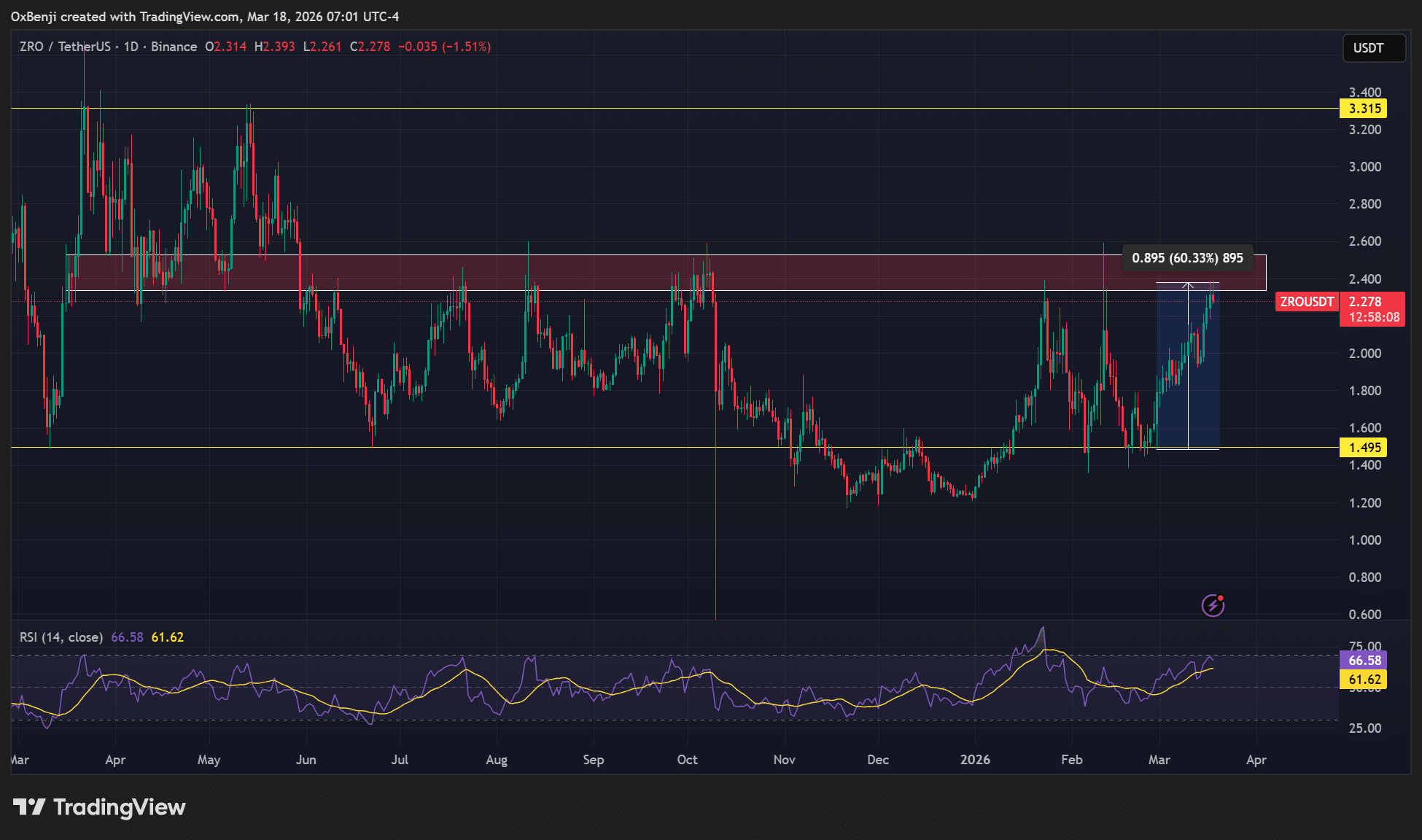
尽管如此,ZRO已从1.49美元的低点上涨了60%,并触及2.5美元,这是自2025年下半年以来的关键阻力区。最近在1月和2月的复苏尝试均在该阻力位(红色)被拒绝。
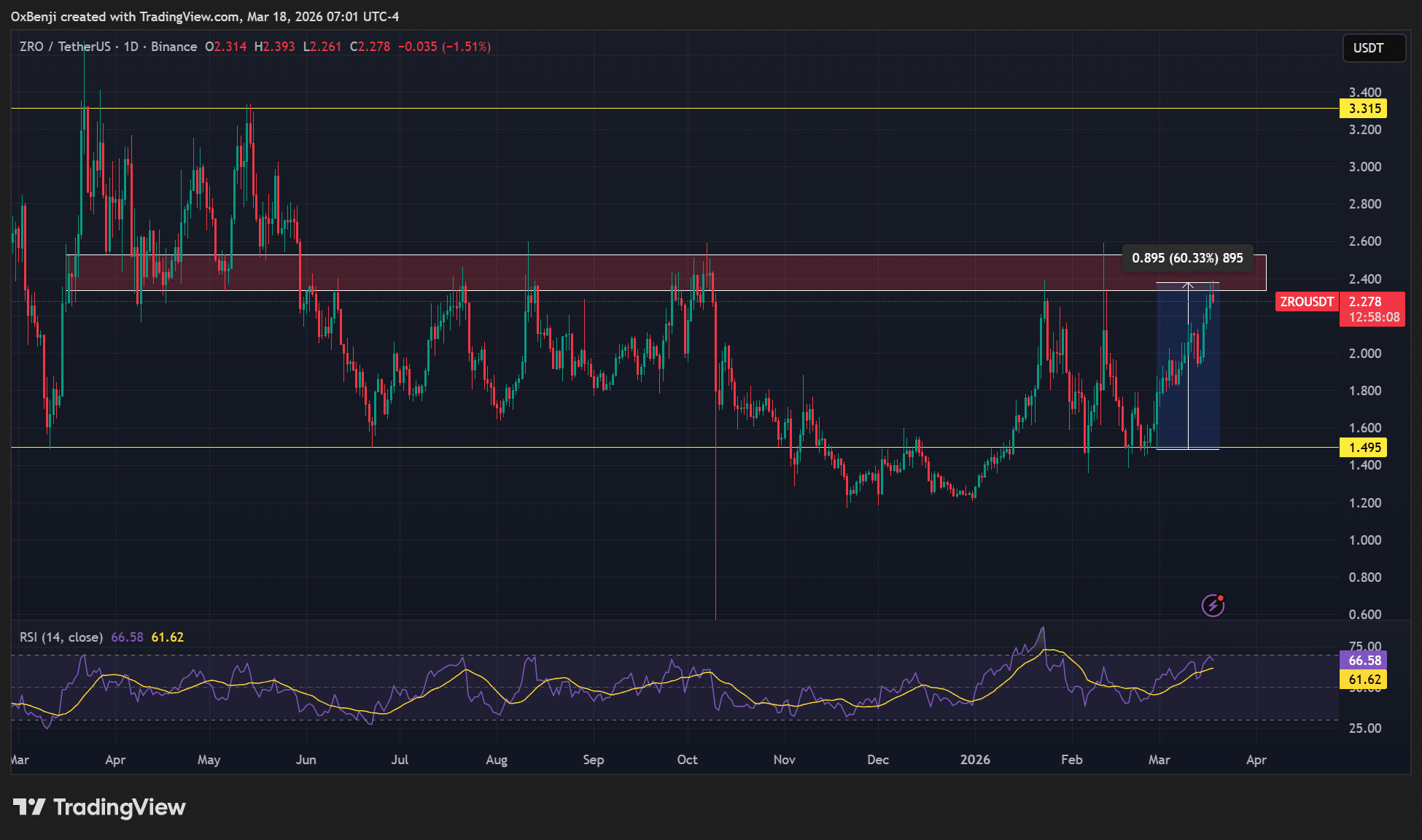
来源:ZRO/USDT, TradingView

如果趋势重演,后期买家可能会等待在1.5美元附近的另一个买入机会。然而,若将2.5美元转化为支撑位,则可能推动涨势至3.3美元。

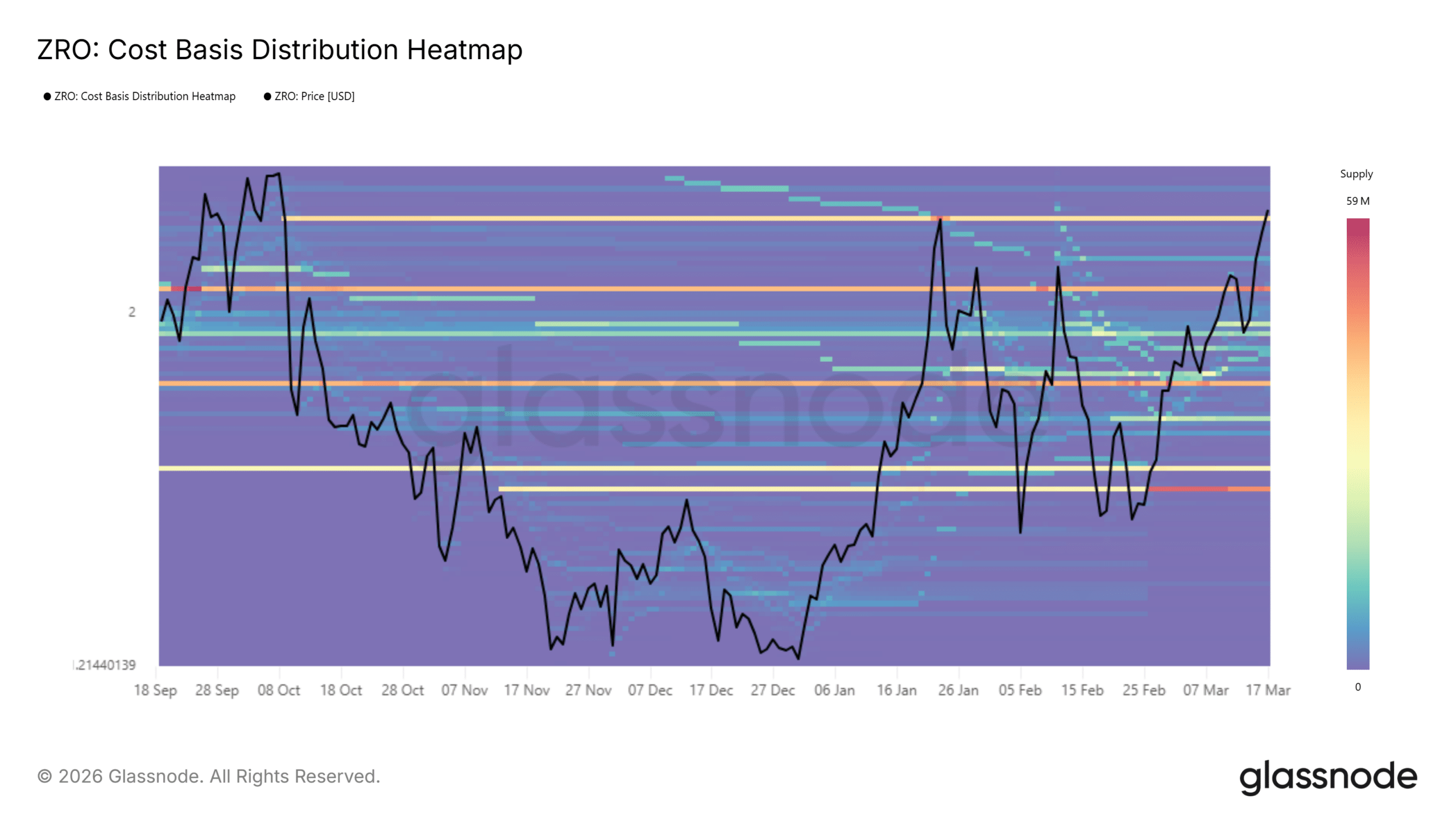
然而,有超过3400万ZRO是在该阻力区购入的,这可能会促使一些已回本的投资者平仓。如果发生这种情况,可能会增加压力并强化该区域作为关键障碍的地位。
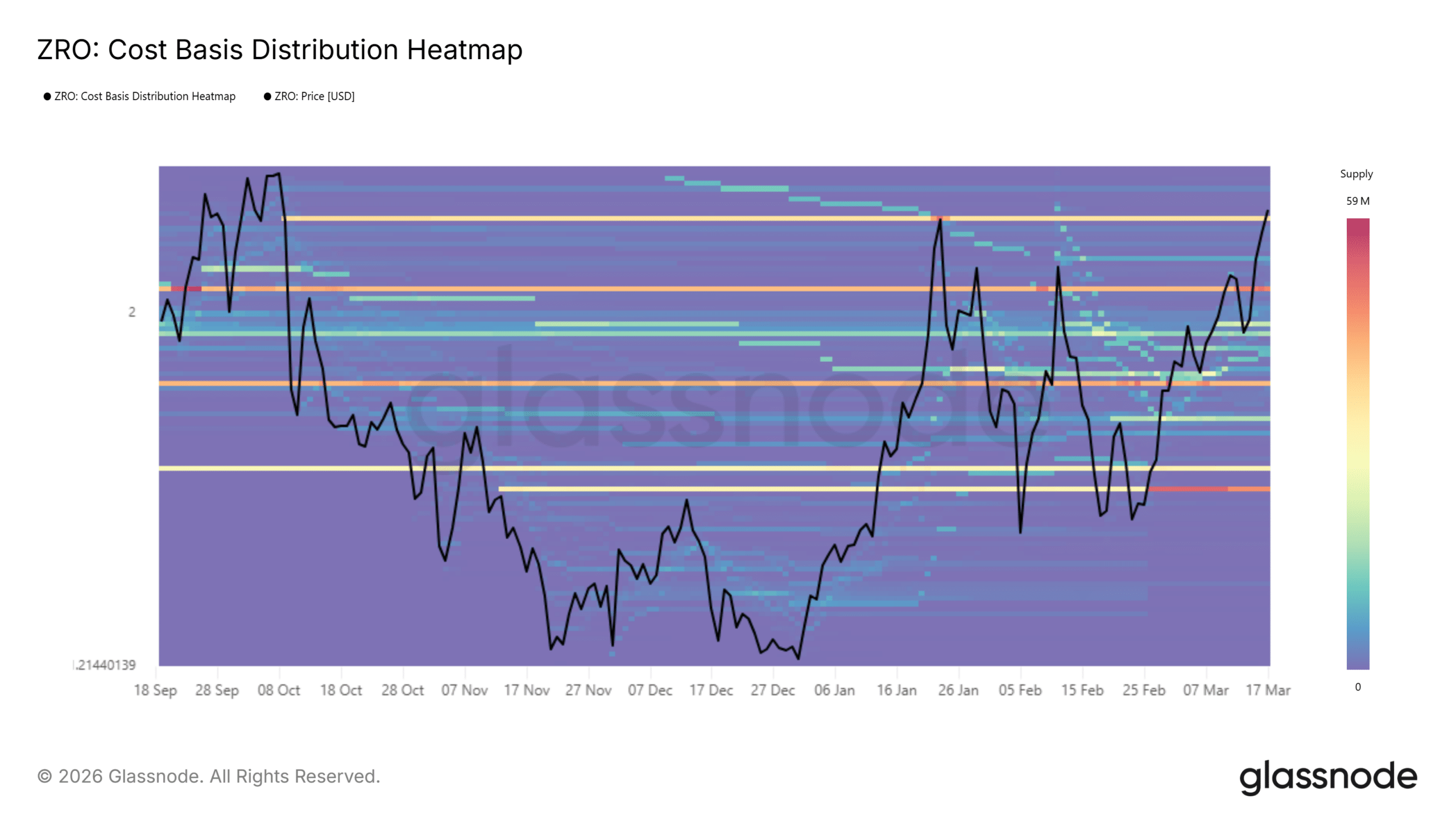
来源:Glassnode

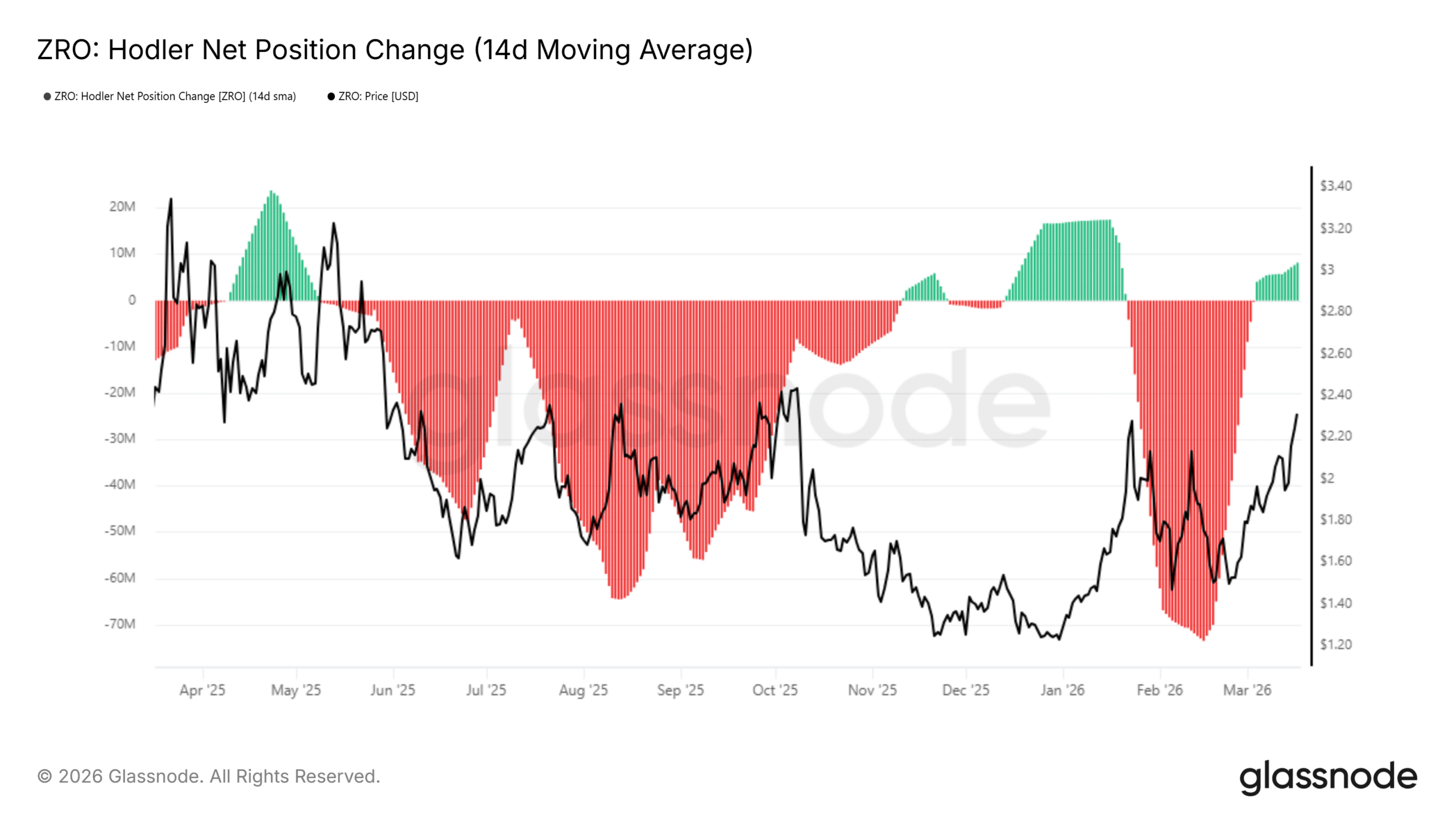
尽管如此,截至发稿时,持有者的抛售压力尚不明显。

根据14日平均持有者净头寸变化,投资者仍在持有并增持其储备,如绿色柱状图所示。
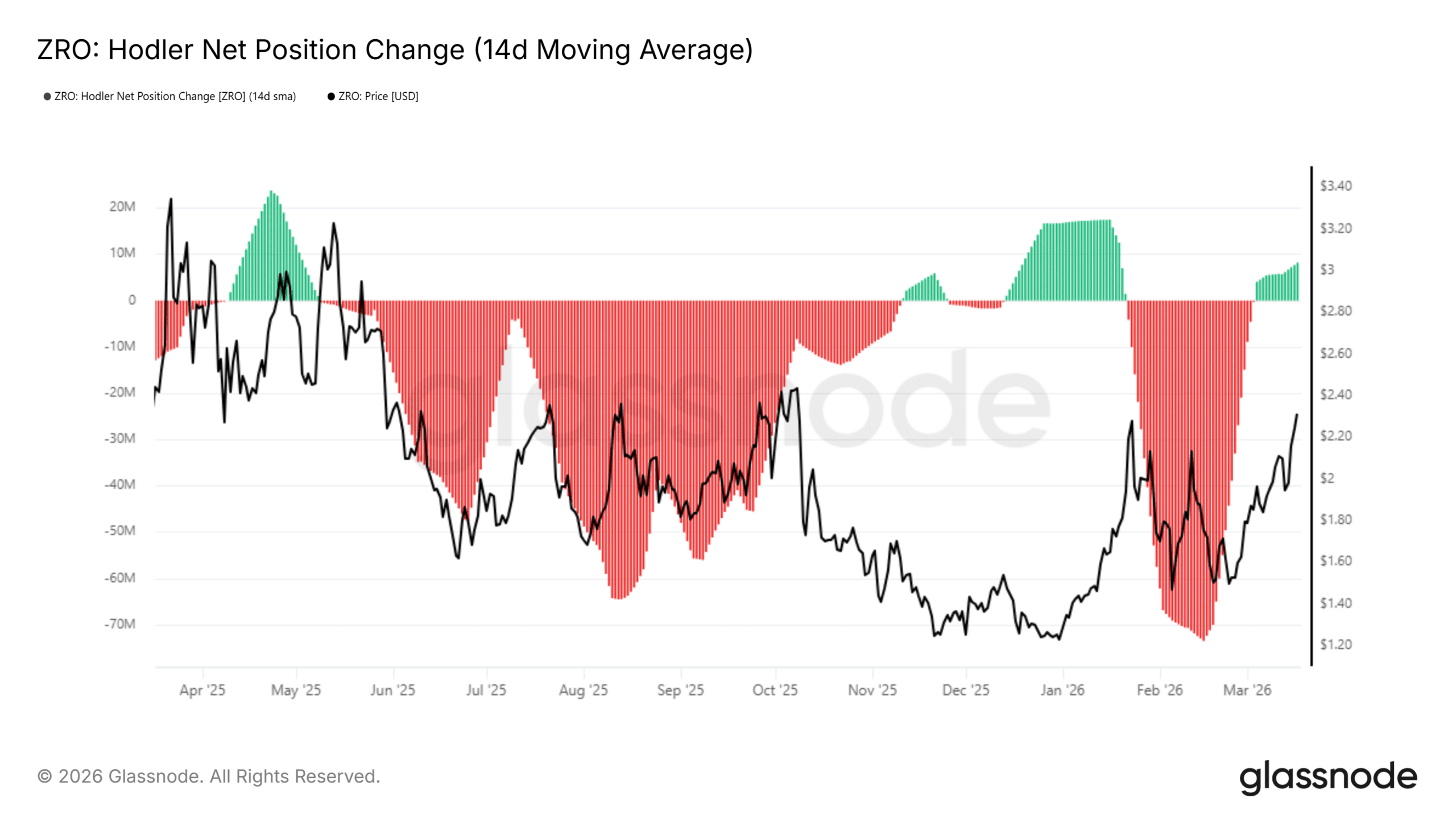
来源:Glassnode

然而,如果该指标变红,则表明持有者已开始抛售。这样的举动可能会进一步强化2.5美元作为多头延续涨势需要克服的关键障碍。

最终总结

  • 一位神秘巨鲸已收购了ZRO总流通供应量的2.6%,但LayerZero否认与该投资者有任何关联。
  • 2.5美元水平自2025年以来一直是一个障碍,如果没有近期的催化剂,可能会阻碍ZRO的复苏。

Criptos en tendencia

Preguntas relacionadas

QLayerZero的CEO Bryan Pellegrino对神秘鲸鱼购买大量ZRO代币的行为有何回应?

ABryan Pellegrino否认认识这位投资者,并强调LayerZero对所有基金和机构的建议是在公开市场上直接购买ZRO,而非从实验室或基金会购买,且没有任何特殊交易或折扣。

Q神秘鲸鱼通过什么平台购买了价值4750万美元的ZRO代币?

A根据Nansen的数据,神秘鲸鱼通过9个钱包在Coinbase Prime上购买了这些ZRO代币,所有资金均来自单一来源。

QZRO代币在2025年下半年以来的关键阻力位是多少?

AZRO代币的关键阻力位是2.5美元,自2025年下半年以来该水平一直是一个重要的障碍。

QLayerZero的Zero链预计何时上线?

AZero链预计在2026年秋季上线。

Q根据Glassnode的数据,ZRO持有者的净头寸变化目前显示什么趋势?

A根据14天平均持有者净头寸变化,投资者仍在持有并增加其ZRO储备,表现为绿色条形图,尚未出现明显的抛售压力。

Lecturas Relacionadas

Goldman Sachs: July Smashes Through Crowded Trades, U.S. Stock Bull Market Not Broken but Harder to Navigate

Goldman Sachs: July Sees Crowded Trades Unwound, U.S. Bull Market Intact but Getting Tougher. The U.S. stock market in July did not see an index-level crash, but rather a significant unwinding of speculative positions. While the S&P 500 remained stable—trading within a narrow 3.5% range and staying within 2% of its high—underlying market dynamics were volatile. Heavily crowded trades, particularly in high-momentum tech, AI-linked stocks, and Asian strategies, faced severe pressure and forced deleveraging. Data indicates this was a meaningful cleanse, not a minor adjustment. Global tech exposure saw its largest sell-off in over five years, leverage in Korean equity ETFs plummeted, and Goldman's prime brokerage recorded the largest gross exposure reduction since late 2022. Leverage on momentum factors among fundamental long/short clients fell to the 28th percentile of its one-year range. The AI trade narrative shifted from pure potential to a focus on tangible returns. While Meta failed to show clear AI monetization, Microsoft and Amazon provided evidence that massive capital expenditure is translating into scalable revenue and product growth, preventing a blanket sell-off of the AI sector. The Federal Reserve's more opaque communication style and volatility in long-end Treasury yields have introduced new friction, particularly for rate-sensitive growth and tech stocks. The broader outlook for U.S. equities remains favorable, supported by a strong economy, robust earnings, and substantial AI capital expenditure. However, risk/reward is no longer cheap, and the market's upward elasticity has weakened. The Nasdaq 100's trajectory—up 12% year-to-date despite significant pullbacks—illustrates that the bull trend persists but the path is becoming more difficult. The key lesson from July is that the market no longer rewards crowded, highly leveraged trades, requiring more disciplined and liquid portfolio approaches.

marsbitHace 8 min(s)

Goldman Sachs: July Smashes Through Crowded Trades, U.S. Stock Bull Market Not Broken but Harder to Navigate

marsbitHace 8 min(s)

Interview with Robinhood Executive: Meme + Tokenized US Stocks as "Barbell" Customer Acquisition Strategy, All Business Lines Achieve Hundreds of Millions in Revenue

Interview with Robinhood executive Johann Kerbrat reveals the company's "barbell" customer acquisition strategy for its new Robinhood Chain, combining meme tokens with tokenized stocks. Three weeks after mainnet launch, the chain has seen over $3B in weekly DEX volume and 105M transactions. Kerbrat explains the logic behind the permissionless chain: meme tokens attract DeFi users, while tokenized real-world assets (RWA), currently over 90 US stocks and ETFs accessible in 120+ countries, serve global users. The goal is to bring Robinhood's 27 million funded accounts on-chain by simplifying DeFi with a user-friendly interface, exemplified by features like Robinhood Earn which offers yield without requiring wallet management. Built on Arbitrum's technology stack for its speed, low cost, and Ethereum's security, the chain focuses on financial products like Earn, spot trading, and perpetuals. Kerbrat downplays direct competition with platforms like Base, emphasizing the goal of expanding the overall market for on-chain assets. He details selective partnerships (e.g., Morpho, Lighter) based on compliance, unique UX, and differentiation. While regulatory clarity is pending for US perpetuals, the expansion continues via Bitstamp in Europe. Finally, Kerbrat positions Robinhood as a "super app" integrating stocks, options, crypto, banking, and AI trading, with all major business lines generating hundreds of millions in revenue. For the chain, current priority is driving adoption over maximizing gas fee revenue.

marsbitHace 2 hora(s)

Interview with Robinhood Executive: Meme + Tokenized US Stocks as "Barbell" Customer Acquisition Strategy, All Business Lines Achieve Hundreds of Millions in Revenue

marsbitHace 2 hora(s)

Fidelity Q3 Report: BTC, ETH, and SOL Continue to Build Bottoms; How Much Further Will This Crypto Bear Market Go?

Fidelity's Q3 Crypto Signal Report analyzes the current bear market, noting Bitcoin (BTC), Ethereum (ETH), and Solana (SOL) are in a prolonged bottoming phase. Key indicators like the weighted Net Unrealized Profit/Loss (NUPL) have turned negative (-0.01), signaling the market is slightly below its aggregate cost basis, with BTC acting as the primary stabilizing asset. BTC's dominance has risen to 68%, indicating a lack of capital rotation to other digital assets. Performance has been weak across the board, with BTC, ETH, and SOL down significantly year-to-date. Market sentiment is depressed, exacerbated by substantial outflows from spot ETPs and a challenging macro environment. The report compares the current ~203-day downtrend to historical ~300-day bottoming cycles, suggesting the process may be two-thirds complete, with late 2026 as a potential timeframe to monitor. For Bitcoin, NUPL at 0.09 indicates cautious sentiment, while momentum signals remain negative. The Yardstick metric points to potential undervaluation relative to network security (hashrate). Ethereum's NUPL is deep in the "capitulation" zone at -0.43, a historically positive signal for future returns, though its momentum and network fee revenue are negative. Solana shows the deepest NUPL at -0.72 but demonstrates relative resilience in on-chain activity and stablecoin transfer volume. The report concludes that while several metrics are near historical capitulation levels, a definitive market bottom has not yet been established. The path forward likely involves continued consolidation, with BTC's relative strength and fundamental on-chain usage for ETH and SOL providing key areas for investor observation.

marsbitHace 2 hora(s)

Fidelity Q3 Report: BTC, ETH, and SOL Continue to Build Bottoms; How Much Further Will This Crypto Bear Market Go?

marsbitHace 2 hora(s)

Trading

Spot

Artículos destacados

Cómo comprar ZRO

¡Bienvenido a HTX.com! Hemos hecho que comprar LayerZero (ZRO) sea simple y conveniente. Sigue nuestra guía paso a paso para iniciar tu viaje de criptos.Paso 1: crea tu cuenta HTXUtiliza tu correo electrónico o número de teléfono para registrarte y obtener una cuenta gratuita en HTX. Experimenta un proceso de registro sin complicaciones y desbloquea todas las funciones.Obtener mi cuentaPaso 2: ve a Comprar cripto y elige tu método de pagoTarjeta de crédito/débito: usa tu Visa o Mastercard para comprar LayerZero (ZRO) al instante.Saldo: utiliza fondos del saldo de tu cuenta HTX para tradear sin problemas.Terceros: hemos agregado métodos de pago populares como Google Pay y Apple Pay para mejorar la comodidad.P2P: tradear directamente con otros usuarios en HTX.Over-the-Counter (OTC): ofrecemos servicios personalizados y tipos de cambio competitivos para los traders.Paso 3: guarda tu LayerZero (ZRO)Después de comprar tu LayerZero (ZRO), guárdalo en tu cuenta HTX. Alternativamente, puedes enviarlo a otro lugar mediante transferencia blockchain o utilizarlo para tradear otras criptomonedas.Paso 4: tradear LayerZero (ZRO)Tradear fácilmente con LayerZero (ZRO) en HTX's mercado spot. Simplemente accede a tu cuenta, selecciona tu par de trading, ejecuta tus trades y monitorea en tiempo real. Ofrecemos una experiencia fácil de usar tanto para principiantes como para traders experimentados.

224 Vistas totalesPublicado en 2024.12.10Actualizado en 2026.06.02

Cómo comprar ZRO

Discusiones

Bienvenido a la comunidad de HTX. Aquí puedes mantenerte informado sobre los últimos desarrollos de la plataforma y acceder a análisis profesionales del mercado. A continuación se presentan las opiniones de los usuarios sobre el precio de ZRO (ZRO).

活动图片