Seeker is up 40% in 24 hours: Will profit-taking trap SKR bulls?

ambcryptoPublicado a 2026-02-24Actualizado a 2026-02-24

Resumen

Solana Mobile's Seeker token (SKR) surged over 70% in 24 hours, surpassing a $100 million market cap, following its listing on the Upbit exchange. The listing, which introduced SKR trading pairs with BTC, USDT, and KRW, led to a 429% increase in daily trading volume, particularly attracting Asian market traders. The price broke out of a falling trend channel, rallying from $0.19 to above $0.26. Key indicators like the Cumulative Volume Delta and Chaikin Money Flow showed strong buying pressure and capital inflow. However, profit-taking emerged as a significant risk, with the Long/Short Ratio dropping sharply, indicating traders were selling to secure gains. This suggests the rally may be unsustainable and could face a pullback.

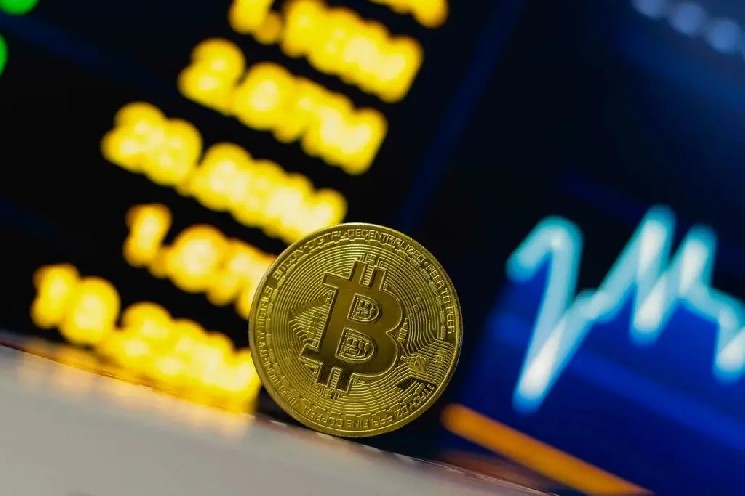
Solana Mobile launched a token for their second-generation Web3 smartphone, Seeker [SKR]. The token has been performing relatively well, surpassing a market cap of $100 million.

This milestone pushed it to be among the top 200 cryptos by market cap. In the past 24 hours, Seeker led this category in daily gains after surging over 70%. The spike erased the weekly losses and pushed the gains to 48%.

But what is behind this sudden surge after declining since the middle of this month?

What drove Seeker’s rally?

Seeker rallied this high due to an uptick of more than 429% in daily trading volume. The uptick came as a result of the Upbit listing, which exposed Seeker to Korean traders and, at large, the Asian market.

Upbit exchange will support three SKR trading pairs featuring Bitcoin [BTC], USDT, and KRW as quoted currencies. This resulted in increased speculative trading exposure for the Seeker cryptocurrency.

This high volume contradicted a falling crypto market. However, can the altcoin sustain the high volume, or will it be another ‘pump and dump’ scenario?

SKR price action breaks out

The charts showed that the altcoin had broken above a falling trend channel, which had confined the price for about 12 days. Price rallied aggressively from $0.19 to above $0.26 in just an hour of launching on Upbit.

The Cumulative Volume Delta (CVD), which notes the difference in buying and selling pressure, was bullish. When writing, the CVD was at 369 million SKR, suggesting massive resultant buying.

This positive capital inflow to Seeker crypto was evident in the Chaikin Money Flow (CMF), whose reading was at 0.47. The indicator showed capital inflow started the previous day, just before the listing.

Historically, most exchange listings end up retracing. That’s why it is always worth locking in the profits, especially in sudden price changes like this one.

However, the market’s widespread profit-taking would prevent the rally from continuing.

Traders’ profit-taking risks rally sustainability

Apart from usual pullbacks after sharp rallies, profit-taking could also curtail this move from continuing. As per CoinGlass data, SKR traders flipped the Long/Short Ratio red just after the price hit $0.030.

The ratio had dropped from its daytime peak of 1.43 to 0.84 at the time of writing. This meant that traders were selling in fear of giving back the gains.

On the Binance Futures market, the Long/Short Ratio dipped as low as 0.58. This means most of the profit-taking happened across the globe more than in the Asian market, which drove this rally.

Still, Seeker was down about 17% this month, indicating there were still traders seeing losses.


Final Summary

  • Seeker rallies 70% after the Upbit listing and technical breakout.
  • SKR price faced the risk of a rally pause as traders intensified profit-taking.

Criptos en tendencia

Preguntas relacionadas

QWhat was the main reason behind Seeker's (SKR) significant price surge in the past 24 hours?

AThe main reason for the surge was its listing on the Upbit exchange, which led to a 429% increase in daily trading volume and exposed the token to Korean and broader Asian markets.

QWhat key technical indicator showed a bullish signal for SKR's price action?

AThe Cumulative Volume Delta (CVD) was bullish, reading 369 million SKR, indicating massive resultant buying pressure.

QWhat is the primary risk to the sustainability of SKR's current rally, according to the article?

AThe primary risk is widespread profit-taking by traders, as evidenced by the Long/Short Ratio dropping significantly, which could prevent the rally from continuing.

QWhich exchange listing supported SKR trading pairs with BTC, USDT, and KRW?

AThe Upbit exchange supported SKR trading pairs with Bitcoin (BTC), Tether (USDT), and the South Korean Won (KRW).

QWhat does the Chaikin Money Flow (CMF) reading of 0.47 indicate for the Seeker cryptocurrency?

AA CMF reading of 0.47 indicates a strong capital inflow into the Seeker cryptocurrency, which began the day before its Upbit listing.

Lecturas Relacionadas

Jensen Huang's Daughter: From Chef to an $8 Million Annual Salary

Madison Huang, daughter of NVIDIA founder Jensen Huang, recently made a rare public appearance in Beijing during the 2026 World Robot Conference. As the Senior Director of Product and Technology Marketing for NVIDIA's Physical AI Platform, with an annual salary of approximately $1.2 million, her visit focused on evaluating leading Chinese robotics companies like UBTech, Unitree, and others. This highlights NVIDIA's strategic interest in the burgeoning Chinese robotics ecosystem, a key battleground for the development of Physical AI—technology that enables machines to understand and interact with the physical world. Huang's career path is unconventional. Initially pursuing her passion, she studied culinary arts, worked as a chef, and later held a marketing role at LVMH. She joined NVIDIA as an intern in 2020 after completing an MBA, quickly rising through the ranks. Her brother, Spencer Huang, followed a similar path, closing a cocktail bar he co-founded to also join NVIDIA, where he now works on robotics software. Jensen Huang has publicly addressed nepotism concerns, humorously noting that some "second-generation" employees outperform their parents. The conference itself underscored China's vibrant robotics sector, marked by Unitree's recent blockbuster IPO and a pipeline of companies preparing to go public. While hardware development and manufacturing are advancing rapidly, industry leaders like Wang Xingxing of Unitree point to the next critical challenge: developing the "brain" or AI that allows robots to perform diverse, unseen tasks based on simple instructions. With massive manufacturing scale and diverse real-world testing scenarios, China is positioned as a central player in the global race to define the future of robotics.

marsbitHace 2 hora(s)

Jensen Huang's Daughter: From Chef to an $8 Million Annual Salary

marsbitHace 2 hora(s)

He Gave Wang Xingxing the First 2 Million, Now Serves as Chairman for the Next 'Unitree'

On August 19, 2024, Unitree Robotics, China's "first humanoid robotics stock," went public. Its founder, Wang Xingxing, started a decade ago with his self-developed XDog. In 2016, at a critical funding juncture, he received his first angel investment of 2 million RMB from Yin Fangming. This bet has since yielded a return of over 140 times. Yin Fangming is more than just a key investor. He was a co-founder of the AI robotics company ROOBO, whose own venture ultimately struggled. This firsthand experience with the hardware challenges in robotics gave him unique insight when backing Unitree, a company renowned for its hardware R&D and cost control. While his own company faltered, Yin continued investing shrewdly. He partially cashed out some Unitree shares early, reinvesting the proceeds into sectors like energy (e.g., solid-state battery firm TaiLan) and commercial aerospace (e.g., small launch vehicle developer XianDeng Aerospace). However, his most significant move after Unitree is his deep involvement with Galaxy General, a leading embodied AI unicorn. In July 2024, Yin stepped from behind the scenes to officially become its Chairman, indicating a role far beyond a typical investor. This comes as Galaxy General is viewed as preparing for future capital moves. Yin's career has consistently been ahead of the curve—from mobile internet to AI and robotics. Known for his foresight and low profile, he declined an interview for this story, offering only a statement encouraging support for visionary entrepreneurs like Wang Xingxing.

marsbitHace 2 hora(s)

He Gave Wang Xingxing the First 2 Million, Now Serves as Chairman for the Next 'Unitree'

marsbitHace 2 hora(s)

Coldcard Theft Reflection: Source Code Visibility Does Not Equal Security

The article examines the open-source vs. closed-source debate in crypto, prompted by a theft of over $100M in Bitcoin from Coldcard hardware wallets. It clarifies key terminology: true "Free and Open Source Software" (FOSS) grants four essential freedoms (use, study, share, modify), while "source available" code, like Coldcard's firmware, may have usage restrictions. The piece argues that visible source code alone does not guarantee security; actual safety depends on the economic incentives for thorough, ongoing review by skilled individuals. Using Bitcoin Core as a model, the article describes a successful, transparent open-source development culture built on public review and consensus. It contrasts this with the Coldcard case, where a critical bug in a lightly-reviewed, source-available library went undetected for years, highlighting a "tragedy of the commons" scenario where assumed but absent scrutiny creates vulnerability. The economics of licensing are crucial: restrictive licenses can limit the pool of motivated commercial reviewers. Finally, the article explores AI's impact. It cites the Bitcoin Red Team's use of AI to rapidly audit codebases and find vulnerabilities at scale, demonstrating a powerful new tool for security. However, AI also floods projects with low-quality code, straining maintainers. The piece concludes that in high-stakes crypto, only well-audited projects—whether open or closed-source—can withstand evolving threats, with AI both challenging and aiding security practices.

marsbitHace 2 hora(s)

Coldcard Theft Reflection: Source Code Visibility Does Not Equal Security

marsbitHace 2 hora(s)

Trading

Spot

Artículos destacados

Cómo comprar SKR

¡Bienvenido a HTX.com! Hemos hecho que comprar Seeker (SKR) sea simple y conveniente. Sigue nuestra guía paso a paso para iniciar tu viaje de criptos.Paso 1: crea tu cuenta HTXUtiliza tu correo electrónico o número de teléfono para registrarte y obtener una cuenta gratuita en HTX. Experimenta un proceso de registro sin complicaciones y desbloquea todas las funciones.Obtener mi cuentaPaso 2: ve a Comprar cripto y elige tu método de pagoTarjeta de crédito/débito: usa tu Visa o Mastercard para comprar Seeker (SKR) al instante.Saldo: utiliza fondos del saldo de tu cuenta HTX para tradear sin problemas.Terceros: hemos agregado métodos de pago populares como Google Pay y Apple Pay para mejorar la comodidad.P2P: tradear directamente con otros usuarios en HTX.Over-the-Counter (OTC): ofrecemos servicios personalizados y tipos de cambio competitivos para los traders.Paso 3: guarda tu Seeker (SKR)Después de comprar tu Seeker (SKR), guárdalo en tu cuenta HTX. Alternativamente, puedes enviarlo a otro lugar mediante transferencia blockchain o utilizarlo para tradear otras criptomonedas.Paso 4: tradear Seeker (SKR)Tradear fácilmente con Seeker (SKR) en HTX's mercado spot. Simplemente accede a tu cuenta, selecciona tu par de trading, ejecuta tus trades y monitorea en tiempo real. Ofrecemos una experiencia fácil de usar tanto para principiantes como para traders experimentados.

500 Vistas totalesPublicado en 2026.01.24Actualizado en 2026.06.02

Cómo comprar SKR

Discusiones

Bienvenido a la comunidad de HTX. Aquí puedes mantenerte informado sobre los últimos desarrollos de la plataforma y acceder a análisis profesionales del mercado. A continuación se presentan las opiniones de los usuarios sobre el precio de SKR (SKR).

活动图片