JustLend DAO's Second JST Buyback and Burn: Cumulative 10.96% of Total Supply Destroyed, Accelerating Entry into a New Era of Value Growth

marsbitPublicado a 2026-01-16Actualizado a 2026-01-16

Resumen

JustLend DAO has executed its second major JST token buyback and burn, permanently removing 525 million JST (5.3% of total supply) from circulation. This brings the cumulative burned amount to over 1.08 billion JST, representing 10.96% of the total supply, significantly accelerating JST’s deflationary trajectory. The burn was funded by $10.19 million from Q4 2025 net profits and $10.34 million from accumulated reserve earnings, demonstrating the protocol’s strong financial health and sustainable revenue model. Key drivers include JustLend’s TVL surpassing $7.08 billion, robust growth in sTRX staking (over 9.3 billion TRX staked), and widespread adoption of GasFree smart wallets, which have facilitated over $46 billion in transactions and saved users $36.25 million in fees. Additionally, USDD’s multi-chain ecosystem reached a milestone with TVL exceeding $1 billion, further supporting JST’s value accrual mechanism. This burn reinforces JST’s transition from a governance token to a yield-backed asset tied to ecosystem cash flow. Market response has been positive, with JST’s market cap breaking $400 million and trading volume rising 21.92% amid a 10.82% monthly price increase. The recurring burn mechanism establishes a deflationary model that enhances scarcity, governance weight per token, and long-term value alignment with holders, setting a new standard for sustainable tokenomics in DeFi.

JustLend DAO Launches Second Round of Buyback and Burn: 525 Million JST Permanently Destroyed, Deflation Engine Continues to Accelerate

525 Million JST Burn Executed! JustLend DAO's Deflation Mechanism Fulfilled Again

Summary: Profit returns and transparent burns form a closed loop for JST value growth, providing a new paradigm for the DeFi market driven by real yield for token value.

January 15, 2026 - The JST token has officially completed its second large-scale buyback and burn. This burn action not only demonstrates the project's firm commitment to its deflation mechanism but also, with the scale of 525,000,000 JST burned (5.3% of the total supply), showcases the strong profitability and financial health of the JUST ecosystem to the entire cryptocurrency market.

According to the official JustLend DAO announcement, the estimated value corresponding to this burn exceeds $21 million USD. Combined with the amount from the first JST burn, the cumulative number of JST tokens burned has reached 1,084,890,753, accounting for 10.96% of the total supply. This means that in less than three months, JST has achieved the permanent removal of over one-tenth of its total supply, a remarkable deflation speed.

From a broader perspective, this burn marks a fundamental evolution in JST's value narrative. It is transitioning from a governance token to an equity asset anchored to the growth of the ecosystem's cash flow. This process not only enhances the scarcity and value foundation of the JST token but also provides a clear, traceable, practical path for the decentralized finance sector—one driven by real yield for token value—demonstrating a transparent and sustainable new paradigm for deflation.

Strong JustLend DAO Ecosystem Performance Forms the Financial Cornerstone for Large-Scale Buybacks

Such a large-scale buyback and burn necessarily requires a solid financial foundation as support. The announcement clearly reveals the dual pillars of the funding source: $10,192,875 came from JustLend DAO's net profit in Q4 2025, while another $10,340,249 originated from the project's accumulated retained earnings reserve. These two figures are, in themselves, the most powerful proof of performance. They collectively point to one core fact: the JustLend DAO ecosystem not only possesses strong immediate profitability but also boasts a robust financial structure and sustainable cash flow, which is the solid foundation supporting its commitment to buybacks and its deflation strategy.

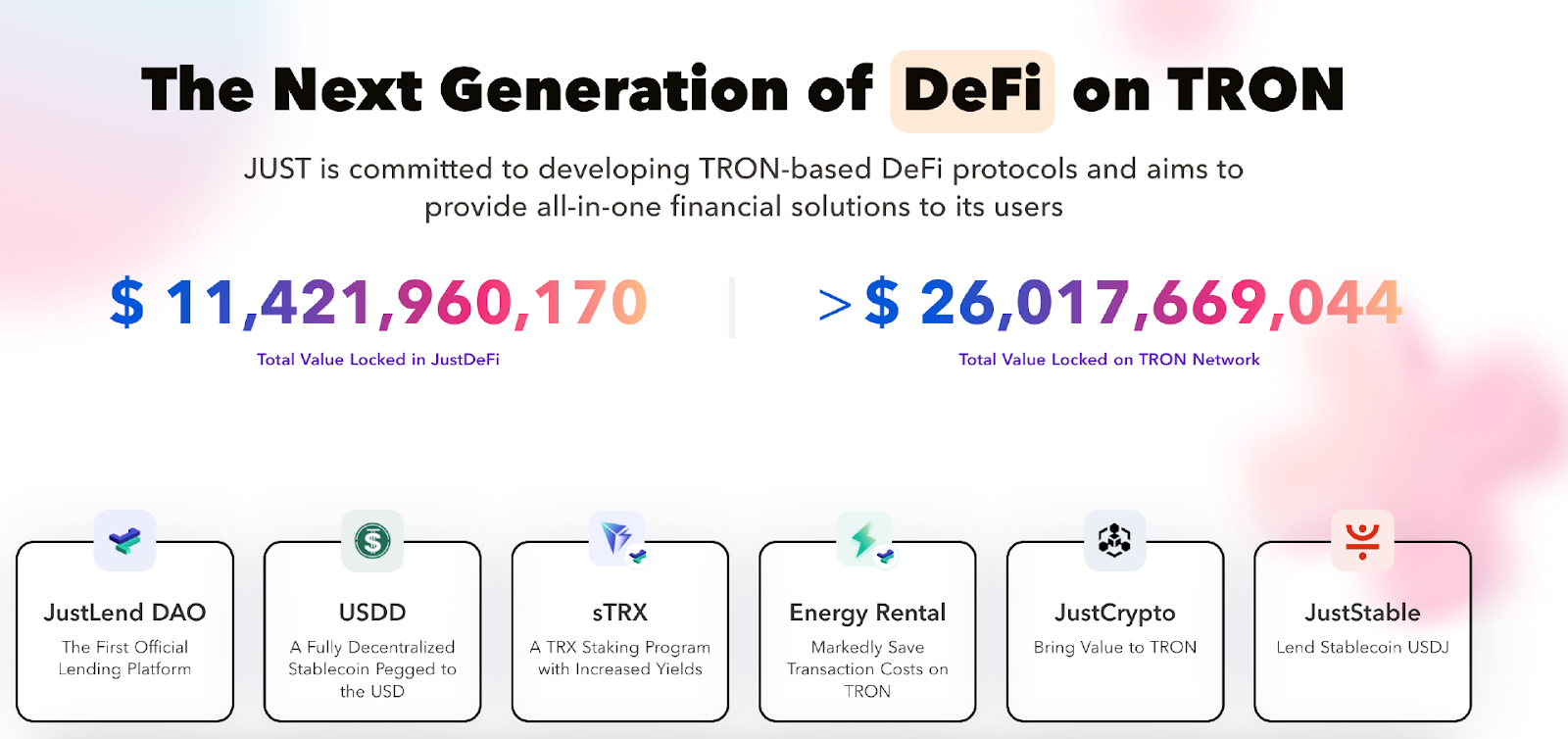
A deep dive into JustLend DAO's Q4 2025 performance reveals clear growth trajectories. First, as the flagship lending protocol of the JUST ecosystem, JustLend DAO benefits from the continuous improvement of the TRON infrastructure, with its Total Value Locked (TVL) breaking through the $7.08 billion mark in the fourth quarter, consistently ranking among the top three in the lending market, and the lending activity in its SBM market also climbed to a new cycle high.

It is worth noting that the source of the $10,340,249 in retained earnings, which forms a significant part of this buyback fund, can be traced back to the revenue generated from the reserve capital deposited into the SBM USDT market during the first JST buyback. The增值 process of this capital is itself the most direct proof of the SBM market's strong profitability. It demonstrates JustLend DAO's sophisticated financial operation model: strategically redeploying ecological profits for regenerative use within the protocol, allowing them to continue "self-generating blood," thereby providing an endogenous, sustainable source of funding for subsequent value returns.

On this basis, JustLend DAO's revenue structure shows a trend of diversification. While the traditional lending market, its fundamental business, maintains steady growth, JustLend DAO has innovatively built a product matrix including sTRX (Staked TRX) and Energy Rental, greatly expanding the boundaries and depth of its value capture.

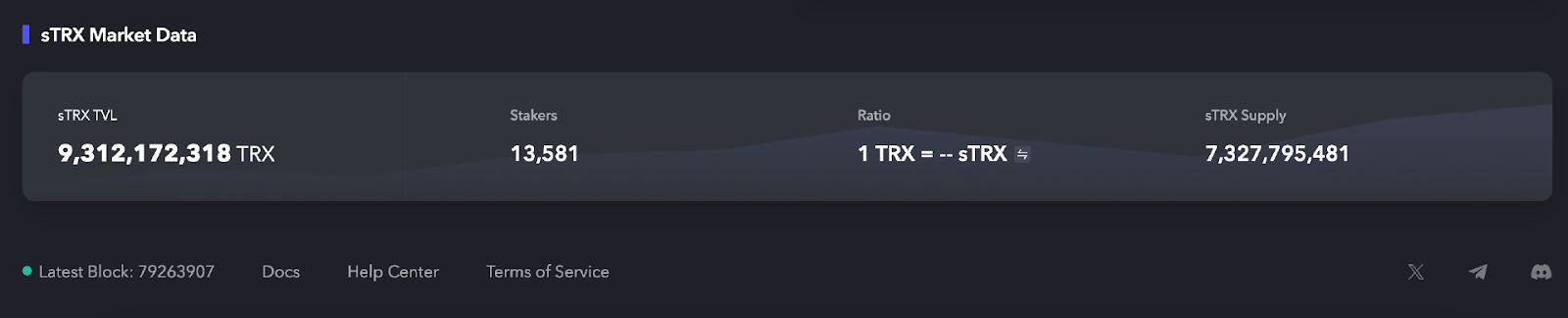
Among these, the sTRX service allows users to stake TRX to earn rewards while still flexibly participating in other DeFi activities. This innovative design significantly improves capital efficiency and user stickiness. As of January 15th, the platform's TRX staking volume has surpassed 9.3 billion tokens. This staggering figure not only reflects the community's high recognition of the sTRX product but also brings considerable and sustainable service revenue.
At the same time, the "Energy Rental" service, designed to reduce user on-chain operation costs, has also demonstrated strong market appeal through active rate optimization. Since September 2025, the base fee rate for this service was significantly reduced from 15% to a more competitive 8%. The fee optimization directly stimulated market demand and transaction frequency, thereby creating steady incremental revenue for the protocol through more active leasing business.

While the core product matrix continues to exert force, JustLend DAO, focusing on lowering the participation barrier for general users, innovatively launched the GasFree smart wallet in March 2025. This feature completely breaks the long-standing barrier for new users of having to pre-hold native tokens (TRX) to pay transaction fees. It allows users to deduct and pay the required network fees directly from the token assets they are transferring (e.g., USDT). This design not only achieves ultimate operational convenience but also fundamentally broadens the accessibility of blockchain finance.

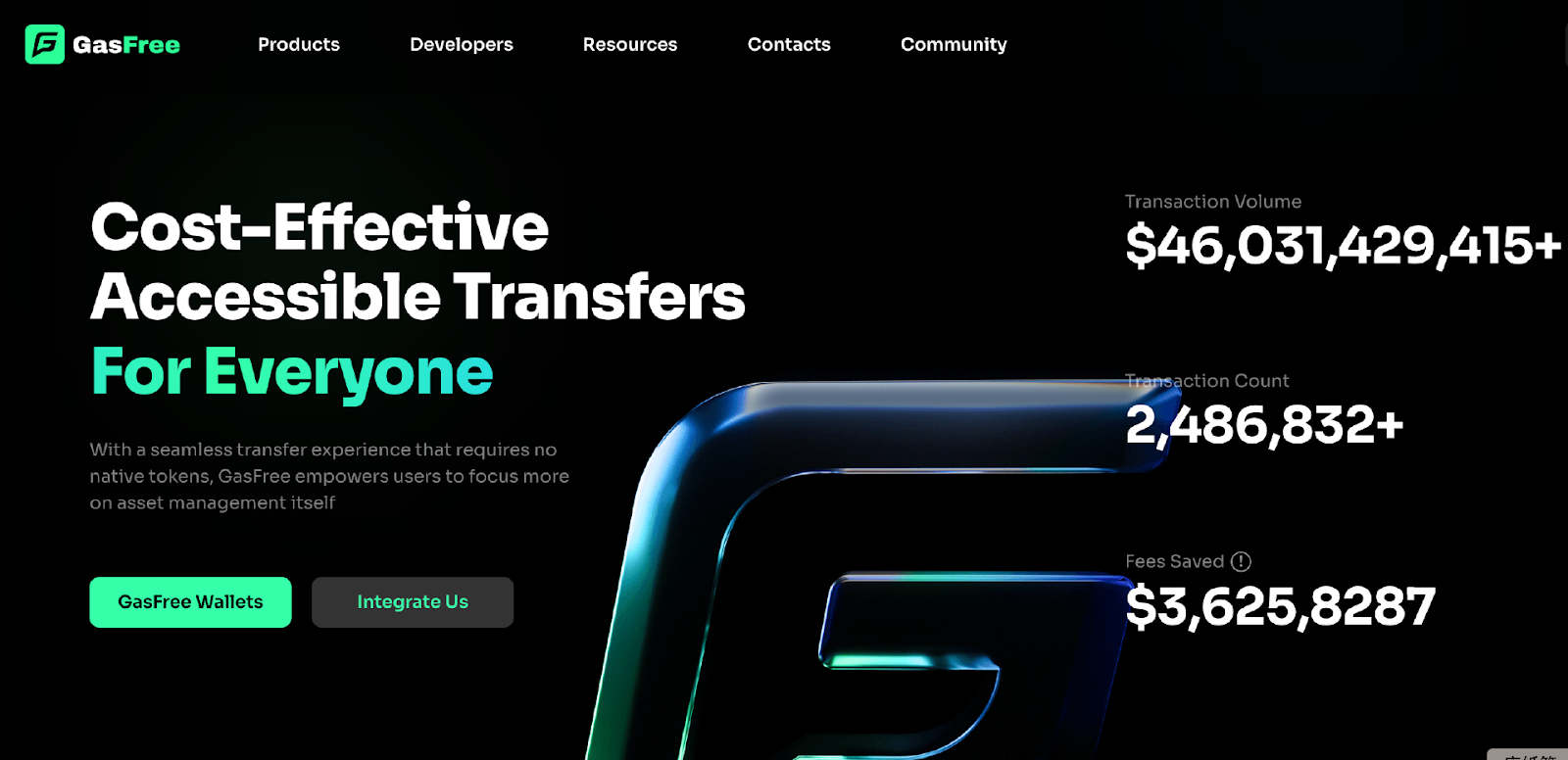
To accelerate the adoption of this innovative feature, JustLend DAO simultaneously launched a highly attractive 90% transfer fee subsidy campaign. With this support, users using the GasFree function for USDT transfers only need to pay an extremely low fee of about 1 USDT. This combined strategy quickly ignited market demand. As of January 15th, the total transaction volume driven by the GasFree smart wallet has surpassed $46 billion. This staggering scale not only validates the market's strong desire for a frictionless transaction experience but also directly saved users a cumulative total of over $36.25 million in network fee costs. This innovation, by significantly reducing actual usage costs and cognitive barriers, has introduced massive incremental users and capital flow into the ecosystem, constituting another strong growth pole for the platform's network effects and revenue potential.
Meanwhile, another funding channel in the buyback and burn plan, the incremental revenue from the USDD multi-chain ecosystem (the portion exceeding $10 million), also constitutes a significant source. USDD, as the core decentralized stablecoin of the TRON ecosystem, has seen fruitful results from its multi-chain expansion strategy. It has been successfully deployed on mainstream public chains like Ethereum and BNB Chain, broadening its application scenarios and user base.

Its ecosystem value recently achieved a milestone breakthrough. On January 14th, USDD's TVL historically broke through the $1 billion mark. This means that in less than two months, USDD's TVL scale achieved an astonishing 100% growth, its expansion speed and market acceptance fully confirming the strong momentum and deep asset appeal of this stablecoin in the multi-chain ecosystem. The rapid growth of its TVL and the continued prosperity of its ecosystem significantly enhance the potential scale of this funding channel, providing an anticipated value source for JST's buyback and burn plans in subsequent quarters.

Through deep integration with various DeFi protocols, USDD not only consolidates its peg stability but also creates continuous value inflow for the entire ecosystem. The inclusion of USDD ecosystem's excess income in the JST buyback and burn plan builds a value closed loop of "stablecoin + lending protocol + governance token". In this model, the expansion and prosperity of USDD and JustLend DAO directly power JST's deflation, while the increase in JST's value in turn enhances the attractiveness and cohesion of the entire TRON DeFi ecosystem, creating a powerful internal synergy and value feedback effect.

Deepening Deflation Mechanism: Revolutionary Reshaping of JST's Value Foundation

In summary, the significance of this buyback and burn extends far beyond mere price support; it is triggering a series of profound structural changes. Most fundamentally, it completes the reshaping of JST's value support logic. JST is no longer merely a "utility token" for paying network fees or participating in governance votes; it has evolved into an "equity asset" directly anchored to the cash flow performance of JustLend DAO, USDD, and associated ecosystems.


Through the buyback and burn mechanism, the profit growth of the ecosystem is continuously injected into the value foundation of the JST token. This makes holding JST equivalent to holding an equity certificate that shares in the future profit growth of the ecosystem. On January 8th, CoinMarketCap data showed that JST market cap historically broke through the $400 million mark. This is not just a numerical leap but substantial market recognition of its new positioning. Along with the rising market cap came increased fund activity. On January 8th, its 24-hour trading volume significantly increased by 21.92%, reaching $31.49 million, and its price had also risen steadily by 10.82% over the past month, with a daily increase of 3.1%.

The synchronous expansion of trading volume and market cap at key junctures is not accidental market fluctuation but a clear "vote of confidence" from capital in response to the positive fundamentals of the JUST ecosystem, particularly the profitability and value return mechanism demonstrated by the buyback and burn.

Secondly, the JST buyback and burn also brings substantial增值 in governance power. As the total token supply is irreversibly reduced, the governance weight in the protocol represented by each remaining JST in the market will increase accordingly. This means long-term holders not only enjoy the economic benefits of value appreciation but also see their voice in key community decisions (such as parameter adjustments, new product launches, treasury fund usage, etc.) amplified simultaneously. This design deeply binds the interests of core community members to the long-term success of the protocol, greatly enhancing community stability and sense of participation.

From a broader industry perspective, JST's buyback and burn practice provides a clear, referable new paradigm for token economics in the DeFi field. Removing 10.96% of the total supply through two burns in a very short time not only demonstrates efficient execution but, more profoundly, deeply binds the protocol's financial success to the interests of token holders, thereby setting a benchmark for a virtuous cycle of "value creation - value return".

This model fundamentally shifts the old logic of token value relying on speculative narratives towards a sustainable path driven by the protocol's fundamental cash flow, providing a solid and credible case study for the industry on how to build economic models with substantial value support.

Looking ahead, with quarterly JST buyback and burn becoming the norm, a clear, predictable deflation path has been laid out. The scarcity of JST will be a certain narrative that strengthens over time. Each quarterly report disclosure and the subsequent burn will serve as a catalyst for reassessing its intrinsic value. This burn is not an endpoint but the beginning of a more magnificent chapter of value accumulation. A value revolution, supported by ecological profits and driven by product synergy, has already pressed the accelerator.


Preguntas relacionadas

QWhat was the total amount of JST tokens burned in the second round of JustLend DAO's buyback and burn, and what percentage of the total supply does this represent?

A525,000,000 JST tokens were burned in the second round, representing 5.3% of the total supply.

QWhat are the two main sources of funding for the JST buyback and burn initiative as detailed in the announcement?

AThe two main sources are $10,192,875 from JustLend DAO's net profit in Q4 2025 and $10,340,249 from the project's accumulated reserve earnings.

QWhat significant milestone did the Total Value Locked (TVL) of JustLend DAO achieve in the fourth quarter of 2025?

AJustLend DAO's Total Value Locked (TVL) surpassed $7.08 billion in Q4 2025.

QWhat is the name of the innovative, gas-free smart wallet feature launched by JustLend DAO, and what was the total transaction volume it facilitated by January 15th?

AThe feature is called the GasFree smart wallet, and it had facilitated a total transaction volume exceeding $46 billion by January 15th.

QWhat major milestone did the USDD ecosystem achieve on January 14th, and what does this signify for its growth?

AOn January 14th, the USDD ecosystem's TVL historically broke through the $1 billion mark, signifying a 100% growth in less than two months and demonstrating its rapid expansion and market adoption.

Lecturas Relacionadas

PANews Column Registration and Article Submission Guide

"PANews Column Registration and Submission Guide" provides instructions for users to register as columnists and publish articles on the PANews platform. Key application requirements are emphasized: content should focus on in-depth analysis within Crypto, Web3, blockchain, data, and viewpoints. Content primarily for brand/product introductions will not be approved, and heavily AI-generated content will be rejected. Promotional (PR/soft) content is directed to the business channel. **Registration Process:** * **Web:** Go to the official website footer, click "Apply for Column," and register with a phone number or email (login via verification code, no password). Fill in the column name, description, upload an avatar, and submit links to previously published work. * **Mobile:** Navigate to "My" -> "Contribute & Create" and complete the form. **Article Submission Tutorial:** 1. Log in to the PANews website. 2. Access the "Creator Center" from your personal homepage. 3. Use the editor to create and publish articles. **Video Upload:** The platform supports embedding videos from third-party sites (e.g., Bilibili). Copy the embed code from the source video, use the editor's "Insert/Edit media" button, paste the code under the "Embed" tab, and adjust the display size (recommended: width 100%, height 560px). **PANews Skills (AI Agent Tool):** PANews offers an official AI Agent skill set called PANews Skills, enabling AI tools to query platform content, track trends, and publish column articles directly. It includes three main skills: 1. `panews`: For tracking daily must-read lists, popular articles, and funding news. 2. `panews-creator`: For managing columns, publishing articles, and uploading images. 3. `panews-web-viewer`: For parsing PANews webpages into Markdown. These skills are compatible with various AI Agent tools (OpenClaw, Cursor, Claude Code, ChatGPT, Gemini, etc.). To use the `panews-creator` skill, users must obtain a specific authentication value from the PANews website after logging into their columnist account.

marsbitHace 3 min(s)

PANews Column Registration and Article Submission Guide

marsbitHace 3 min(s)

I Built Myself an Investment Workbench Using AI

For the past two weeks, I've been immersed in Vibe Coding—using AI to write code from natural language descriptions. This process has enabled me to quickly build functional tools that address long-standing personal ideas. Previously, I had many concepts but found execution too cumbersome. Key ideas included a unified dashboard for assets across US stocks, Crypto, HK stocks, and A-shares; a real-time alert system for price movements; an investment map visualizing sector relationships; and a tool to correlate prediction market bets with news and market data. Traditional development hurdles meant these often remained unrealized. Using AI (Codex, Claude Code, and DeepSeek API), I built four initial tools: 1. A **Cross-Market Asset Dashboard** showing total assets, daily P&L, and holdings by market, with added features for alerts and sector mapping. It's deployed locally for privacy. 2. A **Prediction Market (PM) Monitor** tracking bets on events (e.g., company valuations) and correlating probability shifts with news and market movements. I categorize bets by conviction to filter noise. 3. A **Simple Operations Backend** for managing my writing workflow (topics, progress, publishing). It's cloud-deployed for mobile access. 4. A **One-Click Formatting Tool** that automates converting drafts into various platform-specific formats, saving manual effort. While these tools are basic, they represent a significant shift: AI lowers the barrier to creating personalized systems. I believe individual investors can now feasibly build core systems for: * **Asset Observation** (tracking holdings and changes) * **Signal Monitoring** (watching for key market shifts) * **Sector Mapping** (understanding network relationships within a sector) * **Performance Review** (documenting rationale and outcomes) The power of Vibe Coding is its fast feedback loop. Ideas can be implemented, tested, and iterated on rapidly, turning "want-to-do" into "done." This marks the start of my new phase, where I'll share investment thoughts, tool tests, on-chain operations, and educational Web3 content.

marsbitHace 19 min(s)

I Built Myself an Investment Workbench Using AI

marsbitHace 19 min(s)

After Tokenization of Assets, How to Exit?

Title: How to Exit After Asset Tokenization? Author: Symbiotic Compiled by: Hu Tao, ChainCatcher Summary: Tokenization addresses how assets go on-chain but largely leaves the redemption question unresolved. While tokenized assets can settle instantly, the underlying redemption for assets like treasuries, private credit, or real estate can take from T+1 to 180 days. This gap hinders DeFi adoption of Real World Assets (RWAs). Three emerging models aim to provide instant exit liquidity, differing primarily in their capital structure and efficiency: 1. **Balance Sheet Model (e.g., Grove Basin):** A single entity (like Sky) provides immediate liquidity from its balance sheet, acting as a bridge during the settlement period. It offers simplicity and deep initial liquidity but is constrained by a single entity's capacity and risk appetite. 2. **Asset-Specific Vault Model (e.g., Upshift Clear):** Independent liquidity providers fund dedicated vaults for each supported asset, earning fees. It decentralizes capital sources but isolates liquidity and capital per asset, leading to potential fragmentation. 3. **Shared Liquidity Layer Model (e.g., Symbiotic Liquid Lane):** A shared capital pool supports multiple RWA types simultaneously. Funds remain productive between redemptions (e.g., earning yield in lending markets). Exits are settled via a competitive RFQ market. This model aims for higher capital efficiency, scalability across assets, and serves longer-duration assets like private credit. Key differentiators are: 1) Source of capital and risk bearer, 2) Redemption pricing mechanism, 3) Capital efficiency, 4) Scalability to new asset types, and 5) Composability. The shared liquidity layer model represents a move from piecemeal solutions toward scalable infrastructure, enabling T+0 exits by pooling capital, maintaining yield, and using competitive pricing, thus enhancing RWA utility in DeFi.

marsbitHace 32 min(s)

After Tokenization of Assets, How to Exit?

marsbitHace 32 min(s)

After Tokenizing Assets, How to Exit?

After tokenization, a key unresolved issue is providing holders with a reliable exit mechanism, as underlying asset settlement (taking days to months) lags far behind on-chain token settlement. Three primary models for instant liquidity have emerged, differing in their capital structure and efficiency: 1. **Balance Sheet Model (e.g., Grove Basin):** A single, well-capitalized entity (like Sky) provides immediate liquidity from its own reserves. This offers simplicity and deep initial liquidity but is constrained by that single balance sheet's capacity and risk appetite, limiting scalability. 2. **Dedicated Vault Model (e.g., Upshift Clear):** Independent liquidity providers (LPs) fund separate vaults for each supported asset. This decentralizes capital sources but isolates liquidity and capital, which becomes inefficient as the number of tokenized assets grows. 3. **Shared Liquidity Layer Model (Symbiotic Liquid Lane):** Independent capital providers fund shared vaults that can support multiple tokenized assets simultaneously. Capital remains productive between redemptions (e.g., earning yield in DeFi markets). Exits are settled via a competitive RFQ market where market makers bid. The article argues that the shared layer model offers superior capital efficiency and scalability. It transforms exit liquidity from an asset-specific patch into shared market infrastructure, allowing liquidity capacity to grow with overall market participation rather than being fragmented per asset. This is particularly valuable for longer-duration assets like private credit, where reliable T+0 exits can significantly enhance their utility in DeFi.

链捕手Hace 46 min(s)

After Tokenizing Assets, How to Exit?

链捕手Hace 46 min(s)

Trading

Spot
Futuros

Artículos destacados

Cómo comprar DAO

¡Bienvenido a HTX.com! Hemos hecho que comprar DAO Maker (DAO) sea simple y conveniente. Sigue nuestra guía paso a paso para iniciar tu viaje de criptos.Paso 1: crea tu cuenta HTXUtiliza tu correo electrónico o número de teléfono para registrarte y obtener una cuenta gratuita en HTX. Experimenta un proceso de registro sin complicaciones y desbloquea todas las funciones.Obtener mi cuentaPaso 2: ve a Comprar cripto y elige tu método de pagoTarjeta de crédito/débito: usa tu Visa o Mastercard para comprar DAO Maker (DAO) al instante.Saldo: utiliza fondos del saldo de tu cuenta HTX para tradear sin problemas.Terceros: hemos agregado métodos de pago populares como Google Pay y Apple Pay para mejorar la comodidad.P2P: tradear directamente con otros usuarios en HTX.Over-the-Counter (OTC): ofrecemos servicios personalizados y tipos de cambio competitivos para los traders.Paso 3: guarda tu DAO Maker (DAO)Después de comprar tu DAO Maker (DAO), guárdalo en tu cuenta HTX. Alternativamente, puedes enviarlo a otro lugar mediante transferencia blockchain o utilizarlo para tradear otras criptomonedas.Paso 4: tradear DAO Maker (DAO)Tradear fácilmente con DAO Maker (DAO) en HTX's mercado spot. Simplemente accede a tu cuenta, selecciona tu par de trading, ejecuta tus trades y monitorea en tiempo real. Ofrecemos una experiencia fácil de usar tanto para principiantes como para traders experimentados.

182 Vistas totalesPublicado en 2024.12.11Actualizado en 2026.06.02

Cómo comprar DAO

Discusiones

Bienvenido a la comunidad de HTX. Aquí puedes mantenerte informado sobre los últimos desarrollos de la plataforma y acceder a análisis profesionales del mercado. A continuación se presentan las opiniones de los usuarios sobre el precio de DAO (DAO).

活动图片