2025 In-Depth Crypto Market Report: Review of Institutions, Stablecoins & Regulation in 2025 and 2026 Outlook

HTX LearnPublicado a 2026-01-08Actualizado a 2026-06-19

Resumen

The turning point in the 2025 crypto market was not in prices but in structure: On the capital side, retail investors ceded dominance to institutions; on the asset side, “crypto-native narratives” evolved into an on-chain dollar system centered on stablecoins and real-world assets (RWAs); and on the regulatory side, gray-area contests shifted toward normalized global oversight. Institutional capital entered as marginal buyers through regulated conduits such as spot ETFs, reducing volatility but increasing sensitivity of macro rates. Stablecoins saw a surge in annual transaction volume, evolving into a global settlement infrastructure, while the collapse of yield-bearing and algorithmic stablecoins exposed underlying systemic vulnerabilities. RWAs, especially on-chain U.S. Treasuries, achieved scaled deployment, driving the integration of on-chain yield curves with traditional finance. Regulatory clarity further lowered barriers for institutional participation, steering cryptos away from cyclical speculation toward a stage of modelable, configurable, and auditable infrastructure. Looking toward 2026, key variables will be compliant capital costs, the quality of on-chain U.S. dollar liquidity and the sustainability of real yields.

I. Institutions as Marginal Buyers: Lower Volatility But Higher Rate Sensitivity

In the early development period of the crypto market, price action and market rhythm were almost entirely driven by retail traders, short-term speculative capital and community sentiment. The market exhibited extreme sensitivity to social media hype, narrative shifts, and on-chain activity. Such a pricing mechanism driven by sentiment and narratives often summarized as “community beta”. Under this regime, upward moves of assets were rarely rooted in fundamental improvements or long-term capital allocation, but rather driven by rapid FOMO accumulation. Conversely, when expectations reversed, panic selling was exacerbated immediately by the absence of sustained capital support. This structure resulted in highly nonlinear price volatility for core assets like Bitcoin and Ethereum: Sharp rallies are followed by steep drawdowns, with cycles governed by sentiment rather than capital constraints. Retail participants were both the primary actors and key amplifiers of volatility, and traded based on short-term price moves rather than risk-adjusted returns, leaving the crypto market in a state of high volatility, high correlation and low stability.

However, from 2024 into 2025, this long-standing market structure underwent a fundamental shift, as demonstrated by detailed ETF AUM figures presented in the chart. With the sequential approval and successful operation of U.S. spot Bitcoin ETFs, crypto assets gained their first regulated conduits for large-scale institutional capital allocation. Unlike previous “sub-optimal” paths via trusts, futures, or on-chain custody, ETFs, by leveraging their standardized, transparent, and regulated nature, significantly lowered operational and compliance costs for institutions to enter the crypto market. By 2025, institutional capital was no longer merely “testing the waters” but consistently accumulating positions via ETFs, regulated custodial solutions and asset management products, evolving into marginal buyers in the market. This change was not about sheer capital size, but about the nature of the capital: The new market demand shifted from being driven by retail sentiment to be led by institutional investors that prioritize governed asset allocation and risk budgeting. A shift in the marginal buyer leads to a corresponding transformation in the market’s pricing mechanism. Institutional capital is primarily characterized by lower turnover and longer holding periods. Unlike retail actors driven by short-term price fluctuations and narrative signals, pensions, sovereign wealth funds, family offices and large hedge funds base decisions on medium-to-long-term portfolio performance, requiring investment committee deliberation, risk oversight and compliance review to make allocation decisions. This decision-making mechanism inherently curbs impulsive trading and leads to position adjustments that are more characteristic of gradual rebalancing rather than sentiment‑driven momentum chasing and panic selling. As institutional participation increased, the share of high-frequency, short-term trading diminished, and price action increasingly reflected capital allocation directions rather than instantaneous sentiment shifts. This transition was directly manifested in volatility structures: Although prices still responded to macro and systemic events, extreme short-term swings driven by sentiment were markedly reduced, especially in deep liquidity assets like Bitcoin and Ethereum, reflecting a “static orderliness” more akin to traditional assets in the overall market where price movements no longer hinge entirely on narrative‑driven leaps but are progressively reverting to dynamics constrained by capital.
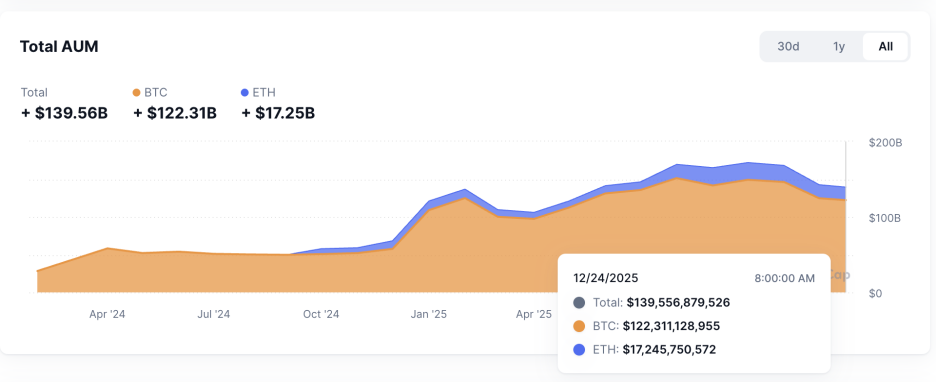
Simultaneously, institutional capital’s second defining feature, heightened sensitivity to macro variables, emerged distinctly. Institutional investment is centered on optimizing risk-adjusted returns rather than maximizing absolute gains, meaning asset allocation decisions are deeply influenced by the broader macro environment. In traditional finance, interest rates, liquidity conditions, risk preferences and cross-asset arbitrage conditions are core inputs for institutions adjusting positions. When this framework entered the crypto market, crypto prices began to exhibit stronger linkages with macro signals. The 2025 market landscape clearly demonstrated that changes in interest rate expectations more significantly affected Bitcoin and overall crypto assets. When major central banks, particularly the Federal Reserve, adjusted their policy rate paths, institutions reevaluated crypto allocations based on opportunity cost and portfolio risk, rather than shifts in narrative confidence.

Overall, the transition of institutions to marginal buyers in 2025 marked crypto’s evolution from a “narrative-driven, sentiment-priced” regime to one of “liquidity-driven, macro-priced” dynamics. Lower volatility did not imply risk elimination but a migration of risk sources from internal sentiment shocks to heightened sensitivity to macro rates, liquidity and risk appetite. For 2026 research, this shift carries methodological significance. Analytical frameworks must expand beyond on-chain indicators and narratives to systemic study of capital structure, institutional constraints and macro transmission pathways. The crypto market is increasingly integrated into global asset allocation frameworks, with prices no longer simply answering “what story the market is telling” but reflecting more “how capital is allocating risk”. This shift stands as one of the most profound structural changes of 2025.


II. Maturation of the On-Chain Dollar System: Stablecoins Transitioning into Infrastructure and RWAs Bringing Yield Curves On-Chain

If institutional capital’s large-scale entry answered “who is buying crypto assets”, the maturation of stablecoins and tokenization of real-world assets (RWAs) further answered the more fundamental questions — “what to buy, how to settle, and where returns come from”. At this level, the crypto market in 2025 completed a critical leap from “crypto-native financial experimentation” to an “on-chain dollar financial system”. Stablecoins evolved beyond trading media or hedging instruments to become the settlement and valuation foundation of the entire on-chain economic system. Concurrently, on-chain U.S. Treasuries, represented by RWAs, began to scale materially, endowing the chain with sustainable, auditable low-risk return anchors, and fundamentally altering DeFi’s yield structure and risk pricing logic.
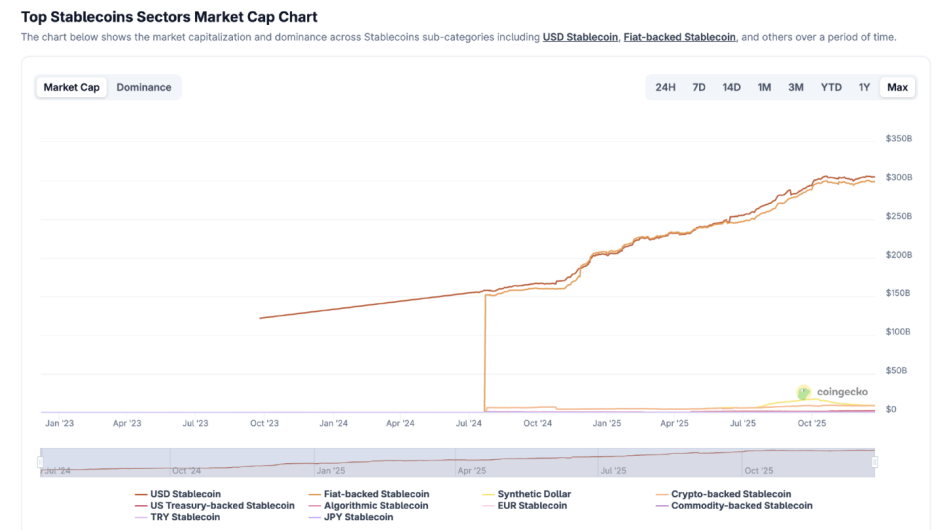
Functionally, stablecoins in 2025 indisputably became the core infrastructure of on-chain finance. Their role has long moved beyond that of “price-stable trading tokens” to fully assume multiple functions: cross-border settlement, trading pair denomination, DeFi liquidity hubs, and institutional capital on- and off-ramps. Across centralized exchanges, decentralized protocols, RWAs, derivatives and payments, stablecoins formed the underlying axis of capital flows. On-chain transaction volume data clearly shows that stablecoins have become a significant extension of the global dollar system, with annualized on-chain transaction volumes reaching tens of trillions of dollars, significantly exceeding those of most individual national payment systems. This indicates that in 2025, blockchains truly served as “functional dollar networks”, rather than mere adjuncts to high-risk asset trading. Moreover, widespread adoption of stablecoins transformed risk structures of on-chain finance. With stablecoins becoming the default unit of account, market participants could trade, borrow, lend and allocate assets without direct exposure to crypto price volatility, significantly lowering participation thresholds. This feature was especially crucial for institutional capital. That's because institutions seeks predictable cash flows and risk-controlled returns rather than high-volatility crypto gains. The maturity of stablecoins enabled institutions to maintain “dollar-denominated” exposure on-chain without traditional crypto price risk, laying the groundwork for expanded RWAs and yield products.

Within this context, RWAs, particularly the scaled deployment of on-chain U.S. Treasuries, became one of the most structurally significant developments of 2025. Unlike earlier initiatives focused on “synthetic assets” or “yield mapping”, RWA projects in 2025 began bringing traditional financial assets on-chain in forms that closely resembled conventional issuance. On-chain Treasuries were no longer conceptual narratives, but existed as auditable, traceable and composable instruments with transparent cash flows and well-defined maturities that directly linked to traditional risk-free yield curves.

However, alongside the rapid expansion of stablecoins and RWAs in 2025, the on-chain dollar system also exposed its latent systemic vulnerabilities. Particularly, multiple de-pegging events and collapses in the yield-bearing and algorithmic stablecoin sectors sounded alarms. These failures were not isolated incidents but reflected a common structural problem: recursive re-staking implicit leverage, opaque collateral structures, and concentrated risks in a small set of protocols and strategies. When stablecoin reserves extended beyond short-term Treasuries or cash equivalents into complex DeFi strategies seeking higher yields, stability stemmed not from underlying assets but from the implicit assumption of continued market prosperity. When this assumption collapsed, de-pegging transitioned from technical fluctuation to systemic shock. The events of 2025 indicated that stablecoin risk lies not in “whether they are stable”, but in "whether its sources of stability are transparent and auditable". Yield-bearing stablecoins can temporarily offer significantly higher returns than risk-free rates, but these often rely on stacked leverage and liquidity mismatches, with risks insufficiently priced. When market participants regard these products as “cash equivalents”, risk becomes systemically amplified. This forced the market to reexamine stablecoin roles: Are they primarily payment and settlement tools or financial products embedded with high-risk strategies? This question was posed in real economic terms for the first time in 2025.

Therefore, looking toward 2026, research focus is no longer on “whether stablecoins and RWAs will continue to grow”. Trendwise, the expansion of the on-chain dollar system is nearly irreversible. The key issue will be “quality stratification”. Differences among stablecoins in collateral transparency, maturity structure, risk isolation, and regulatory compliance will be directly reflected in their capital costs and use cases. Similarly, differences in legal structures, clearing mechanisms and yield stability among various RWAs products will determine their eligibility for institutional asset allocations. It is foreseeable that the on-chain dollar system will evolve from a homogeneous market into one with clear tiering: High-transparency, low-risk, strongly compliant products will enjoy lower capital costs and broader adoption, while products relying on complex strategies and implicit leverage may become marginalized and even phased out. From a macro perspective, the maturation of stablecoins and RWAs embedded the crypto market into the global dollar financial system for the first time. The on-chain ecosystem became an extension of dollar liquidity, yield curves and asset allocation logic rather than a mere experiment for value transfer. This transition, reinforced by institutional capital entry and normalized regulation, jointly propelled the crypto industry from cyclical speculation to infrastructure-level development.


III. Regulatory Normalization: Compliance as a Moat Reshaping Valuation & Industry Structure

In 2025, global crypto regulation entered a stage of normalization, not through a single law or event, but via a fundamental shift in the industry’s “survival assumptions”. For years, the crypto market operated under highly uncertain regulatory conditions, with the core question not about growth or efficiency but “whether this industry is allowed to exist". Regulatory uncertainty was seen as a systemic risk; capital entering the market priced in an extra risk premium for potential compliance shocks, enforcement and policy reversals. In 2025, this long-outstanding issue was partially resolved for the first time. As major jurisdictions in Europe, the U.S. and the Asia-Pacific progressively formed clearer and enforceable regulatory frameworks, market focus shifted from “whether crypto can exist” to “how to expand scale under compliance”, profoundly impacting capital behavior, business models and asset pricing logic.

Regulatory clarity significantly lowered institutional entry barriers. For institutional capital, uncertainty itself is a cost, and regulatory ambiguity means unquantifiable tail risk. In 2025, as stablecoins, ETFs, custodial services and trading platforms were progressively brought into defined regulatory scopes, institutions could finally evaluate crypto risks and returns within existing compliance and risk-control frameworks. This did not mean regulation became lax, but predictable. Predictability itself is a prerequisite for capital scaling. Once regulatory boundaries were defined, institutions could absorb constraints through internal processes, legal structures and risk models without treating them as “uncontrollable variables”. As a result, more long-term capital systematically entered the market, deepening participation and enhancing allocation scale; and crypto assets were steadily incorporated into broader asset allocation frameworks. More significantly, the normalization of regulation has altered the competitive dynamics at both the corporate and protocol levels.

The profound influence of regulatory normalization lies in reshaping industry organization. With compliance requirements materializing across issuance, trading, custody and settlement, the crypto industry began to exhibit stronger centralization and platformization trends. More products were issued and distributed on regulated platforms, and trading activity also concentrated on licensed and compliant infrastructures. This trend did not signify the disappearance of decentralization ideals but the reorganization of “entry points” for capital formation and flow. Token issuance gradually evolved from unstructured peer-to-peer sales to standardized processes more akin to traditional capital markets and became a new form of “internet capital marketization”. In this system, issuance, disclosure, lock-ups, distribution and secondary liquidity are more tightly integrated, stabilizing participants’ risk and return expectations. This organizational shift directly influenced asset valuation methods. In prior cycles, crypto asset valuation heavily relied on narrative strength, user growth and TVL, with limited consideration for legal and regulatory factors. Entering 2026, with regulation becoming a quantifiable constraint, valuation models began incorporating new dimensions. Regulatory capital requirements, compliance costs, legal structure stability, reserve transparency and accessibility of compliant distribution channels increasingly influenced asset prices. In other words, markets began imposing “regulatory premiums” or “regulatory discounts” on different projects and platforms. Entities capable of operating efficiently within compliance frameworks and internalizing regulatory demands as operational advantages often secured lower capital costs while models reliant on regulatory arbitrage or ambiguity faced valuation compression and even marginalization.


IV. Conclusion

The turning point in the 2025 crypto market fundamentally involved three simultaneous changes: capital migrating from retail investors to institutions; assets transitioning from narratives to an on-chain dollar system (stablecoins + RWAs); and regulatory frameworks evolving from gray areas to normalized governance. These forces jointly pushed crypto from “high-volatility speculative assets” toward “modelable financial infrastructure”. Looking ahead to 2026, research and investment should center on three core variable sets: transmission strength of macro rates and liquidity to crypto; quality stratification of on-chain dollar liquidity and sustainability of real yields; and institutional moats formed by compliance costs and distribution capacity. In this new paradigm, winners will not be projects with the best narratives, but those capable of sustained expansion under capital, yield and regulatory constraints.


Criptos en tendencia

Lecturas Relacionadas

CPU Makes a Comeback to the Table, A $170 Billion "Power Seizure" Drama Begins

A new era is dawning for the server CPU (Central Processing Unit), driven by the shift from AI model training to large-scale reasoning and the rise of Agentic AI. This article explores how the CPU is reclaiming a central role in the AI data center. For years, the focus has been on the GPU (Graphics Processing Unit) for AI training. However, as AI moves to the inference and Agent phase—where tasks involve complex, multi-step reasoning, tool calls, and data management—the workload balance is flipping. Studies show CPUs now handle over 70% of the workload in Agentic AI, up from 10-30% in training. This is because Agent tasks generate massive intermediate data (KV Cache) that exceeds GPU memory, forcing it to be offloaded to the CPU's larger, more scalable memory pools. This increased importance is translating into market changes. Major players are taking note: NVIDIA launched its first standalone CPU line, Vera, based on ARM architecture and optimized for Agent performance. AMD doubled its server CPU market forecast to over $1200 billion by 2030. Analyst reports project the total server CPU market could reach $1700 billion by 2030, with AI-driven demand being a primary driver. Furthermore, the classic ratio of CPUs to GPUs in AI servers is rapidly changing, converging from 1:8 toward 1:1 for Agent deployments. This surge in demand has led to a rare industry-wide price increase of 10-15% for server CPUs from Intel and AMD, breaking a decade-long trend of "more performance for the same price." Demand is bifurcating into high-core-count CPUs for in-rack GPU support and moderate-core CPUs for standalone Agent task orchestration. In China, this global trend presents an opportunity for domestic CPU manufacturers like Hygon (海光信息) and Huawei Kunpeng, who are bolstered by both growing AI infrastructure needs and national policies promoting technological self-reliance ("xin chuang"). The maturity of their software ecosystems is also accelerating, evidenced by faster adaptation to new AI models. In conclusion, the narrative is shifting from a GPU-centric view to one where CPU-GPU synergy is critical. The CPU is no longer a peripheral component but a performance-defining bottleneck and a key growth driver in the AI hardware stack, opening a massive new market estimated in the hundreds of billions of dollars.

marsbitHace 1 hora(s)

CPU Makes a Comeback to the Table, A $170 Billion "Power Seizure" Drama Begins

marsbitHace 1 hora(s)

TechFlow Intelligence: AMD AI Director Publicly Criticizes Claude Code for "Becoming Dumber and Lazier", Trump Claims Full Ceasefire in Hormuz But Strait Still Has 80 Unexploded Mines

TechFlow Intelligence Report: This daily digest covers key developments in AI, crypto, hardware, and geopolitics. In AI, SK Telecom faces US export control scrutiny over its partnership with Anthropic, while a Gemini user reports being misled in a scam scenario, sparking safety debates. China's Z.AI launches the GLM-5.2 model, rivaling Claude Opus without NVIDIA chips. In crypto, Bithumb lists ReProtocol, and Upbit delists KernelDAO. On the hardware front, MIT researchers build a custom OS to study chips, ASML denies US claims its advanced lithography machines are in China, and Amazon considers selling its in-house AI chips. Apple's future A21 Pro chip may use TSMC's latest N2P process. Major tech issues include 10,000 GitHub repositories distributing malware and Apple patching a critical eavesdropping flaw in Beats earbuds. US stocks rise, led by semiconductors, with Intel surging 10.6%, while SpaceX falls 3.5%. Geopolitically, despite a US-Iran deal, the Strait of Hormuz remains risky with ~80 uncleared mines, stalling 80M barrels of oil on standby tankers. Iran postpones Switzerland talks, and Trump calls the agreement an "unconditional surrender." The report highlights a contrast: temporary geopolitical calm versus the ongoing, fundamental restructuring of tech supply chains and chip independence.

marsbitHace 1 hora(s)

TechFlow Intelligence: AMD AI Director Publicly Criticizes Claude Code for "Becoming Dumber and Lazier", Trump Claims Full Ceasefire in Hormuz But Strait Still Has 80 Unexploded Mines

marsbitHace 1 hora(s)

Trading

Spot
Futuros

Artículos destacados

Qué es ETH 2.0

ETH 2.0: Una Nueva Era para Ethereum Introducción ETH 2.0, conocido ampliamente como Ethereum 2.0, marca una actualización monumental para la blockchain de Ethereum. Esta transición no es solo una mejora superficial; busca mejorar fundamentalmente la escalabilidad, seguridad y sostenibilidad de la red. Con un cambio del mecanismo de consenso intensivo en energía Prueba de Trabajo (PoW) a una Prueba de Participación (PoS) más eficiente, ETH 2.0 promete un enfoque transformador para el ecosistema blockchain. ¿Qué es ETH 2.0? ETH 2.0 es un conjunto de actualizaciones interconectadas y distintivas centradas en optimizar las capacidades y el rendimiento de Ethereum. La reestructuración está diseñada para abordar desafíos críticos que el mecanismo actual de Ethereum ha enfrentado, particularmente en lo que respecta a la velocidad de transacción y la congestión de la red. Objetivos de ETH 2.0 Los objetivos principales de ETH 2.0 giran en torno a mejorar tres aspectos clave: Escalabilidad: Con el objetivo de aumentar significativamente el número de transacciones que la red puede manejar por segundo, ETH 2.0 busca superar la limitación actual de aproximadamente 15 transacciones por segundo, potencialmente alcanzando miles. Seguridad: Las medidas de seguridad mejoradas son fundamentales para ETH 2.0, particularmente a través de una mejor resistencia contra ciberataques y la preservación del ethos descentralizado de Ethereum. Sostenibilidad: El nuevo mecanismo PoS está diseñado no solo para mejorar la eficiencia, sino también para reducir drásticamente el consumo de energía, alineando el marco operativo de Ethereum con consideraciones ambientales. ¿Quién es el Creador de ETH 2.0? La creación de ETH 2.0 se puede atribuir a la Fundación Ethereum. Esta organización sin fines de lucro, que desempeña un papel crucial en el apoyo al desarrollo de Ethereum, es liderada por el notable cofundador Vitalik Buterin. Su visión de un Ethereum más escalable y sostenible ha sido la fuerza motriz detrás de esta actualización, involucrando contribuciones de una comunidad global de desarrolladores y entusiastas dedicados a mejorar el protocolo. ¿Quiénes son los Inversores de ETH 2.0? Si bien los detalles sobre los inversores de ETH 2.0 no se han hecho públicos, se sabe que la Fundación Ethereum recibe apoyo de varias organizaciones e individuos en el ámbito de blockchain y tecnología. Estos socios incluyen firmas de capital de riesgo, compañías tecnológicas y organizaciones filantrópicas que comparten un interés mutuo en apoyar el desarrollo de tecnologías descentralizadas e infraestructura blockchain. ¿Cómo Funciona ETH 2.0? ETH 2.0 se distingue por introducir una serie de características clave que lo diferencian de su predecesor. Prueba de Participación (PoS) La transición a un mecanismo de consenso PoS es uno de los cambios más destacados de ETH 2.0. A diferencia de PoW, que se basa en la minería intensiva en energía para la verificación de transacciones, PoS permite a los usuarios validar transacciones y crear nuevos bloques de acuerdo con la cantidad de ETH que apuestan en la red. Esto conduce a una mayor eficiencia energética, reduciendo el consumo en aproximadamente un 99.95%, convirtiendo a Ethereum 2.0 en una alternativa considerablemente más verde. Cadenas Shard Las cadenas shard son otra innovación crítica de ETH 2.0. Estas cadenas más pequeñas operan en paralelo con la cadena principal de Ethereum, lo que permite que múltiples transacciones sean procesadas simultáneamente. Este enfoque mejora la capacidad general de la red, abordando las preocupaciones de escalabilidad que han afectado a Ethereum. Cadena Beacon En el núcleo de ETH 2.0 se encuentra la Cadena Beacon, que coordina la red y gestiona el protocolo PoS. Funciona como un organizador de cierta manera: supervisa a los validadores, asegura que los shards permanezcan conectados a la red y monitorea la salud general del ecosistema blockchain. Cronología de ETH 2.0 El viaje de ETH 2.0 ha estado marcado por varios hitos clave que trazan la evolución de esta importante actualización: Diciembre 2020: El lanzamiento de la Cadena Beacon marcó la introducción de PoS, preparándose para la migración hacia ETH 2.0. Septiembre 2022: La finalización de “La Fusión” representa un momento crucial en el que la red Ethereum se trasladó exitosamente de un marco PoW a uno PoS, anunciando una nueva era para Ethereum. 2023: El lanzamiento esperado de cadenas shard tiene como objetivo mejorar aún más la escalabilidad de la red Ethereum, consolidando a ETH 2.0 como una plataforma robusta para aplicaciones y servicios descentralizados. Características Clave y Beneficios Escalabilidad Mejorada Una de las ventajas más significativas de ETH 2.0 es su escalabilidad mejorada. La combinación de PoS y cadenas shard permite que la red expanda su capacidad, permitiendo acomodar un volumen mucho mayor de transacciones en comparación con el sistema heredado. Eficiencia Energética La implementación de PoS representa un gran paso hacia la eficiencia energética en la tecnología blockchain. Al reducir drásticamente el consumo de energía, ETH 2.0 no solo disminuye los costos operativos, sino que también se alinea más estrechamente con los objetivos de sostenibilidad global. Seguridad Mejorada Los mecanismos actualizados de ETH 2.0 contribuyen a mejorar la seguridad en toda la red. El despliegue de PoS, junto con las medidas de control innovadoras establecidas a través de cadenas shard y la Cadena Beacon, asegura un mayor grado de protección contra posibles amenazas. Costos Más Bajos para los Usuarios A medida que la escalabilidad mejora, los efectos sobre los costos de transacción también serán evidentes. Se espera que una mayor capacidad y una menor congestión se traduzcan en tarifas más bajas para los usuarios, haciendo que Ethereum sea más accesible para transacciones cotidianas. Conclusión ETH 2.0 marca una evolución significativa en el ecosistema blockchain de Ethereum. A medida que aborda problemas fundamentales como la escalabilidad, el consumo de energía, la eficiencia en las transacciones y la seguridad general, la importancia de esta actualización no puede ser subestimada. La transición a la Prueba de Participación, la introducción de cadenas shard y el trabajo fundamental de la Cadena Beacon son indicativos de un futuro donde Ethereum puede satisfacer las crecientes demandas del mercado descentralizado. En una industria impulsada por la innovación y el progreso, ETH 2.0 se erige como un testimonio de las capacidades de la tecnología blockchain para allanar el camino hacia una economía digital más sostenible y eficiente.

171 Vistas totalesPublicado en 2024.04.04Actualizado en 2024.12.03

Qué es ETH 2.0

Qué es ETH 3.0

ETH3.0 y $eth 3.0: Un Examen Profundo del Futuro de Ethereum Introducción En el paisaje en rápida evolución de las criptomonedas y la tecnología blockchain, ETH3.0, a menudo denotado como $eth 3.0, ha surgido como un tema de considerable interés y especulación. El término abarca dos conceptos principales que merecen aclaración: Ethereum 3.0: Esto representa una posible actualización futura destinada a aumentar las capacidades de la blockchain existente de Ethereum, enfocándose particularmente en mejorar la escalabilidad y el rendimiento. ETH3.0 Meme Token: Este proyecto de criptomoneda distinto busca aprovechar la blockchain de Ethereum para crear un ecosistema centrado en memes, promoviendo la participación dentro de la comunidad de criptomonedas. Comprender estos aspectos de ETH3.0 es esencial no solo para los entusiastas de las criptomonedas, sino también para aquellos que observan tendencias tecnológicas más amplias en el espacio digital. ¿Qué es ETH3.0? Ethereum 3.0 Ethereum 3.0 se presenta como una actualización propuesta para la red de Ethereum ya establecida, que ha sido la columna vertebral de muchas aplicaciones descentralizadas (dApps) y contratos inteligentes desde su inicio. Las mejoras previstas se concentran principalmente en la escalabilidad, integrando tecnologías avanzadas como sharding y pruebas de conocimiento cero (zk-proofs). Estas innovaciones tecnológicas tienen como objetivo facilitar un número sin precedentes de transacciones por segundo (TPS), potencialmente alcanzando millones, abordando así una de las limitaciones más significativas que enfrenta la tecnología blockchain actual. La mejora no es meramente técnica, sino también estratégica; está destinada a preparar la red de Ethereum para su adopción generalizada y utilidad en un futuro marcado por una mayor demanda de soluciones descentralizadas. ETH3.0 Meme Token En contraste con Ethereum 3.0, el ETH3.0 Meme Token se aventura en un ámbito más ligero y juguetón al combinar la cultura de memes de internet con la dinámica de las criptomonedas. Este proyecto permite a los usuarios comprar, vender e intercambiar memes en la blockchain de Ethereum, proporcionando una plataforma que fomenta la participación comunitaria a través de la creatividad y los intereses compartidos. El ETH3.0 Meme Token tiene como objetivo demostrar cómo la tecnología blockchain puede intersectarse con la cultura digital, creando casos de uso que son tanto entretenidos como financieramente viables. ¿Quién es el Creador de ETH3.0? Ethereum 3.0 La iniciativa hacia Ethereum 3.0 es impulsada principalmente por un consorcio de desarrolladores e investigadores dentro de la comunidad de Ethereum, incluyendo notablemente a Justin Drake. Conocido por sus ideas y contribuciones a la evolución de Ethereum, Drake ha sido una figura prominente en las discusiones sobre la transición de Ethereum a una nueva capa de consenso, denominada “Beam Chain.” Este enfoque colaborativo para el desarrollo significa que Ethereum 3.0 no es el producto de un creador singular, sino más bien una manifestación de ingenio colectivo centrado en avanzar la tecnología blockchain. ETH3.0 Meme Token Los detalles sobre el creador del ETH3.0 Meme Token son actualmente inidentificables. La naturaleza de los tokens de memes a menudo conduce a una estructura más descentralizada y dirigida por la comunidad, lo que podría explicar la falta de atribución específica. Esto se alinea con la ética de la comunidad cripto más amplia, donde la innovación a menudo surge de esfuerzos colaborativos en lugar de individuales. ¿Quiénes son los Inversores de ETH3.0? Ethereum 3.0 El apoyo a Ethereum 3.0 proviene principalmente de la Fundación Ethereum junto con una entusiasta comunidad de desarrolladores e inversores. Esta asociación fundamental proporciona un grado significativo de legitimidad y mejora la perspectiva de una implementación exitosa, ya que aprovecha la confianza y credibilidad construidas a lo largo de años de operaciones en la red. En el clima cambiando rápidamente de las criptomonedas, el apoyo de la comunidad juega un papel crucial en impulsar el desarrollo y la adopción, posicionando a Ethereum 3.0 como un contendiente serio para futuros avances en blockchain. ETH3.0 Meme Token Si bien las fuentes actualmente disponibles no proporcionan información explícita sobre las fundaciones o organizaciones de inversión que respaldan el ETH3.0 Meme Token, es indicativo del modelo de financiamiento típico para tokens de memes, que a menudo depende del apoyo de base y la participación comunitaria. Los inversores en tales proyectos suelen consistir en individuos motivados por el potencial de innovación impulsada por la comunidad y el espíritu de cooperación que se encuentra dentro de la comunidad cripto. ¿Cómo Funciona ETH3.0? Ethereum 3.0 Las características distintivas de Ethereum 3.0 radican en su implementación propuesta de sharding y tecnología zk-proof. Sharding es un método de particionamiento de la blockchain en piezas más pequeñas y manejables o “shards,” que pueden procesar transacciones de manera concurrente en lugar de secuencial. Esta descentralización del procesamiento ayuda a prevenir la congestión y asegura que la red permanezca receptiva incluso bajo una carga pesada. La tecnología de prueba de conocimiento cero (zk-proof) contribuye con otra capa de sofisticación al permitir la validación de transacciones sin revelar los datos subyacentes involucrados. Este aspecto no solo mejora la privacidad, sino que también aumenta la eficiencia general de la red. También se habla de incorporar una Máquina Virtual de Ethereum de conocimiento cero (zkEVM) en esta actualización, amplificando aún más las capacidades y utilidad de la red. ETH3.0 Meme Token El ETH3.0 Meme Token se distingue al capitalizar la popularidad de la cultura de memes. Establece un mercado para que los usuarios participen en el comercio de memes, no solo por entretenimiento sino también por el posible beneficio económico. Al integrar características como staking, provisión de liquidez y mecanismos de gobernanza, el proyecto fomenta un entorno que incentiva la interacción y participación de la comunidad. Al ofrecer una mezcla única de entretenimiento y oportunidad económica, el ETH3.0 Meme Token tiene como objetivo atraer a una audiencia diversa, que abarca desde entusiastas de las criptomonedas hasta conocedores casuales de memes. Línea de Tiempo de ETH3.0 Ethereum 3.0 11 de noviembre de 2024: Justin Drake insinúa la próxima actualización de ETH 3.0, centrada en mejoras de escalabilidad. Este anuncio significa el comienzo de las discusiones formales sobre la futura arquitectura de Ethereum. 12 de noviembre de 2024: Se espera que la propuesta anticipada para Ethereum 3.0 se desvele en Devcon en Bangkok, preparando el escenario para una mayor retroalimentación de la comunidad y posibles próximos pasos en el desarrollo. ETH3.0 Meme Token 21 de marzo de 2024: El ETH3.0 Meme Token se lista oficialmente en CoinMarketCap, marcando su incursión en el dominio público de las criptomonedas y mejorando la visibilidad de su ecosistema basado en memes. Puntos Clave En conclusión, Ethereum 3.0 representa una evolución significativa dentro de la red de Ethereum, enfocándose en superar las limitaciones en términos de escalabilidad y rendimiento a través de tecnologías avanzadas. Sus actualizaciones propuestas reflejan un enfoque proactivo hacia las demandas y la usabilidad futura. Por otro lado, el ETH3.0 Meme Token encapsula la esencia de la cultura impulsada por la comunidad en el espacio de las criptomonedas, aprovechando la cultura de memes para crear plataformas atractivas que fomentan la creatividad y participación del usuario. Comprender los distintos propósitos y funcionalidades de ETH3.0 y $eth 3.0 es fundamental para cualquiera interesado en los desarrollos en curso dentro del espacio cripto. Con ambas iniciativas abriendo caminos únicos, subrayan colectivamente la naturaleza dinámica y multifacética de la innovación en blockchain.

185 Vistas totalesPublicado en 2024.04.04Actualizado en 2024.12.03

Qué es ETH 3.0

Cómo comprar ETH

¡Bienvenido a HTX.com! Hemos hecho que comprar Ethereum (ETH) sea simple y conveniente. Sigue nuestra guía paso a paso para iniciar tu viaje de criptos.Paso 1: crea tu cuenta HTXUtiliza tu correo electrónico o número de teléfono para registrarte y obtener una cuenta gratuita en HTX. Experimenta un proceso de registro sin complicaciones y desbloquea todas las funciones.Obtener mi cuentaPaso 2: ve a Comprar cripto y elige tu método de pagoTarjeta de crédito/débito: usa tu Visa o Mastercard para comprar Ethereum (ETH) al instante.Saldo: utiliza fondos del saldo de tu cuenta HTX para tradear sin problemas.Terceros: hemos agregado métodos de pago populares como Google Pay y Apple Pay para mejorar la comodidad.P2P: tradear directamente con otros usuarios en HTX.Over-the-Counter (OTC): ofrecemos servicios personalizados y tipos de cambio competitivos para los traders.Paso 3: guarda tu Ethereum (ETH)Después de comprar tu Ethereum (ETH), guárdalo en tu cuenta HTX. Alternativamente, puedes enviarlo a otro lugar mediante transferencia blockchain o utilizarlo para tradear otras criptomonedas.Paso 4: tradear Ethereum (ETH)Tradear fácilmente con Ethereum (ETH) en HTX's mercado spot. Simplemente accede a tu cuenta, selecciona tu par de trading, ejecuta tus trades y monitorea en tiempo real. Ofrecemos una experiencia fácil de usar tanto para principiantes como para traders experimentados.

4.2k Vistas totalesPublicado en 2024.12.10Actualizado en 2026.06.02

Cómo comprar ETH

Discusiones

Bienvenido a la comunidad de HTX. Aquí puedes mantenerte informado sobre los últimos desarrollos de la plataforma y acceder a análisis profesionales del mercado. A continuación se presentan las opiniones de los usuarios sobre el precio de ETH (ETH).

活动图片