Dòng Tiền Ra từ ETF & Bitcoin Tiếp Diễn: Dòng Tiền Ròng Hàng Tháng Vẫn Âm

bitcoinistPublicado a 2025-12-31Actualizado a 2025-12-31

Resumen

Dòng tiền ETF Bitcoin và Ethereum tiếp tục ghi nhận dòng tiền ròng âm trong 30 ngày, với mức -656 triệu USD cho BTC và -422 triệu USD cho ETH, cho thấy vốn đang rút khỏi các tài sản kỹ thuật số. Tình trạng này tương tự đợt tháo chạy đầu năm 2025, dù sau đó thị trường đã bùng nổ trở lại. Hiện chưa rõ liệu xu hướng này sẽ đảo ngược hay còn kéo dài. Song song đó, kho bạc tài sản kỹ thuật số toàn cầu đã vượt 185 tỷ USD, với 73% do các công ty nắm giữ. Giá Bitcoin hiện dao động quanh 88.100 USD, ổn định so với tuần trước.

Số liệu cho thấy dòng tiền ròng ETF 30 ngày vẫn âm đối với cả Bitcoin và Ethereum, cho thấy vốn đang chảy ra khỏi các tài sản kỹ thuật số.

Dòng Tiền Ròng ETF của Bitcoin & Ethereum Gần Đây Đã Âm

Như được giải thích bởi nhà phân tích cộng đồng CryptoQuant Maartunn trong một bài đăng mới trên X, các quỹ ETF spot Bitcoin và Ethereum đã phải đối mặt với dòng tiền ròng âm trong tháng qua.

ETF spot là các công cụ đầu tư cho phép nhà đầu tư tiếp cận gián tiếp với biến động giá của tài sản cơ bản. Trong bối cảnh tiền điện tử, điều này có nghĩa là một nhà đầu tư ETF không bao giờ phải tương tác trên chuỗi; quỹ sẽ mua và lưu ký các token thay mặt họ.

ETF spot của Mỹ là một hiện tượng tương đối mới trong lĩnh vực tài sản kỹ thuật số, chỉ được Ủy ban Chứng khoán và Giao dịch (SEC) chấp thuận vào tháng 1 năm 2024 cho Bitcoin và tháng 7 năm 2024 cho Ethereum.

ETF spot có vẻ như là một phương thức đầu tư tiện lợi cho những nhà giao dịch không quen thuộc với ví và sàn giao dịch tiền điện tử. Các thực thể tổ chức, đặc biệt, thích tiếp cận thông qua chúng.

Kể từ khi ra mắt, các công cụ đầu tư này nhanh chóng trở nên phổ biến bằng cách khai thác nhu cầu này từ các nhà đầu tư truyền thống và tự khẳng định mình là một trong những trụ cột của ngành.

Dưới đây là biểu đồ cho thấy dòng tiền ròng 30 ngày liên quan đến ETF spot Bitcoin và Ethereum đã thay đổi như thế nào trong suốt thời gian tồn tại của chúng cho đến nay.
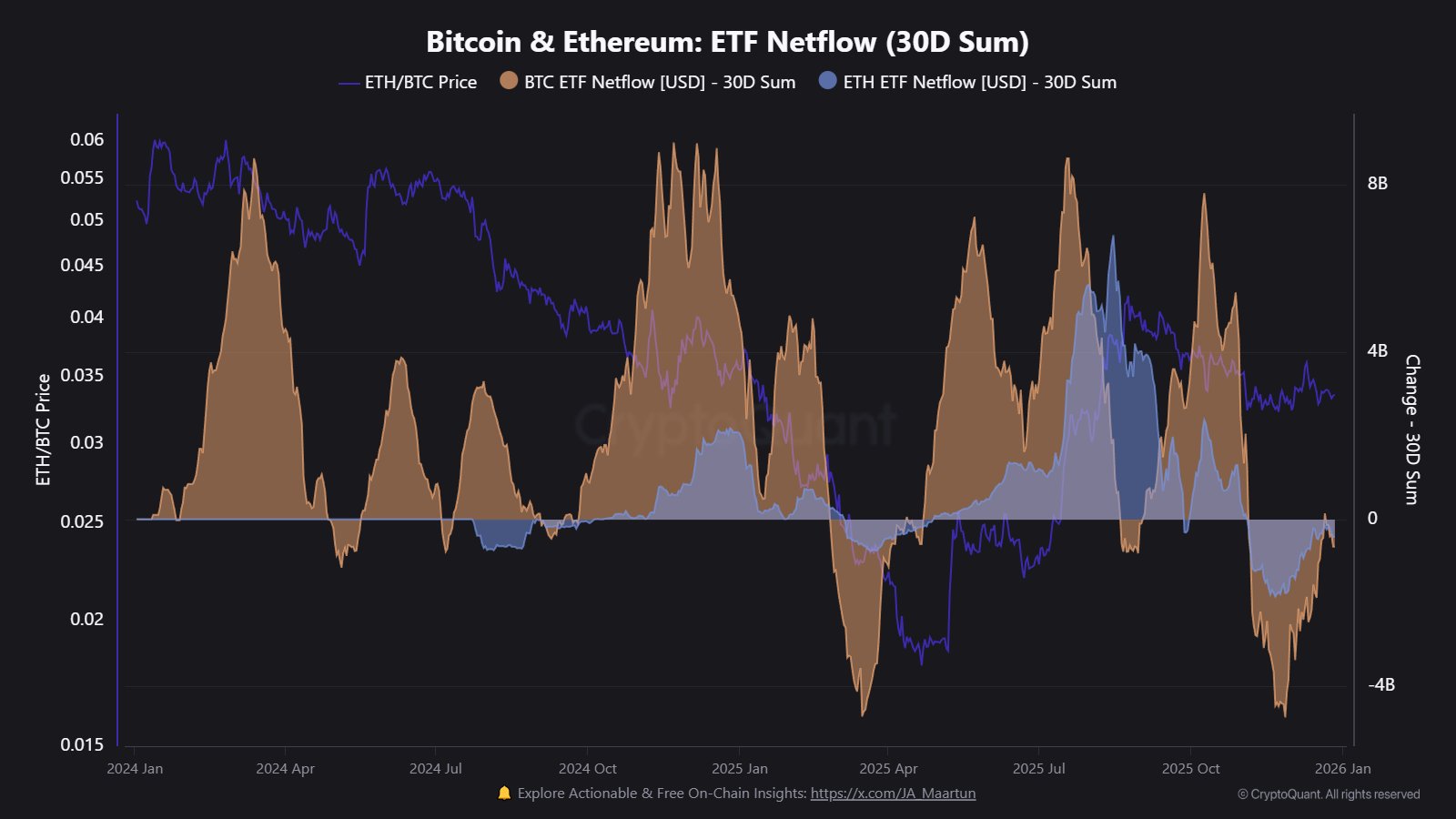
Có vẻ như giá trị của số liệu đã âm đối với cả hai tài sản này trong những tuần gần đây | Nguồn: @JA_Maartun trên X

Như có thể thấy trong biểu đồ, dòng tiền ròng ETF spot 30 ngày đã âm đối với cả Bitcoin và Ethereum từ một lúc nay, cho thấy các quỹ đã chứng kiến dòng tiền ra ròng liên tục.

Tình hình đã được cải thiện một chút gần đây nhất, nhưng chỉ báo vẫn còn màu đỏ cho cả hai tài sản, ở mức -656 triệu USD cho BTC và -422 triệu USD cho ETH. Nhu cầu yếu trên thị trường tương tự như giai đoạn dòng tiền ra từ nửa đầu năm 2025.

Hồi đó, nhu cầu cuối cùng đã quay trở lại một cách bùng nổ, với Bitcoin và Ethereum chứng kiến đà tăng giá mạnh. Giờ đây, vẫn còn phải xem liệu một sự trở lại sẽ xảy ra lần này hay sự chậm lại của nhu cầu sẽ còn ở lại trong lúc này.

Một nguồn cầu tương đối gần đây khác trên thị trường là kho bạc tài sản kỹ thuật số. Như được nêu bật bởi nhà cung cấp giải pháp DeFi tổ chức Sentora trong một bài đăng X mới, kho bạc tiền điện tử hiện vượt quá 185 tỷ USD trên 368 thực thể.
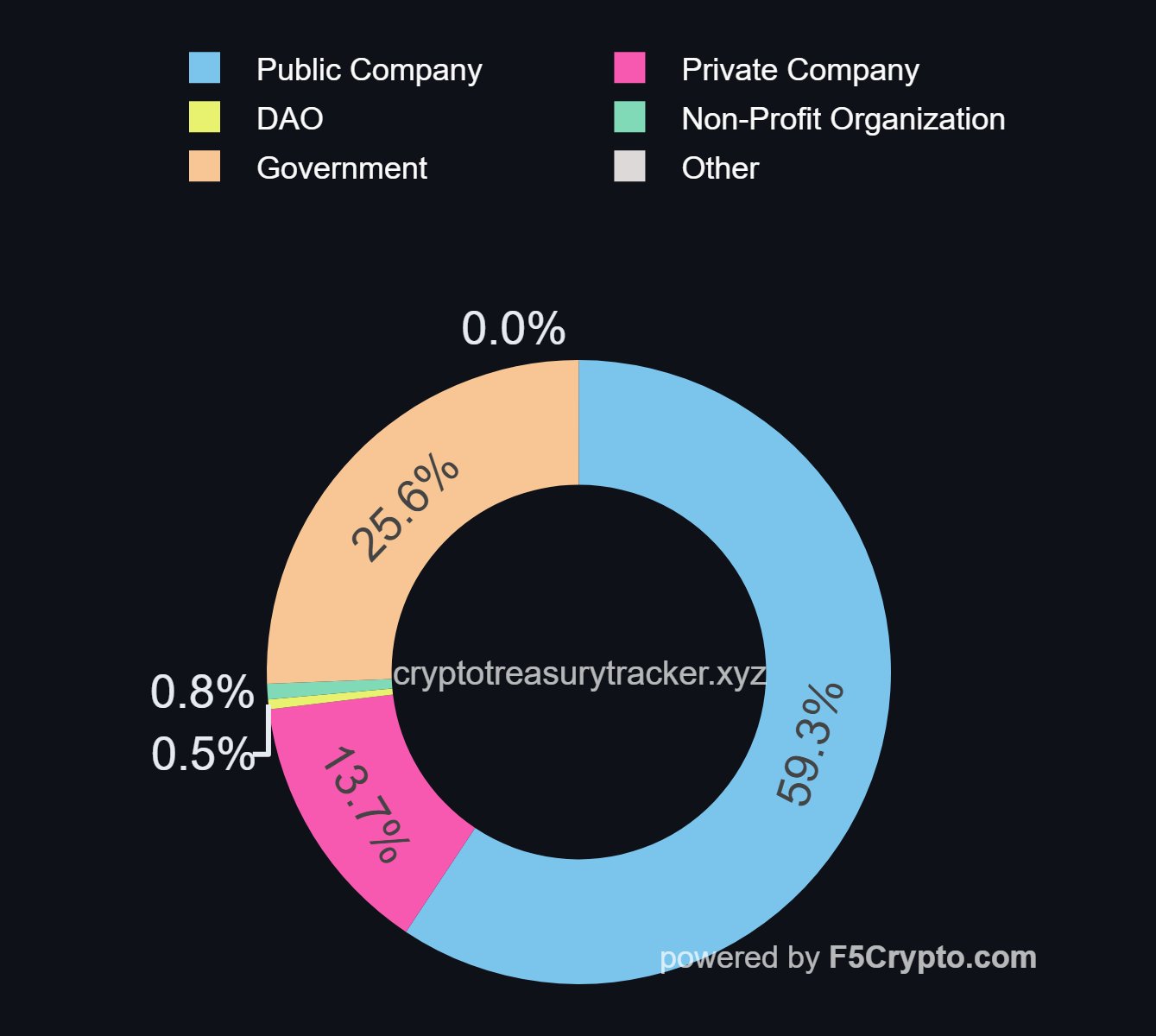
Sự phân bổ kho bạc trên các lĩnh vực khác nhau | Nguồn: Sentora trên X

Trong số này, 73% kho bạc tài sản kỹ thuật số được kiểm soát bởi các công ty, trong khi phần còn lại nằm trong tay các chính phủ.

Giá BTC

Vào thời điểm viết bài, Bitcoin đang giao dịch quanh mức 88.100 USD, không thay đổi so với tuần trước.

Giá của đồng coin dường như đã củng cố gần đây | Nguồn: BTCUSDT trên TradingView


Criptos en tendencia

Preguntas relacionadas

QDòng tiền ròng ETF 30 ngày của Bitcoin và Ethereum gần đây như thế nào?

ADòng tiền ròng ETF 30 ngày của cả Bitcoin và Ethereum đều âm, với Bitcoin ở mức -656 triệu USD và Ethereum ở mức -422 triệu USD, cho thấy vốn đang chảy ra khỏi các tài sản kỹ thuật số này.

QETF spot là gì và chúng hoạt động như thế nào trong lĩnh vực tiền điện tử?

AETF spot là phương tiện đầu tư cho phép nhà đầu tư tiếp cận gián tiếp với biến động giá của tài sản cơ bản. Đối với tiền điện tử, quỹ sẽ mua và lưu ký token thay mặt nhà đầu tư, họ không cần tương tác trực tiếp trên blockchain.

QKhi nào SEC phê duyệt ETF spot Bitcoin và Ethereum tại Mỹ?

AỦy ban Chứng khoán và Giao dịch Hoa Kỳ (SEC) đã phê duyệt ETF spot Bitcoin vào tháng 1 năm 2024 và ETF spot Ethereum vào tháng 7 năm 2024.

QNhu cầu đối với ETF tiền điện tử hiện tại được so sánh với giai đoạn nào trước đây?

ANhu cầu yếu hiện tại trên thị trường tương tự như giai đoạn dòng tiền ra diễn ra trong nửa đầu năm 2025, trước khi nhu cầu bùng nổ trở lại và đẩy giá Bitcoin và Ethereum tăng mạnh.

QTổng giá trị kho bạc tài sản kỹ thuật số được nắm giữ bởi các thực thể là bao nhiêu và ai kiểm soát phần lớn?

ATổng giá trị kho bạc tài sản kỹ thuật số vượt 185 tỷ USD, được nắm giữ bởi 368 thực thể. Trong đó, 73% số này được kiểm soát bởi các công ty, phần còn lại nằm trong tay các chính phủ.

Lecturas Relacionadas

After Three Consecutive Quarters of Decline, Can the Crypto Market Find a Window for Stabilization in Q3?

The cryptocurrency market has just concluded its worst-performing quarter since 2022, with total capitalization dropping 12.6% to $2.1 trillion. All core metrics indicate capital is leaving the sector, not just rotating within it. Bitcoin fell 14.2% and Ethereum dropped 25.4% in Q2, breaking their previous correlation with US tech stocks. A key driver is the reversal in US spot Bitcoin ETF flows, which saw a net outflow of approximately $4.67 billion in Q2, including a record monthly outflow near $4.5 billion in June. While recent data suggests long-term holders are accumulating again, sustained ETF outflows mean continued selling pressure. Market focus is now singularly on the Federal Reserve. The upcoming July FOMC meeting is seen as the most critical event for Q3. A dovish signal could support Bitcoin reclaiming a $68,000-$84,000 range, while a hawkish stance might establish a new trading band around $50,000-$56,000. Additionally, regulatory uncertainty persists, with the progress of the crucial *CLARITY Act* stalling in the Senate, reducing its perceived 2026 passage probability to 40-45%. Despite the broad downturn, a few sectors showed growth. Prediction markets saw nominal volume surge 48.7% year-over-year to $113.8 billion, and tokenized collectibles transaction volume rose 143% quarterly to $1.4 billion. The Real-World Asset (RWA) tokenization sector also continued steady growth, now representing ~$28.1 billion in on-chain value. The market's foundation for an extreme crash appears limited, with Bitcoin price hovering near its 200-week moving average. However, the trading paradigm has shifted from narrative-driven speculation to decisions based on price action, policy developments, and interest rate expectations, making a broad sentiment-driven rally unlikely in the near term.

marsbitHace 3 hora(s)

After Three Consecutive Quarters of Decline, Can the Crypto Market Find a Window for Stabilization in Q3?

marsbitHace 3 hora(s)

BIT Trading Moment: BTC Still Suppressed by Weekly 200 EMA, Rejection May Restart Decline; Storage and Semiconductors that Surged Last Night Begin Falling in Evening Trading

**Crypto & Stock Market Wrap: Bitcoin Tests Resistance, Stocks Retreat After AI Surge** Bitcoin consolidates around $66,000, facing key resistance near $68,000—an area seen as a major psychological and technical hurdle where previous rallies have failed. Analysts note the cryptocurrency is caught between its 200-week moving average (~$63,333) and 200-week EMA (~$68,328). A clear break above $68k is needed to signal a stronger bullish trend, while a rejection could lead to a retest of $63k support. Market sentiment remains cautious, with low futures open interest pointing to a low-liquidity rebound rather than a full bull market. Bitcoin spot ETFs saw another $203 million inflow. US stock futures pointed lower after a strong Tuesday session led by a massive rebound in semiconductors and memory stocks. The rally was fueled by renewed optimism about AI-driven hardware demand, with Micron, SanDisk, and SK Hynix surging. However, those gains reversed in pre-market trading. Super Micro Computer (SMCI) soared over 20% after hours on strong guidance and a record backlog. Other standouts included Rocket Lab and nuclear energy plays Oklo and X-Energy. Rising oil prices (Brent above $91) and climbing Treasury yields (10-year near 4.64%), however, are reigniting inflation concerns and acting as a headwind for equities. In Asia, markets were mixed. South Korea's KOSPI pared early gains to close slightly higher as semiconductor stocks like SK Hynix gave back initial surges. Japan's Nikkei edged lower as the yen hit a fresh 38-year low against the dollar, raising fears of potential market intervention. Key events to watch include the Samsung Galaxy launch, AMD's AI event, and a slew of major tech earnings from Alphabet, Tesla, and IBM after the close on Wednesday, followed by the ECB meeting and Intel's earnings on Thursday.

marsbitHace 3 hora(s)

BIT Trading Moment: BTC Still Suppressed by Weekly 200 EMA, Rejection May Restart Decline; Storage and Semiconductors that Surged Last Night Begin Falling in Evening Trading

marsbitHace 3 hora(s)

Former CFTC Chairman, Circle President Tarbert: Preaching Long-Termism While Cashing Out $30 Million Himself

Former CFTC Chairman and Circle President Heath Tarbert has consistently advocated for a long-term vision in public, urging patience from investors as Circle’s stock price has fallen significantly from its peak. However, it has been revealed that since Circle’s IPO, Tarbert has continuously sold his CRCL shares through pre-arranged trading plans, cashing out approximately $30 million, without making any public market purchases. This contrast between his public messaging and personal actions has drawn criticism. Tarbert joined Circle in July 2023 as Chief Legal Officer, leveraging his regulatory experience to help guide the company through its IPO and expansion. Despite promoting stablecoins as long-term infrastructure, he established a 10b5-1 trading plan just before Circle went public, leading to substantial stock sales over the following year. In March 2026, he initiated another plan to sell more shares. His career trajectory highlights a pattern of moving between high-level regulatory roles and influential positions in the financial sector. After resigning as CFTC Chairman in early 2021, he joined Citadel Securities as Chief Legal Officer just 27 days later, during a period of intense regulatory scrutiny for the firm. He later joined Circle, aiding its efforts to navigate regulatory challenges for its public listing. While Tarbert's expertise in policy and compliance is valuable to companies like Circle, his actions—advocating long-term confidence while personally divesting—raise questions about the alignment between his public statements and his private financial decisions, leaving investors who followed his advice to bear the market risks.

marsbitHace 3 hora(s)

Former CFTC Chairman, Circle President Tarbert: Preaching Long-Termism While Cashing Out $30 Million Himself

marsbitHace 3 hora(s)

Gate Research Institute: The 'Wall Street-ization' Wave of Crypto Financial Products – Competition or Integration?

The article titled "Gate Research Institute: Are Crypto Financial Products Sparking a 'Wall Street' Wave—Competition or Convergence?" explores the evolving relationship between the crypto ecosystem and traditional finance (TradFi). The piece begins by reflecting on Bitcoin's original 2009 vision of decentralization, disintermediation, and moving away from banks. It then contrasts this with the 2024 landscape, where key crypto assets like Bitcoin are increasingly held through Wall Street products like ETFs issued by giants like BlackRock. The article questions whether this signifies that TradFi is systematically taking over the rights to issue, price, custody, and distribute crypto financial assets. The core argument is that this is not a zero-sum takeover but rather a bidirectional convergence where each side addresses the other's weaknesses. Crypto offers 24/7 global markets, programmable settlement, and open access but lacks compliant channels, institutional-grade custody, deep fiat liquidity, and mainstream distribution. TradFi possesses these but is constrained by legacy systems, limited operating hours, and slow settlement. Two primary convergence paths are highlighted: * **Path A (CEX to TradFi):** Exemplified by Gate, which has progressed from offering tokenized stocks and CFDs to providing direct, real stock trading (US, Hong Kong, South Korea) within its platform, using USDT. * **Path B (TradFi to Crypto):** Exemplified by Robinhood, which has integrated crypto trading, acquired exchanges like Bitstamp, and is moving traditional assets like stocks onto the blockchain via tokenization and its own Layer 2. Both paths are ultimately competing to become the next-generation, unified financial account—a "super account" where users can seamlessly trade cryptocurrencies, stocks, ETFs, RWA (Real World Assets), and tokenized treasury products in one interface. The growth of RWA and tokenized treasuries (e.g., BlackRock's BUIDL) is presented as the asset-layer fusion, providing stable, yield-bearing assets on-chain and acting as a bridge between the two worlds. In conclusion, the "Wall Street-ization" of crypto is framed as a mutual transformation. Decentralized ideals persist in the protocol layer, while at the application layer, a more efficient, global, and accessible unified capital market is emerging from this convergence. The future competition lies not between crypto exchanges and stockbrokers, but between platforms vying to offer the most comprehensive asset coverage, liquidity, and user experience within a single account.

marsbitHace 3 hora(s)

Gate Research Institute: The 'Wall Street-ization' Wave of Crypto Financial Products – Competition or Integration?

marsbitHace 3 hora(s)

Trading

Spot

Artículos destacados

Cómo comprar RED

¡Bienvenido a HTX.com! Hemos hecho que comprar RedStone (RED) sea simple y conveniente. Sigue nuestra guía paso a paso para iniciar tu viaje de criptos.Paso 1: crea tu cuenta HTXUtiliza tu correo electrónico o número de teléfono para registrarte y obtener una cuenta gratuita en HTX. Experimenta un proceso de registro sin complicaciones y desbloquea todas las funciones.Obtener mi cuentaPaso 2: ve a Comprar cripto y elige tu método de pagoTarjeta de crédito/débito: usa tu Visa o Mastercard para comprar RedStone (RED) al instante.Saldo: utiliza fondos del saldo de tu cuenta HTX para tradear sin problemas.Terceros: hemos agregado métodos de pago populares como Google Pay y Apple Pay para mejorar la comodidad.P2P: tradear directamente con otros usuarios en HTX.Over-the-Counter (OTC): ofrecemos servicios personalizados y tipos de cambio competitivos para los traders.Paso 3: guarda tu RedStone (RED)Después de comprar tu RedStone (RED), guárdalo en tu cuenta HTX. Alternativamente, puedes enviarlo a otro lugar mediante transferencia blockchain o utilizarlo para tradear otras criptomonedas.Paso 4: tradear RedStone (RED)Tradear fácilmente con RedStone (RED) en HTX's mercado spot. Simplemente accede a tu cuenta, selecciona tu par de trading, ejecuta tus trades y monitorea en tiempo real. Ofrecemos una experiencia fácil de usar tanto para principiantes como para traders experimentados.

411 Vistas totalesPublicado en 2025.03.05Actualizado en 2026.07.21

Cómo comprar RED

Discusiones

Bienvenido a la comunidad de HTX. Aquí puedes mantenerte informado sobre los últimos desarrollos de la plataforma y acceder a análisis profesionales del mercado. A continuación se presentan las opiniones de los usuarios sobre el precio de RED (RED).

活动图片












