What are the characteristics and commonalities of tokens that have performed well after TGE in 2025?

Odaily星球日报Publicado a 2025-12-31Actualizado a 2025-12-31

Resumen

In 2025, most tokens experienced significant price declines shortly after their Token Generation Event (TGE), but a few—such as ASTER, FOLKS, AVICI, and SENTIS—managed to sustain price increases. These tokens shared several key characteristics that contributed to their relative success: 1. **Token Distribution Over Hype**: Successful projects avoided large internal liquidity at TGE. Examples include AVICI (0% team allocation) and SENTIS (activity-based emissions). 2. **Reasonable Valuation**: Tokens launched at fair valuations, rather than during peak hype, allowed room for market reappreciation. AVICI, for instance, launched with a low FDV despite having a functional product. 3. Demonstrable Utility: Projects like ASTER (Perp DEX volume), FOLKS (lending scale), and AVICI (real-world card spending) showed observable usage rather than just promising future utility. 4. **Controlled Unlock Structures**: Linear and transparent token unlock schedules (e.g., SENTIS’s participation-based emissions) were better received than cliff-style unlocks. 5. **Exchange Listings as Accelerators, Not Foundations**: While major exchange support helped, it wasn’t sufficient alone. Strong fundamentals determined long-term performance. The market in 2025 shifted from rewarding potential to valuing structure: healthy circulation, fair distribution, real adoption, and predictable unlocks. Tokens that prioritized these elements demonstrated resilience post-TGE.

Original Author:Stacy Muur, Crypto Researcher

Compiled by: CryptoLeo(@LeoAndCrypto)
Last week, I compiled a research post by Solus Group titled "Over 80% of New Tokens Peak at TGE: The Root Cause and Solution of Web3's False Prosperity," which analyzed the post-TGE situation of 113 tokens in 2025. The vast majority of these tokens peaked at TGE, with their prices starting to decline the day after launch, despite having conditions such as high financing, community support, and exchange listings.

Today's article is from crypto researcher Stacy Muur, who compiled statistics on several tokens in 2025 that showed significant price increases after TGE and analyzed the advantages/conditions these projects possessed. In contrast, the previous article presented a statistical result based on data, while this article focuses more on the projects themselves. In summary: In today's overly homogeneous and expanding crypto market, project tokens need to meet multiple conditions to survive/succeed. Odaily Planet Daily compiled it as follows:

If you've been keen on trading tokens that TGE'd in 2025, the results so far are clear: tokens are hot in the first week after launch, then gradually cool down, and finally default to accepting that "the issuance price is the peak." Most newly launched tokens perform poorly, or even plummet, as the market consistently views tokenomics and liquidity as fundamentals.
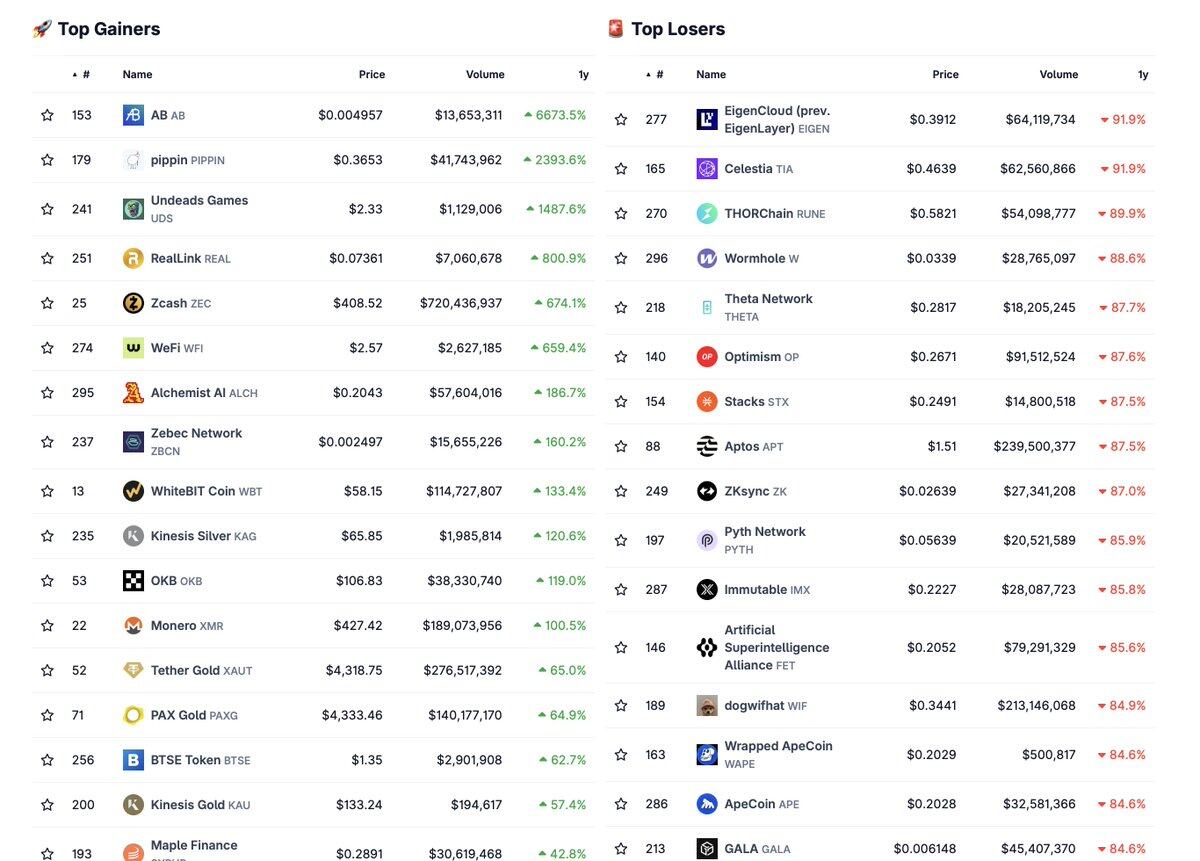
Despite this, a few tokens in 2025 have maintained price increases relative to their TGE. This increase is not a "rebound after a price drop" or "buying at the market bottom," but rather indicates genuine buying support.

Here are the truly rising tokens from the 2025 TGE that I've compiled: ASTER, FOLKS, AVICI, and SENTIS (there are also some "barely passing" tokens like IRYS/FHE/CORN). They don't all look the same, but they all have certain characteristics.

The Best Rising Tokens of the 2025 TGE

Aster is a typical example. ASTER got everything it needed on the first day of launch: major exchange listings, deep liquidity, and the widely accepted "Perp DEX" narrative. The story circulating throughout the year was basically: "Binance-backed Perp DEX with privacy features."

ASTER's price action was controversial (you could call it ZK-related, CZ shadow games, or simply better execution strategies). But despite this, it remains one of the few projects that didn't "immediately sell off" at TGE.
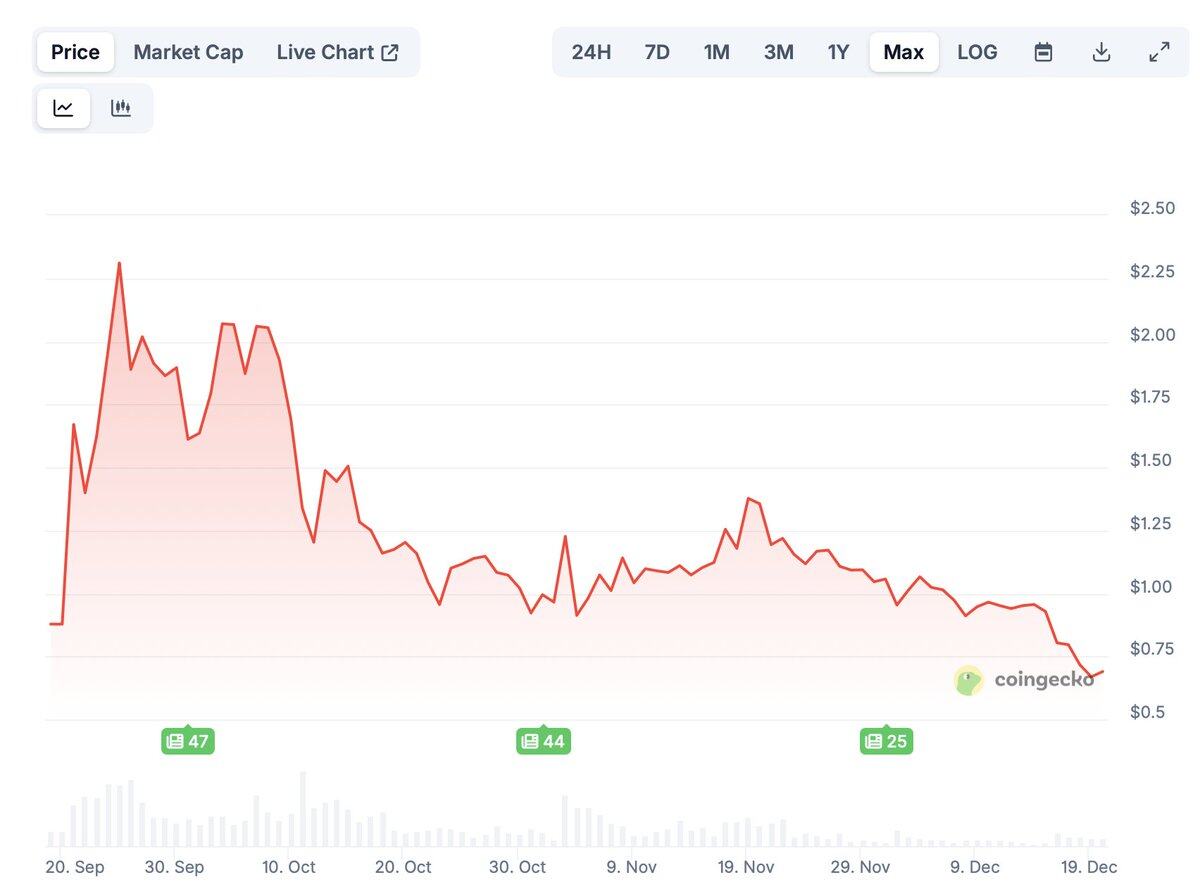
FOLKS is different: it's a lending token, seen as Alpha in a "crappy market year." The formula: "Binance and Kraken showed support from day one, cross-chain pools kept growing, no obvious massive unlocks." The last point is very important. It performed well until the token unlock on December 15th.
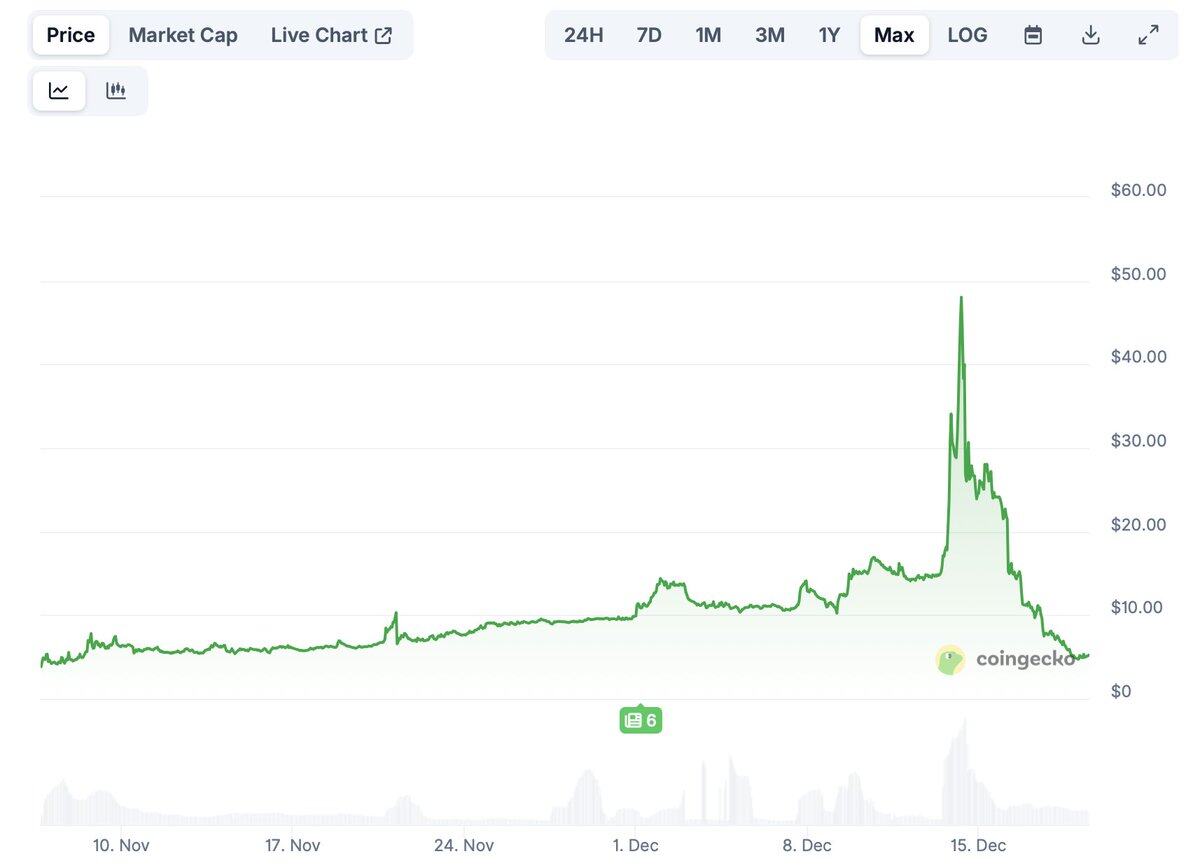
AVICI is different from the first two. AVICI is on this list not because it has the most cutting-edge technology, but because it provided the clearest narrative for CT: "Fair launch, truly usable product." It emphasized not tokenomics, but usage: "decent neobank app, Visa card, real spending." In a market flooded with endogenous "utility," AVICI was a breath of fresh air, both thinking outside the box and being practical. AVICI might be one of the best TGE tokens of the year.
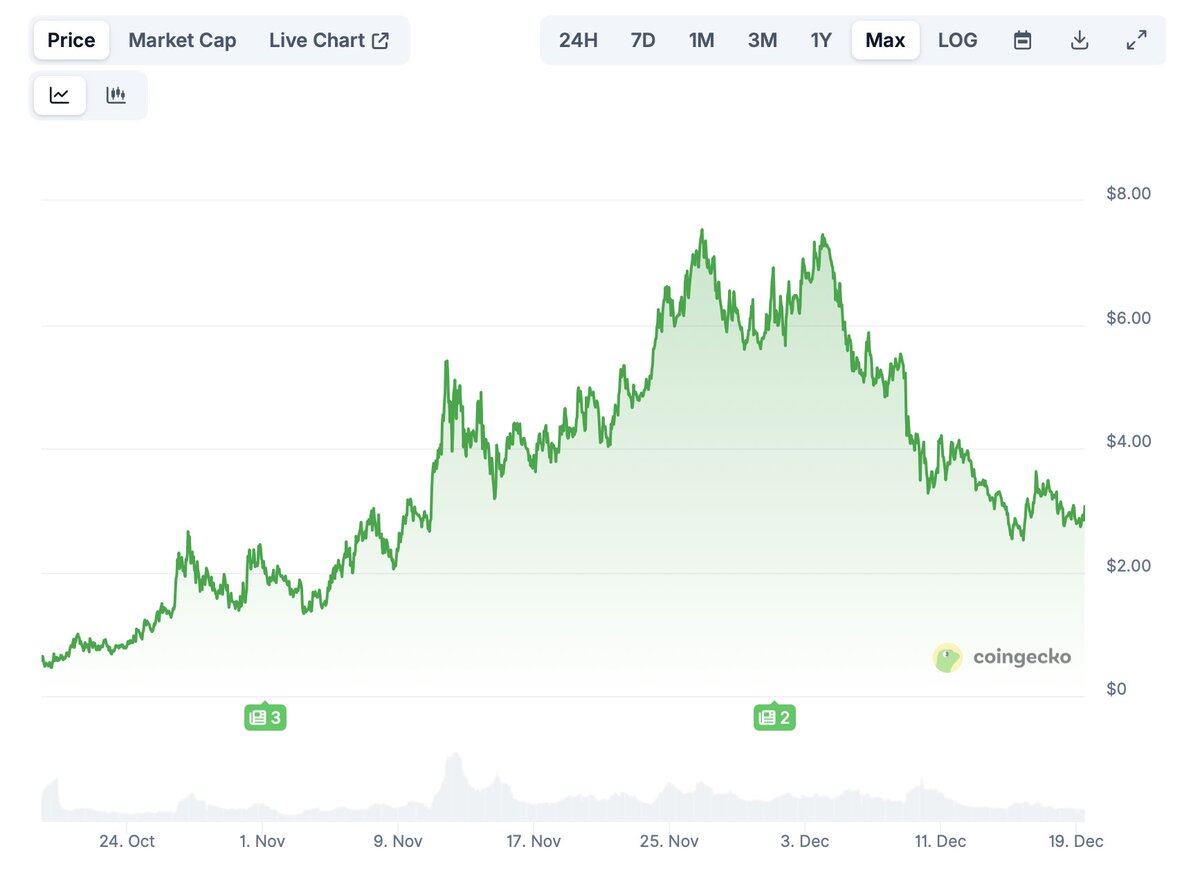
When Tokens Rise for a Reason, Their Prices Tend to Be More Stable

Looking now, the token with the strongest performance post-TGE is SENTIS. Its support points are simple and clear: AI Agent narrative + continuous incentive distribution + exchange listings. In CT, the dominant framework remains consistent: "AI Agents are the next DeFi layer," providing traders with a simple mental model as an anchor.

Mechanically, SENTIS doesn't rely on a one-time listing pump. The token's continuous distribution mechanism (tasks/retrodrop/participation rewards) maintains a steady level of user engagement, which often translates into sustained spot demand as participants prepare for future distributions and ecosystem milestones. This dynamic can support the price even before more meaningful on-chain adoption appears.

"Barely Passing" Tokens

IRYS and FHE belong to the "AI infrastructure and private transactions" field: both benefited from the AI boom, stayed above their initial ranges, and both maintained sufficient liquidity to avoid a price crash. If these projects can translate their narratives into on-chain usage, they can survive. Relying solely on narrative support is not enough.

Then there's CORN. CORN isn't very volatile and is relatively stable compared to its peers, but CORN is more of a "structured product." In 2025, that's not a bad thing. When the market "punishes" overdevelopment, survivability becomes important.

What Characteristics Do Well-Performing 2025 Tokens Share?

Stripping away the narratives and vibes, some clear structural patterns emerge:

1. Token Distribution is More Important Than Hype

The strongest performing projects avoided massive internal liquidity at TGE. AVICI (0% team allocation), SENTIS (activity-based emissions).

Lesson: At project launch, who holds the tokens is more important than who invested privately.

2. Reasonable Launch Valuation Trumps Perfect Timing

Many of the top-performing tokens didn't launch at the peak of market hype, but at reasonable valuations, allowing the market to re-rate them upwards.

AVICI launched a working product with an FDV of around $3.5 million, offering asymmetric upside potential relative to FDV.

Lesson: Tokens that "grow through effort" perform better than those that start with high valuations.

3. Project Usage (or Credible Near-Term Usage) is Priced In

Aster's Perp trading volume, Folks' lending scale, Avici's credit card spending – these weren't just whitepaper promises but observable signals.

Sentis started early but also linked token emissions to on-chain activity, creating a feedback loop between usage and price.

Lesson: The market is now impatient. Utility > Vision.

4. Unlock Structure > Unlock Size

Linear and transparent token unlocks matter, as their dilutive effect is digested by the market. For example, SENTIS releases tokens gradually through participation mechanisms.

Elsewhere, what destroys user confidence isn't token dilution itself, but risky cliff unlocks.

Lesson: Predictable token unlocks are manageable. Unexpected ones are not.

5. Exchange Listings Are Necessary, But Not Sufficient

Almost every token had decent exchange access, but this alone didn't determine anything. Listings amplified outcomes: they helped strong tokens accelerate upwards, while weak tokens were sold off faster. AVICI's token didn't perform that badly even without a Binance listing.

Lesson: Exchange liquidity is an accelerator, not a foundation.

Key Takeaways

Overall, the situation with 2025 TGE tokens marks a shift.

The market no longer rewards "potential," but instead rewards "structure":

- Healthy circulating supply

- Fair token distribution

- Reliable adoption metrics

- Controlled unlock mechanisms

The "rising tokens" of 2025 aren't perfect projects; they were just built to survive their launch. If 2024 was about narrative, then 2025 is about token design under pressure. And this is a lesson most projects haven't yet learned during their TGE.


Criptos en tendencia

Preguntas relacionadas

QWhat are the key characteristics of tokens that performed well after TGE in 2025 according to the article?

AThe key characteristics include: 1. Token distribution being more important than hype (e.g., low internal liquidity at TGE, fair launches). 2. Reasonable initial valuation rather than perfect timing. 3. Demonstrable project usage or credible near-term usage. 4. Transparent and linear token unlock structures. 5. Exchange listings acting as accelerators but not being foundational.

QWhich tokens from 2025 are highlighted as examples of successful post-TGE performance?

AThe tokens highlighted are ASTER, FOLKS, AVICI, and SENTIS. Some 'barely passing' tokens mentioned are IRYS, FHE, and CORN.

QWhy did AVICI stand out among the successful TGE tokens in 2025?

AAVICI stood out due to its fair launch (0% team allocation), a functional product (neobank app with Visa card and real spending), and a low initial fully diluted valuation (FDV) of around $3.5 million, which created asymmetric upside potential.

QHow did SENTIS maintain its price stability after TGE?

ASENTIS maintained price stability through a continuous distribution mechanism (missions, retrodrops, participation rewards) that kept user engagement high, translating into steady spot demand and preparing participants for future allocations and ecosystem milestones.

QWhat shift in market focus does the article note for 2025 compared to previous years?

AThe article notes a shift from rewarding 'potential' in 2024 to rewarding 'structure' in 2025, emphasizing healthy circulating supply, fair token distribution, reliable adoption metrics, and controlled unlock mechanisms.

Lecturas Relacionadas

After Three Consecutive Quarters of Decline, Can the Crypto Market Find a Window for Stabilization in Q3?

The cryptocurrency market has just concluded its worst-performing quarter since 2022, with total capitalization dropping 12.6% to $2.1 trillion. All core metrics indicate capital is leaving the sector, not just rotating within it. Bitcoin fell 14.2% and Ethereum dropped 25.4% in Q2, breaking their previous correlation with US tech stocks. A key driver is the reversal in US spot Bitcoin ETF flows, which saw a net outflow of approximately $4.67 billion in Q2, including a record monthly outflow near $4.5 billion in June. While recent data suggests long-term holders are accumulating again, sustained ETF outflows mean continued selling pressure. Market focus is now singularly on the Federal Reserve. The upcoming July FOMC meeting is seen as the most critical event for Q3. A dovish signal could support Bitcoin reclaiming a $68,000-$84,000 range, while a hawkish stance might establish a new trading band around $50,000-$56,000. Additionally, regulatory uncertainty persists, with the progress of the crucial *CLARITY Act* stalling in the Senate, reducing its perceived 2026 passage probability to 40-45%. Despite the broad downturn, a few sectors showed growth. Prediction markets saw nominal volume surge 48.7% year-over-year to $113.8 billion, and tokenized collectibles transaction volume rose 143% quarterly to $1.4 billion. The Real-World Asset (RWA) tokenization sector also continued steady growth, now representing ~$28.1 billion in on-chain value. The market's foundation for an extreme crash appears limited, with Bitcoin price hovering near its 200-week moving average. However, the trading paradigm has shifted from narrative-driven speculation to decisions based on price action, policy developments, and interest rate expectations, making a broad sentiment-driven rally unlikely in the near term.

marsbitHace 50 min(s)

After Three Consecutive Quarters of Decline, Can the Crypto Market Find a Window for Stabilization in Q3?

marsbitHace 50 min(s)

BIT Trading Moment: BTC Still Suppressed by Weekly 200 EMA, Rejection May Restart Decline; Storage and Semiconductors that Surged Last Night Begin Falling in Evening Trading

**Crypto & Stock Market Wrap: Bitcoin Tests Resistance, Stocks Retreat After AI Surge** Bitcoin consolidates around $66,000, facing key resistance near $68,000—an area seen as a major psychological and technical hurdle where previous rallies have failed. Analysts note the cryptocurrency is caught between its 200-week moving average (~$63,333) and 200-week EMA (~$68,328). A clear break above $68k is needed to signal a stronger bullish trend, while a rejection could lead to a retest of $63k support. Market sentiment remains cautious, with low futures open interest pointing to a low-liquidity rebound rather than a full bull market. Bitcoin spot ETFs saw another $203 million inflow. US stock futures pointed lower after a strong Tuesday session led by a massive rebound in semiconductors and memory stocks. The rally was fueled by renewed optimism about AI-driven hardware demand, with Micron, SanDisk, and SK Hynix surging. However, those gains reversed in pre-market trading. Super Micro Computer (SMCI) soared over 20% after hours on strong guidance and a record backlog. Other standouts included Rocket Lab and nuclear energy plays Oklo and X-Energy. Rising oil prices (Brent above $91) and climbing Treasury yields (10-year near 4.64%), however, are reigniting inflation concerns and acting as a headwind for equities. In Asia, markets were mixed. South Korea's KOSPI pared early gains to close slightly higher as semiconductor stocks like SK Hynix gave back initial surges. Japan's Nikkei edged lower as the yen hit a fresh 38-year low against the dollar, raising fears of potential market intervention. Key events to watch include the Samsung Galaxy launch, AMD's AI event, and a slew of major tech earnings from Alphabet, Tesla, and IBM after the close on Wednesday, followed by the ECB meeting and Intel's earnings on Thursday.

marsbitHace 58 min(s)

BIT Trading Moment: BTC Still Suppressed by Weekly 200 EMA, Rejection May Restart Decline; Storage and Semiconductors that Surged Last Night Begin Falling in Evening Trading

marsbitHace 58 min(s)

Former CFTC Chairman, Circle President Tarbert: Preaching Long-Termism While Cashing Out $30 Million Himself

Former CFTC Chairman and Circle President Heath Tarbert has consistently advocated for a long-term vision in public, urging patience from investors as Circle’s stock price has fallen significantly from its peak. However, it has been revealed that since Circle’s IPO, Tarbert has continuously sold his CRCL shares through pre-arranged trading plans, cashing out approximately $30 million, without making any public market purchases. This contrast between his public messaging and personal actions has drawn criticism. Tarbert joined Circle in July 2023 as Chief Legal Officer, leveraging his regulatory experience to help guide the company through its IPO and expansion. Despite promoting stablecoins as long-term infrastructure, he established a 10b5-1 trading plan just before Circle went public, leading to substantial stock sales over the following year. In March 2026, he initiated another plan to sell more shares. His career trajectory highlights a pattern of moving between high-level regulatory roles and influential positions in the financial sector. After resigning as CFTC Chairman in early 2021, he joined Citadel Securities as Chief Legal Officer just 27 days later, during a period of intense regulatory scrutiny for the firm. He later joined Circle, aiding its efforts to navigate regulatory challenges for its public listing. While Tarbert's expertise in policy and compliance is valuable to companies like Circle, his actions—advocating long-term confidence while personally divesting—raise questions about the alignment between his public statements and his private financial decisions, leaving investors who followed his advice to bear the market risks.

marsbitHace 1 hora(s)

Former CFTC Chairman, Circle President Tarbert: Preaching Long-Termism While Cashing Out $30 Million Himself

marsbitHace 1 hora(s)

Gate Research Institute: The 'Wall Street-ization' Wave of Crypto Financial Products – Competition or Integration?

The article titled "Gate Research Institute: Are Crypto Financial Products Sparking a 'Wall Street' Wave—Competition or Convergence?" explores the evolving relationship between the crypto ecosystem and traditional finance (TradFi). The piece begins by reflecting on Bitcoin's original 2009 vision of decentralization, disintermediation, and moving away from banks. It then contrasts this with the 2024 landscape, where key crypto assets like Bitcoin are increasingly held through Wall Street products like ETFs issued by giants like BlackRock. The article questions whether this signifies that TradFi is systematically taking over the rights to issue, price, custody, and distribute crypto financial assets. The core argument is that this is not a zero-sum takeover but rather a bidirectional convergence where each side addresses the other's weaknesses. Crypto offers 24/7 global markets, programmable settlement, and open access but lacks compliant channels, institutional-grade custody, deep fiat liquidity, and mainstream distribution. TradFi possesses these but is constrained by legacy systems, limited operating hours, and slow settlement. Two primary convergence paths are highlighted: * **Path A (CEX to TradFi):** Exemplified by Gate, which has progressed from offering tokenized stocks and CFDs to providing direct, real stock trading (US, Hong Kong, South Korea) within its platform, using USDT. * **Path B (TradFi to Crypto):** Exemplified by Robinhood, which has integrated crypto trading, acquired exchanges like Bitstamp, and is moving traditional assets like stocks onto the blockchain via tokenization and its own Layer 2. Both paths are ultimately competing to become the next-generation, unified financial account—a "super account" where users can seamlessly trade cryptocurrencies, stocks, ETFs, RWA (Real World Assets), and tokenized treasury products in one interface. The growth of RWA and tokenized treasuries (e.g., BlackRock's BUIDL) is presented as the asset-layer fusion, providing stable, yield-bearing assets on-chain and acting as a bridge between the two worlds. In conclusion, the "Wall Street-ization" of crypto is framed as a mutual transformation. Decentralized ideals persist in the protocol layer, while at the application layer, a more efficient, global, and accessible unified capital market is emerging from this convergence. The future competition lies not between crypto exchanges and stockbrokers, but between platforms vying to offer the most comprehensive asset coverage, liquidity, and user experience within a single account.

marsbitHace 1 hora(s)

Gate Research Institute: The 'Wall Street-ization' Wave of Crypto Financial Products – Competition or Integration?

marsbitHace 1 hora(s)

Trading

Spot

Artículos destacados

Qué es $WELL

WELL3, $$WELL: Revolucionando la Salud y el Bienestar con DePIN y AI Introducción En el paisaje de la tecnología digital que evoluciona rápidamente, el sector de la salud y el bienestar se encuentra a la vanguardia de la innovación, esforzándose por mejorar la atención al paciente y promover estilos de vida más saludables. Un jugador groundbreaking en este dominio es WELL3, un proyecto pionero de Web3 que busca revolucionar cómo las personas se relacionan con su salud. Aprovechando tecnologías como la Red de Infraestructura Física Descentralizada (DePIN), la Identidad Descentralizada (DID) y la Inteligencia Artificial (AI), WELL3 tiene como objetivo fomentar trayectorias de salud seguras y potenciadas por datos. Este artículo completo profundiza en los aspectos centrales de WELL3, $$WELL, explorando sus funcionalidades, creadores, inversores y características únicas. ¿Qué es WELL3, $$WELL? WELL3 sirve como una plataforma innovadora destinada a redefinir el enfoque hacia la salud y el bienestar. Enfocado en integrar DePIN y DID junto con sistemas de IA, el proyecto está diseñado para crear experiencias personalizadas para los usuarios, al tiempo que asegura la seguridad y privacidad de los datos de salud de los individuos. Con una cifra impresionante de más de un millón de usuarios pre-registrados, la misión principal de WELL3 gira en torno a mejorar el bienestar a través de trayectorias de salud seguras y basadas en datos. En su esencia, WELL3 emplea tecnologías avanzadas de blockchain para garantizar que los usuarios tengan control total sobre su información personal. Este proyecto no solo aborda los desafíos de la seguridad y accesibilidad de los datos, sino que también aspira a crear una comunidad vibrante conectada por un compromiso compartido con una mejor salud. Características Clave de WELL3: DePIN y DID: Estas tecnologías permiten la propiedad y autenticación segura de los datos, dando a los usuarios control total sobre su información. Integración de IA: Utilizando análisis de IA, WELL3 ofrece ideas y soluciones personalizadas adaptadas a las necesidades de salud individuales. Compromiso Comunitario: Facilita un entorno de apoyo donde los usuarios pueden conectarse, compartir experiencias y motivarse mutuamente hacia una vida más saludable. Creadores de WELL3, $$WELL La identidad del creador de WELL3 permanece no especificada en la información disponible. A medida que el proyecto avanza, pueden surgir más detalles que arrojen luz sobre las mentes visionarias detrás de esta iniciativa transformadora. Inversores de WELL3, $$WELL WELL3 ha recibido apoyo de una miríada de entidades de inversión influyentes, destacando su credibilidad y potencial en el espacio de la salud y el bienestar. Los inversores notables incluyen: Animoca Brands AWS Samsung The Spartan Group Blocore Fenbushi Capital Newman Group Soul Capital XY Finance Lumoz El respaldo de estas organizaciones establecidas demuestra una fuerte creencia en la misión de WELL3, proporcionándole los recursos necesarios para innovar y expandir sus ofertas. ¿Cómo Funciona WELL3, $$WELL? WELL3 opera fusionando tecnologías avanzadas en un marco multichain, asegurando una experiencia de usuario fluida e innovadora. A continuación, se presentan algunos factores que posicionan de manera única a WELL3 en el mercado del bienestar: 1. Propiedad Segura de Datos Con la integración de DePIN y DID, los usuarios pueden mantener el control total sobre su información personal de salud. Este nivel de seguridad es primordial en la era digital actual, donde las filtraciones de datos y el acceso no autorizado son rampantes. A través de WELL3, la propiedad de datos es descentralizada, permitiendo a los usuarios gestionar proactivamente su información. 2. Personalización a través de IA WELL3 implementa análisis impulsados por IA para proporcionar a los usuarios información de salud personalizada. Al aprovechar el poder de la IA, la plataforma puede ofrecer recomendaciones y soluciones individualizadas, alentando a los usuarios a alcanzar sus objetivos de salud de manera más efectiva. 3. Marco Multichain El proyecto WELL3 está diseñado para funcionar a través de múltiples plataformas de blockchain, incluyendo Bitcoin, Ethereum, Polygon, Solana, Blast y TON. Esta capacidad multichain asegura que los usuarios puedan interactuar con la plataforma sin problemas en diferentes redes, mejorando la accesibilidad y la usabilidad. 4. Token WELL Central en el ecosistema de WELL3 es el Token WELL, que cumple múltiples funciones incluyendo utilidad, gobernanza y recompensas. El token permite la participación en el ecosistema, apoya el intercambio de datos de salud y incentiva a los usuarios en función de su compromiso con la plataforma. Cronología de WELL3, $$WELL La trayectoria de WELL3 muestra hitos significativos en su desarrollo, cada uno contribuyendo al éxito general del proyecto. Aquí hay una breve cronología de eventos críticos en la historia de WELL3: 10 de febrero de 2024: WELL3 lanzó su proyecto NFT, ascendiendo rápidamente a la prominencia como la colección de NFT más grande en la cadena opBNB con más de 324,000 propietarios y alcanzando 8 millones de NFT creados para el 27 de abril de 2024. Venta Pública: El proyecto logró un notable valor total bloqueado (TVL) de aproximadamente 15,237.2 ETH en solo siete días, indicando un robusto interés y respaldo del mercado. Lanzamiento de WELL ID: La plataforma vio más de 900,000 usuarios registrarse para el WELL ID y su correspondiente lista blanca de NFT Ring, marcando una fase significativa de adopción dentro del ecosistema. Desarrollo de Alianzas: WELL3 estableció alianzas con entidades líderes incluyendo Animoca Brands, AWS, Samsung y otras para mejorar su ecosistema y expandir su alcance. Volumen de Transacciones: WELL3 ha facilitado más de $17 millones en transacciones, reflejando su creciente utilidad y compromiso dentro de la comunidad de salud y bienestar. Puntos Clave sobre WELL3, $$WELL Como una iniciativa progresiva que se desplaza hacia el mercado del bienestar, WELL3 ha identificado varios elementos vitales que contribuirán a su éxito continuo. Aquí hay algunos puntos clave a tener en cuenta: Tokenomics El token $$WELL tiene un suministro máximo de 42 mil millones, con un significativo 71% destinado a iniciativas comunitarias. Esta estrategia de distribución enfatiza el compromiso del proyecto con su base de usuarios y la sostenibilidad a largo plazo. Período de Bloqueo Para asegurar estabilidad dentro del ecosistema, los tokens se liberan en lotes durante un período de bloqueo de 24 meses, promoviendo la confianza y seguridad entre los usuarios. Desarrollo del Ecosistema La visión de WELL3 se extiende hacia la creación de un ecosistema integral y sostenible para fomentar un compromiso comunitario próspero, comportamientos que mejoren la salud y soluciones digitales que aborden las necesidades urgentes del dominio del bienestar. Ajuste de Mercado La industria del bienestar, valorada en $5.6 billones, presenta una oportunidad lucrativa que WELL3 busca aprovechar. Con una tasa de crecimiento anual anticipada de 5-10%, el proyecto está idealmente posicionado en medio de una creciente tendencia hacia estilos de vida conscientes de la salud. Dispositivos Portátiles La introducción del Anillo WELL3, un dispositivo portátil incentivado por criptomonedas, se alinea con la creciente demanda de datos de salud personalizados. Este dispositivo no solo mejora la experiencia del usuario, sino que también redefine lo que significa estar comprometido con la salud de uno en el contexto de Web3. Conclusión WELL3 representa un avance significativo en la integración de la tecnología blockchain dentro del sector de la salud y el bienestar. Al abordar cuestiones cruciales sobre la propiedad de datos, personalización y compromiso comunitario, esta plataforma innovadora ofrece una solución de vanguardia para mejorar el bienestar individual. Con un sólido respaldo de inversores notables y un compromiso con tecnologías pioneras, WELL3 está preparado para tener un impacto duradero en el paisaje del bienestar. Para aquellos que buscan navegar las complejidades de la salud en la era digital, WELL3 es, sin duda, uno a seguir mientras continúa evolucionando y creciendo.

77 Vistas totalesPublicado en 2024.07.14Actualizado en 2024.12.03

Qué es $WELL

Cómo comprar WELL

¡Bienvenido a HTX.com! Hemos hecho que comprar Moonwell Artemis (WELL) sea simple y conveniente. Sigue nuestra guía paso a paso para iniciar tu viaje de criptos.Paso 1: crea tu cuenta HTXUtiliza tu correo electrónico o número de teléfono para registrarte y obtener una cuenta gratuita en HTX. Experimenta un proceso de registro sin complicaciones y desbloquea todas las funciones.Obtener mi cuentaPaso 2: ve a Comprar cripto y elige tu método de pagoTarjeta de crédito/débito: usa tu Visa o Mastercard para comprar Moonwell Artemis (WELL) al instante.Saldo: utiliza fondos del saldo de tu cuenta HTX para tradear sin problemas.Terceros: hemos agregado métodos de pago populares como Google Pay y Apple Pay para mejorar la comodidad.P2P: tradear directamente con otros usuarios en HTX.Over-the-Counter (OTC): ofrecemos servicios personalizados y tipos de cambio competitivos para los traders.Paso 3: guarda tu Moonwell Artemis (WELL)Después de comprar tu Moonwell Artemis (WELL), guárdalo en tu cuenta HTX. Alternativamente, puedes enviarlo a otro lugar mediante transferencia blockchain o utilizarlo para tradear otras criptomonedas.Paso 4: tradear Moonwell Artemis (WELL)Tradear fácilmente con Moonwell Artemis (WELL) en HTX's mercado spot. Simplemente accede a tu cuenta, selecciona tu par de trading, ejecuta tus trades y monitorea en tiempo real. Ofrecemos una experiencia fácil de usar tanto para principiantes como para traders experimentados.

116 Vistas totalesPublicado en 2024.12.10Actualizado en 2026.06.02

Cómo comprar WELL

Discusiones

Bienvenido a la comunidad de HTX. Aquí puedes mantenerte informado sobre los últimos desarrollos de la plataforma y acceder a análisis profesionales del mercado. A continuación se presentan las opiniones de los usuarios sobre el precio de WELL (WELL).

活动图片













