Hong Kong Melanjutkan Regime Perizinan untuk Pedagang dan Kustodian Aset Virtual

cointelegraphPublicado a 2025-12-24Actualizado a 2025-12-24

Resumen

Hong Kong akan melanjutkan penerapan rezim perizinan bagi pedagang dan penyedia layanan penitipan aset kripto setelah menyelesaikan proses konsultasi. Langkah ini merupakan bagian dari upaya memperketat pengawasan sektor aset digital. Regulator setempat menyatakan bahwa perusahaan yang menyediakan layanan perdagangan atau penitipan kripto di Hong Kong harus memperoleh izin setelah kerangka peraturan berlaku. Kebijakan ini melengkapi kerangka perizinan kripto yang terus berkembang, termasuk rezim perizinan untuk penerbit stablecoin yang telah diberlakukan awal 2025. Hong Kong juga telah mewajibkan platform perdagangan kripto untuk berlisensi, dengan 11 perusahaan telah disetujui oleh Otoritas Sekuritas dan Berjangka (SFC). Selain aturan perizinan, Hong Kong menguji inisiatif tokenisasi dan menerbitkan konsultasi terpisah untuk rezim perizinan penyedia layanan penasihat dan manajemen aset kripto. Upaya ini bertujuan membangun ekosistem aset digital yang tepercaya dan berkelanjutan, serta memperkuat posisi Hong Kong sebagai pusat keuangan global.

Regulator Hong Kong akan melanjutkan legislasi regime perizinan untuk pedagang dan kustodian kripto setelah menyelesaikan konsultasi, sebagai bagian dari upaya yang lebih luas untuk memperketat pengawasan.

Dalam pengumuman Rabu, Biro Layanan Keuangan dan Perbendaharaan (FSTB) kota tersebut dan Securities and Futures Commission (SFC) menyatakan bahwa mereka telah menyimpulkan konsultasi mengenai regime perizinan yang diusulkan, yang akan mewajibkan perusahaan yang menyediakan layanan perdagangan atau kustodian kripto di Hong Kong untuk memperoleh izin setelah kerangka kerja berlaku.

Langkah ini menambah kerangka kerja perizinan kripto kota yang terus berkembang. Awal tahun 2025, Hong Kong memberlakukan Stablecoin Ordinance-nya, membuka regime perizinan baru bagi penerbit stablecoin.

Hong Kong sudah mewajibkan platform perdagangan kripto untuk memiliki izin. Rezim wajib saat ini dibangun di atas kerangka kerja opsional yang diperkenalkan pada tahun 2020, dengan 11 perusahaan telah mendapat persetujuan dari SFC hingga saat ini.
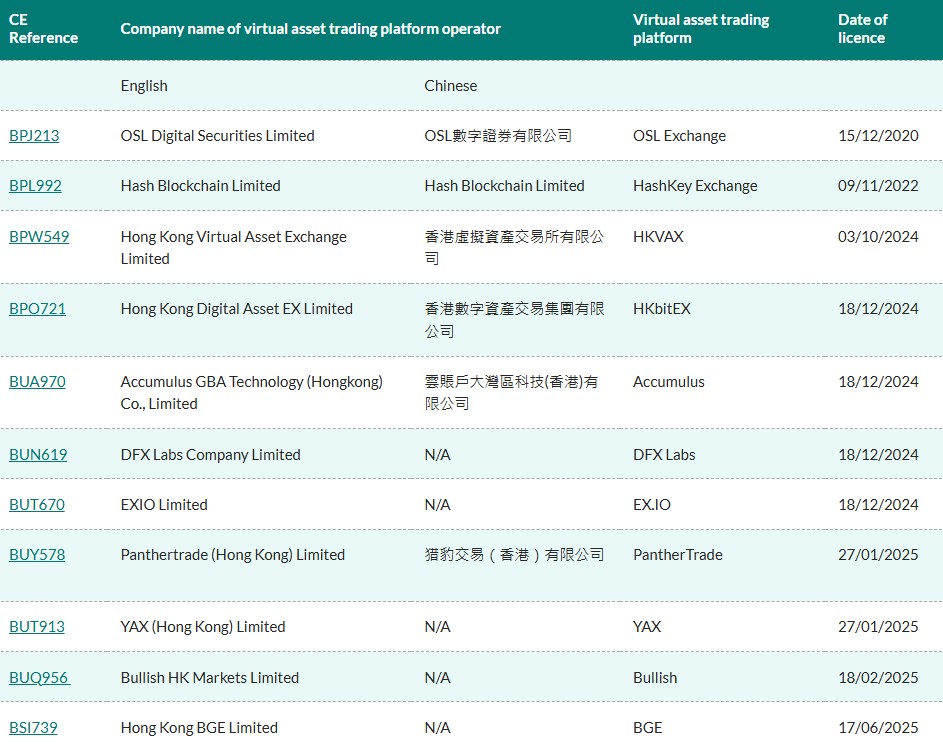
Hong Kong telah menolak lebih banyak pelamar untuk izin pertukaran kriptonya daripada yang disetujui. Sumber: SFC

Terkait: Kripto dapat masuk ke portofolio perusahaan asuransi saat Hong Kong meninjau aturan modal

Inisiatif kripto yang lebih luas Hong Kong

Hong Kong telah lama menyatakan ambisinya untuk berkembang menjadi pusat kripto. Kota ini sudah berfungsi sebagai pusat keuangan dengan rezim pajak yang ramah bisnis dan reputasinya sebagai gerbang keuangan antara Tiongkok daratan dan pasar modal global.

Di luar aturan perizinan kripto, Hong Kong juga telah menguji inisiatif tokenisasi. Dalam pengumuman Kamis, regulator menambahkan bahwa pengenalan regime perizinan yang tertunda untuk pedagang dan kustodian kripto adalah bagian dari upaya kota untuk membangun kerangka regulasi yang komprehensif untuk aset digital bersama stablecoin dan tokenisasi.

​Julia Leung, CEO SFC, mengatakan bahwa pengembangan lebih lanjut kerangka regulasi kripto Hong Kong akan membantu kota mempertahankan posisinya dalam perkembangan pasar aset digital global dengan "mendorong ekosistem yang tepercaya, kompetitif, dan berkelanjutan."

Terkait: Hong Kong meluncurkan konsultasi pajak kripto CARF untuk memerangi penggelapan

Konsultasi penasihat dan manajemen baru

SFC juga menerbitkan makalah konsultasi pada hari yang sama, meminta masukan publik mengenai proposal untuk memperkenalkan regime perizinan untuk penyedia layanan penasihat kripto dan penyedia layanan manajemen.

Konsultasi tersebut menghubungkan rezim yang diusulkan dengan kerangka Anti-Pencucian Uang (AML) yang ada di Hong Kong dan Counter‐Terrorist Financing Ordinance, dan menguraikan bagaimana kegiatan penasihat dan manajemen yang melibatkan aset digital akan dimasukkan ke dalam kerangka regulasi.

Dokumen ini juga mengundang komentar mengenai hal-hal seperti ruang lingkup perizinan, kewenangan pengatur, sanksi dan pengaturan banding, yang akan diperhitungkan dalam memfinalisasi proposal.


Preguntas relacionadas

QApa yang akan diwajibkan oleh rezim perizinan baru Hong Kong bagi perusahaan yang menangani aset kripto?

APerusahaan yang menyediakan layanan perdagangan atau penyimpanan aset kripto di Hong Kong harus memperoleh izin setelah kerangka peraturan ini berlaku.

QBerapa banyak perusahaan yang telah mendapatkan persetujuan izin dari SFC untuk platform perdagangan kripto hingga saat ini?

ASebanyak 11 perusahaan telah mendapatkan persetujuan izin dari Securities and Futures Commission (SFC) hingga saat ini.

QSelain aturan perizinan kripto, inisiatif apa lagi yang telah diuji Hong Kong dalam pengembangan aset digital?

AHong Kong juga telah menguji inisiatif tokenisasi sebagai bagian dari kerangka regulasi komprehensif untuk aset digital.

QApa tujuan Hong Kong mengembangkan kerangka regulasi kripto yang lebih luas menurut CEO SFC Julia Leung?

ATujuannya adalah mempertahankan posisi Hong Kong dalam perkembangan pasar aset digital global dengan menciptakan ekosistem yang tepercaya, kompetitif, dan berkelanjutan.

QApa fokus konsultasi yang diterbitkan SFC terkait penyedia layanan penasihat dan manajemen kripto?

AKonsultasi tersebut meminta masukan tentang pengenalan rezim perizinan yang terkait dengan kerangka Anti-Pencucian Uang (AML) dan mengatur cakupan perizinan, kekuatan regulasi, serta sanksi.

Lecturas Relacionadas

How Much of the Subscription Fee You Pay to Claude Can Optical Module Companies Get?

How much of your $20 Claude Pro subscription actually goes to AI model companies like Anthropic? A viral breakdown image highlights the fundamental valuation challenge for AI applications versus traditional SaaS. Unlike SaaS with high software margins, AI subscriptions face variable "inference costs": every user query consumes GPU time, power, and cloud resources. This creates a tension between fixed subscription fees and usage-driven expenses. While the specific dollar splits are illustrative, the core question is whether AI revenue can achieve SaaS-like margins as usage scales. Currently, infrastructure providers (cloud platforms, GPU makers like Nvidia, HBM suppliers, power/data centers) capture more certain revenue from growing AI usage. Their financials reflect pricing power and faster earnings validation. The bullish case hinges on efficiency improvements: model optimization, caching, smaller models, and custom chips could lower per-token costs over time. The key debate is whether cost declines can outpace increases in user workload complexity and volume. Ultimately, for AI companies to command high SaaS-like valuations, they must demonstrate not just user growth but also improving gross margins after accounting for inference costs. Investors will scrutinize not just subscriber numbers, but usage patterns, enterprise pricing tiers, and real efficiency gains.

marsbitHace 1 min(s)

How Much of the Subscription Fee You Pay to Claude Can Optical Module Companies Get?

marsbitHace 1 min(s)

OpenAI's Hyperliquid Pre-IPO Pricing Venture: Why Did It Last Only Half a Year?

The article discusses the rise and fall of Pre-IPO pricing markets on the Hyperliquid blockchain. Trade.xyz, an anonymous team, successfully built the largest pre-market for SpaceX (SPCX) by launching a contract with a clear anchor: the eventual Nasdaq listing price. This provided inherent price stability and validation. In contrast, Ventuals, a team backed by Paradigm, failed despite holding exclusive contracts for highly sought-after companies like OpenAI and Anthropic. Its key mistake was its pricing mechanism. For companies with no near-term IPO date, Ventuals' oracle relied partly on opaque private market transactions and, critically, partly on its own contract's moving average price. This created a self-referential feedback loop where prices were artificially propped up and detached from genuine supply and demand, leading to illiquid markets. Ventuals shut down after nine months, settling positions at final prices of $1,341.80 for OpenAI and $1,618.90 for Anthropic. Ironically, some employees and late-stage investors of these very companies reportedly used these flawed Ventuals prices for valuation reference, highlighting the acute demand for any price signal in illiquid private markets. The article concludes that while demand for pre-IPO trading is real and growing, with players like Coinbase now entering the space, the fundamental challenge remains: without a public listing to provide a definitive price anchor, these markets struggle to establish truly accurate and liquid pricing. The need for a transparent, self-correcting market is the critical lesson from Ventuals' failure.

marsbitHace 17 min(s)

OpenAI's Hyperliquid Pre-IPO Pricing Venture: Why Did It Last Only Half a Year?

marsbitHace 17 min(s)

With Daily Active Users Reaching 3-4 Times That of the Industry's Second Place, Which Crack in the Office Agent Market Has Tencent's WorkBuddy Torn Open?

Tencent's AI office assistant, WorkBuddy, has achieved daily active users (DAU) 3-4 times that of the industry's second-place product, primarily driven by non-technical users like HR, operations, and administrative staff. Its rapid growth, starting with a public beta in March 2026, highlights a key strategic divergence from competitors like OpenAI's Codex and Anthropic's Claude Code. Unlike those tools, which originated as developer-focused assistants (in command lines or IDEs) and are now expanding towards office scenarios, WorkBuddy was built from the ground up for non-technical office workers. Its development was user-driven, initiated after腾讯云's team observed non-technical employees using their CodeBuddy coding tool for general tasks. WorkBuddy's design is defined by three core decisions aimed at lowering barriers: 1) Using natural language instead of technical concepts, so users describe their goal without needing to understand prompts or agents. 2) Providing pre-packaged "Skill" templates for common office tasks like data processing, content creation, and research. 3) Natively integrating into existing腾讯 ecosystems like腾讯 Docs and WeChat, making the agent a seamless part of the user's workflow rather than a separate tool. This "scenario encapsulation" approach, prioritizing the shortest path for users to get work done, contrasts with the "underlying capability" focus of Codex and Claude, which offer more flexibility but require more technical setup. Analysts confirm WorkBuddy's leading market position in China by mid-2026, with massive user and request growth following its launch. Recognizing the same trend of surging non-technical adoption, OpenAI and Anthropic are now pivoting their products with features like role-based plugins (Codex) and a simplified desktop interface (Claude Cowork). However, adapting tools built for developers requires significant changes to interaction models and integrations. WorkBuddy currently holds an estimated six-month lead in delivering a complete solution for non-technical office users. Its recently launched enterprise version aims to solidify this advantage. The competition underscores two valid paths: embedding agent capabilities directly into familiar work environments versus building powerful, general-purpose agents that users must learn to access. WorkBuddy's early success demonstrates the effectiveness of the former strategy for mainstream office adoption.

marsbitHace 25 min(s)

With Daily Active Users Reaching 3-4 Times That of the Industry's Second Place, Which Crack in the Office Agent Market Has Tencent's WorkBuddy Torn Open?

marsbitHace 25 min(s)

Trading

Spot
Futuros

Artículos destacados

Cómo comprar VIRTUAL

¡Bienvenido a HTX.com! Hemos hecho que comprar Virtuals Protocol (VIRTUAL) sea simple y conveniente. Sigue nuestra guía paso a paso para iniciar tu viaje de criptos.Paso 1: crea tu cuenta HTXUtiliza tu correo electrónico o número de teléfono para registrarte y obtener una cuenta gratuita en HTX. Experimenta un proceso de registro sin complicaciones y desbloquea todas las funciones.Obtener mi cuentaPaso 2: ve a Comprar cripto y elige tu método de pagoTarjeta de crédito/débito: usa tu Visa o Mastercard para comprar Virtuals Protocol (VIRTUAL) al instante.Saldo: utiliza fondos del saldo de tu cuenta HTX para tradear sin problemas.Terceros: hemos agregado métodos de pago populares como Google Pay y Apple Pay para mejorar la comodidad.P2P: tradear directamente con otros usuarios en HTX.Over-the-Counter (OTC): ofrecemos servicios personalizados y tipos de cambio competitivos para los traders.Paso 3: guarda tu Virtuals Protocol (VIRTUAL)Después de comprar tu Virtuals Protocol (VIRTUAL), guárdalo en tu cuenta HTX. Alternativamente, puedes enviarlo a otro lugar mediante transferencia blockchain o utilizarlo para tradear otras criptomonedas.Paso 4: tradear Virtuals Protocol (VIRTUAL)Tradear fácilmente con Virtuals Protocol (VIRTUAL) en HTX's mercado spot. Simplemente accede a tu cuenta, selecciona tu par de trading, ejecuta tus trades y monitorea en tiempo real. Ofrecemos una experiencia fácil de usar tanto para principiantes como para traders experimentados.

344 Vistas totalesPublicado en 2024.12.23Actualizado en 2026.06.02

Cómo comprar VIRTUAL

Discusiones

Bienvenido a la comunidad de HTX. Aquí puedes mantenerte informado sobre los últimos desarrollos de la plataforma y acceder a análisis profesionales del mercado. A continuación se presentan las opiniones de los usuarios sobre el precio de VIRTUAL (VIRTUAL).

活动图片