December 22: BTC, ETH, SOL, LIGHT, MERL, PIPPIN Market Analysis

金色财经Publicado a 2025-12-22Actualizado a 2025-12-22

Resumen

December 22: BTC, ETH, SOL, LIGHT, MERL, PIPPIN Market Analysis Bitcoin saw low liquidity and reduced volatility over the weekend but halted its downward trend, climbing back to around $90,000. The weekly chart shows signs of stabilization, with limited downside and potential upside in the coming month. Macro conditions currently don’t support further decline. BTC is trading at $89,240, still in a broad consolidation range. Key resistance is at 89.5K–90K; a break above could signal further gains. Key support lies at 87,900, with major resistance near 100,000 and strong support around 78,000–79,000. ETH has consolidated and reclaimed $3,000. Long positions can consider partial profit-taking or break-even stops. Next targets are $3,144 and $3,269. A pullback to $2,980–$2,950 may offer entry opportunities. SOL has shown weak momentum, with less than 3% gains over three days. It faces strong resistance near $134, making it a candidate for shorting. Further downside is expected after a potential brief rebound. LIGHT experienced a sharp drop with little buyer reaction. Such altcoins often have short cycles and high risk. Caution is advised—avoid FOMO. Better opportunities may lie in tokens like XPIN, NIGHT, and BEAT after clearer signals emerge. MERL has repeatedly failed to hold above $0.50 due to heavy selling pressure, especially with large unlocks in mid-December. A drop toward $0.30 is likely, making it a candidate for short positions with a stop above $0.52. PIPPIN has...

Over the weekend, Bitcoin lacked liquidity and trading volume, with volatility severely decreasing. However, the selling pressure trend ended by the weekend, and last night it climbed back to around $90,000.

There are signs of a halt in the decline on the weekly chart. From a macro perspective, there are currently no reasons for a drop. The current range is in a position with limited downside and unlimited upside potential. A rebound is expected to occur within the next month.

In Q1 2026, Trump has vowed to directly distribute ?, so there is considerable hope. However, we will need to analyze the situation when the time comes.

BTC

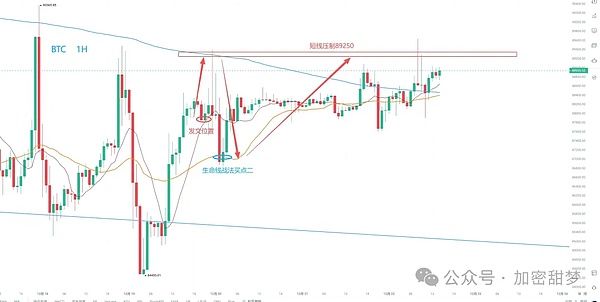
Current price: $89,240, still in a wide consolidation range. The $89.5K-$90K range is currently seen as the top resistance level (for shorting). A failed breakout will lead to further decline; a bullish move requires a complete breakout above this range. Short-term trading should focus around these support and resistance levels.

The current upper volatility band is at $90,500, and the lower band is at $87,900. Corresponding short-term resistance is at $90,777–$92,410 (avoid shorting), and short-term support is at $85,710–$82,569.

Secondary resistance is at $93,668–$95,240 (enter on pullback after a breakout with volume; if only reached, enter on pullback to short-term resistance). Secondary support is at $83,540–$82,650.

Outside the range: Upwards, the resistance around the $100,000 mark ±$2,000 remains, referenced at $98,110–$101,116. Downwards, support at $79,050–$78,000 is effective, as is support at $75,750–$74,635.
ETH

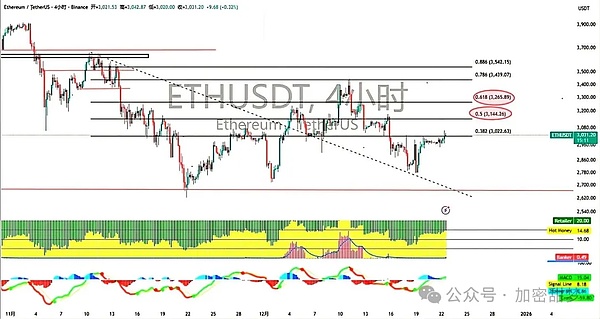
ETH has finally broken above the $3,000 level after two days of consolidation. Those holding long positions can set breakeven stop-losses or take partial profits. The next targets are the $3,144 and $3,269 levels.

Today, the U.S. stock market will open with a slight downward correction before continuing to rise. Those without long positions can wait for a pullback to around $2,980–$2,950.
SOL

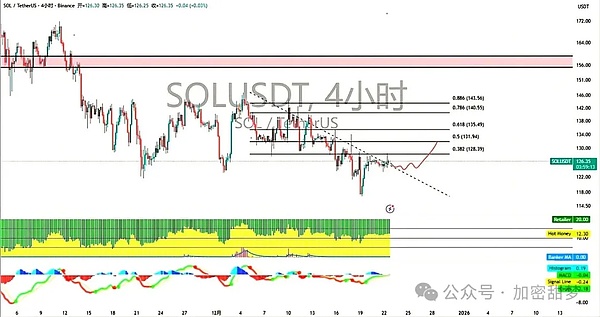
SOL has seen less than a 3% increase over the past three days... quite disappointing. The on-chain profitability is also poor, with major funds only recognizing BTC and ETH. After a rebound this week, it is likely to continue declining to new lows.

The biggest resistance this week is at $134, which is the highest point of the rebound from $116. Shorting near $133.85 offers the best risk-reward ratio for short-term trades. The secondary shorting point is around $131.5.
LIGHT

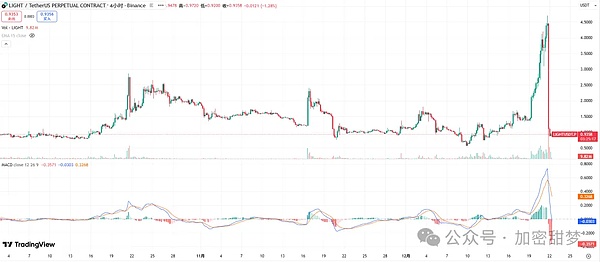
LIGHT suddenly crashed early this morning, leaving bulls with almost no time to react. For small-cap coins, this is not unexpected but a common occurrence. To be blunt: most people won’t make money on such coins. The cycles are extremely short, the pace is extremely fast, and the outcome is often either sideways distribution or a path to zero.

Currently, the overall position of altcoins is not stable. Don’t rush to go all-in, and don’t be swayed by a few big green candles. At this stage, I’d rather keep coins like $XPIN, $NIGHT, and $BEAT in the watchlist. Don’t rush or chase. Wait for the structure to clarify and signals to emerge before considering action. The market is not short of opportunities; what’s lacking are those who can stay steady when emotions are hottest.
MERL

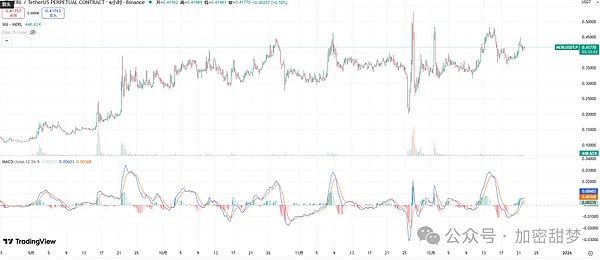
MERL has touched around $0.50 three times recently, each time pulling back sharply after a brief rise. The selling pressure is heavy, showing typical divergence between volume and price. The unlock volume in December is too concentrated: the 12th, 15th, 16th, and 19th alone add 70 million tokens directly into circulation. With such solid and certain selling pressure and no substantial buying support, the price is likely to decline slowly initially. Once expectations build, it could accelerate downward.

I lean toward shorting on rallies. My short-term target is around the $0.30 support area, with a stop-loss set above $0.52. Before the unlock period, I’d rather stay short than try to withstand this pressure.
PIPPIN

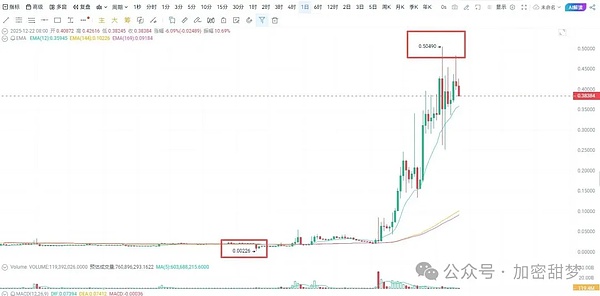
PIPPIN has surged over 200x, with two daily chart peaks followed by pullback. This coin has likely topped out. It’s a shame I missed it during yesterday’s second peak.
If you find our content helpful, please share our public account with your friends! Welcome to follow and stay updated with the latest crypto news! After every sharp decline comes vast opportunities. If you’re unsure about future market strategies, follow Tianmeng. Contact: RFGH8689

Criptos en tendencia

Preguntas relacionadas

QWhat is the current price of BTC and what are the key resistance and support levels mentioned in the analysis?

AThe current price of BTC is 89,240. The key resistance levels are 89.5K-90K (top of the range), 90,500 (upper volatility band), and 100,000 ± 2,000. The key support levels are 87,900 (lower volatility band), 85,710-82,569 (short-term support), and 79,050-78,000.

QWhat is the trading advice for ETH after it broke above $3000 according to the article?

AFor ETH, which have broken above $3000, the advice is to set a break-even stop-loss or take partial profits. The next targets are $3144 and $3269. For those without a long position, wait for a pullback to around $2980-$2950 to enter.

QWhat is the outlook for SOL and what is the recommended trading strategy?

AThe outlook for SOL is bearish. The analysis states it has poor on-chain benefits and that major funds are only focused on BTC and ETH. It is expected to hit new lows after a rebound this week. The recommended strategy is to short near the major resistance at $134 (or near $133.85) for the best risk-reward ratio, with a secondary shorting point around $131.5.

QWhy does the analysis recommend being cautious with altcoins like LIGHT and what alternative coins are mentioned for observation?

AThe analysis recommends caution with altcoins like LIGHT because they are highly volatile with extremely fast cycles, often ending in sideways distribution or trending to zero. Instead, the author prefers to observe coins like $XPIN, $NIGHT, and $BEAT, waiting for their structures to become clear and for signals to appear before considering any action.

QWhat is the reasoning behind the bearish view on MERL and what is the suggested trade?

AThe bearish view on MERL is due to heavy selling pressure and a typical volume-price divergence. It has failed three times near $0.50, and there is a concentrated unlock of 70 million tokens in December, creating significant and certain selling pressure with little buying support. The suggested trade is to short on rallies, with a short-term target around $0.30 and a stop-loss placed above $0.52.

Lecturas Relacionadas

GPT-5.6 Countdown: Abandon the Illusion of a Single API, Computational Iteration Can't Outpace a Single Page of Compliance

In mid-June, three seemingly independent industry events—the compliance-driven throttling of Fable 5, the open-sourcing of GLM-5.2, and the leaked release timeline for GPT-5.6—are pushing the global AI industry toward a watershed moment. These shifts signal a fundamental restructuring of the industry's underlying logic. First, **"usability" has substantially overtaken "advanced capabilities"** as the primary weight, pushing the global large language model (LLM) supply chain into a "dual-track" phase of controlled closed-source and local open-source coexistence. Second, **the competitive moats of closed-source giants are shifting**. Their technical focus is moving from "language intelligence" toward "spatial intelligence (world models)"—a domain heavily reliant on computing power. Third, faced with常态化 transnational compliance risks, **a "model-agnostic" decoupled design has become a survival necessity for application-layer developers to maintain business continuity.** The article details how Anthropic's Fable 5, despite its advanced engineering feats, was restricted for non-U.S. citizens within 72 hours of launch, highlighting how geopolitical compliance can instantly limit even the most advanced models. In response, the open-source camp, exemplified by Zhipu AI's MIT-licensed GLM-5.2, is gaining market share by offering stable performance improvements and significant cost advantages (up to 70% savings for enterprises), while achieving full adaptation with domestic semiconductor platforms. Meanwhile, closed-source leaders like OpenAI are pivoting. The anticipated GPT-5.6 reportedly shifts focus from language to spatial intelligence and world models, aiming to rebuild a generational gap in areas like 3D understanding, simulation, and industrial design that demand immense compute. The core conclusion is that the LLM supply chain's logic has changed. Enterprises must now evaluate infrastructure based on a composite of technical performance and policy compliance. For developers, complete reliance on a single closed-source API poses unacceptable risk. Implementing a truly model-agnostic architecture—enabling swift switches to compliant, locally deployable open-source alternatives—is no longer just good practice but a fundamental baseline for business continuity.

marsbitHace 2 hora(s)

GPT-5.6 Countdown: Abandon the Illusion of a Single API, Computational Iteration Can't Outpace a Single Page of Compliance

marsbitHace 2 hora(s)

Is the 'Token Subsidy War' Among AI Giants Almost Over?

The article discusses the ongoing "token subsidy war" among AI giants like OpenAI and Anthropic, questioning whether it's nearing its end. It reveals that current AI subscription prices are heavily subsidized, with some plans offering tokens at up to 70 times the actual cost to attract and retain heavy users, especially developers and enterprises. This strategy mirrors past internet-era subsidy battles, but with a key difference: AI tokens lack "lock-in" effects. Unlike ride-hailing or food delivery apps, users can easily switch between AI providers as APIs become standardized, making it difficult for companies to raise prices post-subsidy. The piece highlights a structural asymmetry in the competition. Giants like Google, with massive advertising revenue, can afford to subsidize tokens indefinitely, akin to using "tokens as a weapon." In contrast, venture-backed companies like OpenAI and Anthropic face pressure to become profitable, especially as they approach IPO. The article cites Google Ventures founder Bill Maris, who suggests Google could slash token prices by 80%, putting immense pressure on competitors. Two potential endgames are presented: the "internet service" model (subsidize, monopolize, then raise prices) and the "utility" model (tokens become a standardized, low-margin commodity like electricity). Given the low switching costs, the latter seems more likely. The competition may not have a single winner but could instead accelerate AI's evolution into a foundational, infrastructure-level technology, akin to a public utility. For now, users continue to benefit from heavily subsidized token costs.

marsbitHace 2 hora(s)

Is the 'Token Subsidy War' Among AI Giants Almost Over?

marsbitHace 2 hora(s)

Beyond the Stadium: The Profitable Games Surrounding the World Cup

"Beyond the Pitch: The Profit Game Around the World Cup" The FIFA World Cup transcends being a sporting spectacle, evolving into a massive global arena for speculation and profit-seeking. The 2026 tournament has amplified this dynamic, creating a multi-layered ecosystem of financial opportunism alongside the football. **Prediction markets** have surged into the mainstream. Platforms like Polymarket and Kalshi saw trading volumes for World Cup contracts soar, attracting new users with their financial trading model and high-profile, chain-based wealth stories that overshadow traditional sports betting in terms of growth and narrative. However, **traditional sportsbooks** remain the dominant force, leveraging established user habits, legal markets, and comprehensive product offerings to handle the vast majority of speculative wagers, with projections suggesting record-breaking betting volumes. Capital markets also react. **"Concept stocks"** in countries like South Korea and Japan experience volatile price swings based on team performance and anticipated fan spending on items like chicken, beer, and viewing parties, effectively becoming a stock market reflecting fan sentiment. The **ticket resale market** has become a sophisticated arena for arbitrage. Prices fluctuate wildly based on team draws and star power, with sellers sometimes listing tickets they don't yet own in a practice akin to short-selling, while FIFA's own "Right to Buy" tokens add another layer of speculative trading. **Collectibles and merchandise** offer another avenue. Panini sticker albums, with their inherent scarcity and nostalgic value, can become high-value collectibles. Limited-edition or locally themed jerseys command significant premiums on secondary markets, and even counterfeit vendors profit from fans' desire for affordable match-day identity. The **cryptocurrency** space has seen a frenzy of speculative, unauthorized World Cup-themed meme coins on chains like Solana. These tokens, often exploiting team names and player imagery, experience extreme pump-and-dump cycles, creating stories of massive gains for a few early entrants and steep losses for many others. Finally, an entire industry thrives on **providing information and tools** to other speculators. Developers create platforms like SeatSidekick to track ticket inventory and prices, while paid Telegram groups and subscriptions sell betting tips and predictions, monetizing the widespread desire for an informational edge. In essence, the World Cup has become a compressed, global laboratory for speculation. While the games determine champions on the field, a parallel, complex network of financial transactions—spanning prediction contracts, bets, stocks, tickets, collectibles, crypto, and information services—settles its own scores in the global market.

marsbitHace 3 hora(s)

Beyond the Stadium: The Profitable Games Surrounding the World Cup

marsbitHace 3 hora(s)

Trading

Spot
Futuros

Artículos destacados

Qué es BITCOIN

Entendiendo HarryPotterObamaSonic10Inu (ERC-20) y Su Posición en el Espacio Cripto En los últimos años, el mercado de criptomonedas ha sido testigo de un aumento en la popularidad de las monedas meme, capturando el interés no solo de los comerciantes, sino también de aquellos que buscan compromiso comunitario y valor de entretenimiento. Entre estos tokens únicos se encuentra HarryPotterObamaSonic10Inu (ERC-20), un proyecto intrigante que mezcla referencias culturales en el tejido de las criptomonedas. Este artículo profundiza en los aspectos clave de HarryPotterObamaSonic10Inu, explorando sus mecanismos, ethos impulsado por la comunidad y su relación con el paisaje cripto más amplio. ¿Qué es HarryPotterObamaSonic10Inu (ERC-20)? Como su nombre sugiere, HarryPotterObamaSonic10Inu es una moneda meme construida sobre la blockchain de Ethereum, clasificada bajo el estándar ERC-20. A diferencia de las criptomonedas tradicionales que pueden enfatizar la utilidad práctica o el potencial de inversión, este token prospera en el valor de entretenimiento y la fuerza de su comunidad. El proyecto tiene como objetivo fomentar un entorno donde los usuarios comprometidos puedan reunirse, compartir ideas y participar en actividades inspiradas por diversos fenómenos culturales. Una característica notable de HarryPotterObamaSonic10Inu es su cero impuestos en las transacciones. Este atractivo elemento tiene como objetivo incentivar el comercio y la participación comunitaria, sin cargos adicionales que puedan disuadir a los comerciantes de pequeña escala. El suministro total de la moneda está establecido en mil millones de tokens, una cifra que marca su intención de mantener una circulación sustancial dentro de la comunidad. Creador de HarryPotterObamaSonic10Inu (ERC-20) Los orígenes de HarryPotterObamaSonic10Inu están algo envueltos en misterio; los detalles sobre el creador siguen siendo desconocidos. El desarrollo de este token carece de un equipo identificable o de un plan explícito, lo cual no es inusual dentro del sector de monedas meme. En cambio, el proyecto ha surgido de manera orgánica, con su progreso muy dependiente del entusiasmo y la participación de su comunidad. Inversores de HarryPotterObamaSonic10Inu (ERC-20) En cuanto a inversiones externas y respaldo, HarryPotterObamaSonic10Inu también sigue siendo ambiguo. El token no lista ninguna fundación de inversión conocida o apoyo organizacional significativo. En cambio, la savia del proyecto es su comunidad de base, que informa su crecimiento y sostenibilidad a través de la acción colectiva y el compromiso en el espacio cripto. ¿Cómo Funciona HarryPotterObamaSonic10Inu (ERC-20)? Como una moneda meme, HarryPotterObamaSonic10Inu opera principalmente fuera de los marcos tradicionales que a menudo rigen el valor de los activos. Hay varios aspectos distintivos que definen cómo funciona el proyecto: Transacciones Sin Impuestos: Sin tarifas impositivas en las transacciones, los usuarios pueden comprar y vender el token libremente sin preocuparse por costos ocultos. Compromiso Comunitario: El proyecto prospera en la interacción comunitaria, aprovechando plataformas de redes sociales para crear entusiasmo y facilitar la participación. Las discusiones, el intercambio de contenido y el compromiso son elementos cruciales que ayudan a expandir su alcance y fomentar la lealtad entre los seguidores. Sin Utilidad Práctica: Cabe señalar que HarryPotterObamaSonic10Inu no ofrece utilidad concreta dentro del ecosistema financiero. Más bien, se clasifica como un token principalmente para actividades de entretenimiento y comunitarias. Referencia Cultural: El token incorpora astutamente elementos de la cultura popular para atraer interés, conectando con entusiastas de los memes y seguidores de las criptomonedas por igual. HarryPotterObamaSonic10Inu ejemplifica cómo las monedas meme operan de manera diferente a los proyectos de criptomonedas más tradicionales, ingresando al mercado como construcciones sociales innovadoras en lugar de activos utilitarios. Cronología de HarryPotterObamaSonic10Inu (ERC-20) La historia de HarryPotterObamaSonic10Inu está marcada por varios hitos notables: Creación: El token surgió de un meme viral, capturando la imaginación de muchos entusiastas de las criptomonedas. Las fechas específicas de creación no están disponibles, subrayando su ascenso orgánico. Listado en Exchanges: HarryPotterObamaSonic10Inu ha llegado a varios exchanges, permitiendo un acceso y comercio más fácil por parte de la comunidad. Iniciativas de Compromiso Comunitario: Actividades continuas destinadas a mejorar la interacción comunitaria, incluyendo concursos, campañas en redes sociales y generación de contenido por parte de fanáticos y defensores. Planes de Expansión Futuros: La hoja de ruta del proyecto incluye el lanzamiento de una colección de NFT, mercancía y un sitio de comercio electrónico relacionado con sus temas culturales, involucrando aún más a la comunidad e intentando añadir más dimensiones a su ecosistema. Puntos Clave Sobre HarryPotterObamaSonic10Inu (ERC-20) Naturaleza Impulsada por la Comunidad: El proyecto prioriza la participación colectiva y la creatividad, asegurando que la involucración de los usuarios esté a la vanguardia de su desarrollo. Clasificación como Moneda Meme: Representa la epítome de las criptomonedas basadas en el entretenimiento, diferenciándose de los vehículos de inversión tradicionales. Sin Afiliación Directa con Bitcoin: A pesar de la similitud en el nombre del ticker, HarryPotterObamaSonic10Inu es distinto y no tiene relación con Bitcoin u otras criptomonedas establecidas. Enfoque en la Colaboración: HarryPotterObamaSonic10Inu está diseñado para crear un espacio para la colaboración y el intercambio de historias entre sus poseedores, proporcionando una vía para la creatividad y el vínculo comunitario. Perspectivas Futuras: La ambición de expandirse más allá de su premisa inicial hacia NFTs y mercancías describe un camino para que el proyecto potencialmente ingrese a avenidas más tradicionales dentro de la cultura digital. A medida que las monedas meme continúan capturando la imaginación de la comunidad de criptomonedas, HarryPotterObamaSonic10Inu (ERC-20) se destaca debido a sus lazos culturales y su enfoque centrado en la comunidad. Si bien puede no encajar en el molde típico de un token impulsado por la utilidad, su esencia radica en la alegría y la camaradería fomentadas entre sus seguidores, destacando la naturaleza en evolución de las criptomonedas en una era cada vez más digital. A medida que el proyecto continúa desarrollándose, será importante observar cómo las dinámicas comunitarias influyen en su trayectoria en el cambiante paisaje de la tecnología blockchain.

1.8k Vistas totalesPublicado en 2024.04.01Actualizado en 2024.12.03

Qué es BITCOIN

Cómo comprar BTC

¡Bienvenido a HTX.com! Hemos hecho que comprar Bitcoin (BTC) sea simple y conveniente. Sigue nuestra guía paso a paso para iniciar tu viaje de criptos.Paso 1: crea tu cuenta HTXUtiliza tu correo electrónico o número de teléfono para registrarte y obtener una cuenta gratuita en HTX. Experimenta un proceso de registro sin complicaciones y desbloquea todas las funciones.Obtener mi cuentaPaso 2: ve a Comprar cripto y elige tu método de pagoTarjeta de crédito/débito: usa tu Visa o Mastercard para comprar Bitcoin (BTC) al instante.Saldo: utiliza fondos del saldo de tu cuenta HTX para tradear sin problemas.Terceros: hemos agregado métodos de pago populares como Google Pay y Apple Pay para mejorar la comodidad.P2P: tradear directamente con otros usuarios en HTX.Over-the-Counter (OTC): ofrecemos servicios personalizados y tipos de cambio competitivos para los traders.Paso 3: guarda tu Bitcoin (BTC)Después de comprar tu Bitcoin (BTC), guárdalo en tu cuenta HTX. Alternativamente, puedes enviarlo a otro lugar mediante transferencia blockchain o utilizarlo para tradear otras criptomonedas.Paso 4: tradear Bitcoin (BTC)Tradear fácilmente con Bitcoin (BTC) en HTX's mercado spot. Simplemente accede a tu cuenta, selecciona tu par de trading, ejecuta tus trades y monitorea en tiempo real. Ofrecemos una experiencia fácil de usar tanto para principiantes como para traders experimentados.

5.2k Vistas totalesPublicado en 2024.12.12Actualizado en 2026.06.02

Cómo comprar BTC

Qué es $BITCOIN

ORO DIGITAL ($BITCOIN): Un Análisis Integral Introducción al ORO DIGITAL ($BITCOIN) ORO DIGITAL ($BITCOIN) es un proyecto basado en blockchain que opera en la red Solana, cuyo objetivo es combinar las características de los metales preciosos tradicionales con la innovación de las tecnologías descentralizadas. Aunque comparte un nombre con Bitcoin, a menudo referido como “oro digital” debido a su percepción como un refugio de valor, ORO DIGITAL es un token separado diseñado para crear un ecosistema único dentro del paisaje Web3. Su meta es posicionarse como un activo digital alternativo viable, aunque los detalles sobre sus aplicaciones y funcionalidades aún están en desarrollo. ¿Qué es ORO DIGITAL ($BITCOIN)? ORO DIGITAL ($BITCOIN) es un token de criptomoneda diseñado explícitamente para su uso en la blockchain de Solana. A diferencia de Bitcoin, que proporciona un papel de almacenamiento de valor ampliamente reconocido, este token parece centrarse en aplicaciones y características más amplias. Aspectos notables incluyen: Infraestructura Blockchain: El token está construido sobre la blockchain de Solana, conocida por su capacidad para manejar transacciones de alta velocidad y bajo costo. Dinámicas de Suministro: ORO DIGITAL tiene un suministro máximo limitado a 100 cuatrillones de tokens (100P $BITCOIN), aunque los detalles sobre su suministro circulante no se han divulgado actualmente. Utilidad: Si bien las funcionalidades precisas no están delineadas explícitamente, hay indicios de que el token podría ser utilizado para diversas aplicaciones, potencialmente involucrando aplicaciones descentralizadas (dApps) o estrategias de tokenización de activos. ¿Quién es el Creador de ORO DIGITAL ($BITCOIN)? En la actualidad, la identidad de los creadores y el equipo de desarrollo detrás de ORO DIGITAL ($BITCOIN) sigue siendo desconocida. Esta situación es típica entre muchos proyectos innovadores dentro del espacio blockchain, particularmente aquellos alineados con las finanzas descentralizadas y fenómenos de monedas meme. Si bien tal anonimato puede fomentar una cultura impulsada por la comunidad, intensifica las preocupaciones sobre la gobernanza y la responsabilidad. ¿Quiénes son los Inversores de ORO DIGITAL ($BITCOIN)? La información disponible indica que ORO DIGITAL ($BITCOIN) no tiene patrocinadores institucionales conocidos ni inversiones destacadas de capital de riesgo. El proyecto parece operar en un modelo de peer-to-peer centrado en el apoyo y la adopción de la comunidad en lugar de rutas de financiamiento tradicionales. Su actividad y liquidez se sitúan principalmente en intercambios descentralizados (DEX), como PumpSwap, en lugar de plataformas de trading centralizadas establecidas, lo que resalta aún más su enfoque de base. Cómo Funciona ORO DIGITAL ($BITCOIN) Los mecanismos operativos de ORO DIGITAL ($BITCOIN) pueden elaborarse en función de su diseño blockchain y atributos de red: Mecanismo de Consenso: Al aprovechar el único proof-of-history (PoH) de Solana combinado con un modelo de proof-of-stake (PoS), el proyecto asegura una validación de transacciones eficiente que contribuye al alto rendimiento de la red. Tokenómica: Si bien los mecanismos deflacionarios específicos no se han detallado extensamente, el vasto suministro máximo de tokens implica que podría atender microtransacciones o casos de uso nicho que aún están por definirse. Interoperabilidad: Existe el potencial de integración con el ecosistema más amplio de Solana, incluyendo varias plataformas de finanzas descentralizadas (DeFi). Sin embargo, los detalles sobre integraciones específicas permanecen no especificados. Cronología de Eventos Clave Aquí hay una cronología que destaca hitos significativos relacionados con ORO DIGITAL ($BITCOIN): 2023: El despliegue inicial del token ocurre en la blockchain de Solana, marcado por su dirección de contrato. 2024: ORO DIGITAL gana visibilidad al estar disponible para trading en intercambios descentralizados como PumpSwap, permitiendo a los usuarios comerciar contra SOL. 2025: El proyecto presencia actividad de trading esporádica y potencial interés en compromisos liderados por la comunidad, aunque no se han documentado asociaciones notables o avances técnicos hasta el momento. Análisis Crítico Fortalezas Escalabilidad: La infraestructura subyacente de Solana soporta altos volúmenes de transacciones, lo que podría mejorar la utilidad de $BITCOIN en varios escenarios de transacción. Accesibilidad: El potencial bajo precio de trading por token podría atraer a inversores minoristas, facilitando una participación más amplia debido a oportunidades de propiedad fraccionada. Riesgos Falta de Transparencia: La ausencia de patrocinadores, desarrolladores o un proceso de auditoría conocidos públicamente puede generar escepticismo sobre la sostenibilidad y confiabilidad del proyecto. Volatilidad del Mercado: La actividad de trading depende en gran medida del comportamiento especulativo, lo que puede resultar en una volatilidad de precios significativa y en incertidumbre para los inversores. Conclusión ORO DIGITAL ($BITCOIN) surge como un proyecto intrigante pero ambiguo dentro del ecosistema de Solana en rápida evolución. Si bien intenta aprovechar la narrativa del “oro digital”, su alejamiento del papel establecido de Bitcoin como refugio de valor subraya la necesidad de una diferenciación más clara de su utilidad y estructura de gobernanza previstas. La aceptación y adopción futura dependerán probablemente de abordar la actual opacidad y de definir sus estrategias operativas y económicas de manera más explícita. Nota: Este informe abarca información sintetizada disponible hasta octubre de 2023, y pueden haber ocurrido desarrollos más allá del período de investigación.

96 Vistas totalesPublicado en 2025.05.13Actualizado en 2025.05.13

Qué es $BITCOIN

Discusiones

Bienvenido a la comunidad de HTX. Aquí puedes mantenerte informado sobre los últimos desarrollos de la plataforma y acceder a análisis profesionales del mercado. A continuación se presentan las opiniones de los usuarios sobre el precio de BTC (BTC).

活动图片