Gartner:当前至2024年的五大隐私趋势

中钞区块链技术研究院 Publicado a 2022-07-12Actualizado a 2022-07-12

Resumen

随着全球隐私法规数量的不断增加,企业机构应关注五项重大隐私趋势,以应对保护个人数据和遵守监管要求方面的挑战。

根据Gartner的研究,随着全球隐私法规数量的不断增加,企业机构应关注五项重大隐私趋势,以应对保护个人数据和遵守监管要求方面的挑战。

Gartner研究副总裁Nader Henein表示:“根据Gartner的预测,到2024年末,全球75%人口的个人数据将得到现代隐私法规的保护。这一监管方面的进步已成为推动企业机构加强隐私保护的主要动力。由于多数企业机构尚未形成专门的隐私保护实践,隐私保护责任落到了技术人员身上,更确切地说,落到了首席信息安全官所领导的安全团队身上。”

未来两年,几十个司法管辖区将陆续实施隐私法规,因此许多企业机构认为有必要马上启动隐私工作计划。根据Gartner的预测,到2024年,大型企业机构的年均隐私预算将超过250万美元。

Gartner发布了当前到2024年的五大隐私趋势,能够推动企业机构形成和完善隐私保护实践。在企业机构内部,各个业务领域的领导者应积极传播这些趋势,从而更容易达成共识、创造更大价值并显著缩短价值实现时间。

数据本地化

在一个无国界的数字社会中,设法对数据所在国进行控制似乎有违常识,但许多新出台的隐私法规直接或间接地提出了此种要求。

安全和风险管理领导者面对着尺度不一的监管环境,在不同地区需要采取不同的本地化策略,这使得企业机构为应对跨国业务战略风险而采取一种适合所有服务模式的新型云服务设计和获取方法。由此,数据本地化规划将成为云服务设计和获取方面的首要任务。

隐私增强计算技术

在公有云等不可信环境中进行数据处理以及与多方共享和分析数据,已成为企业机构取得成功的基础。随着分析引擎和架构的日益复杂化,厂商必须提前在设计中加入隐私保护功能,而不是在产品完成后再添加这一功能。企业机构已将AI模型运用至很多领域,同时也必须对AI模型进行训练,这给隐私保护带来了新的隐患。

与常见的静态数据安全控制不同,隐私增强计算(PEC)可以对使用中的数据实施保护。因此,企业机构可以执行此前因隐私或安全担忧而无法实现的数据处理和分析活动。Gartner预测,到2025年60%的大型企业机构将使用至少一种PEC技术来支持分析、商业智能和/或云计算的应用。

AI治理

Gartner的一项调查发现,40%的企业机构存在AI侵犯隐私问题,其中仅有四分之一属于恶意行为。企业机构在处理个人数据时,无论是借助厂商产品中预先集成的AI模块,还是利用内部数据科学团队管理的独立平台,都存在明显的隐私泄露风险和个人数据滥用隐患。

Henein表示:“目前在企业机构中运行的AI模型,大多集成在更大型的解决方案中,几乎没有任何监控手段来评估相关的隐私影响。这些嵌入的AI能力被用于追踪员工行为、评估消费者情绪并构建可在运行中持续学习的“智能”产品。此外,当前被输入至这些学习模型中的数据也将对多年后的决策产生影响。未来,当AI监管法规更为成熟时,企业机构几乎不可能清除在AI治理计划缺位时所采集的‘有毒’数据。IT领导者将不得不放弃整个系统,这将使企业机构及其自身地位蒙受巨大损失。”

集中式隐私用户体验

消费者要求数据主体权利的呼声越来越高,对公开透明的期望也在升高,使得企业机构更重视打造集中式隐私用户体验(UX)。具有远见的企业深谙将通知、cookie、同意管理、主体权利请求(SRR)处理等隐私用户体验的所有构成要素整合至一个自助服务门户的优势。这种方法不但为关键用户群体、客户和员工提供便利,还能节省大量时间和成本。Gartner预测,到2023年,30%面向消费者的企业机构将推出可支持偏好和同意管理的自助式透明门户。

远程模式进化为“万物皆混合”

随着个人在工作和生活中更多地采用混合互动模式,追踪、监测等个人数据处理活动将变得更加频繁,并且隐私风险已变得极为严重。

完全混合的互动方式对隐私产生了诸多影响。同时,在各个行业和领域,员工的生产力以及对工作与生活平衡的满意度也有所提升。企业机构在处理隐私问题时应采取以人为本的方法,尽可能减少监测数据的使用,实际使用时应带有明确目的,例如通过杜绝不必要的摩擦来改善员工体验,或通过向员工发出健康风险信号来降低倦怠风险。

End

来源 | Gartner公司

RECOMMEND

推荐阅读

图片

阅读原文

喜欢此内容的人还喜欢

网络安全未来十大趋势展望...

中钞区块链技术研究院

不喜欢

不看的原因

内容质量低 不看此公众号

微信扫一扫

关注该公众号
Lecturas Relacionadas

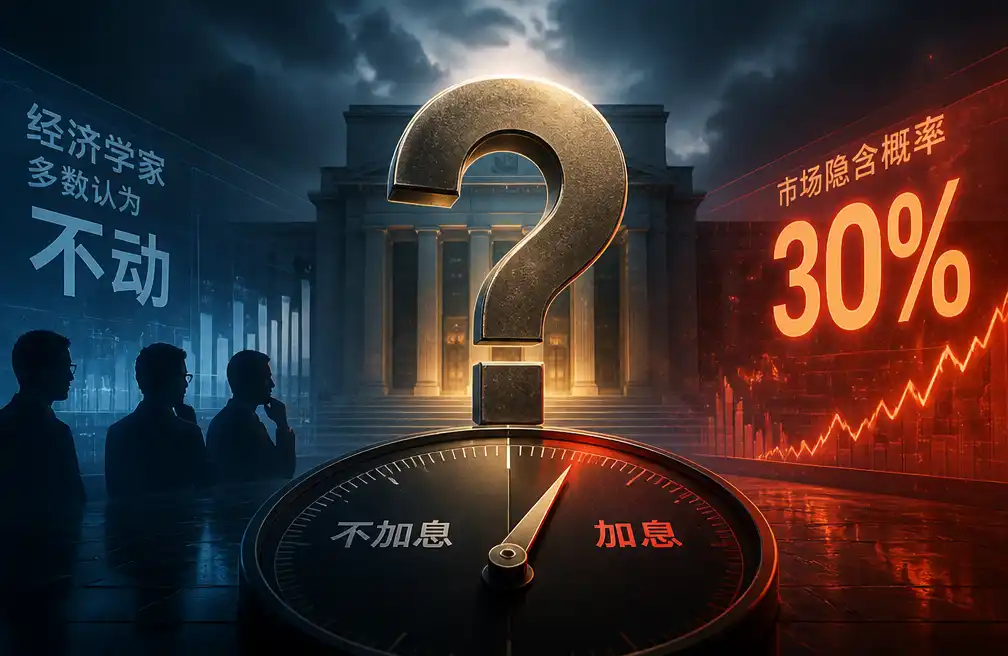
To Hike or Not Tonight: Economists Unanimous on 'No', Markets Price in a 30% Chance

Federal funds futures are repricing ahead of the July FOMC decision, as traders pay a higher premium for the risk of a surprise rate hike or more hawkish signals. This contrasts with economists, where a Reuters survey of 104 analysts unanimously expects rates to remain unchanged at 3.50%-3.75%, with 78 foreseeing no change through year-end. Yet, futures markets have priced in about a 30% probability of a 25-basis-point hike. The core debate, especially under new Fed Chair Kevin Warsh, centers on how the Fed will respond to the oil price shock from Middle East tensions. The market is not necessarily predicting a hike tonight but is hedging against two tail risks: an immediate rate increase, or a hold combined with communication that seriously opens the door for a September hike. This hedging activity has driven up open interest in Fed funds futures. Analysts are divided on how to weight the oil price surge in the Fed's reaction function. Hawkish voices (e.g., BofA) worry that completely dismissing the price pressure could challenge the Fed's inflation credibility in Warsh's first major test. Dovish views (e.g., Citi) argue the shock is primarily supply-driven and that overreacting with rate hikes could unnecessarily hurt growth, unless clear signs of secondary inflation emerge. Warsh's new tenure amplifies policy path uncertainty, as markets lack a stable baseline for his communication style. This environment forces traders to price in a wider range of outcomes, explaining the divergence between unanimous economist forecasts and market hedging. The key focus will be on Warsh's post-meeting commentary. If he downplays the oil shock and stresses anchored long-term expectations, hawkish pricing may recede. If he emphasizes the risk of broader price spillovers and prioritizes returning to 2% inflation, the market will interpret this as reopening the door for a September hike. This would sustain support for the USD, keep pressure on JPY (testing intervention thresholds), and challenge risk assets like stocks and crypto through higher discount rates and weaker sentiment. The baseline remains no action in July, but the communication will determine how far this repricing extends.

marsbitHace 45 min(s)

To Hike or Not Tonight: Economists Unanimous on 'No', Markets Price in a 30% Chance

marsbitHace 45 min(s)

The Semiconductor Industry's Most Obscure Chokepoint Material: It Has Multiplied in Price Unnoticed, and China Just Banned Its Export

"Helium: The Silent Choke Point in Semiconductors" Helium, despite being the universe's second most abundant element, is critically scarce on Earth. It cannot be synthesized artificially and escapes Earth's gravity once released, making it a non-renewable resource. Yet, it is indispensable for advanced semiconductor manufacturing, requiring ultra-high purity (99.9999%) for processes like wafer etching, leak detection, and thermal management in lithography tools, with no viable substitutes. This low-profile resource, whose price has doubled unnoticed, suddenly gained attention when China imposed an export ban on July 10th. The ban is a response to a severe global shortage triggered months earlier. In March, missile attacks damaged the world's largest helium production hub in Qatar's Ras Laffan, halting a third of global supply with repairs expected to take 3-5 years. Concurrently, Russia tightened export controls, and the US sold off its federal helium reserve. Approximately 200 specialized transport containers, each worth ~$1 million, were stranded with perishable cargo. Global spot prices skyrocketed, and chipmakers like TSMC warned of potential impacts. China, which imports over 84% of its helium (primarily from Qatar and Russia), faces a severe squeeze. Despite being helium-poor, China has developed domestic extraction technology over five years, processing byproduct gases from LNG plants to produce ultra-pure helium. Domestic output, while still only covering less than 20% of demand, enabled the recent export ban aimed at securing domestic supply for its own expanding chip industry. The industry now faces "Helium Shortage 5.0." With key global sources constrained for years, this invisible gas—once wasted on party balloons—has become a critical, geopolitically charged bottleneck for chips, healthcare (MRI machines), and beyond, forcing the world to finally treat it as the finite strategic resource it is.

marsbitHace 1 hora(s)

The Semiconductor Industry's Most Obscure Chokepoint Material: It Has Multiplied in Price Unnoticed, and China Just Banned Its Export

marsbitHace 1 hora(s)

Trading

Spot
活动图片