DeFi Loses $678 Million To Hackers In Q2 2022, New Report Reveals

BitcoinistPublicado a 2022-07-12Actualizado a 2022-07-12

Resumen

The cryptocurrency market has suffered greatly, particularly since Bitcoin had its worst quarter in 11 years. According to data releasedby...

The cryptocurrency market has suffered greatly, particularly since Bitcoin had its worst quarter in 11 years. According to data releasedby Immunefi, a leading bug bounty and security services platform, the Decentralize Finance (DeFi) ecosystem lost $678 million, in the second quarter of 2022.
Immunefi Says Loss Is x1.5 Of Q2 2021
DeFi, an emerging financial technology that stands for decentralized finance, has lost almost $680 million to bad actors since the last quarter.
According to the blockchain security platform Immunefi, fraudulent founders and black hat hackers attacked several crypto protocols in the second quarter of 2022 for a total of $670,698,280. In contrast to the prior quarter, hacks on DeFi protocols rather than cross-chain bridges were the primary cause of losses.
Four projects: Beanstalk ($182 million); Harmony’s Horizon Bridge ($100 million); Mirror Protocol ($90 million); and Fei Protocol ($80 million) accounted for the bulk of the money lost in the second quarter.
According to the Immunefi report, it looked at all instances in which blackhat hackers allegedly attacked different crypto protocols, as well as alleged incidents of fake protocols and founders who allegedly rug pulled in Q2 2022. When compared to Q2 2021, when hackers and fraudsters took $440,021,559, these figures show an almost 1.5x increase.
Immunefi


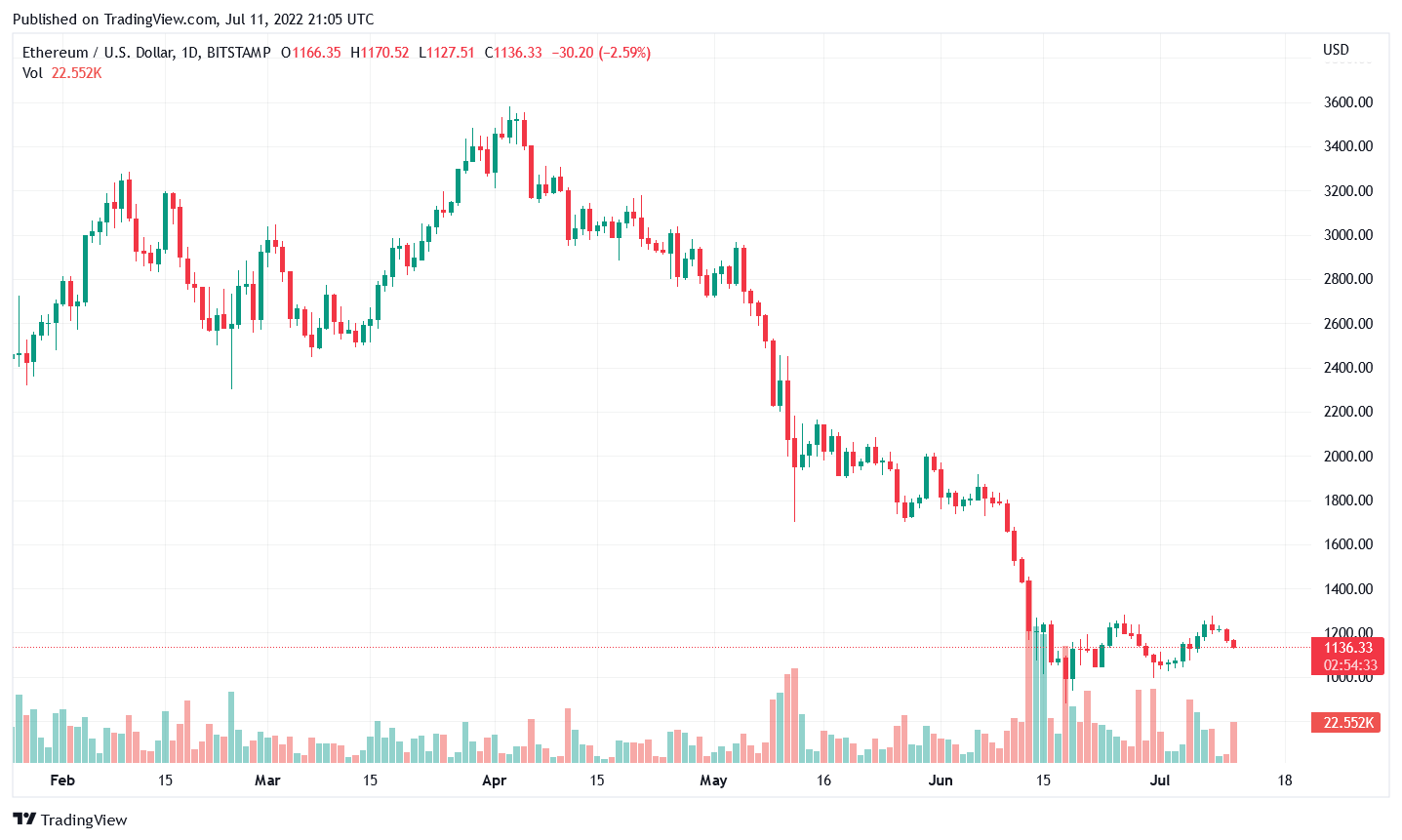
ETH/USD hovers around $1k. Source: TradingView
More than $1.2 billion was stolen from the cryptocurrency ecosystem between January and March. The most prominent cases include the $326 million attack on the Solana’s Wormhole bridge and the approximately $550 million exploitation of Axie Infinity’s Ronin Network.
The frequency of hacks has increased while the amount of funds stolen has doubled from the year’s beginning. 25 attacks were reported in Q1 2022, while 50 occurred in the previous quarter. A whitehat hacker received $6 million from Aurora last month for revealing a flaw that might have endangered $100 million in assets. According to ImmuneFi, the reward was the second-largest ever given out for a crypto vulnerability.
DeFi TVL Lost $156 Billion In The Same Quarter
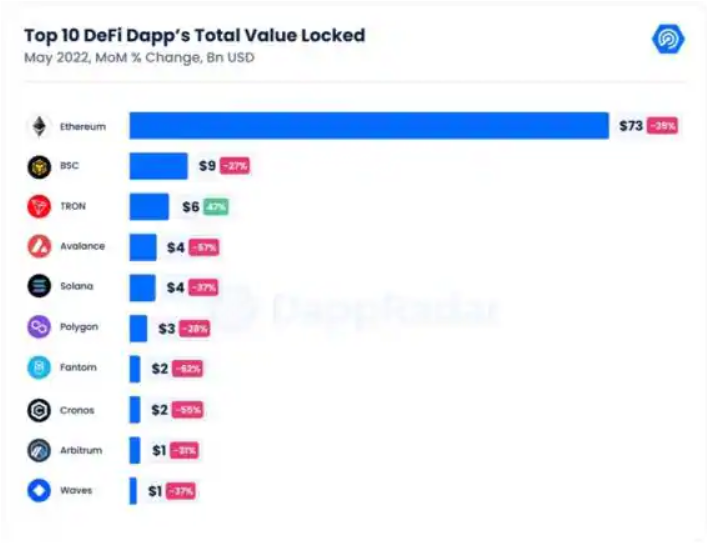
According to the Blockchain Industry Report for May 2022 published by DappRadar, Bitcoin and Ethereum have lost 25% and 40% of their value since Terra’s collapse. 
At the time of writing, the TVL had a value of $77.94 billion. The company with the largest TVL, MakerDAO, has $7.66 billion to its credit. In the past 30 days, it has decreased by more than 19 percent. AAVE and WBTC are the next two, contributing $6.68 billion and $5.52 billion respectively. In comparison to the previous 30 days, they are both down more than 30%. 25.5% of the TVL is made up of the trio.
Immunefi


In the second quarter of 2022, the Ethereum blockchain lost 63.25 percent of its TVL. It had a value of $125.49 billion at the start of the quarter, and at the conclusion it was $46.11 billion.


Lecturas Relacionadas

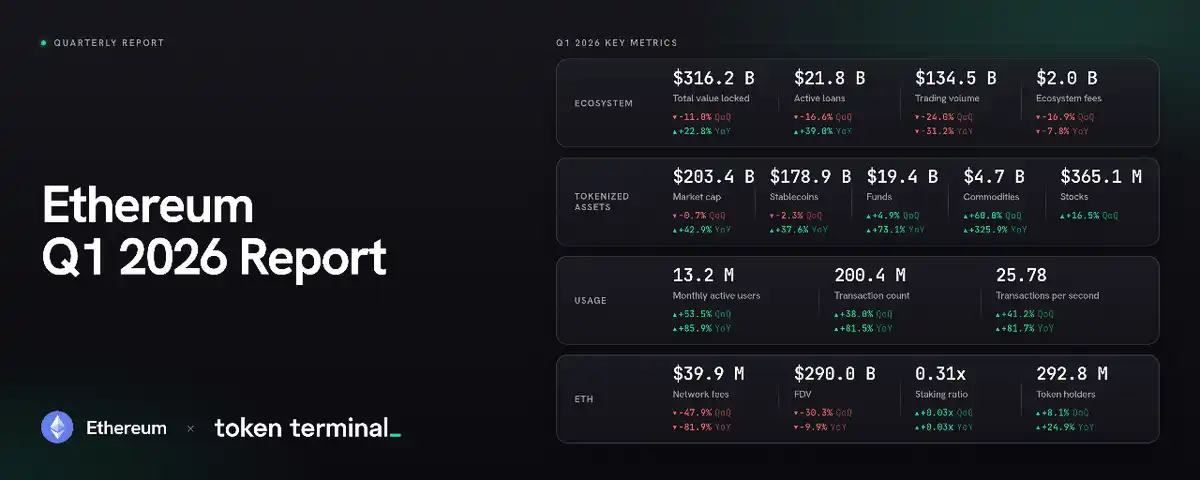
Ethereum 2026 Q1 Review: On-Chain Activity Hits Record Highs, Tokenized Assets Lead the Industry

Ethereum Q1 2026 Review: Record On-Chain Activity, Tokenized Assets Lead the Industry. Despite a price correction impacting USD-denominated metrics, Ethereum's on-chain usage hit all-time highs in Q1 2026. Monthly active addresses surged 85.9% year-over-year to 13.2 million, while L1 transactions and throughput also set new records. This growth occurred alongside a significant 47.9% quarterly drop in L1 transaction fees, demonstrating the impact of network scaling via upgrades like the Blob Parameter Fork. The ecosystem maintained its dominance in decentralized finance (DeFi), holding 71% of the total value locked among top chains and 79.2% of active borrowing. Ethereum solidified its position as the primary platform for tokenized real-world assets (RWAs), with a total market cap of $203.4B. It holds leading shares in stablecoins (61.8%), tokenized funds (73%), and tokenized commodities (84%) across major chains. Key developments included the ERC-8004 standard for AI agents and heightened institutional engagement at forums. Major financial institutions like BlackRock, JPMorgan, and a European banking consortium announced new tokenized products on Ethereum throughout the period. The report draws parallels to the early internet, suggesting Ethereum is sacrificing short-term fee revenue for long-term network expansion and adoption. Its strategy focuses on becoming a neutral, open settlement layer for global finance, with scaling roadmaps aiming for tens of thousands of TPS by 2029.

marsbitHace 54 min(s)

Ethereum 2026 Q1 Review: On-Chain Activity Hits Record Highs, Tokenized Assets Lead the Industry

marsbitHace 54 min(s)

Matrixdock Featured Again in SBMA’s 《Crucible》: Discussing How Tokenisation Enhances Efficiency in the Precious Metals Market

Matrixdock's research article, titled "Why Tokenisation Matters for the Bullion Industry and How Carrying Costs Fit In," has been featured again in the SBMA's industry publication *Crucible*. Authored by Matrixdock lead Eva Meng, the piece examines how tokenisation enhances the efficiency and utility of the precious metals market. The article argues that tokenisation builds upon the accessibility improvements brought by gold ETFs, not by redefining gold's value but by enabling it to function within digital finance. It extends gold's role beyond a portfolio holding, potentially facilitating instant settlement, digital collateral, and operation in 24/7 markets. A key focus is transparently handling the unavoidable carrying costs (storage, insurance) of physical assets like gold and silver. Matrixdock introduces the Fungible Reserve Standard (FRS) framework, based on an "Economic Purity Principle," which aims to reflect these real-world economic costs clearly within the token mechanism, rather than bundling them opaquely. The platform's practical applications are highlighted, including its gold token XAUm and its silver token XAGm, the first built on the FRS framework. As the tokenised gold market surpassed $6 billion in February 2026, the industry's focus is shifting from initial proofs of reserves to broader concerns of market efficiency and capital utilization. Tokenisation is positioning gold and other precious metals to become active components within the evolving digital financial system.

marsbitHace 1 hora(s)

Matrixdock Featured Again in SBMA’s 《Crucible》: Discussing How Tokenisation Enhances Efficiency in the Precious Metals Market

marsbitHace 1 hora(s)

Trading

Spot
Futuros
活动图片