Greenidge продает землю и права на электроэнергию в Южной Каролине на фоне сокращения майнинговых мощностей

cryptonews.ruPublicado a 2025-12-19Actualizado a 2025-12-19

Во вторник Greenidge сообщила о продаже двух земельных участков общей площадью 152 акра. Покупателем выступит дочерняя структура компании Lightstone Group.

В рамках сделки передаются права на 60 МВт мощности («начальная нагрузка»), которые должны стать доступны на площадке в сентябре 2026 года.

Нью‑йоркская инвестиционная компания Lightstone Group выплатит первоначально $18 млн наличными при закрытии сделки. Сумма может быть увеличена с учетом затрат на развитие подстанции. Дополнительно предусмотрено до $18 млн — они будут выплачены, если мощность превысит начальную до конца 2030 года.

Покупатель уже перечислил невозвратный депозит в размере $1,5 млн. Эти средства будут зачтены при закрытии сделки. Ожидается, что сделка завершится не ранее 11 декабря либо через два рабочих дня после предоставления необходимой документации от коммунальных служб для передачи прав на электроэнергию.

«Платежи за успех» составят $180 000 за 1 МВт и обеспечены безотзывной гарантией от Lightstone Group.

Сделка может затронуть ту же территорию, которую компания частично продала в 2023 году. Greenidge продолжает реструктуризацию активов на фоне ограниченного роста и финансовых трудностей.

Речь идет о том же участке в Спартанбурге, где Greenidge в декабре 2024 года продала объекты дата‑центра и права на застройку компании Data Journey. В рамках той сделки компания получила $12,1 млн и сохранила 8% доли в будущих прибылях от планов развития Data Journey. Тогда Greenidge сообщала, что площадка имеет доступ к 60 МВт мощности и может вместить третий дата‑центр для оператора, базирующегося в Северной Каролине и Техасе.

Greenidge приобрела обширный участок в Спартанбурге в 2021 году за $15 млн на пике криптовалютного рынка. На части земли компания развернула майнинговую ферму мощностью 44 МВт. В 2023 году этот объект был передан компании NYDIG в рамках соглашения о погашении долга. После этого у Greenidge остались только те земли, которые сейчас выставлены на продажу.
Lecturas Relacionadas

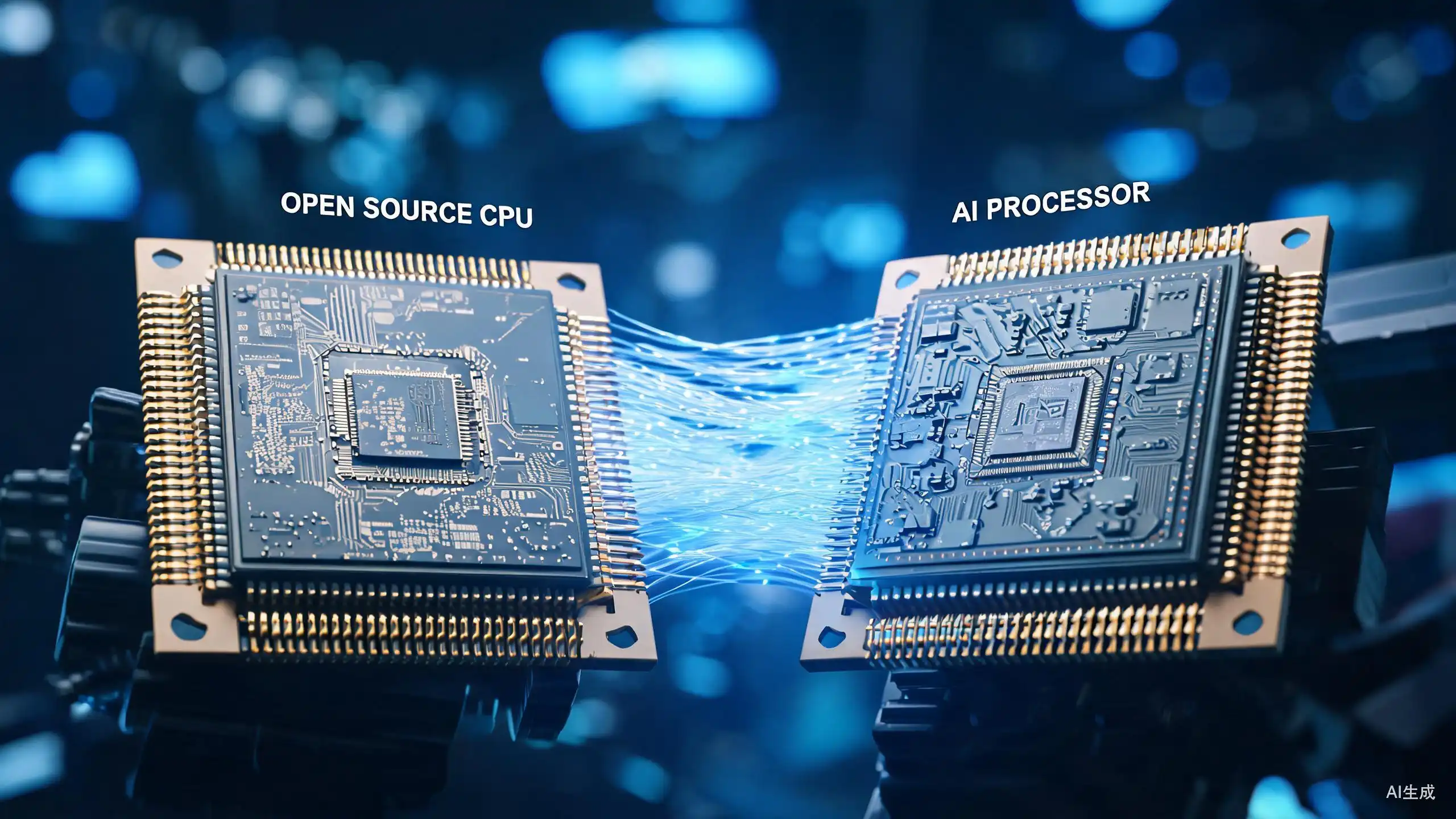
NVIDIA CPU Advances, China's RISC-V Responds: Semiconductor Deep Dive - Part Four

NVIDIA is set to launch its new Vera AI data center CPU in China as early as August, with high pricing. While this move offers a new option, it highlights China's continued dependence on foreign-controlled Arm architecture. In response, the Chinese semiconductor industry is increasingly turning to RISC-V as a strategic alternative for achieving high-performance computing autonomy. The article explores the concept of the "impossible triangle" in CPU development—balancing prosperity, control, and autonomy—and posits that RISC-V's open-source, modular nature offers a unique path to achieving all three. While RISC-V is already dominant in embedded systems, the focus is now shifting to data centers and AI workloads. China has become a global hotspot for RISC-V development, driven by AI-driven compute demand, supply chain concerns from export controls, cost benefits of open-source, and strong policy support. Multiple Chinese companies have reportedly crossed the key performance threshold of 15 SPECint per GHz, a benchmark for entering the high-performance CPU club. Progress extends beyond single-core benchmarks. Companies are developing complete computing subsystems, including commercial-grade coherent network-on-chip (NoC) technology and server processors with up to 40 cores that strictly adhere to the RVA23 standard to ensure software compatibility. Real-world applications are emerging in areas like video transcoding and edge AI. However, significant challenges remain. The RISC-V ecosystem faces fragmentation, immature toolchains and verification processes, and gaps in single-core performance and energy efficiency compared to mature x86 and Arm architectures. The formidable software moat, epitomized by NVIDIA's CUDA, is a long-term hurdle. In conclusion, while RISC-V cannot immediately replace offerings like NVIDIA's Vera, it represents a viable long-term path for China to develop a self-sufficient, high-performance CPU ecosystem. The journey is acknowledged to be long and arduous, requiring sustained effort to overcome technical and ecosystem challenges.

marsbitHace 1 hora(s)

NVIDIA CPU Advances, China's RISC-V Responds: Semiconductor Deep Dive - Part Four

marsbitHace 1 hora(s)

My Coding Betting Dashboard is Profiting, but Polymarket is Truly Not a Good Place for 'Arbitrage'

The author built a custom monitoring dashboard for Polymarket, a prediction market platform, and tested it with $1,600, achieving over 30% returns. However, the core argument is that Polymarket is not a good venue for traditional arbitrage. The dashboard has two main sections: a "Portfolio Dashboard" for tracking active positions with key metrics like total capital, P&L, and a risk-control module using a tier system (T1, T2, T3), and an "Opportunity Watchlist" for monitoring markets. The article details a critical structural trap in binary markets: a bet with a high perceived probability of success still carries a 100% loss risk if wrong. The author's T1/T2/T3 system is designed to manage this by limiting position sizes based on conviction and time horizon, emphasizing that high confidence should not equal high concentration. A key insight is the danger of "pseudo-diversification"—betting on different markets driven by the same underlying variable. The author concludes that Polymarket offers few true low-risk, arbitrage opportunities. It is instead a high-risk environment where wins can create a false sense of mastery, leading to large losses. The platform is better viewed as a training ground for honing judgment through disciplined, framework-driven betting rather than a reliable income source. The tools help transform intuition into structured, rule-based decisions to mitigate the risk of catastrophic errors.

marsbitHace 4 hora(s)

My Coding Betting Dashboard is Profiting, but Polymarket is Truly Not a Good Place for 'Arbitrage'

marsbitHace 4 hora(s)

WeChat AI Card Hands-On Guide: Has the AI Shopping Era Arrived?

**"WeChat AI Card" Practical Test Guide: Has the Era of AI Shopping Arrived?** WeChat has officially launched the "AI Exclusive Card," a feature integrated into its Workbuddy AI assistant. This card is designed to handle payments for AI-initiated purchases. Our hands-on test reveals it's not yet a tool for fully autonomous AI shopping, but rather a controlled payment layer for AI agents. The AI Card functions as an isolated sub-wallet within WeChat Pay. Users must bind the card and transfer funds into it from their main wallet. Crucially, every transaction requires explicit user confirmation via smartphone scan; AI cannot spend autonomously. Currently accessible through the Workbuddy agent, the card targets specific digital consumption scenarios: purchasing paid content (reports, data), calling paid APIs/tools, and subscribing to services. Its design prioritizes security and control by separating funds and mandating approval for each payment. We tested a real-world scenario: ordering bubble tea via Workbuddy using a "Meituan Life Assistant" skill. The process encountered multiple hurdles: high "skill" usage costs (exceeding daily free credits), and most importantly, while a payment was successfully initiated, the AI purchased an incorrect product (a mismatched group-buy coupon instead of the desired drink). This highlights the current limitation: the **AI Card only solves the payment step**. The broader challenge lies in the **AI agent's execution chain**—accurately understanding intent, navigating third-party platforms, selecting the right product, and ensuring proper fulfillment. The payment succeeded, but the purchase failed to meet the user's need. In conclusion, the WeChat AI Exclusive Card is a cautious, early-step experiment in AI commerce. It provides a secure, user-controlled payment method for agent interactions but is not yet capable of reliable, end-to-end complex purchases. For now, it's best used for low-value, low-risk digital services with careful user verification at each step. The vision of AI handling complete shopping tasks remains a work in progress.

marsbitHace 6 hora(s)

WeChat AI Card Hands-On Guide: Has the AI Shopping Era Arrived?

marsbitHace 6 hora(s)

Trading

Spot
Futuros
活动图片