Ноэль Ачесон объяснила недавнее падение биткоин

cryptonews.ruPublicado a 2025-03-18Actualizado a 2025-11-19

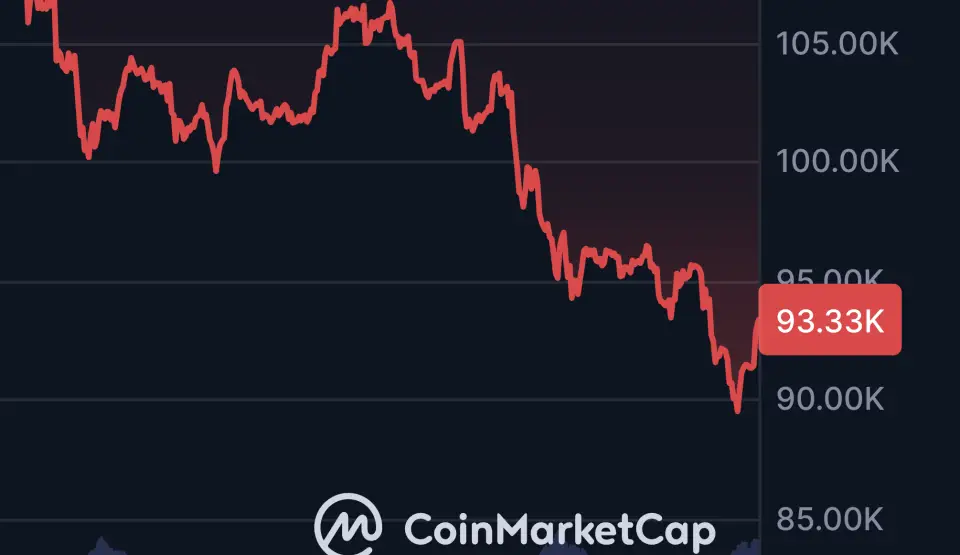
Краткосрочная просадка биткоина ниже $90 000, которая произошла во вторник утром, является проявлением неуверенности инвесторов на фоне глобальных проблем с ликвидностью, заявила экс-директор по исследованиям CoinDesk Ноэль Ачесон (Noelle Acheson).

По ее словам, биткоин выступает одним из главных индикаторов макронастроений широкого круга инвесторов, поскольку более ликвиден, чем другие рисковые активы, торгуется по выходным и не зависит от корпоративных партнерств или хайпа вокруг искусственного интеллекта.
480.png

Аналитик охарактеризовала коррекцию стоимости биткоина как своевременное и полезное для крипторынка событие.

«Этот обвал был желателен и даже необходим. Он будет очень болезненным для многих инвесторов, которые не хотели сталкиваться с реальностью новой парадигмы, в которой мы сейчас находимся», — подчеркнула Ачесон.

Эксперт сравнила падение первой криптовалюты с «вентиляцией», которая очищает крипторынок от спекулянтов и трейдеров с чрезмерно раздутым кредитным плечом, накопленным после халвинга биткоина в апреле 2024 года.

«Мы наблюдаем интересную тенденцию, когда доминирование биткоина и эфира падает одновременно, чего не наблюдалось раньше, инвесторы уходят из криптовалюты в целом, а их ликвидность формируется в наличной форме и не перетекает в акции или облигации», — отметила Ачесон.

В долгосрочной перспективе Ачесон сохраняет оптимизм и подчеркивает потенциальные возможности для притока нового капитала на крипторынок. По ее мнению, большинство институциональных портфелей еще не инвестировали в криптовалюту, что формирует горизонт возможностей для роста крипторынка.

Накануне генеральный директор платформы Real Vision Рауль Пал (Raoul Pal) заявил, что борьба между Минфином США и ФРС за контроль над ликвидностью вызывает у инвесторов страх рецессии и усиливает волатильность криптоактивов.

Lecturas Relacionadas

Spicy Review|Is the "Most Emotionally Valuable" Post Here? Could STRC Be the Next LUNA?

Here is an English summary of the article (under 1500 characters): This article from the spicy commentary series "LaPing" covers three key stories in the crypto world for the week. First, during a sharp market downturn in June where BTC fell over 20%, a Reddit post on r/Cryptocurrency rallying against "Fear, Uncertainty, and Doubt (FUD)" went viral. The comment section became a hub for retail traders to share memes and encouragement, with many advocating holding (HODLing) through the volatility, embodying the "be fearful when others are greedy" mantra. Second, it examines the situation with STRG (Strategy's perpetual preferred stock), which has "de-pegged," trading around $76 vs. its $100 face value, a ~25% discount. The concern is whether Michael Saylor's company, MicroStrategy, can sustain the $1.2 billion annual dividend payment, given its ~$1.4 billion cash reserve. While analysts note STRG is fundamentally different from the catastrophic LUNA collapse—as Saylor isn't obligated to pay the dividend—risks remain. If MicroStrategy's (MSTR) common stock investors feel their capital is being prioritized for STRG dividends, it could hurt MSTR demand. Third, the article analyzes the online persona of "Chuan Mu," a trader famous for turning $500 into $1 million during the 2023 ORDI inscription boom and again with short positions in 2025. An analysis of his 1,828 tweets reveals his success stems from a top-down analytical framework, asking systemic questions like "Where will the bottleneck be in the AI supply chain?" rather than chasing individual pumps. His investments migrated from crypto-linked stocks to AI infrastructure plays like SK Hynix and Samsung. However, the piece also notes criticism that he has occasionally "pumped" assets and sold positions without notifying followers, creating a contradictory public image. The weekly recap highlights themes of community sentiment during bear markets, financial instrument risks, and the complex realities of following influential online traders.

Foresight NewsHace 27 min(s)

Spicy Review|Is the "Most Emotionally Valuable" Post Here? Could STRC Be the Next LUNA?

Foresight NewsHace 27 min(s)

Glue Finance Founder: ETH Has Entered a Phase of Non-Consensus, an Inflection Point Is Coming

"Glue Finance founder argues Ethereum's current price underperformance stems from its 'unfinished machine' status. Despite record usage and settlement value in 2026, ETH remains below its 2021 peak because the protocol's continued development creates a dependency on the Ethereum Foundation for guidance and fixes. Key issues include centralized L2 sequencers, governance-based freezes (as seen with Arbitrum), state bloat, a vulnerable public mempool, and looming quantum computing threats. This 'dependency discount' prevents ETH from accruing the 'ossification premium' that markets award to immutable, trustless systems like Bitcoin. The author, a self-described Ethereum maximalist, rejects two flawed escape paths: a 'war mode' shift towards centralization for speed (which would sacrifice Ethereum's core value), or simply replacing the EF with another governing body. The only solution is the 'Manhattan Plan' or 'Lean Ethereum': a concerted, accelerated effort to complete and then *freeze* the protocol's neutral core. This involves finalizing critical upgrades in consensus (Lean Consensus), scaling (targeting 1 trillion gas/sec), quantum resistance (leanXMSS signatures), and full ZK-provable execution. The goal is to pass the 'walk-away test'—where Ethereum could run forever, neutrally, without the EF. Success would transform Ethereum into the first programmable, quantum-resistant, immutable global settlement layer, flipping its current discount into a unique 'eternity premium' that surpasses Bitcoin's. Failure—stagnation or trading neutrality for speed—would relegate it to being a slower, less trustworthy competitor."

marsbitHace 53 min(s)

Glue Finance Founder: ETH Has Entered a Phase of Non-Consensus, an Inflection Point Is Coming

marsbitHace 53 min(s)

Glue Finance Founder: ETH Has Entered a Phase of Non-Consensus, an Inflection Point Is Approaching

Glue Finance founder argues that Ethereum's current price underperformance, despite high on-chain activity, stems from its incomplete state and lingering dependency on central stewards like the Ethereum Foundation. The core thesis is that the market is discounting ETH not for lack of use, but because the protocol remains a "machine under construction." Key unresolved issues include centralized L2 sequencers with limited escape hatches, state bloat, vulnerable public mempools, and the looming quantum computing threat. This perpetual "work-in-progress" status forces reliance on a small group of maintainers, undermining the network's promise of credible neutrality and immutability. The author, a self-described Ethereum maximalist, rejects two flawed paths: a "wartime mode" of centralizing for speed (surrendering Ethereum's unique value) or merely replacing the Foundation with another governing entity. The only solution is to complete and then "freeze" the protocol's neutral core through a focused "Manhattan Project" dubbed "Lean Ethereum." This project aims to bundle critical upgrades—consensus layer overhaul, massive scaling via ZK-proofs, quantum resistance, and statelessness—into a decisive push to finalize the base layer. Once the core rules are cryptographically solidified and beyond anyone's control (passing the "walk-away test"), Ethereum would shed its dependency discount and earn a "rigidity premium" for its credible neutrality and programmability, potentially surpassing Bitcoin's valuation. The race is between completing this hardening and the risks of protocol capture or stagnation.

链捕手Hace 54 min(s)

Glue Finance Founder: ETH Has Entered a Phase of Non-Consensus, an Inflection Point Is Approaching

链捕手Hace 54 min(s)

Trading

Spot
活动图片