币圈崩盘?比特币跌破9万\以太坊插针2900,还没到底?山寨行情怎么玩?DUSK\SOL\RLC

金色财经Publicado a 2025-11-18Actualizado a 2025-11-18

最近老OG/远古巨鲸、老美的ETF、1011暴雷的机构、杠杆清算……砸盘的太多太多了!  james、内幕、麻吉大哥……一个个多头的头铁连环被爆,多军不是被杀就是被杀怕了?

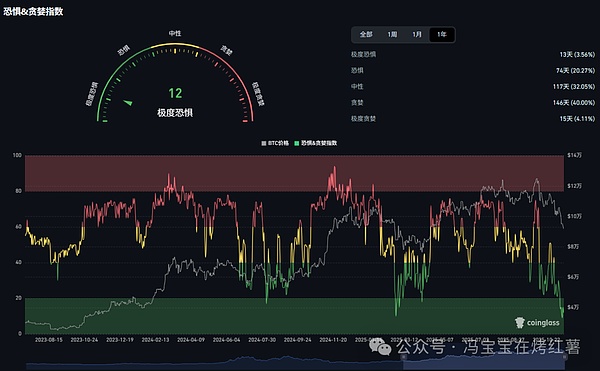
历史上“恐惧&贪婪指数<10”,随后比特币走势:1、2018年12月7日,恐惧&贪婪指数为8,随后一周上涨12.5%,一个月上涨45.2%。2、2020年3月13日,恐惧&贪婪指数为8,随后一周上涨25.3%,一个月上涨150%。3、2022年6月19日,恐惧&贪婪指数为6,随后一周上涨8.7%,一个月上涨22.1%。4、2025年11月16日,恐惧&贪婪指数为9,随后一周上涨 ?,一个月上涨 ?我已经不指望上涨了,稳住不跌就可以了。
图片

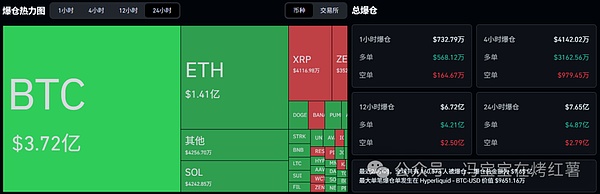
过去24小时全网共有160,373人被被爆仓,爆仓总金额为$7.65亿美元,多单爆仓4.87亿美元,空单爆仓2.79亿美元。
图片

BTC

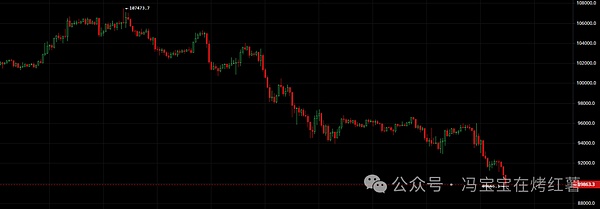
比特币昨天虽然价格触及支撑附近,但基本没有反弹,之后再次开始下跌,自从跌破十万之后价格是一点反弹都没有,行情还是太弱了。

比特币93000-90000区间里的92555、91666只是路过站,接低多就是超短线,轻仓打几分钟就跑,别贪。
图片

今天日内如果能反弹能到93600-94025就轻仓再空一次;到不了就别追空了,再低容易被多头反杀。等反弹结束开始下跌,就可以分批抄底了。今晚到明天会依次踩90850、89600、88888、88555,这些位置都是好机会。

ETH

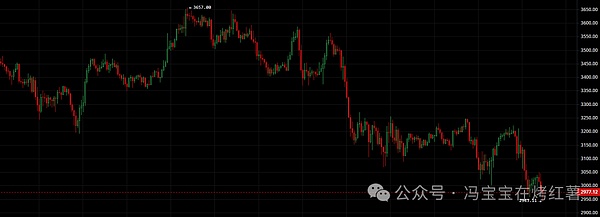
以太坊5日MACD归零、周线归零,昨晚首次跌破3000,在2960停顿,符合预期,目前小时图连阴下探、均线系统呈空头排列,反弹动能持续匮乏,单边下跌格局暂未出现扭转信号。
图片

建议反弹做:日内反弹3088-3112,再回踩下去就是支撑点2926。空单要在这里做止盈。2926不跌破,低多直接进。若破,2882-2850,直接抄底一笔。但缺口是在2855——2925附近,一旦价格补缺完成,短期寻找止跌筑底信号的机会就来了!

山寨

在下跌趋势中,不要看所谓的趋势线,单方面趋势的时候所有的趋势线都是用来打破的,市场会往更容易的方向进行,当前跌比涨更容易。大跌小反弹是最近两个月的主旋律,别急着抄底,做波段可以,别贪赚了就跑,这也是我反复强调的。

$DUSK

隐私和RWA这两个概念在市值仅为 3000 万美元的情况下,形成了强大的共生关系。这被严重低估了,DUSK触底反弹——趋势突破后回测——成交量走高。与我之前做多 ZEC 底部的情况类似。$DUSK即将打破多年的下跌趋势。这可能会引发爆发式增长。

$SOL

SOL真的拉垮,而且很明显被控制了,每次反弹到1h布林上轨就会被打下来,4小时图连阴下探,时线均线紊乱,单边下跌格局清晰,短期难改弱势,保持反弹即空的思路,建议在:135-138附近布局空单, 130跌破后抄底点在126.25或125.65。

$RLC

Prime Set AI代理概念 + 隐私币板块全面爆发,已经涨超50%!下一个还没启动的主角就是 $RLC!RLC走势很稳,已经突破下降楔形,动能正在反转,正是上车最好时机!之前同形态突破后都大涨了,这次RLC大概率要来2-3倍!


Criptos en tendencia

Lecturas Relacionadas

Ethereum's Next Decade in the Eyes of Vitalik

"Lean Ethereum" Long-Term Roadmap Unveiled by Vitalik Buterin On July 5, 2026, Vitalik Buterin published the "Lean Ethereum" roadmap, positioning it as Ethereum's third major evolution following the Merge. This multi-year, multi-phase upgrade aims to fundamentally transform Ethereum's core protocol through staged network upgrades extending to 2029. Key goals include achieving 1 gigagas per second L1 throughput (a massive increase from the current ~32 TPS), near-instant finality, and quantum-resistant cryptography. The plan involves transitioning Ethereum's security model from full transaction re-execution by all nodes to native verification via recursive STARK proofs. A major proposed change is replacing the EVM with a proof-friendly architecture like RISC-V or leanISA, though this remains a point of contention, especially with L2s like Arbitrum favoring alternatives like WASM. Other planned upgrades include a restructured state model with a large, cheap "warehouse" storage layer to drastically reduce fees for migrated applications, multi-dimensional gas pricing, and a new focus on making privacy a first-class, native protocol feature. While the roadmap significantly raises Ethereum's long-term technical ceiling, analysts note it does not directly address ETH's mid-term token economics or value capture. The plan's multi-year timeline means near-term price impact will likely depend on observable progress milestones, such as the successful deployment of the upcoming Glamsterdam gas limit increase, growth in L2 activity and blob usage, and trends in L1 fee revenue and ETH burn.

链捕手Hace 33 min(s)

Ethereum's Next Decade in the Eyes of Vitalik

链捕手Hace 33 min(s)

In Just 11 Days, Claude Rewrote Millions of Lines of Code, an Epic AI Engineering Feat Sparks Fury

In just 11 days, Bun's founder Jarred Sumner used Anthropic's Claude AI models to rewrite its million lines of code from Zig to Rust. This move sparked significant controversy, particularly from Zig's creator, Andrew Kelley, who publicly criticized Sumner's engineering practices and the decision to use AI for such a massive rewrite. Bun, a high-performance JavaScript/TypeScript runtime and rival to Node.js, was originally written in Zig. After Anthropic acquired Bun, the team encountered persistent stability and memory safety bugs in the Zig codebase. These issues, combined with Zig's strict policy against LLM-generated code, led to the decision to rewrite in Rust. The rewrite was executed using Claude AI tools at an estimated API cost of $165,000, dramatically reducing the expected time and financial cost. Andrew Kelley's response was scathing. He blamed the original bugs on poor engineering habits, calling Bun's Zig code a collection of "hacks on top of hacks." He expressed relief that Bun was no longer associated with Zig, fearing it would misrepresent the language and attract low-quality, AI-generated contributions. The tech community is divided; some view Kelley's critique as unprofessional, while others see it as a defense of engineering integrity. A major concern about the AI-driven rewrite is the resulting code quality. The translation from Zig left approximately 27,000 lines of unsafe Rust code, raising fears about long-term maintainability and technical debt. The debate centers on whether this project is a milestone in AI-assisted development or a future maintenance nightmare.

marsbitHace 1 hora(s)

In Just 11 Days, Claude Rewrote Millions of Lines of Code, an Epic AI Engineering Feat Sparks Fury

marsbitHace 1 hora(s)

From Auto Finance to Bitcoin to AI Engines: An Analysis of Cango's 'What Not to Do' Strategy

From Auto Finance to Bitcoin and Now AI: Cango's "What Not to Do" Strategy Cango, a Chinese auto finance platform that went public on the NYSE in 2018, is undergoing its third major transformation. After selling its entire auto business in 2024, it pivoted to become a large-scale Bitcoin miner, acquiring 50 exahash of mining rigs from Bitmain. However, its true goal was never Bitcoin, but owning and controlling energy infrastructure. Now, Cango is pivoting again. While most listed Bitcoin miners are leasing power to giant hyperscalers for AI training clusters, Cango is taking the opposite path. It has launched an AI inference subsidiary called EcoHash, focusing not on training but on distributed inference. The company's strategy hinges on the insight that over 70% of mining industry power is controlled by small, independent sites (10-50 MW), which are too small for hyperscalers but ideal for low-latency AI inference. Cango aims to partner with these small operators, providing the AI technology, customers, and financing through its EcoLink software layer, which can distribute workloads across sites for reliability. Cango maintains a hybrid model, running roughly 31.7 EH/s of Bitcoin mining for cash flow while aggressively cleaning its balance sheet—slashing long-term debt by 94.5% to $30.6 million and raising $75 million for its AI venture. Its first AI deployment will be at a 50 MW site in Georgia. The strategy faces skepticism, given the high costs of converting mining sites and the potential for an AI bubble. However, Cango's leadership believes discipline around "what not to do"—avoiding direct competition with hyperscalers in training—positions it to capture the long-tail demand for distributed AI inference power.

Foresight NewsHace 1 hora(s)

From Auto Finance to Bitcoin to AI Engines: An Analysis of Cango's 'What Not to Do' Strategy

Foresight NewsHace 1 hora(s)

Strategy's Bitcoin Sales Cap Far Exceeds $1.25 Billion: A Detail the Market Overlooked

The article discusses how MicroStrategy's potential Bitcoin sales go far beyond the announced $1.25 billion "reserve-building capacity." It clarifies a key distinction in the company's "BTC Monetization Program": selling Bitcoin to *build* a new dollar reserve (the $1.25B cap) versus selling to *replenish* the existing USD Reserve after it's used for expenses like preferred share dividends. The recent $216M BTC sale for dividend payments was a "replenishment," leaving the headline $1.25B building quota untouched. The plan actually outlines three potential funding pools from BTC sales: 1) Building the reserve ($1.25B cap), 2) Covering preferred share/ debt costs (no specified cap), and 3) Funding buyback programs (up to $20B). This means the structured sales potential exceeds $30 billion, not including uncapped replenishment sales. The piece argues this marks MicroStrategy's shift from a passive "buy-and-hold" Bitcoin proxy to an actively managed entity using BTC as a balance-sheet tool to manage its complex capital structure (common stock, preferred shares, debt, reserve). This creates new dynamics and potential conflicts, as actions benefiting one part (e.g., selling BTC to pay dividends) may pressure another (e.g., undermining the "never sell" narrative). Investors must now parse the company's specific terminology ("build" vs. "replenish") to understand the true scope of future BTC sales, which is significantly larger than the market initially perceived.

marsbitHace 1 hora(s)

Strategy's Bitcoin Sales Cap Far Exceeds $1.25 Billion: A Detail the Market Overlooked

marsbitHace 1 hora(s)

Goldman Sachs Report Deconstructs the Competitive Landscape of China's AI Large Models: Who Will Be the Long-Term Winner?

Goldman Sachs analyzes China's AI large language model (LLM) landscape, identifying key players and a strategic shift towards efficiency and global expansion. The report highlights that Chinese open-source/open-weight models are closing the performance gap with top global proprietary models at significantly lower cost, driven by architectural innovations like MoE. This enables a "two-tier" market: a high-end segment (e.g., GLM5.2, Qwen3.7 Max) with pricing at ~$1 per million tokens, and a low-end, price-sensitive global segment. Open-source strategies aid adoption but limit monetization, as deployments via third-party platforms (e.g., AWS Bedrock, Alibaba Cloud) may not generate direct revenue for model creators. The industry is thus moving towards "open-weight + community license" models with revenue-sharing to improve unit economics. Internationally, the focus is shifting from "token maximization" to ROI-driven enterprise adoption, particularly in non-U.S. markets. Major cloud platforms are integrating Chinese models (e.g., DeepSeek, MiniMax). Using a competitive framework based on pricing power, cost advantage, and financial strength, Goldman Sachs identifies **Zhipu AI** and **DeepSeek** as leaders in foundational text models, and **ByteDance** (with Seedance) leading in multimodal/video generation. **MiniMax** and **Kuaishou** are also rated favorably. The firm forecasts China's AI model API/subscription revenue growing from ~RMB 35bn (2026E) to RMB 879bn by 2030.

marsbitHace 2 hora(s)

Goldman Sachs Report Deconstructs the Competitive Landscape of China's AI Large Models: Who Will Be the Long-Term Winner?

marsbitHace 2 hora(s)

Trading

Spot

Artículos destacados

Cómo comprar RLC

¡Bienvenido a HTX.com! Hemos hecho que comprar iExec (RLC) sea simple y conveniente. Sigue nuestra guía paso a paso para iniciar tu viaje de criptos.Paso 1: crea tu cuenta HTXUtiliza tu correo electrónico o número de teléfono para registrarte y obtener una cuenta gratuita en HTX. Experimenta un proceso de registro sin complicaciones y desbloquea todas las funciones.Obtener mi cuentaPaso 2: ve a Comprar cripto y elige tu método de pagoTarjeta de crédito/débito: usa tu Visa o Mastercard para comprar iExec (RLC) al instante.Saldo: utiliza fondos del saldo de tu cuenta HTX para tradear sin problemas.Terceros: hemos agregado métodos de pago populares como Google Pay y Apple Pay para mejorar la comodidad.P2P: tradear directamente con otros usuarios en HTX.Over-the-Counter (OTC): ofrecemos servicios personalizados y tipos de cambio competitivos para los traders.Paso 3: guarda tu iExec (RLC)Después de comprar tu iExec (RLC), guárdalo en tu cuenta HTX. Alternativamente, puedes enviarlo a otro lugar mediante transferencia blockchain o utilizarlo para tradear otras criptomonedas.Paso 4: tradear iExec (RLC)Tradear fácilmente con iExec (RLC) en HTX's mercado spot. Simplemente accede a tu cuenta, selecciona tu par de trading, ejecuta tus trades y monitorea en tiempo real. Ofrecemos una experiencia fácil de usar tanto para principiantes como para traders experimentados.

88 Vistas totalesPublicado en 2024.12.10Actualizado en 2026.06.02

Cómo comprar RLC

Discusiones

Bienvenido a la comunidad de HTX. Aquí puedes mantenerte informado sobre los últimos desarrollos de la plataforma y acceder a análisis profesionales del mercado. A continuación se presentan las opiniones de los usuarios sobre el precio de RLC (RLC).

活动图片