Explaining the ZK price trend this week and what traders can expect next

ambcryptoPublicado a 2025-11-06Actualizado a 2025-11-07

Key Takeaways

Why has ZK been volatile over the past 24 hours?

Its 15% rally on Wednesday, followed by a 12% setback in under 12 hours, was due to the short-term range formation for ZK.

What should traders expect for the next price trends?

The bullish 1-day timeframe structure meant that a ZK price dip to $0.065 in search of liquidity would likely see a bullish rebound.


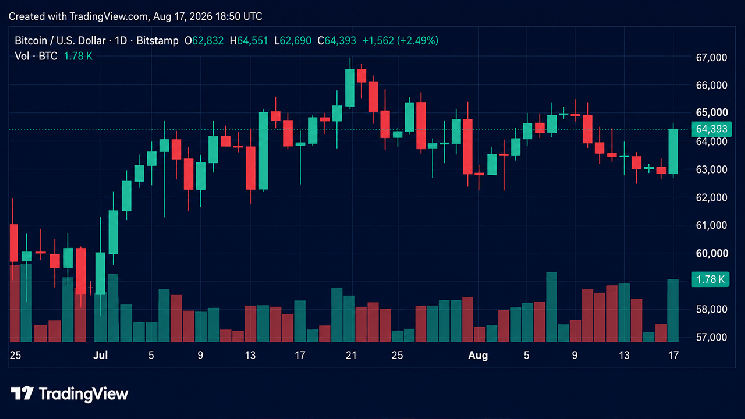
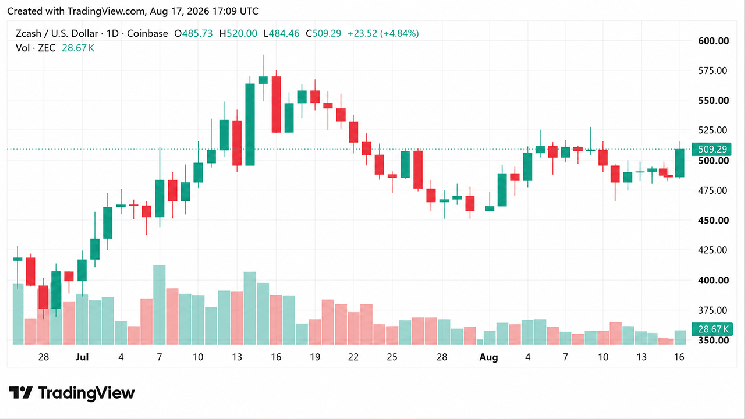
On Thursday, 06 November, ZKSync [ZK] surged by 15% within two hours, from $0.066 to $0.076. In those two hours, Bitcoin [BTC] bounced by 2% from $100.3k to $102.3k, and ZCash [ZEC] was up 6.86%, from $510 to $540.

The performance of ZCash is important because it has been leading the recent craze for privacy tokens and privacy tech. A boost in ZEC prices generally sees tokens such as ZK follow suit.

Over the past ten hours, ZK retraced 1% from the $0.76 local high. In doing so, it showed that a short-term range formation may still be in play. The higher timeframe ZK price structure was bullish, and the uptrend could resume once the market sentiment shifts away from extreme fear.

Short-term range shows ZK’s price is in a retracement phase

ZK 1-day Price Chart

Source: ZK/USDT on TradingView

The daily chart highlighted a bullish structure in place after ZK broke past the $0.065 swing high from early October on Wednesday.

The OBV and volume bars reflected heavy demand in recent days, and this bullish structure shift is likely to result in further gains for ZK.

ZK 1-hour Chart

Source: ZK/USDT on TradingView

The 1-hour chart underlined a short-term range formation (yellow) from $0.066 to $0.077. The retracement seen from Wednesday’s high was a rejection at the range high and a move to the range lows.

The OBV and RSI were both neutral, and did now show an advantage to the bulls or the bears. Traders can use a brief dip below the $0.066-level to buy ZK. However, a move below the $0.058-$0.06 area in the coming days would indicate heightened short-term bearish pressure.

This would increase the chance of a deeper price retracement.

ZK Liquidation Heatmap

Source: CoinGlass

Finally, the liquidation heatmap revealed the liquidity built just beyond the extremes of the range. A price dip to the $0.064-$0.065 magnetic zone is highly likely in the next day or two. It would offer a buying opportunity targeting the $0.079-pocket overhead.

Such a price dip might not lead to a deeper retracement to $0.045, the next liquidity pocket, due to the bullish 1-day structure. However, it is a possibility, especially if ZEC and Bitcoin face a bearish setback.


Share

Lecturas Relacionadas

Data Theft at Will! Major Vulnerability Exposed in This Popular AI Programming Tool

A critical vulnerability in Anthropic's Claude Code AI programming tool allowed attackers to bypass its network sandbox for over five months, enabling potential data exfiltration. Independent researcher Aonan Guan discovered a second complete bypass exploiting a null-byte injection in the SOCKS5 proxy. This flaw, present since the sandbox's launch in October 2025, let processes inside the sandbox access any host, contrary to user-configured domain whitelists. The attack chain involved manipulating hostnames (e.g., `attacker.com\x00.google.com`). JavaScript's `endsWith()` check would pass `.google.com`, while the underlying C `getaddrinfo()` function would only parse `attacker.com` due to the null byte, creating a parser discrepancy. Combined with a previously disclosed prompt injection method, this could leak API keys, credentials, and internal data. Anthropic silently fixed the issue in April 2026 without a security advisory, CVE, or user notification. The researcher noted that Claude Code itself confirmed the vulnerability's severity when tested. This incident highlights broader industry issues, as similar vulnerabilities found in Google's Gemini CLI and GitHub's Copilot Agent also lacked public disclosures. The report criticizes the false sense of security created by a broken sandbox and emphasizes the need for defense-in-depth and transparency in AI tool security.

marsbitHace 1 hora(s)

Data Theft at Will! Major Vulnerability Exposed in This Popular AI Programming Tool

marsbitHace 1 hora(s)

Under the squeeze between giants Tether and Circle, how can foreign exchange stablecoins break through?

In the face of dominance by Tether (USDT) and Circle (USDC), new entrants in the stablecoin space face significant challenges competing directly, especially in the foreign exchange (FX) market. A more viable and efficient path forward is the adoption of synthetic foreign exchange (Forex) built atop existing USD stablecoin rails. The rise of stablecoin neo-banks represents the next major growth area for mass crypto adoption, with FX becoming a core component. However, replicating the vast liquidity, distribution channels, and network effects of USDT/USDC is extremely difficult for new FX stablecoin issuers. The total market cap of all FX stablecoins is a fraction (roughly 1/700th) of USD stablecoins, leading to issues like poor liquidity, peg instability, limited acceptance, and complex compliance hurdles. Instead of issuing spot FX stablecoins, the article advocates for a model inspired by traditional finance's non-deliverable forwards (NDFs). Users would continue to hold underlying USDT/USDC, while their account balances are displayed and economically settled in their preferred local currency through MtM (Mark-to-Market) NDF structures. This approach leverages the deep liquidity and infrastructure of USD stablecoins while providing synthetic forex exposure. Key advantages include strong peg stability via oracles, retained access to USD stablecoin yields and liquidity, high capital efficiency, and easy scalability to new currencies. Primary use cases for this on-chain NDF forex include: 1. Neo-banks, custodians, and wallets offering multi-currency accounts to attract international users and increase deposits. 2. Forex carry trade strategies, potentially offering more stable and scalable yields compared to crypto-native products like Ethena. 3. Global corporate payments, allowing businesses to receive payments in local currencies while hedging forex risk on-chain, similar to services offered by Stripe in traditional finance. This synthetic forex model presents a pragmatic solution to overcome the network effects of incumbents and unlock the next wave of stablecoin utility for global consumers and businesses.

marsbitHace 1 hora(s)

Under the squeeze between giants Tether and Circle, how can foreign exchange stablecoins break through?

marsbitHace 1 hora(s)

$2 Billion Write-Off: Manus Plans Hong Kong IPO for a Comeback?

The $2 billion acquisition of Chinese AI startup Manus by Meta was officially blocked by Chinese regulators in April 2026, citing national security concerns under foreign investment review rules. Despite the deal being completed months prior, with Manus integrated into Meta, the unprecedented "prohibited" ruling forced a reversal. In response, Manus's founders are now negotiating a $1 billion funding round to buy back the company from Meta at a valuation matching the original $2 billion, followed by plans to establish a Chinese joint venture and pursue a Hong Kong IPO. The article details Manus's rapid rise to $100 million in annual recurring revenue within eight months, leading to Meta's swift acquisition. However, regulators deemed its core technology and data too strategically linked to China, regardless of its Singapore headquarters. The forced unwind is complex, as Manus's team and tech are deeply embedded within Meta. Facing a reshaped competitive landscape in China's AI Agent sector with rivals like Zhipu and MiniMax, Manus sees an IPO as essential for survival and future funding. Hong Kong is presented as the ideal venue, given its recent boom in AI listings, investor appetite for high-growth tech firms, and favorable mechanisms for ongoing capital raises. The move symbolizes Manus's shift from dependence on a foreign giant to seeking independent, market-driven growth.

marsbitHace 1 hora(s)

$2 Billion Write-Off: Manus Plans Hong Kong IPO for a Comeback?

marsbitHace 1 hora(s)

Trading

Spot
Futuros

Artículos destacados

Cómo comprar ZK

¡Bienvenido a HTX.com! Hemos hecho que comprar ZKsync (ZK) sea simple y conveniente. Sigue nuestra guía paso a paso para iniciar tu viaje de criptos.Paso 1: crea tu cuenta HTXUtiliza tu correo electrónico o número de teléfono para registrarte y obtener una cuenta gratuita en HTX. Experimenta un proceso de registro sin complicaciones y desbloquea todas las funciones.Obtener mi cuentaPaso 2: ve a Comprar cripto y elige tu método de pagoTarjeta de crédito/débito: usa tu Visa o Mastercard para comprar ZKsync (ZK) al instante.Saldo: utiliza fondos del saldo de tu cuenta HTX para tradear sin problemas.Terceros: hemos agregado métodos de pago populares como Google Pay y Apple Pay para mejorar la comodidad.P2P: tradear directamente con otros usuarios en HTX.Over-the-Counter (OTC): ofrecemos servicios personalizados y tipos de cambio competitivos para los traders.Paso 3: guarda tu ZKsync (ZK)Después de comprar tu ZKsync (ZK), guárdalo en tu cuenta HTX. Alternativamente, puedes enviarlo a otro lugar mediante transferencia blockchain o utilizarlo para tradear otras criptomonedas.Paso 4: tradear ZKsync (ZK)Tradear fácilmente con ZKsync (ZK) en HTX's mercado spot. Simplemente accede a tu cuenta, selecciona tu par de trading, ejecuta tus trades y monitorea en tiempo real. Ofrecemos una experiencia fácil de usar tanto para principiantes como para traders experimentados.

526 Vistas totalesPublicado en 2024.12.13Actualizado en 2025.03.21

Cómo comprar ZK

Discusiones

Bienvenido a la comunidad de HTX. Aquí puedes mantenerte informado sobre los últimos desarrollos de la plataforma y acceder a análisis profesionales del mercado. A continuación se presentan las opiniones de los usuarios sobre el precio de ZK (ZK).

活动图片