Ethereum whales pour $80 mln into accumulation – Start of a bullish turn?

ambcryptoPublicado a 2025-11-05Actualizado a 2025-11-06

Key Takeaways

Why are whales accumulating over $80 million worth of ETH?

Institutional buyers like Bitmine and whales are signaling renewed long-term confidence in Ethereum.

How are exchange outflows and rising Open Interest shaping Ethereum’s price direction?

Decreasing supply and increasing trader activity suggest growing bullish pressure for a possible breakout.


Institutional activity is picking up again as large Ethereum [ETH] purchases point to renewed conviction in the asset’s long-term potential. 

Bitmine’s $69.89 million purchase from Coinbase and FalconX, combined with the additional 4,009 ETH acquisition by a whale, has pushed total inflows beyond $80 million. 

This resurgence comes after weeks of price pressure and uncertainty across the broader market. However, such strong accumulation often marks a transitional phase where capital shifts from weaker to stronger hands. 

As liquidity tightens and confidence rebuilds, Ethereum’s market structure appears to be stabilizing, paving the way for a more sustained upward movement if accumulation continues at this pace.

Ethereum eyes rebound

Ethereum’s price action shows encouraging signs of recovery after defending the $3,292 support zone, a level that has historically triggered buying momentum. 

The daily chart indicates a rebound from a falling wedge pattern, often considered a bullish reversal signal. Moreover, the RSI’s bounce from oversold territory supports a gradual shift in momentum favoring buyers. 

If sustained, Ethereum could challenge resistance around $4,248, while a successful breakout could open the path toward $4,949. 

However, the recovery remains fragile, and failure to maintain the current trajectory might invite short-term retracement. 

Still, the ongoing accumulation suggests investors expect a potential resurgence once price stability is confirmed above key technical thresholds.

Source: TradingView

Growing confidence among investors

Recent on-chain data from CoinGlass revealed a $74.03 million net outflow of ETH from exchanges, highlighting a strong accumulation phase. 

Negative netflows often suggest investors are moving their holdings into self-custody, reducing the available supply for selling.

This shift supports a bullish narrative, as consistent exchange outflows typically precede upward price movements during supply contractions. 

Additionally, the continuation of these outflows since mid-October coincided with whale buying activity, underscoring a shared sentiment of confidence among long-term holders. 

As liquidity on centralized exchanges tightens, short-term volatility may increase, but the broader structure points toward a healthier market foundation fueled by demand outweighing supply.

Source: CoinGlass

Traders gear up as Open Interest surges

Ethereum’s derivatives market is showing renewed excitement, with Open Interest climbing 2.81% to $18.92 billion. 

The rise suggests traders are positioning for potential volatility and directional momentum. This growing interest reflects expectations of a major move, amplified by spot accumulation and exchange outflows. 

The synergy between rising Open Interest and strengthening spot demand indicates that both retail and institutional traders are preparing for a decisive shift in market sentiment. 

However, it also raises the probability of sharper swings if leveraged positions unwind suddenly. 

Still, if momentum continues aligning with on-chain accumulation trends, Ethereum could soon experience a volatility-driven breakout that redefines its short-term trajectory.

Ethereum Open Interest - All Exchanges, All SymbolEthereum Open Interest - All Exchanges, All Symbol

Source: CryptoQuant

Conclusively, Ethereum’s outlook is turning decisively bullish as whales inject over $80 million, exchange reserves continue to decline, and Open Interest climbs steadily. 

These converging signals point toward strengthening investor conviction and a tightening supply environment that could favor upward momentum. 

If buyers successfully maintain support above $3,300 and reclaim the $4,200 barrier, Ethereum could re-enter a mid-term bullish phase, potentially targeting the $4,900 zone. 

The alignment of whale confidence, technical resilience, and rising speculative demand suggests that Ethereum’s next major breakout may already be in motion.


Share

Criptos en tendencia

Lecturas Relacionadas

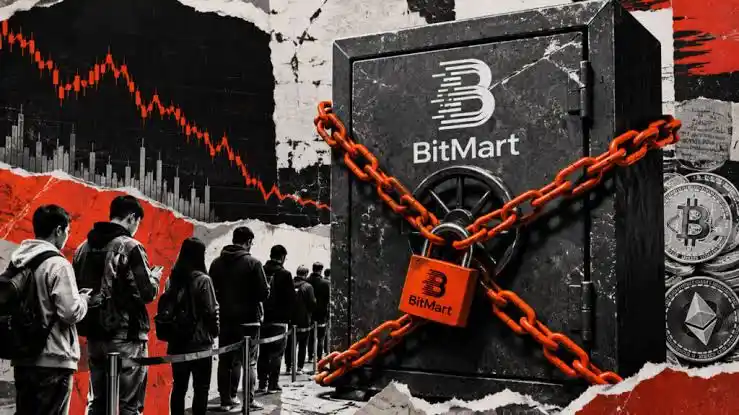
BitMart's Final 9 Days: A True Exchange Crisis Is Never About Shutting Down

BitMart's Final 9 Days: A True Exchange Crisis Is Not About Shutting Down On August 17, 2026, with just 9 days until BitMart's scheduled cessation of trading, the focus shifted from the platform's orderly closure to serious questions about user withdrawals, platform solvency, employee payments, and reserve transparency. Stakeholders, claiming to represent users and staff, publicly demanded asset/liability disclosures, explanations for withdrawal delays, a user repayment plan, and an independent audit, setting an August 19 deadline. While BitMart CEO Sheldon Lee denied allegations of insolvency or wrongdoing, the controversy highlighted a core vulnerability of centralized exchanges (CEXs). When an exchange announces its shutdown, normal user behavior changes dramatically, triggering a mass withdrawal event—the ultimate stress test for its liquidity and custodial integrity. The key question becomes not whether the platform has assets, but whether it holds sufficient *liquid* assets to cover all user liabilities on demand. The article argues that the trust placed in CEXs is based on the convenience they provide, abstracting users from direct control of their private keys. This trust is rarely questioned during normal operations but becomes critically exposed during a wind-down. The situation underscores the limitations of simple Proof of Reserves, which shows "what we have" but not the crucial "what we owe." True financial credibility requires transparent, auditable data on assets, liabilities, and segregated user funds. BitMart's situation reflects a broader, often overlooked issue in the crypto industry: while there is extensive focus on growth mechanisms for exchanges, there is little discussion or established protocol for a safe and transparent "exit mechanism." The final measure of an exchange's integrity, the article concludes, is not its user count or trading volume during a bull market, but its ability to ensure every last user can successfully withdraw their assets when the doors are closing. The outcome will be determined not by statements, but by whether the final user's funds securely leave the platform.

marsbitHace 17 min(s)

BitMart's Final 9 Days: A True Exchange Crisis Is Never About Shutting Down

marsbitHace 17 min(s)

Don't Speculate on 100x Coins, Just Bet on 'Cash Cows': Which Projects Are Worth Dollar-Cost Averaging in the Bear Market?

In a bearish crypto market, finding sustainable investments is more prudent than chasing speculative meme coins. This article analyzes projects generating consistent revenue, highlighting them as potential "cash cows" for long-term dollar-cost averaging (DCA). The top performers are "picks-and-shovels" plays. **Pump.fun**, a Solana-based meme coin launchpad, leads with $415.3M in monthly revenue, profiting from a 1.25% fee on token transactions. Despite market volatility, it has averaged tens of millions in monthly income in 2024. Perpetual DEX **Hyperliquid** stands out as a "bear market star," accumulating ~$352M in revenue over seven months. Its model funnels ~99% of fees into buying back and permanently burning its HYPE token. Established giants are also adapting. **Uniswap**, after enabling its fee switch, now earns protocol revenue (e.g., $5.6M recently), which is used to buy back and burn UNI, giving the token direct value accrual. Similarly, oracle provider **Chainlink** generates stable monthly revenue (~$4.57M recently) from its essential data, cross-chain, and automation services. Its new Payment Abstraction feature automatically converts service fees into LINK, accruing value in its treasury. The core thesis is clear: in a downturn, focus on projects with proven, resilient business models—those acting as essential infrastructure or capturing consistent transaction fees—rather than speculative narratives.

marsbitHace 32 min(s)

Don't Speculate on 100x Coins, Just Bet on 'Cash Cows': Which Projects Are Worth Dollar-Cost Averaging in the Bear Market?

marsbitHace 32 min(s)

Trends in U.S. Stocks (August 18): U.S.-Iran Deal Prospects Dim, Major Indices See Two Consecutive Down Days, Chip Stocks Defy Market Decline

**Market Overview:** On August 18th, U.S. stock indices declined for a second consecutive day. The S&P 500 fell 0.52%, the Dow dropped 0.51% to a two-week low, and the Nasdaq slipped 0.32%. The decline was driven by heightened geopolitical risk as U.S.-Iran negotiations reached a key deadline without an extension, dimming the prospect of a long-term agreement. **Key Drivers:** * **Geopolitics & Oil:** The failure to extend the U.S.-Iran memorandum led to a surge in oil prices, with Brent crude closing above $90/barrel for the first time in three weeks. * **Treasury Yields:** The 30-year U.S. Treasury yield hit a high not seen since 2007, driven by heavy corporate issuance (notably for AI investments) and ongoing fiscal deficits. * **Sector Performance:** While the "Magnificent Seven" tech giants all closed lower, semiconductor stocks bucked the trend. The Philadelphia Semiconductor Index rose 1.6%, led by memory chipmakers (e.g., SanDisk, Micron) and optical communication companies, as investors focused on the strong demand outlook for AI-related hardware. * **Currency & Safe Havens:** The U.S. Dollar Index fell for a third day, while the offshore Chinese Yuan hit a three-year high. Gold prices rose to a two-month peak, supported by safe-haven demand outweighing pressure from rising yields. Bitcoin also gained. **Outlook:** Market focus remains on potential escalation in the Middle East and its impact on oil, alongside continued scrutiny of AI-related earnings and demand signals.

marsbitHace 38 min(s)

Trends in U.S. Stocks (August 18): U.S.-Iran Deal Prospects Dim, Major Indices See Two Consecutive Down Days, Chip Stocks Defy Market Decline

marsbitHace 38 min(s)

Trading

Spot

Artículos destacados

Cómo comprar NAVER

¡Bienvenido a HTX.com! Hemos hecho que comprar NAVER Corp (NAVER) sea simple y conveniente. Sigue nuestra guía paso a paso para iniciar tu viaje de criptos.Paso 1: crea tu cuenta HTXUtiliza tu correo electrónico o número de teléfono para registrarte y obtener una cuenta gratuita en HTX. Experimenta un proceso de registro sin complicaciones y desbloquea todas las funciones.Obtener mi cuentaPaso 2: ve a Comprar cripto y elige tu método de pagoTarjeta de crédito/débito: usa tu Visa o Mastercard para comprar NAVER Corp (NAVER) al instante.Saldo: utiliza fondos del saldo de tu cuenta HTX para tradear sin problemas.Terceros: hemos agregado métodos de pago populares como Google Pay y Apple Pay para mejorar la comodidad.P2P: tradear directamente con otros usuarios en HTX.Over-the-Counter (OTC): ofrecemos servicios personalizados y tipos de cambio competitivos para los traders.Paso 3: guarda tu NAVER Corp (NAVER)Después de comprar tu NAVER Corp (NAVER), guárdalo en tu cuenta HTX. Alternativamente, puedes enviarlo a otro lugar mediante transferencia blockchain o utilizarlo para tradear otras criptomonedas.Paso 4: tradear NAVER Corp (NAVER)Tradear fácilmente con NAVER Corp (NAVER) en HTX's mercado spot. Simplemente accede a tu cuenta, selecciona tu par de trading, ejecuta tus trades y monitorea en tiempo real. Ofrecemos una experiencia fácil de usar tanto para principiantes como para traders experimentados.

71 Vistas totalesPublicado en 2026.08.14Actualizado en 2026.08.14

Cómo comprar NAVER

Qué es KODEX200

El contrato perpetuo KODEX200USDT sigue el precio del ETF KODEX 200 de Samsung. Rastrean el rendimiento del índice KOSPI 200, ofreciendo una amplia exposición a las principales empresas de gran capitalización de Corea del Sur.

101 Vistas totalesPublicado en 2026.08.14Actualizado en 2026.08.14

Qué es KODEX200

Cómo comprar KODEX200

¡Bienvenido a HTX.com! Hemos hecho que comprar Samsung KODEX 200 ETF (KODEX200) sea simple y conveniente. Sigue nuestra guía paso a paso para iniciar tu viaje de criptos.Paso 1: crea tu cuenta HTXUtiliza tu correo electrónico o número de teléfono para registrarte y obtener una cuenta gratuita en HTX. Experimenta un proceso de registro sin complicaciones y desbloquea todas las funciones.Obtener mi cuentaPaso 2: ve a Comprar cripto y elige tu método de pagoTarjeta de crédito/débito: usa tu Visa o Mastercard para comprar Samsung KODEX 200 ETF (KODEX200) al instante.Saldo: utiliza fondos del saldo de tu cuenta HTX para tradear sin problemas.Terceros: hemos agregado métodos de pago populares como Google Pay y Apple Pay para mejorar la comodidad.P2P: tradear directamente con otros usuarios en HTX.Over-the-Counter (OTC): ofrecemos servicios personalizados y tipos de cambio competitivos para los traders.Paso 3: guarda tu Samsung KODEX 200 ETF (KODEX200)Después de comprar tu Samsung KODEX 200 ETF (KODEX200), guárdalo en tu cuenta HTX. Alternativamente, puedes enviarlo a otro lugar mediante transferencia blockchain o utilizarlo para tradear otras criptomonedas.Paso 4: tradear Samsung KODEX 200 ETF (KODEX200)Tradear fácilmente con Samsung KODEX 200 ETF (KODEX200) en HTX's mercado spot. Simplemente accede a tu cuenta, selecciona tu par de trading, ejecuta tus trades y monitorea en tiempo real. Ofrecemos una experiencia fácil de usar tanto para principiantes como para traders experimentados.

70 Vistas totalesPublicado en 2026.08.14Actualizado en 2026.08.14

Cómo comprar KODEX200

Discusiones

Bienvenido a la comunidad de HTX. Aquí puedes mantenerte informado sobre los últimos desarrollos de la plataforma y acceder a análisis profesionales del mercado. A continuación se presentan las opiniones de los usuarios sobre el precio de A (A).

活动图片