Issuers update XRP ETF filings to bypass shutdown delays: Launch likely in November

ambcryptoPublicado a 2025-11-05Actualizado a 2025-11-06

Key Takeaways 

Why are all issuers updating XRP ETFs? 

To allow them to launch despite the ongoing government shutdown. 

How is the market positioned for the launch? 

Traders were overly cautious amid the extended, broader market pullback. 


Amid the market chaos, there is good news, at least for the Ripple [XRP] community. 

According to Bloomberg ETF analyst James Seyffart, Franklin Templeton, alongside Canary Capital and Bitwise, has filed updated spot XRP ETFs that would allow the products to begin trading despite the ongoing government shutdown. 

XRP ETFXRP ETF

Source: X

Seyffart added that the changes would enable the products to begin trading this month. If so, they’ll join other altcoin ETFs, such as Solana [SOL], Litecoin [LTC], and Hedera Hashgraph [HBAR]

For perspective, the recently approved Spot SOL ETFs also went live after making updated filings that allowed them to launch without the SEC’s greenlight. 

Assessing XRP market positioning

That said, a U.S. spot XRP ETF launch would mark a new precedent, especially after Ripple Labs endured an SEC lawsuit for five years. Nate Geraci, co-founder of ETF Prime, echoed a similar sentiment and added, 

“Launch of spot XRP ETFs represents final nail in the coffin of previous anti-crypto regulators. Have come a long way.”

On the market front, however, the XRP price was largely influenced by the broader market sentiment rather than the update.

It extended its correction to $2.0 before clawing back to $2.2. Overall, it was down about 12% in November ahead of a likely death cross that could drag it lower if sentiment does not improve. 

XRP ETFXRP ETF

Source: XRP/USDT, TradingView

However, the selling pressure from whales had tapered off completely, as illustrated by the Whale Flow 30DMA.

Over the past two months, major players have offloaded more than 45 million XRP, coinciding with a decline in price from $3.5 to $2. 

If the whales begin accumulating, it could potentially boost XRP bulls, similar to the trend observed during the Q2 2025 recovery. 

XRP ETFXRP ETF

Source: CryptoQuant

Nonetheless, Options traders were actively buying short-dated puts (hedging), underscoring caution and uncertainty in the near-term.

This was illustrated by the negative 25-Risk Reversal (25RR), which tracks market sentiment and positioning. 

XRP ETFXRP ETF

Source: Amberdata

The current weak market sentiment has overshadowed the upcoming ETF launch. Despite even XRP whales slowing down on the offloading, positioning remained cautious in the near term. 

Share

Criptos en tendencia

Lecturas Relacionadas

South Korean Retail Investors 'Move from Seoul to Wall Street': Buying SK Hynix ADR, Betting on Triple-Leverage ETF

A surge of Korean retail investors is shifting funds from the volatile Seoul market to Wall Street, intensifying their bets on the AI theme through unconventional and high-risk instruments. Data shows Korean investors were net buyers of about $4.5 billion in US stocks in July, nearing a yearly peak. A notable trend is their purchase of approximately $840 million worth of SK Hynix American Depositary Receipts (ADRs), despite a significant 10% premium over the company's domestic shares, leading analysts to label the move as speculative and irrational. Simultaneously, Korean traders are heavily favoring leveraged ETFs. The triple-leveraged semiconductor ETF SOXL was the most-bought US product in July, with leveraged products occupying four of the top ten spots. Experts note that this shift in geography does not represent a diversification of risk; instead, investors are merely expressing the same concentrated bet on AI hardware through different, often riskier, US-listed vehicles. Analysts warn that while this capital inflow is unlikely to systemically impact the vast US institutional market, it risks creating localized distortions and amplifying volatility, particularly in the targeted sectors and instruments. The move follows a sharp correction in the Korean market, where high leverage in semiconductor stocks and related ETFs had previously led to significant losses, prompting this search for alternative avenues to chase the AI narrative.

marsbitHace 23 min(s)

South Korean Retail Investors 'Move from Seoul to Wall Street': Buying SK Hynix ADR, Betting on Triple-Leverage ETF

marsbitHace 23 min(s)

Bithumb's First Half Report: Net Loss Exceeds $76 Million, Where Did the Profits Go?

**Title: Bithumb H1 2026 Report: Net Loss Exceeds $76M – Where Did the Profits Go?** Despite a headline net loss of approximately 108.7 billion KRW (~$76.44 million) for the first half of 2026, a detailed breakdown reveals Bithumb's core exchange business remained profitable. The significant loss was primarily driven by two major non-operating items: substantial losses on the disposal and valuation of the company's own cryptocurrency holdings (net loss ~$48.21 million) and a sharp increase in litigation provisions (~$25.93 million), largely linked to a regulatory fine. Operating revenue fell 48.7% year-on-year to ~$119 million, almost entirely from transaction fees, as market activity cooled. While the company drastically cut marketing and subsidy expenses by ~70% to protect margins, more rigid costs like payment processing and salaries declined only modestly. This highlights the vulnerability of its highly fee-dependent revenue model in a down market. Total assets decreased by ~$584 million, but this was largely attributable to an ~86% drop in client KRW deposits. The market value of client crypto assets under custody also fell (~32.7%), partly influenced by declining cryptocurrency prices rather than solely client withdrawals. In summary, the report indicates underlying exchange profitability was eroded by significant crypto asset losses and mounting regulatory/legal costs, against a backdrop of declining trading revenue. Future focus should be on revenue recovery, managing crypto-related损益, and the ongoing impact of regulatory challenges.

marsbitHace 42 min(s)

Bithumb's First Half Report: Net Loss Exceeds $76 Million, Where Did the Profits Go?

marsbitHace 42 min(s)

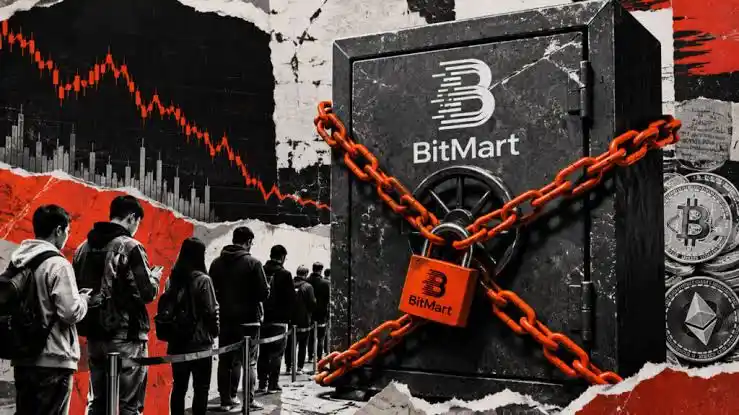
BitMart's Final 9 Days: A True Exchange Crisis Is Never About Shutting Down

BitMart's Final 9 Days: A True Exchange Crisis Is Not About Shutting Down On August 17, 2026, with just 9 days until BitMart's scheduled cessation of trading, the focus shifted from the platform's orderly closure to serious questions about user withdrawals, platform solvency, employee payments, and reserve transparency. Stakeholders, claiming to represent users and staff, publicly demanded asset/liability disclosures, explanations for withdrawal delays, a user repayment plan, and an independent audit, setting an August 19 deadline. While BitMart CEO Sheldon Lee denied allegations of insolvency or wrongdoing, the controversy highlighted a core vulnerability of centralized exchanges (CEXs). When an exchange announces its shutdown, normal user behavior changes dramatically, triggering a mass withdrawal event—the ultimate stress test for its liquidity and custodial integrity. The key question becomes not whether the platform has assets, but whether it holds sufficient *liquid* assets to cover all user liabilities on demand. The article argues that the trust placed in CEXs is based on the convenience they provide, abstracting users from direct control of their private keys. This trust is rarely questioned during normal operations but becomes critically exposed during a wind-down. The situation underscores the limitations of simple Proof of Reserves, which shows "what we have" but not the crucial "what we owe." True financial credibility requires transparent, auditable data on assets, liabilities, and segregated user funds. BitMart's situation reflects a broader, often overlooked issue in the crypto industry: while there is extensive focus on growth mechanisms for exchanges, there is little discussion or established protocol for a safe and transparent "exit mechanism." The final measure of an exchange's integrity, the article concludes, is not its user count or trading volume during a bull market, but its ability to ensure every last user can successfully withdraw their assets when the doors are closing. The outcome will be determined not by statements, but by whether the final user's funds securely leave the platform.

marsbitHace 1 hora(s)

BitMart's Final 9 Days: A True Exchange Crisis Is Never About Shutting Down

marsbitHace 1 hora(s)

Don't Speculate on 100x Coins, Just Bet on 'Cash Cows': Which Projects Are Worth Dollar-Cost Averaging in the Bear Market?

In a bearish crypto market, finding sustainable investments is more prudent than chasing speculative meme coins. This article analyzes projects generating consistent revenue, highlighting them as potential "cash cows" for long-term dollar-cost averaging (DCA). The top performers are "picks-and-shovels" plays. **Pump.fun**, a Solana-based meme coin launchpad, leads with $415.3M in monthly revenue, profiting from a 1.25% fee on token transactions. Despite market volatility, it has averaged tens of millions in monthly income in 2024. Perpetual DEX **Hyperliquid** stands out as a "bear market star," accumulating ~$352M in revenue over seven months. Its model funnels ~99% of fees into buying back and permanently burning its HYPE token. Established giants are also adapting. **Uniswap**, after enabling its fee switch, now earns protocol revenue (e.g., $5.6M recently), which is used to buy back and burn UNI, giving the token direct value accrual. Similarly, oracle provider **Chainlink** generates stable monthly revenue (~$4.57M recently) from its essential data, cross-chain, and automation services. Its new Payment Abstraction feature automatically converts service fees into LINK, accruing value in its treasury. The core thesis is clear: in a downturn, focus on projects with proven, resilient business models—those acting as essential infrastructure or capturing consistent transaction fees—rather than speculative narratives.

marsbitHace 1 hora(s)

Don't Speculate on 100x Coins, Just Bet on 'Cash Cows': Which Projects Are Worth Dollar-Cost Averaging in the Bear Market?

marsbitHace 1 hora(s)

Trading

Spot

Artículos destacados

Qué es XRP 2.0

XRP 2.0: Una Nueva Frontera en el Panorama de las Criptomonedas Introducción a XRP 2.0 En el siempre cambiante ámbito de las criptomonedas, nuevos proyectos surgen continuamente, compitiendo por atención y adopción. Una de estas iniciativas prometedoras es XRP 2.0, un nuevo proyecto de criptomoneda diseñado para aprovechar la tecnología blockchain avanzada y metodologías de encriptación robustas. Aunque el nombre establece paralelismos con el XRP de Ripple, es crucial señalar que XRP 2.0 opera de manera independiente, enfocándose en mejorar la seguridad de las transacciones, la privacidad y la escalabilidad. A medida que el panorama financiero digital abraza cada vez más soluciones descentralizadas, XRP 2.0 busca contribuir de manera significativa a web3 y a la expansión general de los proyectos de criptomonedas. ¿Qué es XRP 2.0? En esencia, XRP 2.0 es un proyecto de criptomoneda que busca crear un ecosistema de moneda digital seguro y descentralizado. Su tecnología fundamental integra principios avanzados de blockchain con técnicas de encriptación de vanguardia. El objetivo principal de XRP 2.0 es establecerse como una plataforma confiable y eficiente que permita la ejecución rápida de transacciones mientras prioriza la protección de la privacidad de sus usuarios. El proyecto se promociona como una solución a muchas limitaciones enfrentadas por las criptomonedas existentes, proponiendo un sistema que puede manejar un mayor volumen de transacciones con mejor velocidad y privacidad. Esta versatilidad posiciona a XRP 2.0 como un competidor significativo en un mercado plagado de diversas monedas digitales. ¿Quién es el Creador de XRP 2.0? La identidad del creador detrás de XRP 2.0 ha sido señalada como 'Wilbur.' Sin embargo, los detalles completos sobre Wilbur o su entidad asociada siguen siendo elusivos. La anonimidad de muchos creadores de criptomonedas no es un fenómeno poco común en la industria, a menudo diseñado para mantener un grado de privacidad y seguridad. ¿Quiénes son los Inversores de XRP 2.0? Hasta ahora, la información específica relacionada con las fundaciones o organizaciones de inversión que apoyan a XRP 2.0 no está disponible públicamente. En el sector de las criptomonedas, el respaldo de inversores respetables puede influir significativamente en la credibilidad y el éxito de un proyecto, sin embargo, la transparencia sobre los patrocinadores financieros de XRP 2.0 no se ha establecido. ¿Cómo Funciona XRP 2.0? XRP 2.0 se destaca al emplear una combinación de tecnología blockchain y algoritmos de encriptación avanzados que aseguran transacciones seguras y descentralizadas. Su estructura innovadora incluye características únicas diseñadas para fomentar el compromiso del usuario y ampliar las funcionalidades más allá de las transacciones convencionales de criptomonedas. Entre estas características, XRP 2.0 incorpora capacidades impulsadas por IA, como funcionalidades de texto a imagen y de texto a voz. Estas adiciones están diseñadas para mejorar la experiencia interactiva de los usuarios, promoviendo una mayor aplicabilidad en diversos sectores. Al unir avances tecnológicos con un diseño centrado en el usuario, XRP 2.0 busca captar la atención de una amplia gama de individuos y empresas que buscan integrar soluciones de criptomonedas en sus marcos operativos. Cronología de XRP 2.0 Entender XRP 2.0 requiere examinar los hitos que han definido su viaje hasta ahora: 23 de julio de 2023: Se presenta XRP 2.0 como un nuevo proyecto de criptomonedas, con el objetivo de revolucionar las capacidades de transacciones seguras y descentralizadas en el ámbito de blockchain. 8 de septiembre de 2023: Se lanza otro proyecto, XRP20, marcando la aparición de un token ERC-20 en la blockchain de Ethereum que no guarda relación con XRP 2.0. 13 de noviembre de 2023: El Libro Mayor de XRP experimenta una actualización significativa con el lanzamiento de la versión 2.0.0 del software del servidor rippled. Es esencial señalar que este desarrollo está desconectado del proyecto de criptomonedas XRP 2.0. Puntos Clave sobre XRP 2.0 Para destilar la esencia de XRP 2.0, surgen varios factores críticos: Características Únicas: La inclusión de características como texto a imagen y texto a voz impulsadas por IA diversifica aún más las aplicaciones potenciales de XRP 2.0. Tecnología Blockchain: El marco utiliza mecanismos avanzados de blockchain y protocolos de encriptación, asegurando un entorno seguro y descentralizado para las transacciones. Escalabilidad y Privacidad: XRP 2.0 prioriza la protección mejorada de la privacidad en los procesos de transacción y la escalabilidad necesaria para acomodar una base de usuarios creciente. No Afiliación con Ripple: Es importante destacar que, a pesar de su nombre, XRP 2.0 no tiene ninguna lealtad ni colaboración con el XRP de Ripple, diferenciando su marco operativo y objetivos dentro del ecosistema de criptomonedas. Conclusión XRP 2.0 representa una ambiciosa aventura en la esfera de las criptomonedas, buscando ofrecer una combinación de seguridad, privacidad y eficiencia en las transacciones digitales. Al integrar tecnologías sofisticadas y características amigables para el usuario, el proyecto se propone ampliar los horizontes de lo que la criptomoneda puede lograr en la economía digital de hoy. Si bien la anonimidad de su creador y la falta de inversores revelados pueden generar cuestionamientos para algunos, el enfoque de XRP 2.0 en funcionalidades avanzadas y descentralización realza su atractivo en un mercado de criptomonedas cada vez más abarrotado. A medida que el paisaje de las criptomonedas sigue evolucionando, XRP 2.0 podría emerger como un jugador crucial en la expansión de soluciones blockchain seguras y escalables.

320 Vistas totalesPublicado en 2024.04.05Actualizado en 2024.12.03

Qué es XRP 2.0

Cómo comprar XRP

¡Bienvenido a HTX.com! Hemos hecho que comprar XRP (XRP) sea simple y conveniente. Sigue nuestra guía paso a paso para iniciar tu viaje de criptos.Paso 1: crea tu cuenta HTXUtiliza tu correo electrónico o número de teléfono para registrarte y obtener una cuenta gratuita en HTX. Experimenta un proceso de registro sin complicaciones y desbloquea todas las funciones.Obtener mi cuentaPaso 2: ve a Comprar cripto y elige tu método de pagoTarjeta de crédito/débito: usa tu Visa o Mastercard para comprar XRP (XRP) al instante.Saldo: utiliza fondos del saldo de tu cuenta HTX para tradear sin problemas.Terceros: hemos agregado métodos de pago populares como Google Pay y Apple Pay para mejorar la comodidad.P2P: tradear directamente con otros usuarios en HTX.Over-the-Counter (OTC): ofrecemos servicios personalizados y tipos de cambio competitivos para los traders.Paso 3: guarda tu XRP (XRP)Después de comprar tu XRP (XRP), guárdalo en tu cuenta HTX. Alternativamente, puedes enviarlo a otro lugar mediante transferencia blockchain o utilizarlo para tradear otras criptomonedas.Paso 4: tradear XRP (XRP)Tradear fácilmente con XRP (XRP) en HTX's mercado spot. Simplemente accede a tu cuenta, selecciona tu par de trading, ejecuta tus trades y monitorea en tiempo real. Ofrecemos una experiencia fácil de usar tanto para principiantes como para traders experimentados.

1.6k Vistas totalesPublicado en 2024.12.10Actualizado en 2026.06.02

Cómo comprar XRP

Discusiones

Bienvenido a la comunidad de HTX. Aquí puedes mantenerte informado sobre los últimos desarrollos de la plataforma y acceder a análisis profesionales del mercado. A continuación se presentan las opiniones de los usuarios sobre el precio de XRP (XRP).

活动图片