为何降息了,市场却还在跌?

coinvoicePublicado a 2025-02-27Actualizado a 2025-10-30

北京时间今天凌晨,美联储宣布——降息25个基点,将联邦基金利率区间下调至 4.00%–4.25%。

同时,美联储还表示:量化紧缩(QT)将在 12 月 1 日正式结束。
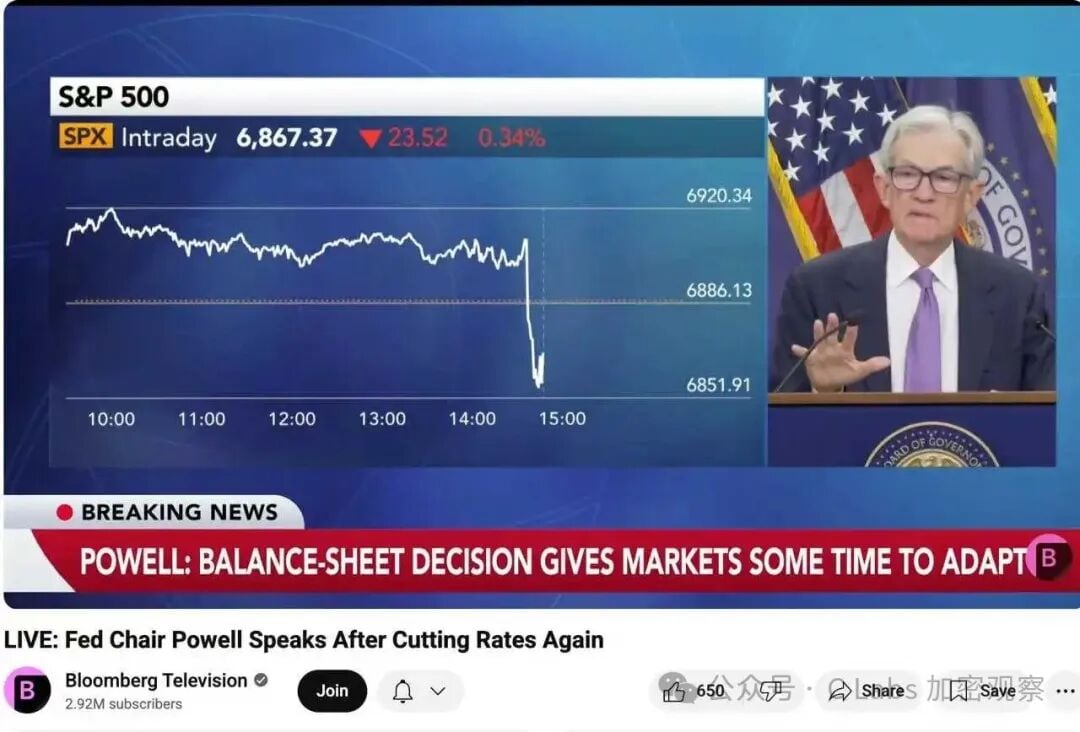
照理说,这本该是“利好”:降息、结束缩表、流动性预期改善。但结果却让很多人疑惑——为什么股市、加密货币、甚至黄金都没涨,反而普跌?


01、市场的“利好预期”早已透支


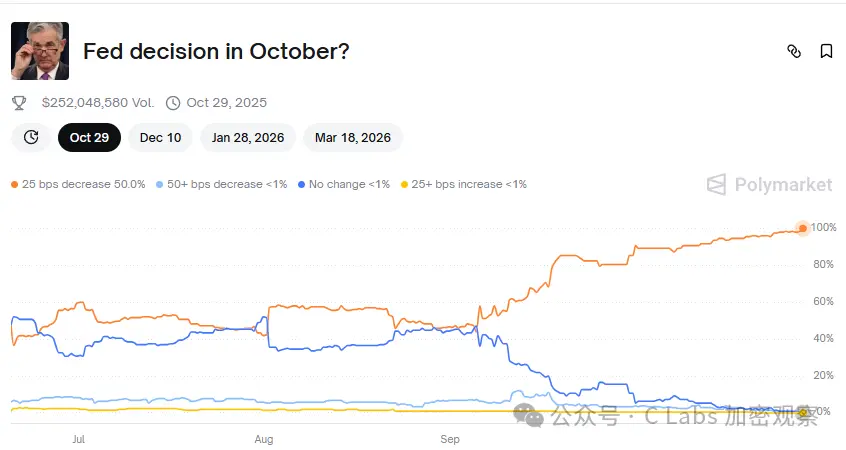
事实上,市场早在本月初就已经“押注”这次降息。根据 CME FedWatch 数据,在会议前,市场认为:

降息 25bp 的概率高达 95%,同时还有约 40% 的投资者预期美联储会立即宣布启动 QE(重新扩表)。

结果,美联储只是选择了“温和”降息。
换句话说:

这次降息,不是“新利好”,而是“低于预期”。

当预期兑现但没有惊喜,市场往往会选择获利了结。这也是典型的“买消息,卖事实(Buy the rumor, sell the news)”行情。


02、停止缩表 ≠ 开始放水


很多人看到“QT 结束”,就以为意味着“大放水”要来了。但其实,美联储这次的声明非常谨慎:

“我们将结束缩表,但暂不启动新的资产购买计划。”

也就是:

从“收水”阶段,转为“观望”阶段。

在金融市场的语言里,这叫:

流动性不再恶化,但也没有改善。

而投资市场要上涨,光“止跌”不够——还需要“增量资金”。这就是目前最大的缺口。


03、降息并未传导到“实际资金利率”


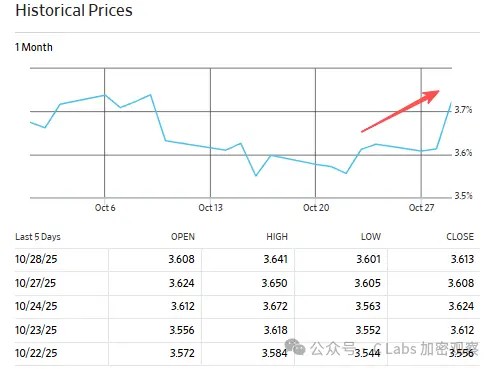
理论上,降息会让短端利率下降,带动资金成本降低。但这次的情况有点特殊——虽然名义政策利率降了 25 个点,但中长期资金成本并没有同步下降。

例如五年期国债收益率从3.6%涨到3.7%:
十年期国债收益率更是飙涨到4%以上:
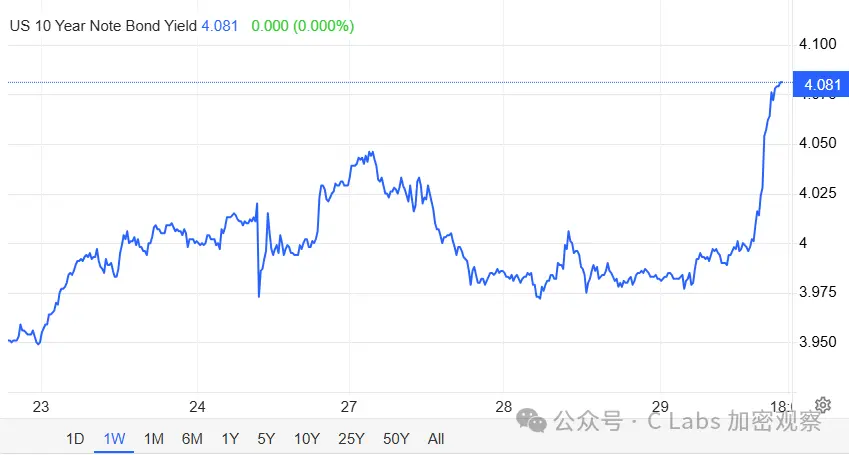
这说明什么?说明市场的真实流动性仍然紧张,投资机构并没有感受到“钱变多”。美联储的降息,还停留在“嘴上”,并没有真正“流到市场”。


04、“降息”背后的隐忧:经济下行压力依然大


从更宏观的角度看,美联储的这次降息,其实是一种“防御性操作”。近期的美国经济数据显示:

  • 房地产、制造业连续两个季度负增长;
  • 就业市场放缓,失业率重新升至 4.6%;
  • 企业盈利增长几乎停滞。

这意味着,美联储在“保增长”与“控通胀”之间,选择了轻微松动货币政策来缓冲下行风险。

但这种操作也释放出一个信号:

美国经济可能已经进入“缓衰期”。

在这种情况下,市场宁愿先锁定利润,也不敢轻易加仓风险资产。


05、总结:降息≠牛市,流动性才是核心变量


这次降息,市场的反应其实给出了一条最清晰的逻辑:

短期政策松动 ≠ 流动性充裕 ≠ 资产上涨。

真正能推动股市、加密市场全面反转的,是央行重新启动资产扩张(QE),或财政刺激配合大规模资本流入。

在那之前,降息只是“中性偏暖”——能稳住信心,但还不足以掀起新一轮牛市。

市场要的不是25个点的降息,而是一场真正的放水。

在那之前,‘风险资产’都还要再等等。


声明:本内容为作者独立观点,不代表 CoinVoice 立场,且不构成投资建议,请谨慎对待,如需报道或加入交流群,请联系微信:VOICE-V。

Lecturas Relacionadas

AI Folding: Fable 5 and GPT-5.6 Are Becoming the Privilege of a Few

【AI Accessibility Gap Widens: Elite Tools Like Fable 5 and GPT-5.6 Are Becoming Privileged】 We are witnessing a growing "AI divide." A stark reality is emerging: a tiny fraction of elites, primarily in tech, are using powerful next-generation models like Fable 5 or the upcoming GPT-5.6, while the vast majority of the public only has access to "toys" - free, limited models equivalent to ChatGPT's basic versions (8B to 30B parameters). This creates a massive experiential chasm and cognitive dissonance. Industry outsiders see AI as overhyped and ineffective, unable to grasp its transformative potential, while insiders leverage these advanced models for a decisive competitive edge. The gap isn't just about model quality but product functionality. Free users get a simple chatbot. Paying elites get integrated workflow systems—capable of creating specialized agents, processing complex data, and handling real-world tasks like management, coding, and planning. Demos showcasing AI planning weddings or building apps feel disconnected from everyday needs like managing bills, groceries, or health. The cost barrier is immense, with reports of engineers spending $1000 daily on Fable 5 inference. Elite users employ sophisticated multi-model workflows, combining different AIs for ideation, architecture, execution, and review, completing complex projects in minutes instead of weeks. This divide extends to critical areas like healthcare, where free models are dangerously unreliable for medical queries. However, some argue that for 90% of common business tasks, mid-tier models like GPT-5.5 are sufficient; the perceived limitation often stems from poor integration and lack of context, not model intelligence. Ultimately, unequal access to cutting-edge AI is creating a new form of social stratification, where the most powerful tools are becoming the exclusive privilege of a few.

marsbitHace 26 min(s)

AI Folding: Fable 5 and GPT-5.6 Are Becoming the Privilege of a Few

marsbitHace 26 min(s)

Cathie Wood's June $77M Investment: Are Crypto Stocks a True 'Substitute' for Bitcoin?

In June, Cathie Wood's ARK Invest purchased $77 million worth of publicly traded crypto-related stocks, including Coinbase, Circle, and Bullish, during Bitcoin's worst monthly performance in four years. This aligns with the investment thesis that such stocks offer a compliant way to gain exposure to the crypto cycle without directly holding Bitcoin. However, data analysis reveals significant drawbacks. A group of nine U.S.-listed crypto companies showed 30-day annualized realized volatility between 68% and 90%, nearly double Bitcoin's 37.6%. Over 90 days, Circle's volatility reached 103.6% versus Bitcoin's 37.8%. Drawdowns were also more severe for stocks like Circle (-51.4%) and MicroStrategy (-48.6%) compared to Bitcoin's -36.4% from its January high. Correlation analysis shows most stocks share only a moderate link to Bitcoin. For example, Circle, Robinhood, and Bullish have a 90-day correlation coefficient of just 0.55–0.58 with BTC, meaning only about one-third of their price movement is explained by Bitcoin's action. The rest stems from company-specific risks: earnings, competition, fundraising, and equity dilution. MicroStrategy (MSTR) is the notable exception, acting as a leveraged Bitcoin proxy with a beta of 1.59 and 0.85 correlation. Coinbase offers relatively balanced exposure. Circle exemplifies "crypto-wrapped" corporate risk, with its recent crash tied to stablecoin competition, not Bitcoin. Robinhood's diversified business insulates it from crypto downturns but also limits upside. Bitcoin miners like RIOT and MARA have posted significant gains year-to-date, driven primarily by their pivot to AI compute services, not Bitcoin's price. The article highlights that investing in crypto stocks often means accepting amplified volatility or layering on business-specific risks absent from direct Bitcoin ownership. For instance, MicroStrategy's recent challenges—its market value falling below its Bitcoin holdings (mNAV <1) and facing potential Bitcoin sales for liquidity—demonstrate equity-specific hazards like dilution and financing pressures not faced by a direct Bitcoin holder. ARK's buying spree represents a bet on a basket of different business models with varying crypto exposure, not a simple, lower-risk substitute for holding Bitcoin.

marsbitHace 26 min(s)

Cathie Wood's June $77M Investment: Are Crypto Stocks a True 'Substitute' for Bitcoin?

marsbitHace 26 min(s)

Crypto Welcomes the 'July Rebound'? On-Chain Bottom Signals Align, Reversal Still Requires Breakthrough Above $70k

The cryptocurrency market is showing signs of a potential "July rebound," with Bitcoin leading a recovery above $63,000 and total market cap rising. This bounce is attributed to improved macro expectations (weaker US jobs data easing Fed hike fears), a short squeeze in derivatives, and signs of whale accumulation. Key on-chain metrics signal a potential bottom, including the Sharpe Ratio hitting extreme lows, the AHR999 index nearing historic buy zones, and miner pressure reaching significant levels. However, analysts caution this is likely a corrective rebound rather than a confirmed trend reversal. Persistent challenges include weak spot demand, negative Coinbase Premium indicating institutional caution, and ongoing selling pressure in the altcoin market. Market sentiment remains in "extreme fear" territory, and the AVIV ratio suggests the average active Bitcoin investor is still at a loss. For a true bullish reversal, Bitcoin needs to convincingly break above the key $70,000 level (aligned with the Short-Term Holder Realized Price). The path to a new parabolic bull market is seen as dependent on attracting substantially more capital, as capital efficiency has declined. While prices may be approaching a cyclical bottom zone (with estimates between $37k-$60k), the market requires more sustained positive signals for a definitive uptrend.

marsbitHace 56 min(s)

Crypto Welcomes the 'July Rebound'? On-Chain Bottom Signals Align, Reversal Still Requires Breakthrough Above $70k

marsbitHace 56 min(s)

Trading

Spot
活动图片