Акционер Semler Scientific подал иск против слияния со Strive

cryptonews.ruPublicado a 2025-06-16Actualizado a 2025-10-17

Акционер компании Semler Scientific, работающей в сфере медицинских технологий, подал иск с целью заблокировать планируемое слияние со Strive. Управляющая активами компания Strive, возглавляемая бывшим кандидатом в президенты США Вивеком Рамасвами, недавно стала публичной и специализируется на управлении биткоин-резервами.

Согласно исковому заявлению, поданному в Окружной суд США по Северному округу Иллинойса, истец Терри Тран обвинил Semler Scientific и ее совет директоров в нарушении разделов 14(a) и 20(a) Закона о биржах 1934 года. Эти положения запрещают распространение вводящих в заблуждение материалов для голосования акционеров и устанавливают ответственность руководителей компании за подобные нарушения.

«Регистрационное заявление содержит существенные неполноты и вводит в заблуждение относительно финансовых последствий планируемой сделки для объединенной компании, а также относительно финансовой обоснованности предлагаемого слияния», — утверждается в иске.

В соответствии с условиями сделки, объявленной в сентябре, Strive планирует приобрести Semler Scientific через обмен акциями. Акционеры Semler получат 21,05 обыкновенных акций Strive класса A за каждую принадлежащую им акцию Semler.
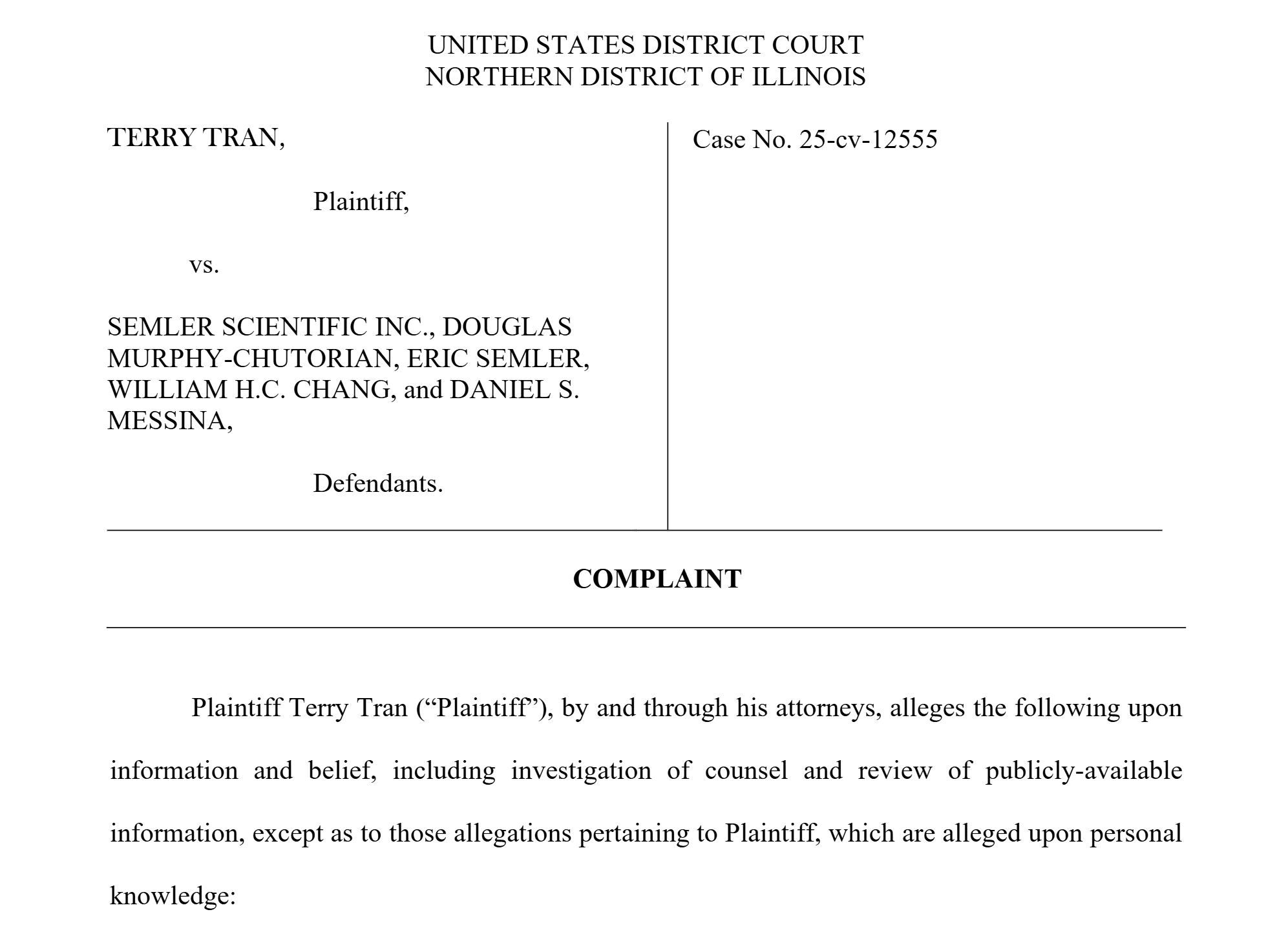

Выдержка из искового заявления. Источник: Bloomberg Law

В иске утверждается, что совет директоров Semler ввел акционеров в заблуждение

В исковом заявлении Трана утверждается, что совет директоров Semler, включая генерального директора Дугласа Мерфи-Чуториана и директоров Эрика Семлера, Уильяма Чанга и Дэниела Мессину, не предоставил достаточной информации о финансовой обоснованности сделки и ее последствиях для акционеров.

Истец требует от суда приостановить голосование акционеров и любые действия по завершению слияния до тех пор, пока компания не опубликует скорректированные материалы, устраняющие пробелы в заявлении о доверенности. Если сделка уже будет завершена, Тран добивается отмены слияния или получения денежной компенсации.

В случае удовлетворения иска слияние может столкнуться со значительными задержками. Дело, поданное во вторник, ведет юридическая фирма Ademi & Fruchter из Висконсина, специализирующаяся на судебных разбирательствах по ценным бумагам.

Semler Scientific представляет собой компанию из сферы медицинских технологий, которая в 2024 году приняла биткоин в качестве основного актива корпоративного казначейства и последовательно наращивает свои резервы за счет многочисленных приобретений.

Strive и Semler входят в двадцатку крупнейших компаний, владеющих биткоин-резервами

Лидером среди крупнейших корпоративных держателей биткоина является MicroStrategy с впечатляющими 640 250 BTC. За ней следуют MARA Holdings с 53 250 BTC и Twenty One Capital при поддержке Cantor Fitzgerald с 43 514 BTC.
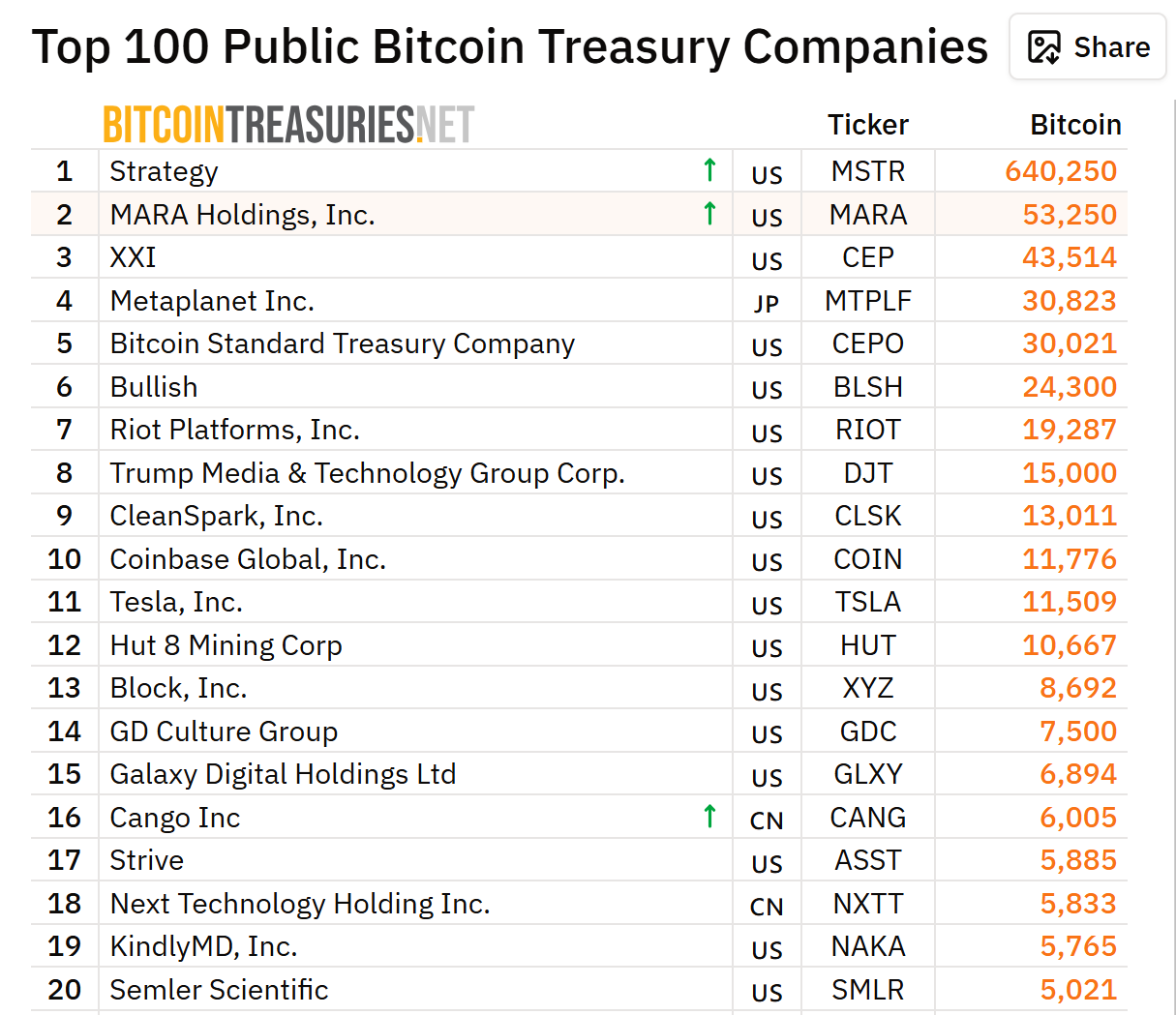

20 крупнейших компаний, владеющих биткоин-резервами. Источник: BitcoinTreasuries.Net

Далее в списке Strive и Semler Scientific выделяются как менее крупные, но заметные участники среди публичных держателей биткоина. Компании занимают 17-ю и 20-ю позиции с 5885 BTC и 5021 BTC соответственно.


Lecturas Relacionadas

Institutions Have Already Bought the Dip: Is Bitcoin at $70,000 the Start of a Bull Run or a Local Top?

Institutional Investors Piled into Bitcoin Ahead of Rally: Is $70K a New Bull Market Start or Local Top? Bitcoin surged past $70,000 following pro-crypto remarks from former U.S. President Donald Trump on August 20. However, institutional investors had been accumulating exposure in Q2 2026, even as the price fell. 13F filings reveal that while total Bitcoin ETF holdings declined, institutional holdings increased by 7.5%, reaching a record 44.2% share of ETF assets. Key institutional moves include Jane Street increasing its Bitcoin ETF and MicroStrategy (MSTR) exposure by over $800 million, BlackRock adding ~$290 million in Bitcoin-related holdings (MSTR, its own IBIT ETF, and ASST), and JPMorgan boosting its IBIT position by $85.6 million. UBS significantly increased its call option exposure on IBIT. Notably, Paul Tudor Jones's fund reversed a multi-quarter selling trend to add IBIT shares. Market opinions are divided post-rally. The "bear market over" camp includes F2Pool's co-founder declaring the bear market ended, Strive's CEO citing a favorable macro backdrop for Bitcoin, and Standard Chartered targeting $100,000 by year-end. Conversely, the "not yet bottomed" camp includes CZ stating the super cycle hasn't arrived, CryptoQuant analysts warning of elevated retail demand often preceding local tops, and analysis from VanEck and Glassnode suggesting on-chain data shows a prolonged "capitulation phase" is still unfolding, indicating current price strength may be a relief rally rather than a definitive trend reversal.

Odaily星球日报Hace 14 min(s)

Institutions Have Already Bought the Dip: Is Bitcoin at $70,000 the Start of a Bull Run or a Local Top?

Odaily星球日报Hace 14 min(s)

Viewpoint: A $4 Billion Buyback Can Fix Liquidity, But Not U.S. Fiscal Health

On August 19, the U.S. Treasury announced it would increase its maximum single-operation buyback size for long-term bonds from $2 billion to at least $4 billion, aiming to improve market liquidity. This move initially led to a pullback in long-term yields, such as the 30-year Treasury yield which had recently hit a 2007 high near 5.34%, sparking talk of potential "Treasury support." However, an opposing perspective argues this is merely a temporary fix. While buybacks can enhance trading conditions for older, less-liquid bonds, they do not address the underlying fiscal pressures. The Treasury's actions are a form of debt management, not monetary stimulus like QE; the funds used for buybacks ultimately come from cash balances or new borrowing. They do not reduce the government's overall financing needs. The core issue is growing fiscal supply. With the federal deficit reaching a record $432 billion in July 2026 and cumulative deficits already surpassing the prior fiscal year's total, the market faces a massive wave of new debt issuance. The recent surge in long-term yields may reflect a repricing of this persistent fiscal risk and the associated term premium, rather than just a liquidity shortage. Furthermore, demand-side challenges loom. Foreign holdings of U.S. Treasuries have recently declined, and if official demand weakens, the market will rely more on price-sensitive private investors, potentially requiring higher yields to clear future auctions. In essence, the Treasury can use buybacks to soothe market "trading problems," but it cannot buy away the nation's "fiscal problem." The key factors to watch will be the appetite at long-term bond auctions, the trajectory of the fiscal deficit, and whether higher yields can sustainably attract buyers. Without improvement in these areas, the yield relief provided by the $4 billion buyback expansion is likely just a short-term buffer.

marsbitHace 23 min(s)

Viewpoint: A $4 Billion Buyback Can Fix Liquidity, But Not U.S. Fiscal Health

marsbitHace 23 min(s)

Trading

Spot
活动图片