Tether урегулировал иски Celsius на $300 млн

cryptonews.ruPublicado a 2025-04-14Actualizado a 2025-10-15

Эмитент стейблкоинов Tether согласился выплатить 299 500 000 долларов в конкурсную массу Celsius Network, урегулировав претензии, связанные с крахом кредитора криптовалют в 2022 году, и потенциально открыв новую главу в дебатах об ответственности стейблкоинов.

Инвестиционный консорциум по восстановлению блокчейна (BRIC) - совместное предприятие управляющей компании VanEck и GXD Labs, аффилированной с Atlas Grove Partners, - объявил о соглашении во вторник. Это соглашение завершает многолетний спор о переводе и ликвидации залогового обеспечения в биткоинах, предшествовавший громкому банкротству Celsius в июле 2022 года.

BRIC был создан в начале 2023 года для содействия максимальному взысканию средств кредиторами с обанкротившихся платформ цифровых активов. В январе 2024 года должники Celsius и Комитет необеспеченных кредиторов назначили его управляющим по взысканию активов и управляющим судебными разбирательствами.
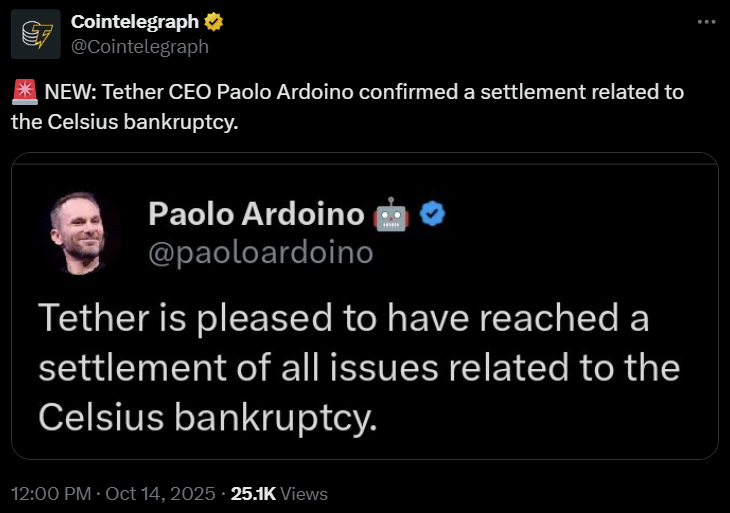
Рисунок 1.

Ранее Celsius подавала в суд на Tether, утверждая, что эмитент стейблкоинов неправомерно ликвидировал залог в биткоинах, предоставленный по кредитам, деноминированным в USDT. Согласно иску, Tether продал залог, когда цена биткоина практически совпала со стоимостью долга Celsius, фактически уничтожив позиции Celsius и способствовав его неплатежеспособности.

Недавно объявленное урегулирование в размере 299 500 000 долларов США представляет собой лишь малую часть от примерно 4 000 000 долларов США, которые Celsius запросила в суде после искового производства, поданного в августе 2024 года. В июле 2025 года суд по делам о банкротстве одобрил более масштабный иск против Tether, хотя в настоящее время неясно, как это последнее взыскание повлияет на вышеперечисленные разбирательства.

Урегулирование может свидетельствовать о растущей юридической ответственности эмитентов стейблкоинов, которые выступают в качестве контрагентов на проблемных криптовалютных рынках, - событие, которое может изменить отношение регулирующих органов и судов к ответственности таких организаций, как Tether, в будущих делах о банкротстве.

До сих пор такие эмитенты, как Tether, в основном утверждали, что их роль сводится исключительно к транзакциям, содействию выпуску и погашению токенов, и они не несут ответственности за то, как эти токены используются на биржах, у кредиторов или на децентрализованных финансовых платформах.

Выход из одной из самых мрачных глав в истории криптовалют

Банкротство Celsius Network стало частью череды крахов криптовалют в 2022 году, которые погрузили отрасль в затяжной медвежий рынок и, в конечном итоге, в том же году подготовили почву для краха FTX.

Последствия оказались особенно тяжелыми для бывшего генерального директора Celsius Алекса Машински, который в июне согласился не претендовать на какие-либо активы из конкурсной массы компании и впоследствии был приговорен к 12 годам тюремного заключения по двум пунктам обвинения в совершении тяжких преступлений. Как ранее сообщалось, Машински отправился в тюрьму в сентябре.

Компания Celsius была далеко не одинока. В 2022 году крупные кредиторы криптовалют BlockFi и Voyager Digital подали заявления о защите от банкротства, а в 2023 году за ними последовал Genesis Global Capital.

Согласно анализу Федерального резервного банка Чикаго, в период с мая по ноябрь 2022 года клиенты вывели почти 13 000 000 000 долларов с платформ криптовалютных активов, поскольку доверие к сектору резко упало.
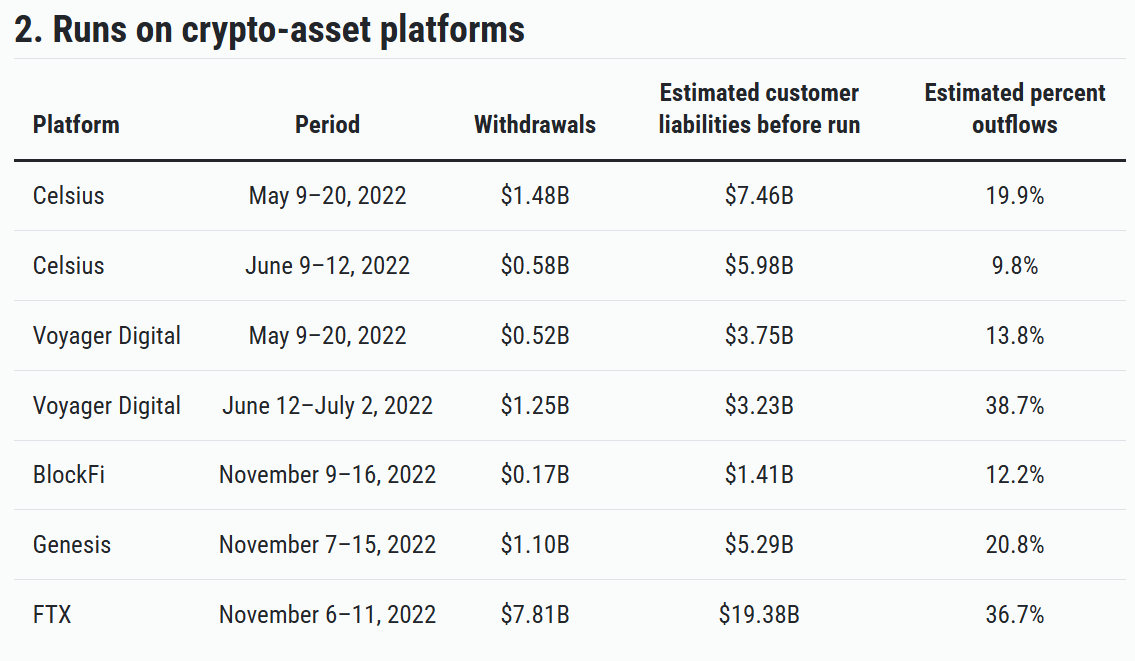
Рисунок 2. Набег на кредиторы криптовалюты и биржи в 2022 году. Источник: Chicago Fed.

«Высокодоходные продукты были ключевым магнитом для клиентов на некоторых платформах», - отметил Федеральный резервный банк Чикаго, сославшись на процентные ставки, которые в некоторых случаях превышают 17% - уровень, который привлекал инвесторов во время бычьего рынка, но оказался неустойчивым после обвала цен.
Lecturas Relacionadas

Conversation with Jason Huang, Founder of NDV: Puncturing the AI Bubble and the MicroStrategy Myth, Searching for the Ultimate Trump Card in the Crypto Market

In a podcast interview, NDV founder Jason Huang discusses the recent crypto market downturn, attributing the initial phase to typical Bitcoin cycle selling pressure, now compounded by a US stock market correction, tightening liquidity, and MicroStrategy's financial strain. He argues the market hasn't bottomed yet, noting true bear market lows often require a major, despair-inducing event like FTX's collapse. Huang details MicroStrategy's precarious position: its debt-and-equity fueled Bitcoin buying model has reversed into a negative cycle as prices fell. He interprets its sale of just 32 BTC as a signal prioritizing creditors over shareholders, sparking market "front-running" of its larger potential sell-off. A true bottom may arrive only after MicroStrategy resolves its looming debt payments, possibly via a large, private Bitcoin sale. His fund is up ~20% this year, outperforming Bitcoin by 50-60%, by shorting crypto and trading commodities like oil and gold. He avoided AI stocks despite being a heavy user, citing a lack of trading edge in the crowded semiconductor hardware trade, which he views as ripe for a significant correction. Long-term, Huang remains bullish on stablecoins as crypto's clearest, most practical innovation with high growth potential. He is very bearish on Ethereum and skeptical that Bitcoin has found its floor, suggesting $48,000 may not hold. He expects a sharp decline followed by a strong recovery within a year, but only after a major panic event leads to widespread capitulation and despair—the true hallmark of a market bottom.

链捕手Hace 5 min(s)

Conversation with Jason Huang, Founder of NDV: Puncturing the AI Bubble and the MicroStrategy Myth, Searching for the Ultimate Trump Card in the Crypto Market

链捕手Hace 5 min(s)

U.S. Stocks Trend (June 24): Korean Stock Plunge Ripples Global Chip Sector, Micron Tumbles Over 10%, Long-Term Supply Certainty Faces a 'Hard Test'

US Stock Market Trend (June 24): South Korean Market Plunge Disrupts Global Chips, Micron Drops Over 10%, Long-Term Supply Certainty Faces Hard Test On Monday, the South Korean KOSPI index plunged 10%, with SK Hynix and Samsung dropping over 12%, triggered by rumors that SK Hynix might slow its HBM4 production expansion. This shock quickly spread to the U.S. semiconductor sector. Micron plummeted 13.18% to $1,051.77, SanDisk fell 13.64%, and Marvell declined 8%. The Philadelphia Semiconductor Index closed down 7.87%, while the Nasdaq fell 2.21% to 25,587.04 points. The sell-off particularly hit memory chip stocks. Defensive sectors showed relative resilience, with gains in stocks like IBM and Johnson & Johnson. Market volatility spiked, with the VIX index jumping 12.79%. Commodities weakened, with WTI crude oil hitting a near three-month low and gold falling below $4,100. The core issue is not a challenge to AI demand itself, but a market reassessment of overly optimistic capacity expectations for memory chips, especially HBM. The rumor about SK Hynix undermined perceived certainty in the AI infrastructure cycle. Key upcoming events include Thursday's PCE inflation data, which will influence Fed rate expectations, and Micron's earnings report. The market will focus on Micron's HBM gross margins and its long-term capacity guidance. The shift indicates the AI investment cycle is moving from euphoria to rational pricing. Large institutions are questioning the sustainability of AI-related capital expenditure growth. Micron's repricing from an "AI infrastructure staple" to a more cyclical stock highlights this change. Thursday's data and earnings represent a critical juncture for assessing long-term supply certainty, which has now significantly decreased.

marsbitHace 12 min(s)

U.S. Stocks Trend (June 24): Korean Stock Plunge Ripples Global Chip Sector, Micron Tumbles Over 10%, Long-Term Supply Certainty Faces a 'Hard Test'

marsbitHace 12 min(s)

Preferred Stock Is Not the Trigger for Corporate Bankruptcy, MicroStrategy's Dollar Reserves Can Cover Dividend and Interest Payments Until February 2027

Preferred Shares Are Not the Catalyst for Corporate Bankruptcy; MicroStrategy's Dollar Reserves Can Cover Dividend and Interest Payments Until February 2027. This article analyzes the nature of preferred shares used by MicroStrategy (MSTR). Legally equity but economically similar to debt, these shares, including its Bitcoin-linked STR convertible preferred notes (STRC), offer fixed or floating dividends. Crucially, MicroStrategy's preferred shares lack rigid redemption clauses, meaning they are not classified as traditional debt. This eliminates principal repayment pressure and means missed dividends do not constitute default or trigger bankruptcy, creating a "self-contradictory virtuous cycle." The article clarifies that if funds are short, MicroStrategy can defer or suspend preferred share dividends (except for non-cumulative types like STRD) without immediate risk. The real potential crisis point lies with its convertible bonds. If a prolonged bear market prevents conversion, MicroStrategy might need to sell Bitcoin to repay these bonds starting from the earliest maturity in September 2027, potentially creating a downward spiral. Preferred dividend suspensions would only exacerbate market panic in such a scenario. Recent financial activity shows MicroStrategy strengthened its position through four weeks of common stock (MSTR) issuances, raising over $851 million without issuing new preferred shares. It increased its dollar reserves to approximately $1.4 billion, which is sufficient to cover all preferred share dividends and interest until around March 2027. While Bitcoin purchases slowed recently, this prioritization of cash reserves enhances the company's near-term financial safety. The analysis concludes that if the Bitcoin bear market ends by early 2025 as anticipated, MicroStrategy can resume issuing MSTR stock in a rising market to replenish reserves and manage future dividend obligations, thereby reducing the long-term pressure from its preferred share structure.

marsbitHace 1 hora(s)

Preferred Stock Is Not the Trigger for Corporate Bankruptcy, MicroStrategy's Dollar Reserves Can Cover Dividend and Interest Payments Until February 2027

marsbitHace 1 hora(s)

Giants Wage the Context War, Reconstructing AI Moats

The article "Giants Launch the Context War, Reconstructing AI's Moat" discusses how leading AI companies—OpenAI, Anthropic, and Google—are shifting their competitive focus from model size to acquiring, managing, and utilizing user context (Context). Initially, Context referred to the length of text a model could process, leading to a "arms race" for longer context windows. However, the competition has evolved through three key phases: expanding text capacity (long context windows), enabling memory across sessions, and finally, integrating AI into real user environments like browsers and desktops to capture dynamic task states. Each company is pursuing a distinct strategy. OpenAI is building Context around the ChatGPT account, turning it into a central hub that accumulates user understanding across various integrated applications and tools. Anthropic, lacking a major user base, focuses on high-value verticals like coding, empowering its Claude model to actively gather Context through GUI interaction (Computer Use) and system connections (MCP protocol). Google, with vast existing user data from products like Search and Gmail, faces the challenge of restructuring this data into actionable, AI-understandable Context for its Gemini model within its ecosystem. The core argument is that the nature of competitive advantage in AI is changing. The internet era prized network effects—connecting more users. The AI era values "individual depth": the ability to build deep, task-specific understanding of a user. This creates a new moat through 1) the compounding value of accumulated Context, 2) deep integration with user tools and permissions, and 3) the establishment of trust for complex tasks. Therefore, the battle for Context is fundamentally about capturing "task entry points" and converting existing digital ecosystems into environments where AI can effectively understand and act, rather than merely scaling user numbers.

marsbitHace 2 hora(s)

Giants Wage the Context War, Reconstructing AI Moats

marsbitHace 2 hora(s)

Trading

Spot
Futuros
活动图片