Биткоин подскочил до $125 000 на фоне приостановки работы правительства США и макроэкономических факторов

cryptonews.ruPublicado a 2025-04-05Actualizado a 2025-10-06

На выходных биткоин обновил исторический максимум, что побудило аналитиков прогнозировать возобновление фазы накопления, которая может спровоцировать рост до $150 000 до конца года.

Биткоин установил новый исторический максимум, превысив $125 700, а его рыночная капитализация впервые в истории криптовалют ненадолго превысила отметку в $2,5 триллиона.

Росту способствовал ряд макроэкономических факторов, включая недавнее закрытие правительства США — первое с 2018 года, — которое, по словам некоторых аналитиков, возобновило интерес к роли биткоина как средства сбережения.

По словам Фабиана Дори, главного инвестиционного директора группы Sygnum Bank, занимающейся банковским обслуживанием цифровых активов, в прошлом аналогичные условия приводили к «важным ценовым вехам».

Приостановка работы правительства США «возобновила обсуждение роли биткоина как средства сбережения, поскольку политическая нестабильность подчеркивает интерес к децентрализованным активам, — сказал Дори. — В то же время более широкая ситуация, характеризующаяся слабой ликвидностью, ускорением бизнес-цикла, обусловленным развитием сервисов, и сокращением отставания от акций и золота, привлекла внимание к цифровым активам».
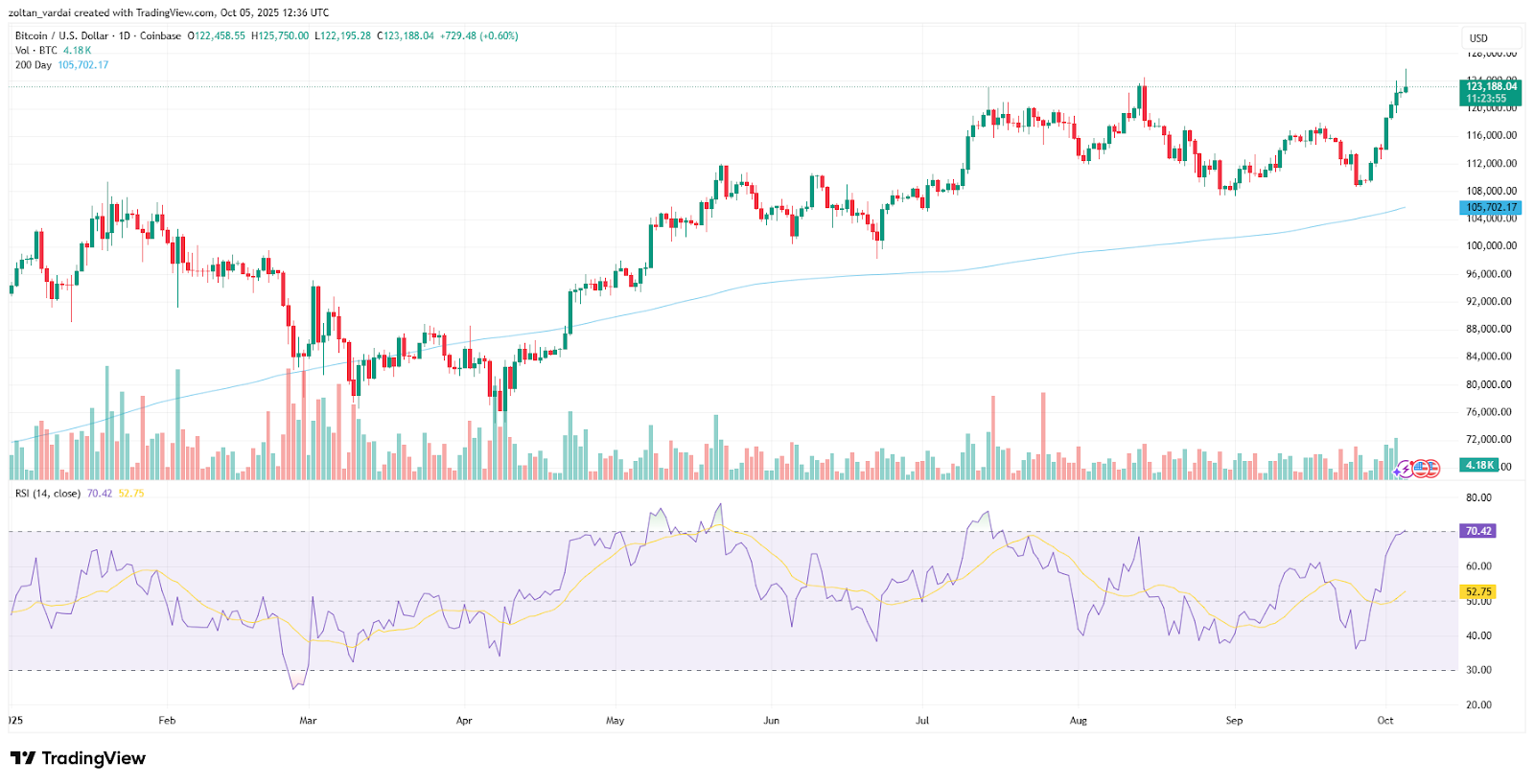
BTC/USD, график с начала года. Источник: Cointelegraph/ TradingView.

Однако степень положительного влияния приостановки работы правительства на рынок криптовалют в конечном итоге будет зависеть от того, как это скажется на позиции Федеральной резервной системы США в отношении решений по процентным ставкам, сообщил Джейк Кеннис, старший аналитик Nansen.

«Криптовалютные рынки могут выиграть от решения о закрытии, если оно снизит неопределенность и подтолкнет ФРС к более мягкой позиции», — добавил Кеннис.

В то время как некоторые аналитики рассматривают прекращение работы правительства как сигнал о возможном достижении дна рынком криптовалют, Кеннис заявил, что «преждевременно называть это локальным дном рынка», поскольку для подтверждения потребуется «многонедельная стабильность выше ключевых уровней поддержки».

Биткоин вступает в новую фазу накопления

Некоторые аналитики рассматривают недавний рост биткоина как признак новой фазы накопления крупными компаниями, поскольку данные блокчейна указывают на снижение давления на продажу со стороны китов.

«Рыночные данные указывают на то, что текущее ценовое движение может быть связано с фазой накопления, — сказал Дори из Sygnym Bank. — Похоже, что давление со стороны долгосрочных держателей ослабевает, в то время как краткосрочные инвесторы демонстрируют признаки стабилизации после периода понесенных убытков».

Он добавил, что периоды «охлаждения спекулятивной активности и более устойчивого позиционирования» исторически предшествовали значительным ростам биткоина.

Между тем, по данным блокчейн-платформы Glassnode, открытый интерес к биткоину «резко восстановился» после истечения срока действия опционов на прошлой неделе, что может «подготовить почву» для четвертого квартала.
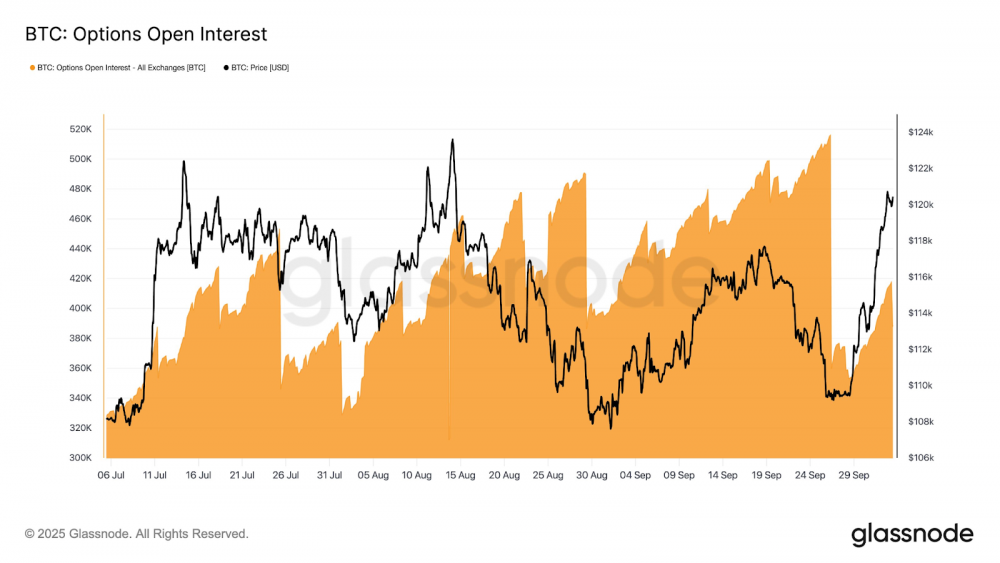
Источник: Glassnode.

Замедление спекулятивной активности может привлечь больше внимания к биткоину, подкрепляя прогнозы аналитиков о прорыве к отметке $150 000 в четвертом квартале 2025 года, если BTC сможет удержаться выше ключевого психологического уровня в $120 000, сказал Чарльз Эдвардс в интервью на Token2049.

Lecturas Relacionadas

Bitcoin Falls Below $60,000 Again; After 20 Months, We've Reached a New Low

Bitcoin Drops Below $60,000, Hitting a 20-Month Low Bitcoin fell below the key $60,000 psychological level again, reaching a low of $59,023—its lowest point in approximately 20 months, dating back to October 2024. While it later recovered slightly to around $60,600, this marks its third significant breach of $60,000 this year. The downturn is attributed to two primary factors. First, U.S. spot Bitcoin ETFs are experiencing their longest streak of net outflows since launch, with nearly $5.94 billion withdrawn over 30 days. This creates sustained selling pressure as Authorized Participants sell Bitcoin to meet redemptions. Second, shifting macroeconomic expectations are adding pressure. Strong U.S. job data and hawkish remarks from Fed officials have increased market pricing for potential rate hikes, reversing the earlier liquidity-driven bullish sentiment and prompting a shift away from risk assets like Bitcoin. Analyst views are mixed. 21Shares maintains a bullish long-term outlook, expecting prices to recover towards $100,000, citing historical post-halving cycles and substantial ETF holdings as a base. In contrast, Arthur Hayes predicts a potential bottom around $40,000 within six months due to persistent Fed hawkishness. CryptoQuant suggests, based on on-chain data, that the market may not find a bottom until prices fall below the average investor cost basis around $53,000, potentially extending the bearish phase into late 2026 or early 2027. The immediate focus is on upcoming U.S. inflation data and Fed signals. Lower-than-expected CPI could offer relief, but confirmation of sticky inflation or continued ETF outflows may lead to further downside pressure. Bitcoin's ability to hold above $60,000 remains a critical test for the near-term market direction.

Odaily星球日报Hace 8 min(s)

Bitcoin Falls Below $60,000 Again; After 20 Months, We've Reached a New Low

Odaily星球日报Hace 8 min(s)

When Billions Begin to Operate Everything by Voice, How Far is ‘All Assets on Chain’?

In June 2026, WeChat began a limited rollout of "Xiaowei," its native AI assistant. This move is more than an upgrade to a smarter chatbot; it signals a crucial step from "universal internet access" toward the broader vision of "full asset tokenization." Xiaowei, powered primarily by WeChat's in-house WeLM model, demonstrates four key capabilities: 1) direct voice/web chat control of app functions, 2) automated access to mini-programs for services, 3) instant comprehension and summarization of complex documents like PDFs, and 4) generating functional mini-program prototypes from simple natural language requests. This represents a fundamental shift from GUI (Graphical User Interface) to LUI (Language User Interface), eliminating friction in human-digital interaction. The rollout is pivotal because it brings AI Agents to China's massive user base with zero friction—no new app downloads or accounts needed. This "seamless access" mirrors past platform revolutions like the App Store or WeChat Mini-Programs, potentially unlocking a global AI Agent market projected to grow from $7.92 billion in 2025 to nearly $295 billion by 2035. The article argues that China's internet evolution has moved from "connecting everyone" to "putting all services online." The next phase is "tokenizing all assets"—a concept broader than just Real World Assets (RWA) like real estate. It encompasses tokenizing personal assets like social influence, attention, and credit history. RWA tokenization itself is forecast to explode from $35 billion in 2025 to over $500 billion in 2026. The convergence of ubiquitous AI Agents and rapidly tokenizing assets points to a future paradigm for wealth management. Your AI Agent could autonomously manage a globally diversified, tokenized portfolio based on your preferences. Initiatives like EXIO Group's full-stack RWA services aim to lower investment barriers, paralleling WeChat's democratization of AI access. In conclusion, the launch of Xiaowei is not merely a technical upgrade but a historic inflection point. It marks AI Agents' transition from niche tools to essential utilities and accelerates the movement toward a future where voice commands seamlessly interact with tokenized value, redefining humanity's relationship with the digital and financial worlds.

marsbitHace 1 hora(s)

When Billions Begin to Operate Everything by Voice, How Far is ‘All Assets on Chain’?

marsbitHace 1 hora(s)

SoftBank CEO Masayoshi Son's New Trillion-Dollar "Gamble"

SoftBank founder Masayoshi Son is embroiled in a new trillion-dollar "bet" on Physical AI and humanoid robotics, even as his massive wager on OpenAI faces uncertainty ahead of its potential IPO. Recent reports reveal OpenAI's steep losses—$85 billion net loss by Q1 2026 and a $38.5 billion loss in 2025—casting doubt on its path to a trillion-dollar valuation. SoftBank, OpenAI's second-largest external shareholder with a planned 13% stake, stands to gain hugely if OpenAI succeeds. Undeterred, Son is already pushing forward with his next ambitious venture: consolidating SoftBank's AI and robotics assets into a new U.S.-based company named "Roze," targeting a $100 billion IPO as early as late 2026. This move aligns with his belief that Physical AI, merging AI cognition with robotic physical execution, is the next trillion-dollar frontier. Son's confidence stems from recent AI wins; SoftBank's stock surged and he briefly regained the title of Asia's richest person, largely due to OpenAI's soaring valuation. However, his aggressive strategy has raised internal concerns about over-reliance on OpenAI and strained finances. With competitors like Anthropic advancing rapidly and OpenAI's IPO timing uncertain, Son is racing to capitalize on the AI boom. His long-term vision for Physical AI includes a decade of investments in robotics, from Boston Dynamics to recent acquisitions like ABB's robotics unit, and a planned $1 trillion investment in U.S.-based AI robotics industrial parks. Yet, challenges remain: humanoid robotics firms like Figure AI lack the clear revenue paths of AI software companies, and Roze's lofty valuation faces skepticism. For Son, these bets are also driven by an unfulfilled promise of massive returns to key investors like Saudi Arabia's PIF. Despite risks, he continues to double down, betting that the fusion of AI and physical machines will define the next technological era.

marsbitHace 1 hora(s)

SoftBank CEO Masayoshi Son's New Trillion-Dollar "Gamble"

marsbitHace 1 hora(s)

Trading

Spot
Futuros
活动图片