Coinbase Shareholders Greenlit To Proceed With Lawsuit By Federal Judge

bitcoinistPublicado a 2025-10-02Actualizado a 2025-10-02

Resumen

A federal judge has granted Coinbase (COIN) shareholders the opportunity to move forward with a narrowed lawsuit against the US-based...

Trusted Editorial content, reviewed by leading industry experts and seasoned editors. Ad Disclosure

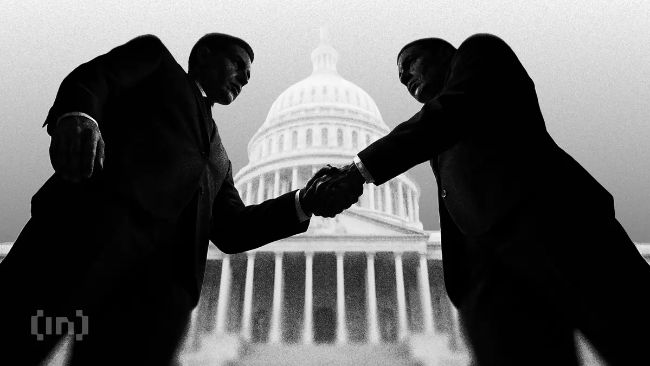
A federal judge has granted Coinbase (COIN) shareholders the opportunity to move forward with a narrowed lawsuit against the US-based cryptocurrency exchange, alleging that the company concealed alleged “business risks,” including the possibility of being sued by the Securities and Exchange Commission (SEC). 

Claims Against Coinbase

The ruling, issued by US District Judge Brian Martinotti in Newark, New Jersey, comes as a response to claims that Coinbase misled investors regarding its regulatory standing and the safety of their assets. The Judge rejected requests from the crypto exchange executives and directors to dismiss the lawsuit entirely. 

The shareholders contend that the company misrepresented the likelihood of an SEC lawsuit regarding its operations as an unregistered securities exchange, leading them to believe that such an action was improbable. 

They also argue that Coinbase failed to disclose the alleged risks associated with asset loss in the event of a bankruptcy filing. The judge pointed out that while shareholders could not base their claims solely on “group pleading,” they can pursue claims that provide detailed allegations against specific parties. 

Martinotti emphasized that claims grounded in particularized allegations must be allowed to proceed, stating, “Where plaintiffs have appropriately provided defendant-by-defendant particularity, the claims must remain.”

Shareholder Legal Teams Remain Silent 

The ruling, which spans 59 pages, does not outline which specific statements were dismissed due to the group pleading issue, as neither party identified those in their arguments. 

As Reuters reported, Martinotti noted in a footnote that “Judges are not like pigs, hunting for truffles buried in briefs,” highlighting the importance of clarity in legal documentation.

The proposed class action suit is spearheaded by the Swedish pension fund Sjunde AP-Fonden and encompasses Coinbase shareholders from April 14, 2021, to June 5, 2023. 

In February, the Securities and Exchange Commission had concluded its lawsuit against the exchange as regulatory scrutiny on the cryptocurrency industry began to ease under the Trump administration.

Others, such as Uniswap, Robinhood, and Kraken, have also had their lawsuits dismissed by the regulator this year. Trump’s appointment of Paul Atkins as the new chair has been a positive development, providing clear regulatory frameworks and collaborations to boost the adoption and usage of cryptocurrency in the country. 

At the time of writing, neither Coinbase nor its shareholders’ legal representatives have commented on the judge’s ruling. It remains to be seen what actions the firm will take and whether its executives will issue an official comment. 

Coinbase
The 1-hour chart shows COIN’s valuation trending upwards. Source: COIN on TradingView.com

Despite the judge’s decision, the exchange’s stock, which trades on the Nasdaq under the ticker symbol COIN, surged towards $347 on Wednesday, marking gains of almost 12%. This aligns with the broader crypto market recovery, led by Bitcoin (BTC), which is approaching record highs. 

Featured image from DALL-E, chart from TradingView.com 

Editorial Process for bitcoinist is centered on delivering thoroughly researched, accurate, and unbiased content. We uphold strict sourcing standards, and each page undergoes diligent review by our team of top technology experts and seasoned editors. This process ensures the integrity, relevance, and value of our content for our readers.

Ronaldo is a seasoned crypto enthusiast with over four years of experience in the field. He is passionate about exploring the vast and dynamic world of decentralized finance (DeFi) and its practical applications for achieving economic sovereignty. Ronaldo is constantly seeking to expand his knowledge and expertise in the DeFi space, as he believes it holds tremendous potential for transforming the traditional financial landscape.

Lecturas Relacionadas

Near Returns to the AI Stage: Transformation into a Public Chain Due to 'Payroll Difficulties,' Agent and Privacy Emerge as New Growth Narratives

NEAR Returns to AI Origins: From Payroll Struggles to Blockchain, Now Focusing on AI Agents and Privacy NEAR Protocol's journey began not with grand blockchain ambitions, but from a practical hurdle: its AI startup founders, including Transformer paper co-author Illia Polosukhin, couldn't efficiently pay international developers in 2017. This led them to pivot and build a high-performance, scalable blockchain. After years navigating various crypto narratives like sharding and cross-chain interoperability, NEAR is now leveraging its AI roots to re-enter the AI arena. A key driver is its "NEAR Intents" layer, which abstracts complex cross-chain transactions. Users simply state their goal (e.g., swap BTC for ETH), and a solver network finds the optimal route. This system has processed over $20B in cross-chain volume, generating significant fee revenue. A major growth area is private transactions via "Confidential Intents/Swaps," which hide trade details until settlement to protect against MEV and front-running. Remarkably, private swaps recently accounted for over 40% of NEAR's transaction volume, highlighting strong demand but also potential regulatory scrutiny. With its AI-founder pedigree, NEAR is positioning itself at the intersection of blockchain, AI agents, and privacy, aiming to become infrastructure for the emerging agent economy while navigating the challenges of its rapid adoption.

marsbitHace 2 hora(s)

Near Returns to the AI Stage: Transformation into a Public Chain Due to 'Payroll Difficulties,' Agent and Privacy Emerge as New Growth Narratives

marsbitHace 2 hora(s)

From Ethereum to AI's 'CROPS': What Exactly is This Set of 'Slow Variables' That Vitalik Repeatedly Emphasizes?

In recent discussions, Vitalik Buterin has frequently emphasized the concept of "CROPS," a framework defining core values for Ethereum's development. CROPS stands for Censorship Resistance, Capture Resistance, Open Source, Privacy, and Security. Initially outlined in the Ethereum Foundation's "EF Mandate," it represents a commitment to user sovereignty, ensuring that the network resists external control, remains open, protects privacy, and prioritizes security. The relevance of CROPS extends beyond Ethereum's foundational principles, becoming crucial in the context of AI integration. As AI agents begin handling wallet operations and automated transactions, the risk increases that users may cede control over their digital assets, privacy, and intentions to centralized AI service providers. A "CROPS AI" would therefore emphasize local execution where possible, privacy-preserving remote model calls (e.g., using zero-knowledge proofs), and transparent, verifiable processes to maintain user agency. Vitalik highlights a significant convergence between "CROPS Ethereum access layer" and "CROPS AI." Both address the same fundamental challenge: how users can access powerful services—be it blockchain data via RPCs or AI models—without exposing sensitive information or relinquishing ultimate control. This intersection points toward a future digital entry point that is more private, secure, and user-controlled. Ultimately, CROPS is not merely an abstract ideal but a practical guidepost. It steers development—from protocol resilience and wallet design to AI agent safety—towards a future where users retain self-sovereignty even as digital systems grow more complex and powerful. In an era of accelerating AI adoption, these "slow variables" of censorship resistance, openness, privacy, and security may define Ethereum's enduring value.

marsbitHace 2 hora(s)

From Ethereum to AI's 'CROPS': What Exactly is This Set of 'Slow Variables' That Vitalik Repeatedly Emphasizes?

marsbitHace 2 hora(s)

Silicon Valley 'Startup Guru' Steve Hoffman: Web3 + AI Could Be a Trap

Silicon Valley investor and "Godfather of Startups" Steve Hoffman warns that combining Web3 with AI is likely a trap, not a promising venture. In an interview, Hoffman argues that while AI is a foundational technology touching all industries, Web3 adds complexity, friction, and regulatory risk without solving mainstream consumer or business needs. He advises founders to focus on deep, specialized applications where startups can out-iterate giants, rather than on generic features easily replicated by large tech companies. Hoffman observes that Silicon Valley will lead foundational AI research, while China excels at rapid, large-scale application and commercialization, particularly in robotics. He stresses that AI-driven autonomous agents capable of collaborative, multi-step tasks are 2-4 years away, which will cause significant job displacement. The solution is not to slow AI but to redesign business models around human-AI collaboration and reform social systems like education and retraining. For startups, Hoffman recommends focusing on vertical, expertise-heavy domains to build defensibility. He sees major opportunities in AI fraud detection and cybersecurity. Key founder mindsets include systemic thinking over feature-focus, relentless customer centricity, building adaptive teams, and deeply understanding AI's capabilities and limits. Hoffman is also leading a non-profit initiative to establish university centers aimed at training future leaders in responsible, human-value-aligned AI innovation.

marsbitHace 4 hora(s)

Silicon Valley 'Startup Guru' Steve Hoffman: Web3 + AI Could Be a Trap

marsbitHace 4 hora(s)

Trading

Spot
Futuros
活动图片