SEC Eyes More Crypto Clarity: ‘Innovation Exemption’ Could Come By Year-End – Chair Atkins

bitcoinistPublicado a 2025-09-24Actualizado a 2025-09-24

Resumen

In a recent interview, the Securities and Exchange Commission (SEC) Chairman discussed the importance of establishing a crypto market structure...

Trusted Editorial content, reviewed by leading industry experts and seasoned editors. Ad Disclosure

In a recent interview, the Securities and Exchange Commission (SEC) Chairman discussed the importance of establishing a crypto market structure legislation and the regulatory agency’s effort to implement a rule exception for digital asset firms in the coming months.

SEC To Offer More Crypto Clarity By Year-End

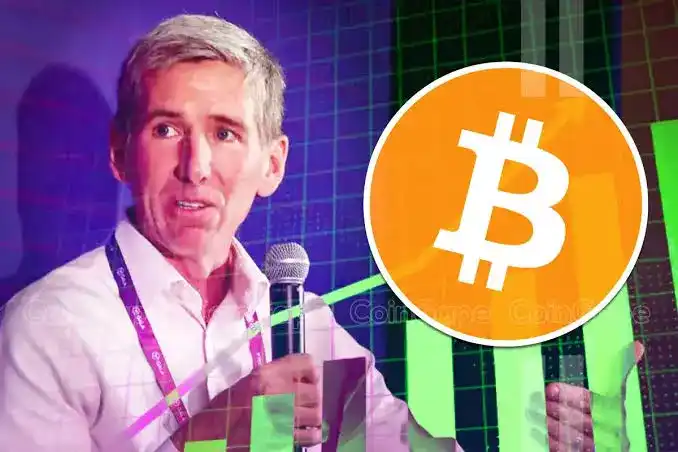
On Tuesday, SEC Chairman Paul Atkins joined FOX Business to discuss the US Congress’s crypto legislation and the agency’s measures to make the industry “stand on firm ground” and provide the long-awaited regulatory clarity to advance the digital assets sector in America.

Atkins stated that the Commission is “trying to get the marketplace some kind of stable platform upon which they can introduce new products,” citing the recently approved new generic listing standards for spot crypto exchange-traded funds (ETFs) as one big step toward their goals.

The SEC Chief affirmed that “a lot is going on” for the agency, including working on rulemaking and setting an innovation exemption for crypto firms by the end of 2025. Following the successful “Crypto Week” in July, he revealed that the Commission was exploring some regulatory changes to boost innovation.

As reported by Bitcoinist, the Chairman shared that the agency was considering an innovation exemption that would “permit novel ways of trading and more narrowly tailored forms of relief to facilitate the building of other components of a tokenized securities ecosystem.”

The rule exemption would allow crypto firms to quickly launch products without having to comply with “burdensome prescriptive regulatory requirements that hinder productive economic activity.”

Instead, crypto firms would “be able to comply with certain principles-based conditions designed to achieve the core policy aims of the federal securities laws,” Atkins detailed in a late July speech.

CFTC, SEC To Work ‘Hand in Glove’

During the interview, the SEC Chairman also discussed the regulator’s ongoing collaboration with the Commodity Futures Trading Commission (CFTC) and the potential consolidation of the two agencies, with Atkins as the leader.

It’s worth noting that the CFTC is currently in leadership limbo as the confirmation process of President Trump’s nominee for Chairman, Brian Quintenz, has stalled following a request from the White House.

The regulatory agency, intended to be a five-person, bipartisan commission, is down to only acting Chair Caroline Pham, who is also expected to depart from the agency once a permanent chief is appointed.

“I have my hands full right now,” Atkins said, shutting down the idea. “We are working hand in glove right now with the CFTC, so harmonization is what I envision. People have been discussing this issue for a long time, and I think we’re at a point now, especially when we look at the changes in the digital asset area, that it’s incumbent on the two agencies to work hand in glove.”

What we have to really focus on is that over the years, there’s been (…) jockeying for position, and we don’t need regulatory turf battles. The field is littered with bodies of would-be products (…) that over the years have been torpedoed by the lack of certainty as between what falls within the SEC’s realm and what’s the CFTC’s realm.

Speaking about crypto market structure legislation, the regulator highlighted the importance of the bill. He explained that with the enactment of the GENIUS Act for stablecoin regulations, the market structure must be a priority “so that there’s certainty in the marketplace and direction to the SEC and CFTC to work together.”

Ultimately, he anticipated that the two regulatory agencies would work on joint rulemaking to “try to future-proof these rules and the relationships from some rogue regulations in the future.”
crypto, bitcoin, btc, btcusdt

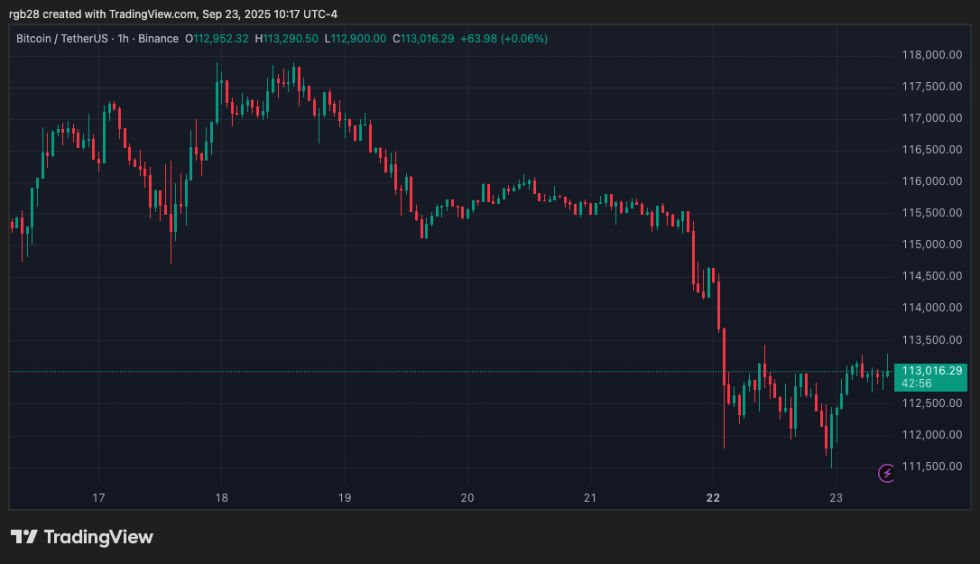
Bitcoin (BTC) trades at $113,016 in the one-week chart. Source: BTCUSDT on TradingView
Featured Image from NBC News, Chart from TradingView.com
Editorial Process for bitcoinist is centered on delivering thoroughly researched, accurate, and unbiased content. We uphold strict sourcing standards, and each page undergoes diligent review by our team of top technology experts and seasoned editors. This process ensures the integrity, relevance, and value of our content for our readers.

Rubmar is a crypto enthusiast who likes learning and improving constantly. She enjoys reporting on the latest news and developments in the crypto industry. Rubmar also enjoys scrapbooking, crafting, simulation games, and watching football.

Lecturas Relacionadas

Coldcard Theft Reflection: Source Code Visibility Does Not Equal Security

The article examines the open-source vs. closed-source debate in crypto, prompted by a theft of over $100M in Bitcoin from Coldcard hardware wallets. It clarifies key terminology: true "Free and Open Source Software" (FOSS) grants four essential freedoms (use, study, share, modify), while "source available" code, like Coldcard's firmware, may have usage restrictions. The piece argues that visible source code alone does not guarantee security; actual safety depends on the economic incentives for thorough, ongoing review by skilled individuals. Using Bitcoin Core as a model, the article describes a successful, transparent open-source development culture built on public review and consensus. It contrasts this with the Coldcard case, where a critical bug in a lightly-reviewed, source-available library went undetected for years, highlighting a "tragedy of the commons" scenario where assumed but absent scrutiny creates vulnerability. The economics of licensing are crucial: restrictive licenses can limit the pool of motivated commercial reviewers. Finally, the article explores AI's impact. It cites the Bitcoin Red Team's use of AI to rapidly audit codebases and find vulnerabilities at scale, demonstrating a powerful new tool for security. However, AI also floods projects with low-quality code, straining maintainers. The piece concludes that in high-stakes crypto, only well-audited projects—whether open or closed-source—can withstand evolving threats, with AI both challenging and aiding security practices.

marsbitHace 5 min(s)

Coldcard Theft Reflection: Source Code Visibility Does Not Equal Security

marsbitHace 5 min(s)

Mysterious "Ox Alpha" Large Model Goes Viral with Limited-Time Free Access

A mysterious anonymous AI model named "Ox Alpha," nicknamed "Cow is Coming" by Chinese netizens, has appeared on OpenRouter, sparking widespread speculation. The model offers a 1 million token context, supports text, image, and video inputs, can call tools, and is currently free. Its standout feature is strong coding ability. Initial tests on the DeepSWE benchmark, which evaluates real-world software engineering tasks, showed an 80% pass rate on a subset of tasks, reportedly nearing top-tier code models. However, follow-up tests yielded a 63% score, with variations attributed to different task sets and configurations. The model's true developer is a major topic of debate. The prevailing theory points to Zhipu AI's unreleased GLM-5.3 Flash or its multimodal variant. Evidence cited includes identical visual token consumption patterns with GLM-5V-Turbo for videos, a consistent offset in text token counts compared to GLM-5.3, and similar behavioral traits like refusing audio processing. Zhipu has a precedent of anonymous testing. Simultaneously, another anonymous model, "korrine," appeared on Code Arena, with guesses ranging from Moonshot's Kimi K3.1 to models from Qwen or MiMo, adding to the industry's guessing game. This trend of anonymous "undercover" testing allows for unbiased performance evaluation in platforms like Arena and provides real-world, high-pressure testing through tools like OpenRouter before official release. It also serves as an effective marketing tactic, prolonging discussion through suspense. If Ox Alpha is indeed a "Flash" model, its performance raises expectations for the full-scale version's potential.

marsbitHace 4 hora(s)

Mysterious "Ox Alpha" Large Model Goes Viral with Limited-Time Free Access

marsbitHace 4 hora(s)

Trading

Spot
活动图片