Violence Rises: Crypto Holders Face 170% Surge In Physical Attacks

bitcoinistPublicado a 2025-09-23Actualizado a 2025-09-23

Resumen

According to a Forbes report, physical attacks tied to cryptocurrency holdings rose by almost 170% over a six months span....

Trusted Editorial content, reviewed by leading industry experts and seasoned editors. Ad Disclosure

According to a Forbes report, physical attacks tied to cryptocurrency holdings rose by almost 170% over a six months span. That figure comes alongside a broader tally of 48 violent incidents recorded globally, a level that exceeds last year’s totals.

Around 35 of those incidents were reported since late February, signaling a rapid uptick in a short time. The spike has left law enforcement and the crypto community watching closely.

Attacks Spike In Six Months

Investigators and security analysts say the rise is linked to more people holding larger sums of crypto and the growing visibility of holders’ wealth.

France alone reported 14 incidents this year, making it one of the harder-hit countries. Many of the episodes involved coercion: victims were forced to move funds or surrender access to wallets.

In some cases, attackers used threats or physical violence to get what they wanted. Each incident, while different, points to a common pattern — criminals targeting self-custody holders because they can be forced to transfer funds on the spot.

What Types Of Violence Were Seen?

The range of attacks is broad. Kidnapping attempts and robberies have been documented. There are also so-called “wrench attacks,” where someone is hurt or threatened until they reveal a password or sign a transfer.

Total crypto market cap currently at $3.86 trillion. Chart: TradingView

Some victims were pushed to make immediate transactions under duress while others lost access after being forced to disclose private keys. Based on reports, forced transfers make up a large share of the newer incidents. This kind of crime sidesteps many of the digital protections that wallets provide.

How The Community Is Responding

Security firms and advocacy groups are urging better personal safety practices. Advice being circulated includes reducing public displays of wealth, using multisig setups that require multiple people to sign transactions, and keeping cold storage physically secure.

Some experts say privacy measures should be strengthened so that ownership and balances are harder to trace. Reports have suggested that law enforcement capacity varies by country, leaving some victims with fewer options for quick help.

What Security Experts Recommend

Law enforcement officials have been asked to coordinate more closely with crypto firms and security teams. Some jurisdictions are starting to track these crimes more carefully and to issue alerts.

Still, experts warn that storing large sums in single, easily accessible places raises risk. Users are being told to plan for worst-case scenarios and to treat physical safety as part of their crypto risk management.

Featured image from Pexels, chart from TradingView

Editorial Process for bitcoinist is centered on delivering thoroughly researched, accurate, and unbiased content. We uphold strict sourcing standards, and each page undergoes diligent review by our team of top technology experts and seasoned editors. This process ensures the integrity, relevance, and value of our content for our readers.

Christian, a journalist and editor with leadership roles in Philippine and Canadian media, is fueled by his love for writing and cryptocurrency. Off-screen, he's a cook and cinephile who's constantly intrigued by the size of the universe.

Lecturas Relacionadas

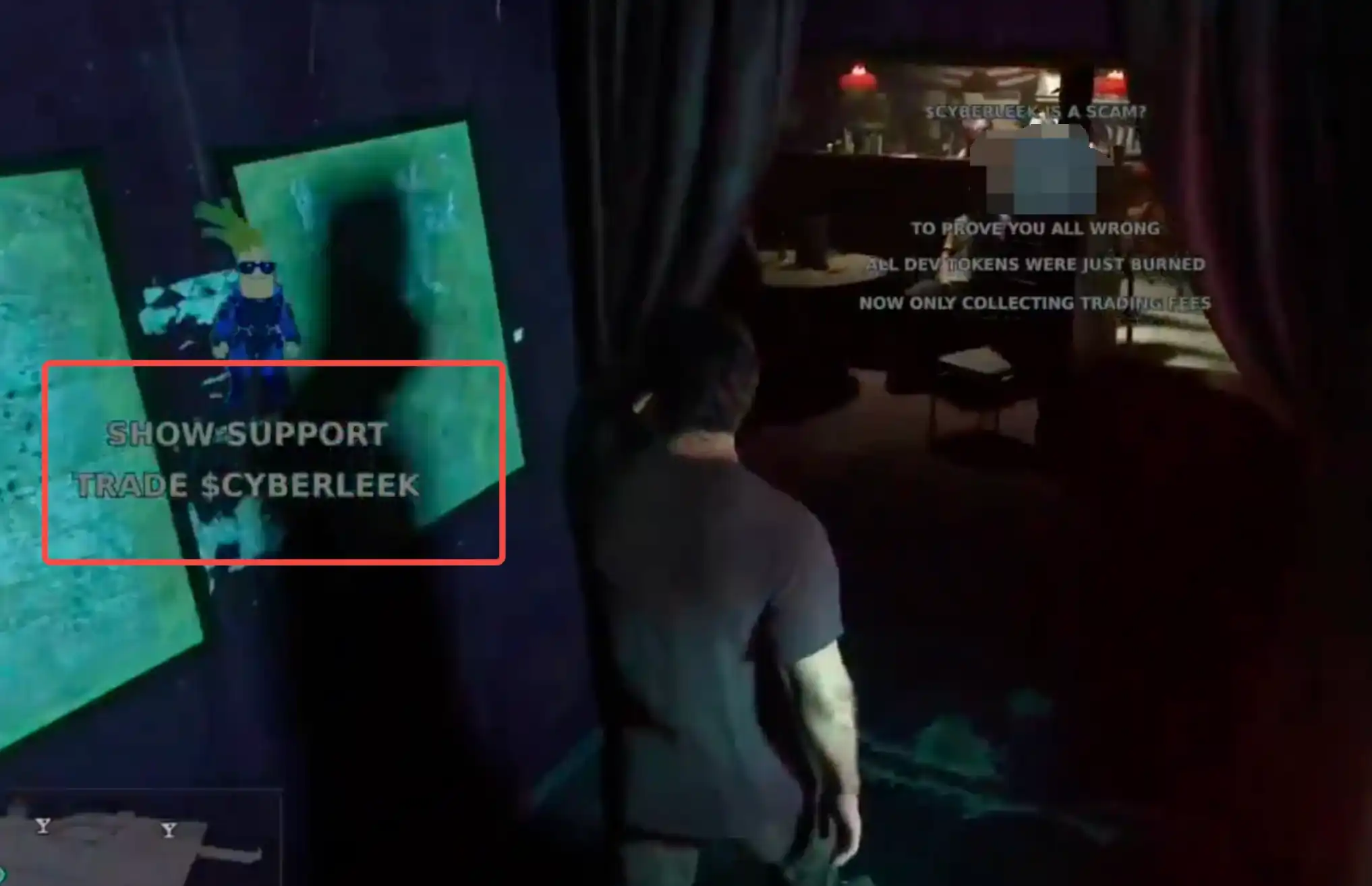
Hacker Leaks GTA6 and Launches a Token: Leaked Videos Become Ad Space for $CYBERLEEK, Must Buy Tokens to Vote for Next Clip

A hacker group called "CyberLeek" has leaked gameplay footage of the highly anticipated video game *GTA 6*, which is slated for release in 2026. Simultaneously, the group launched a meme token, $CYBERLEEK, on Solana. The leaks, which include maps and gameplay clips, are heavily watermarked with advertisements urging viewers to buy the token. Investigations of blockchain data reveal that the token was created and funded from a single wallet approximately eight hours before the first leak was released, suggesting a coordinated plan. The group has implemented a voting system where token holders can "vote" for the next type of content to be leaked by sending $CYBERLEEK tokens to a designated wallet—a process that permanently transfers the tokens to the hackers. This creates a self-sustaining cycle where interest in the leaks drives token purchases. Financially, the operation involved minimal upfront costs (less than $3,500 in out-of-pocket expenses) but generated significant revenue. On its first day, the token saw $15 million in trading volume, netting the creators an estimated $30,000 from transaction fees alone. While the group later burned a large portion of its developer-held tokens (worth over $1 million) to build trust, the fee-generating mechanism remains intact. The game's publisher, Take-Two Interactive, has initiated legal proceedings to identify the hackers. Despite this, the case demonstrates a new model where leaked intellectual property is used as leverage to promote and profit from a cryptocurrency, with meme token markets serving as an additional revenue stream.

marsbitHace 15 min(s)

Hacker Leaks GTA6 and Launches a Token: Leaked Videos Become Ad Space for $CYBERLEEK, Must Buy Tokens to Vote for Next Clip

marsbitHace 15 min(s)

Jensen Huang's Daughter: From Chef to an $8 Million Annual Salary

Madison Huang, daughter of NVIDIA founder Jensen Huang, recently made a rare public appearance in Beijing during the 2026 World Robot Conference. As the Senior Director of Product and Technology Marketing for NVIDIA's Physical AI Platform, with an annual salary of approximately $1.2 million, her visit focused on evaluating leading Chinese robotics companies like UBTech, Unitree, and others. This highlights NVIDIA's strategic interest in the burgeoning Chinese robotics ecosystem, a key battleground for the development of Physical AI—technology that enables machines to understand and interact with the physical world. Huang's career path is unconventional. Initially pursuing her passion, she studied culinary arts, worked as a chef, and later held a marketing role at LVMH. She joined NVIDIA as an intern in 2020 after completing an MBA, quickly rising through the ranks. Her brother, Spencer Huang, followed a similar path, closing a cocktail bar he co-founded to also join NVIDIA, where he now works on robotics software. Jensen Huang has publicly addressed nepotism concerns, humorously noting that some "second-generation" employees outperform their parents. The conference itself underscored China's vibrant robotics sector, marked by Unitree's recent blockbuster IPO and a pipeline of companies preparing to go public. While hardware development and manufacturing are advancing rapidly, industry leaders like Wang Xingxing of Unitree point to the next critical challenge: developing the "brain" or AI that allows robots to perform diverse, unseen tasks based on simple instructions. With massive manufacturing scale and diverse real-world testing scenarios, China is positioned as a central player in the global race to define the future of robotics.

marsbitHace 2 hora(s)

Jensen Huang's Daughter: From Chef to an $8 Million Annual Salary

marsbitHace 2 hora(s)

He Gave Wang Xingxing the First 2 Million, Now Serves as Chairman for the Next 'Unitree'

On August 19, 2024, Unitree Robotics, China's "first humanoid robotics stock," went public. Its founder, Wang Xingxing, started a decade ago with his self-developed XDog. In 2016, at a critical funding juncture, he received his first angel investment of 2 million RMB from Yin Fangming. This bet has since yielded a return of over 140 times. Yin Fangming is more than just a key investor. He was a co-founder of the AI robotics company ROOBO, whose own venture ultimately struggled. This firsthand experience with the hardware challenges in robotics gave him unique insight when backing Unitree, a company renowned for its hardware R&D and cost control. While his own company faltered, Yin continued investing shrewdly. He partially cashed out some Unitree shares early, reinvesting the proceeds into sectors like energy (e.g., solid-state battery firm TaiLan) and commercial aerospace (e.g., small launch vehicle developer XianDeng Aerospace). However, his most significant move after Unitree is his deep involvement with Galaxy General, a leading embodied AI unicorn. In July 2024, Yin stepped from behind the scenes to officially become its Chairman, indicating a role far beyond a typical investor. This comes as Galaxy General is viewed as preparing for future capital moves. Yin's career has consistently been ahead of the curve—from mobile internet to AI and robotics. Known for his foresight and low profile, he declined an interview for this story, offering only a statement encouraging support for visionary entrepreneurs like Wang Xingxing.

marsbitHace 3 hora(s)

He Gave Wang Xingxing the First 2 Million, Now Serves as Chairman for the Next 'Unitree'

marsbitHace 3 hora(s)

Coldcard Theft Reflection: Source Code Visibility Does Not Equal Security

The article examines the open-source vs. closed-source debate in crypto, prompted by a theft of over $100M in Bitcoin from Coldcard hardware wallets. It clarifies key terminology: true "Free and Open Source Software" (FOSS) grants four essential freedoms (use, study, share, modify), while "source available" code, like Coldcard's firmware, may have usage restrictions. The piece argues that visible source code alone does not guarantee security; actual safety depends on the economic incentives for thorough, ongoing review by skilled individuals. Using Bitcoin Core as a model, the article describes a successful, transparent open-source development culture built on public review and consensus. It contrasts this with the Coldcard case, where a critical bug in a lightly-reviewed, source-available library went undetected for years, highlighting a "tragedy of the commons" scenario where assumed but absent scrutiny creates vulnerability. The economics of licensing are crucial: restrictive licenses can limit the pool of motivated commercial reviewers. Finally, the article explores AI's impact. It cites the Bitcoin Red Team's use of AI to rapidly audit codebases and find vulnerabilities at scale, demonstrating a powerful new tool for security. However, AI also floods projects with low-quality code, straining maintainers. The piece concludes that in high-stakes crypto, only well-audited projects—whether open or closed-source—can withstand evolving threats, with AI both challenging and aiding security practices.

marsbitHace 3 hora(s)

Coldcard Theft Reflection: Source Code Visibility Does Not Equal Security

marsbitHace 3 hora(s)

Trading

Spot
活动图片