Intuition Protocol:互联网信任的未来基石

深潮Publicado a 2025-09-10Actualizado a 2025-09-11

Intuition Protocol通过将信任变得可见、可衡量和社区认可,正在构建下一代互联网的基础层。

作者:Delphi Digital

互联网的信任危机

互联网的运作方式存在根本问题:信任缺失。如今,我们的数字生活被分割在不同的平台中,每个平台都掌握着我们部分身份的碎片。例如,Google决定你能发现什么;Reddit筛选你能看到什么;Amazon控制你能购买什么。这些巨头以“围墙花园”的形式存在,利用自身的数据和算法偏见将用户困在回音室中。更糟的是,随着AI技术的兴起,人们将越来越依赖单一的提示词来获取所谓的“真相”。预计到2028年,AI驱动的搜索将全面取代传统搜索,“真相”将由少数几个模型决定,受算法和集中化公司控制。
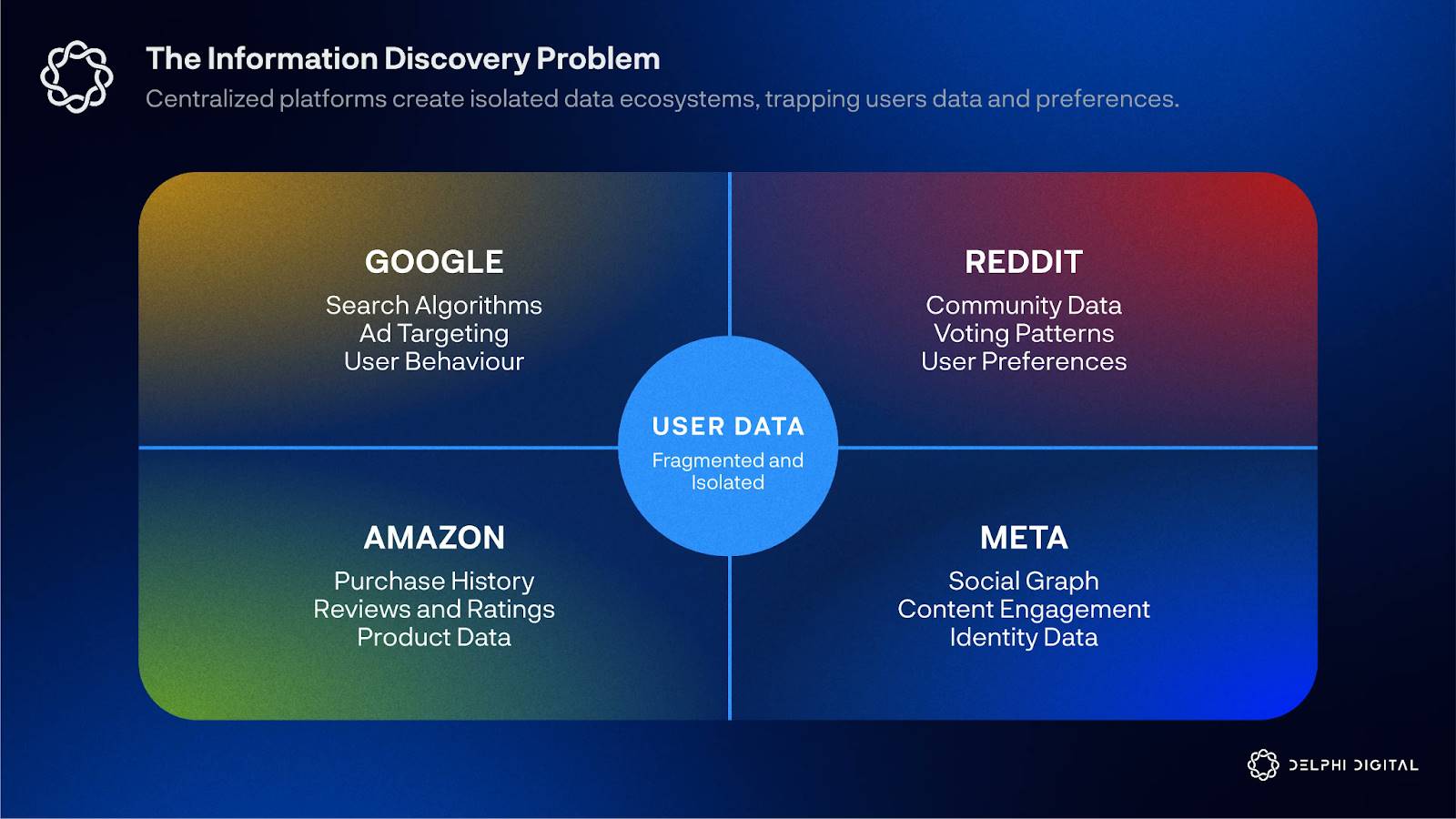
这种现状意味着我们的世界观将被企业利益塑造。讽刺的是,我们在去中心化交易的技术上取得了巨大进展(如DeFi协议和NFT市场),但却忽略了如何去中心化信息的发现和消费。

Intuition Protocol的解决方案

为了解决这个问题,Intuition Protocol提出了一种全新的解决方案。它构建了一个去中心化的发现方式,将信息转化为一种资产类别,并通过经济激励机制形成一个开放、可组合的信任层。
信息市场的演变:预测市场与Intuition Protocol的对比

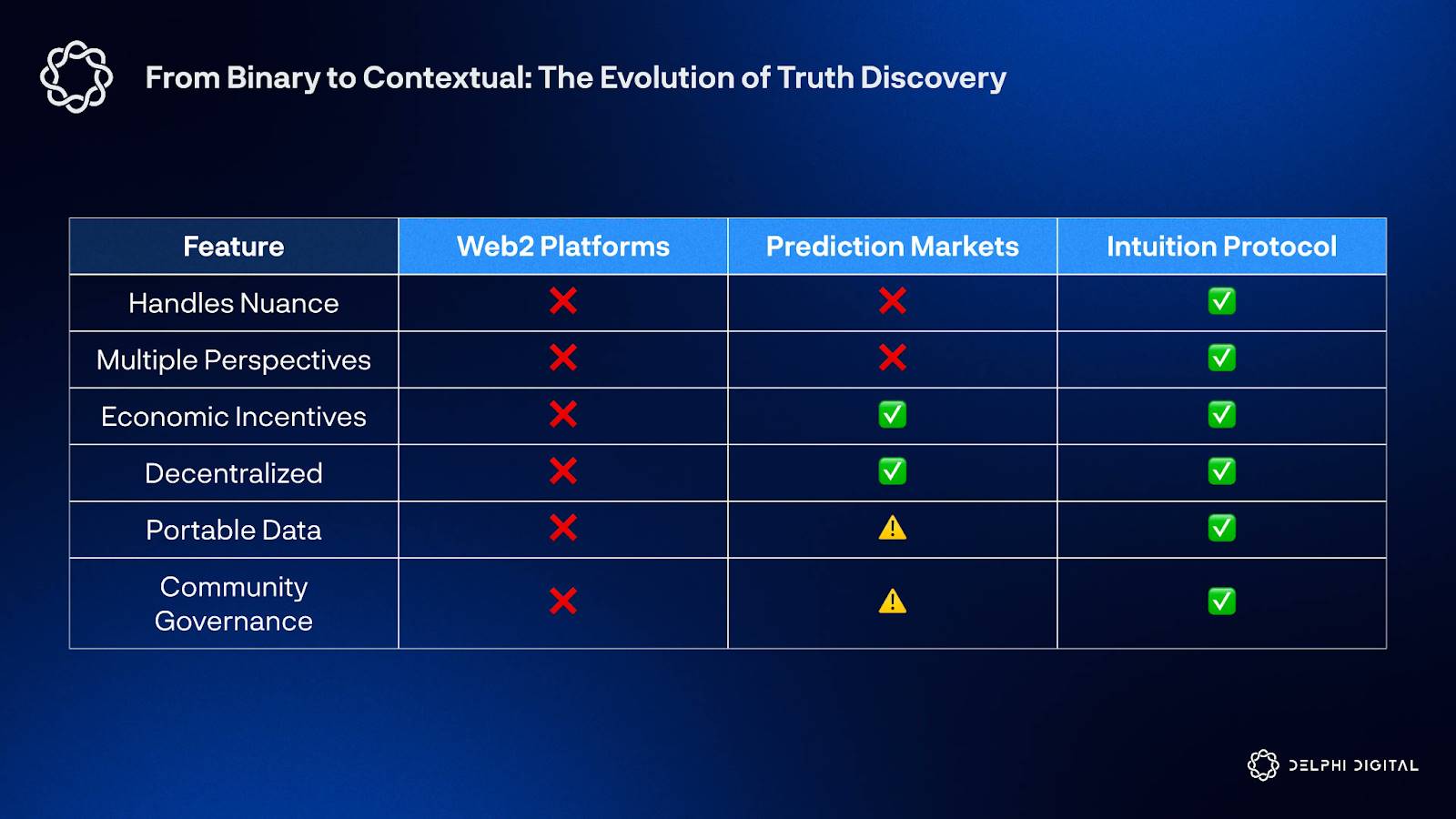
预测市场(如Polymarket)展示了信息市场的潜力,通过经济激励让人们趋向于单一的二元“真相”。然而,现实世界充满了复杂性和多样性,不同社区对“真相”有着不同的理解。Intuition Protocol通过引入更多维度的表达方式解决了预测市场的局限性。用户不仅可以通过信号表达对信息的信任,还可以对其相关性和背景进行标注。相比于预测市场的简单二元选择,Intuition Protocol允许多种观点共存并得到奖励。
核心技术:Atoms与Triples

Intuition Protocol的技术框架基于两个核心概念:Atoms和Triples。

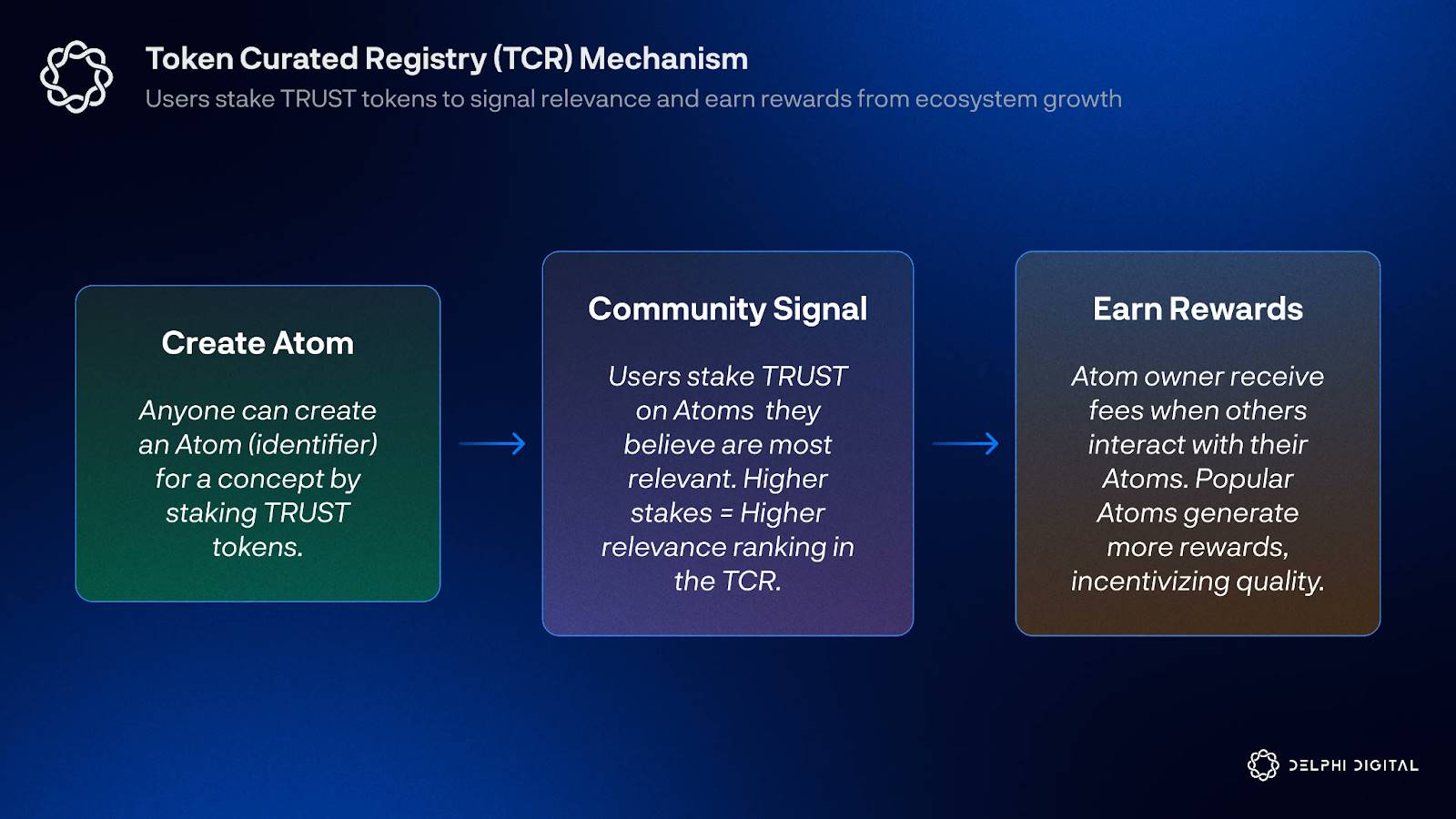
  • Atoms:Atoms是最基本的知识单位,代表唯一的去中心化标识符(DID)。它们可以是一个词、一个概念或一段复杂的信息。例如,“以太坊”的单一标识符将由市场决定,确保全球范围内数据的一致性和关联性。用户可通过信号表达对某个Atom的支持,从而形成一个去中心化的“Token Curated Graph”。

  • Triples:Triples定义了Atoms之间的关系,采用“主语-谓语-宾语”的语义结构,例如:[纽约时报][是][一个可靠的新闻来源]。用户通过信号表明对Triple的支持或反对,从而形成一个经济驱动的验证系统。
信号经济与激励机制

Intuition Protocol通过信号经济实现信息的排名和验证。用户通过锁定原生代币TRUST来表达对Atoms或Triples的支持。TRUST不仅用来衡量信息的相关性,还用来验证其真实性。通过经济激励机制,用户能够对信息的质量和可信度进行贡献,同时获得奖励。这种设计既能防止垃圾信息,也能鼓励高质量数据的产生。

应用场景与用户体验

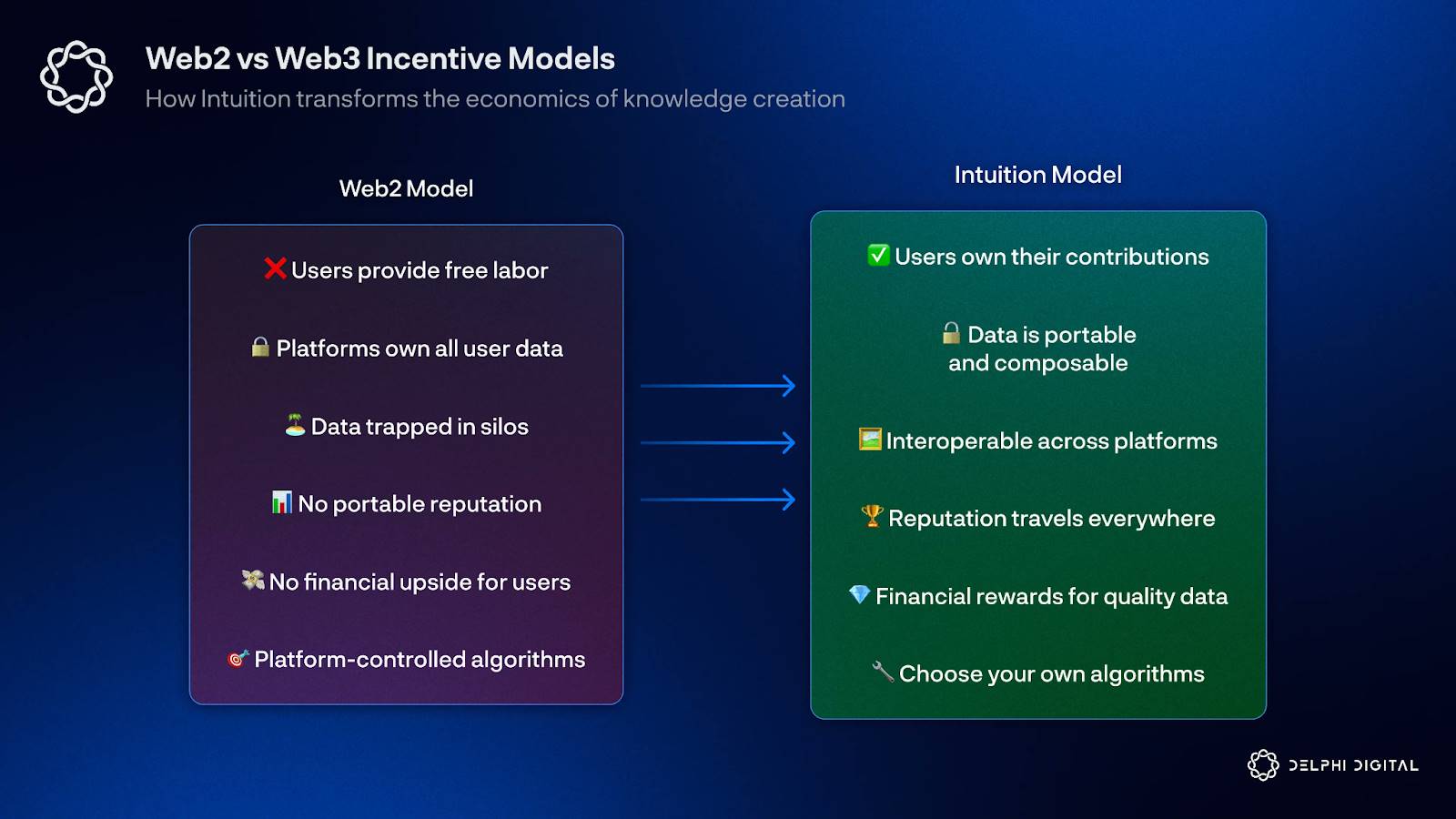
在应用层,普通用户无需理解Atoms或Triples的复杂技术,而是通过直观的应用程序与协议互动。例如,一个类似Reddit的应用可以展示社区对信息的信号,或一个AI助手可以基于开放且可验证的知识图谱提供信息。对于开发者,Intuition Protocol提供了一个共享的结构化知识图谱,降低了开发成本,使创新更加快速。而对于用户,他们的偏好、信任圈和声誉可以随应用无缝迁移,真正实现数据主权。

TRUST代币的核心作用

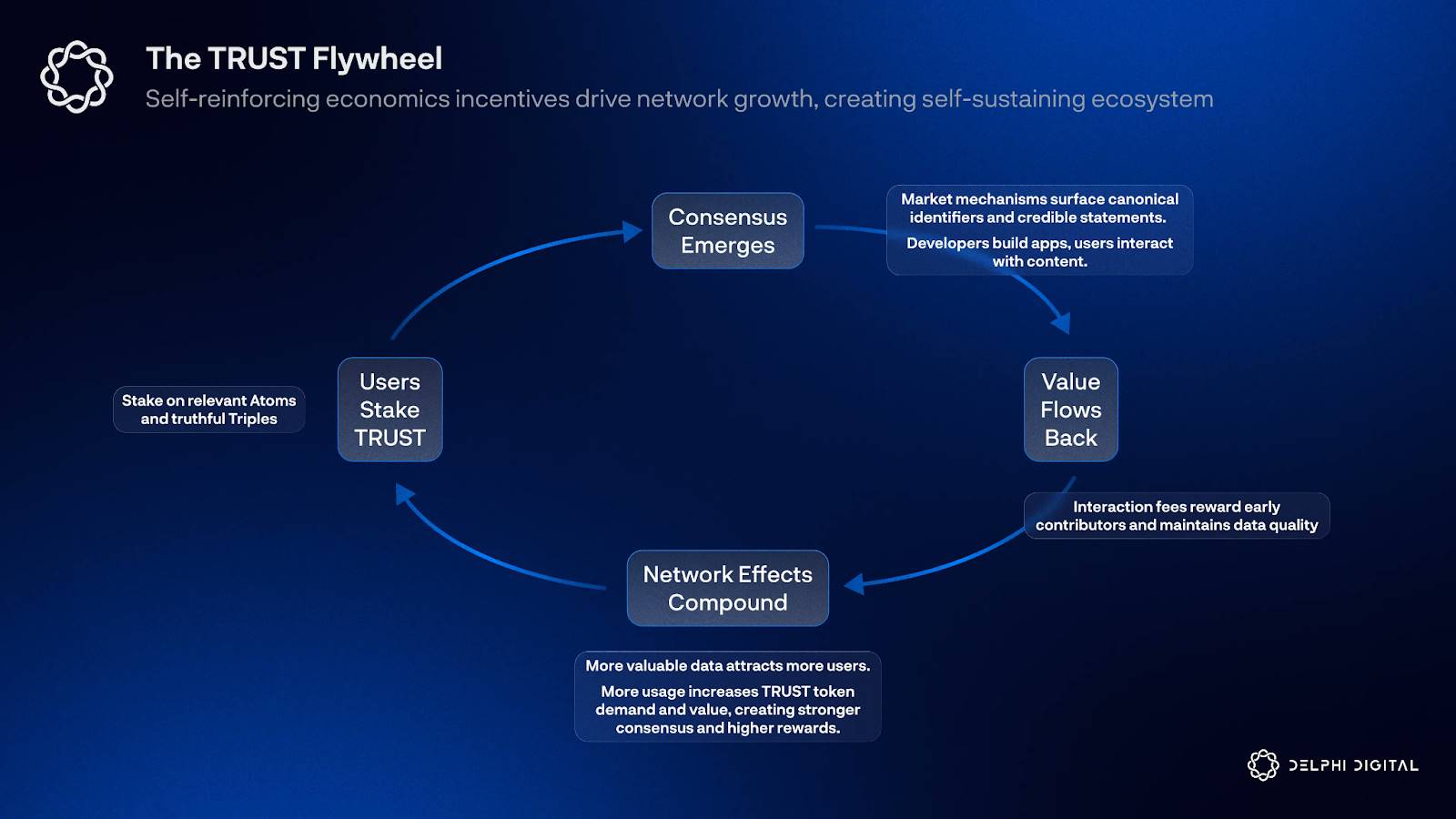
TRUST代币是Intuition Protocol的核心动力。它不仅用于网络交互的费用,还作为一种经济信号,帮助社区达成共识。通过TRUST代币,用户能够对信息进行背书,开发者能够通过代币的增值获益,从而形成一个可持续的生态系统。
AI时代的战略意义

随着AI驱动搜索的兴起,信息的集中化问题日益严重。Intuition Protocol通过构建开放且可验证的数据基础,提供了一种解决方案。AI系统可以利用Atoms和Triples中的结构化数据,为用户提供具有背景和信誉的答案,而不是依赖单一的黑箱模型。

初步成果与未来规划

Intuition Protocol的测试阶段已经取得了显著成果:超过24.4万名用户参与,完成了530万次交易,其中510万次为数据验证。这些数字表明,用户对去中心化信息市场的需求是真实存在的。接下来,团队将完成主网的最后准备工作,包括安全审计和数据迁移,以确保系统的稳定性和可扩展性。

过去十年,我们专注于构建“去信任化”的加密技术,让资产能够无中介地流转。但互联网的真正变革者不仅仅是金钱,而是信任和知识。Intuition Protocol通过将信任变得可见、可衡量和社区认可,正在构建下一代互联网的基础层。它不仅改变了信息的组织方式,也改变了人与信息的互动方式。Intuition Protocol的愿景是一个去中心化的发现中心,让信息成为共享的、可组合的资源,为人类、社区乃至AI代理提供透明、可验证且真正属于自己的信息世界。

Lecturas Relacionadas

Lei Jun Reports Xiaomi's Q2 Performance, Phone Premiumization Takes Effect, While Automotive and AI Continue 'Burning Cash'

Xiaomi released its Q2 2026 financial results, showing mixed performance. Total revenue was approximately 108.9 billion yuan, down 6.1% year-over-year, while adjusted net profit fell 42.6% to about 6.2 billion yuan. The company's core smartphone business saw a 7.5% decline in revenue to 42.1 billion yuan, primarily due to lower shipment volumes, partially offset by a record high average selling price (ASP) which rose 25.9%. Xiaomi's global smartphone market share held steady at third place. Its AIoT platform connected over 1.16 billion devices, a 17.4% increase. Despite pressures on traditional revenue streams, Xiaomi continues heavy investment in new growth areas. Its innovation segment, encompassing smart electric vehicles and AI, generated 24.9 billion yuan in revenue (up 17.1%), but reported an operating loss of 2.6 billion yuan. Capital expenditure for these businesses reached 2.4 billion yuan in Q2. Vehicle deliveries grew 28.2% to 104,199 units, with cumulative deliveries for the SU7 series surpassing 500,000 units by mid-August. The company also highlighted significant R&D spending of 9.2 billion yuan for the quarter. On the technology front, Xiaomi announced several AI and software developments, including the new Xiaomi HyperOS 4, the "Super Xiaoai 2.0" assistant, and advancements in its MiMo large language model and robotics platform. The company noted its first-generation self-developed chip, the Xuangjie O1, has surpassed one million units shipped across three products, with a new generation chip soon to be released. Management acknowledged that memory price increases impacted low-end phone sales more severely but expects the trend to moderate.

marsbitHace 32 min(s)

Lei Jun Reports Xiaomi's Q2 Performance, Phone Premiumization Takes Effect, While Automotive and AI Continue 'Burning Cash'

marsbitHace 32 min(s)

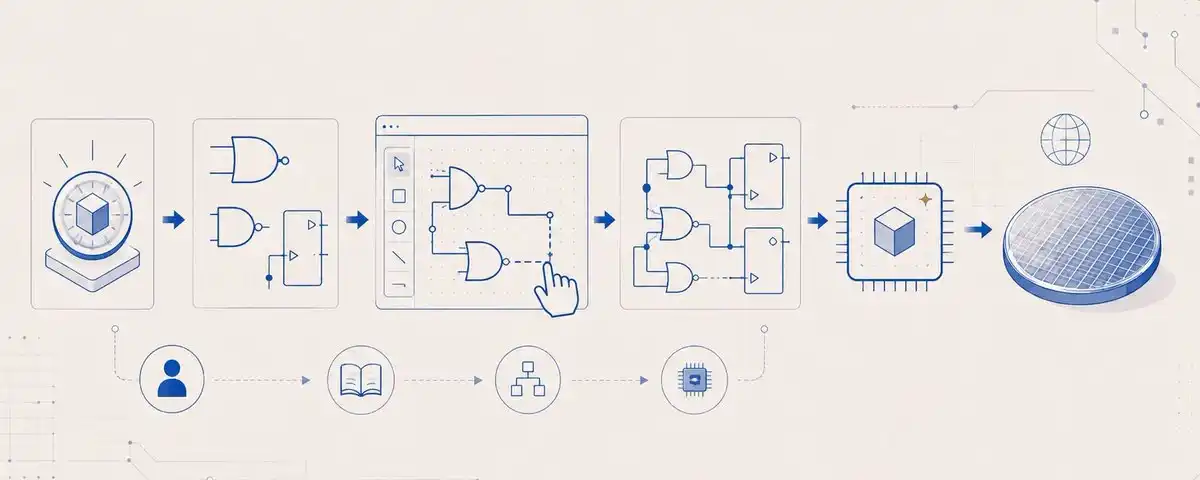
From Minting to Tape-Out: A First-Timer’s Guide to TapeOut

Title: From Mint to Tapeout: A First-Timer’s Guide to TapeOut **Summary:** This guide provides a risk-conscious, step-by-step introduction to TapeOut, a platform where users can mint logic components (NAND, LATCH) and use them to "tape out" on-chain circuits. It emphasizes a fundamental shift in mindset: instead of focusing first on prices or speculation, users should first understand how to use the platform's core functionality. The recommended path begins with preparation: use a separate, low-fund wallet on BNB Smart Chain for experimentation. The first step is to choose a "Processor"—the foundational unit for components and circuits—by examining its details (supply, mintage, creator) rather than chasing trends. If a Processor has remaining supply, users can mint a small number of components. The guide stresses that minting acquires specific components for a specific processor, not a generic asset. For sold-out Processors, trading occurs on an order book market. Users must carefully understand order prices, quantities, and the 1% fee, and always verify transactions on a block explorer. The core "play" experience is in the Canvas, where users can build and test logic circuits without a wallet. Before proceeding to tapeout—the irreversible, on-chain act of finalizing a circuit which consumes components—users must verify their design, component costs, and target processor. After taping out a circuit, the guide encourages users to interact with it, for example by calling its functions via BscScan's read contract feature, completing the "components -> circuit -> verification" loop. It concludes with critical safety checks to perform before any wallet signature, and cautions against misinterpreting demo pages (like the "on-chain BTC miner") as profit-generating services. The goal is to approach TapeOut as a hands-on lesson in on-chain logic, minimizing financial risk while learning its unique mechanics.

marsbitHace 1 hora(s)

From Minting to Tape-Out: A First-Timer’s Guide to TapeOut

marsbitHace 1 hora(s)

Wall Street Analyst Predicts SpaceX Stock Price Drop to $75

A Wall Street analyst from Phillip Securities, Glenn Tumm, has issued a "Sell" recommendation for SpaceX stock (SPCX), maintaining a 12-month price target of $75. This implies a potential 46.6% drop from the current price of $140.50. The bearish outlook is based on the company's significant capital expenditures, reliance on temporary cloud service contracts, and customer concentration in its AI services, suggesting a need for longer-term commitments to support its valuation. This stance contrasts sharply with the broader Wall Street consensus. An average of 31 analysts polled by TipRanks sets a 12-month price target of $232.35, implying 64% upside, with the highest forecast at $800 and the lowest at $75. The report follows SpaceX's impressive Q2 2026 results, where total revenue surged 92% year-over-year to $7.8 billion. Starlink subscriber count doubled to 12 million, driving communications revenue up 66% to $4.3 billion. AI-related revenue skyrocketed 247% to $2.6 billion, fueled by new cloud services and infrastructure deals. Despite the strong earnings, SPCX shares fell over 4% in the last 24 hours, reducing the company's market cap to $1.9 trillion. The stock had initially jumped over 17% post-earnings but faced resistance near $149. The analyst concludes that SpaceX's future trajectory hinges on securing more long-term contracts with its AI and Starlink customers. Success could validate Wall Street's bullish forecasts, while failure may render the recent stock rebound temporary.

cryptonews.ruHace 1 hora(s)

Wall Street Analyst Predicts SpaceX Stock Price Drop to $75

cryptonews.ruHace 1 hora(s)

Trading

Spot
活动图片