Kaito 正在扼杀注意力

深潮Publicado a 2025-09-08Actualizado a 2025-09-09

当外在奖励取代内在动机时,创造力和真实的参与度会下降。

撰文:The Smart Ape

编译:AididiaoJP,Foresight News

我最近看到赫伯特·西蒙的一句话:「信息的丰富导致注意力的贫乏。」

这句话出自 1971 年,而随着时间的推移,它变得越来越真实。

通过 @KaitoAI ,注意力被转化为一种货币,内容的价值被衡量并转换为 Yaps,即心智份额。

但在这背后存在一个悖论:在试图聚焦和货币化注意力的过程中,我们实际上可能正在无节制地消耗注意力,也就是说注意力正在扼杀注意力。

背景

最近的研究显示,如今人们在屏幕前的平均注意力持续时间已降至约 50 秒,而在 2000 年代初,这一时间是 2 分钟。
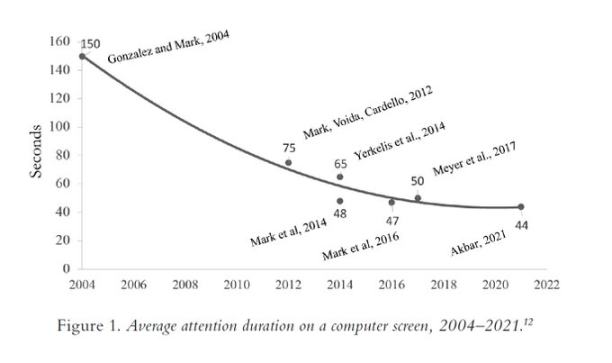
每次中断后,平均需要约 23 分钟才能重新进入深度专注状态。

这一数据表明,我们越是试图通过增加信息和信号来捕获注意力,就实际上越是在削弱它。

心理学家将这种现象称为「定向注意力疲劳」。这是大脑为了保持专注而不得不持续过滤干扰时所出现的疲惫感。

注意力的心理学

关于注意力,存在许多心理学研究和悖论。

查尔斯·古德哈特曾说过:「当一个指标成为目标时,它就不再是一个好指标。」
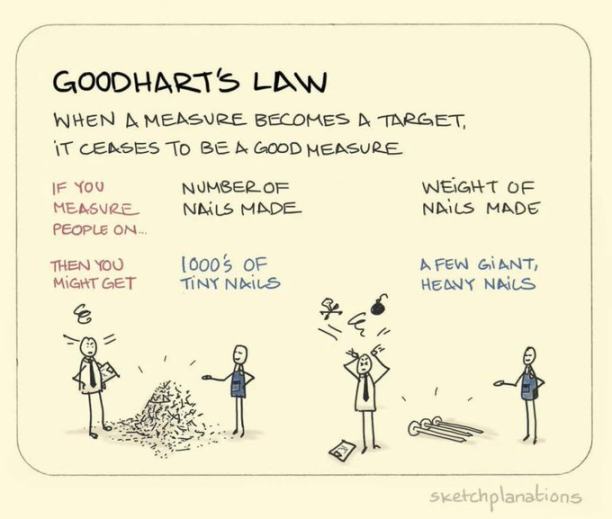
Kaito 的目标是通过衡量注意力来设立奖励机制。但一旦注意力本身成为目标,Kaito 的衡量就失去了意义。
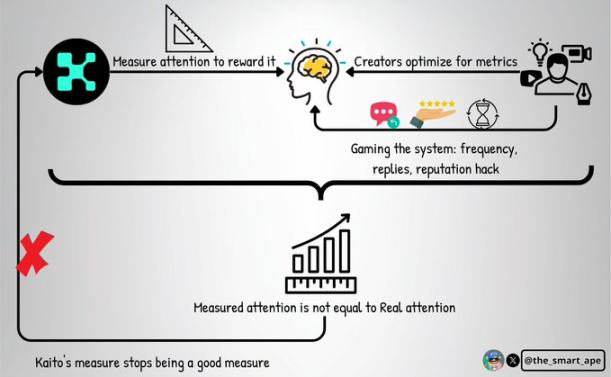
还有大量研究表明,当外在奖励取代内在动机时,创造力和真实的参与度会下降。在 Kaito 的案例中,奖励明显降低了真实性。

其独特之处在于,Kaito 的奖励系统具有高度成瘾性,很像赌场游戏。

它让创作者持续参与,但也导致疲劳和依赖,从而削弱了集体的注意力。

Kaito 的承诺

Kaito 对创作者具有成瘾性并不令人意外,它通过一种游戏化的体验分发可观的奖励。Kaito 已向超过 20 万个钱包分发了超过 1.1 亿美元(不包括其自身的空投)。
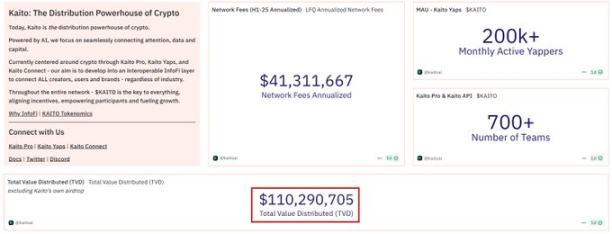
一些活动让个别创作者赚取了超过 20 万美元。

但恰恰是这种规模的激励在扼杀注意力。由于有如此多的资金和奖励,创作者被迫优化发帖频率、回复策略和互动战术,而不是培养深度思考习惯。

再加上 X 上的帖子生命周期只有约 80 分钟,之后互动量急剧下降。这带来了高频率发帖的额外压力。一些创作者仅为了获取心智份额,在一个月内就一个项目发布 200 多条帖子。

结果,读者被重复的内容轰炸,变得麻木,并失去兴趣,即使这些信息可能是有用的。

我认识很多人,最终在 Kaito 活动期间选择屏蔽项目名称,只是为了不让它们出现在自己的信息流中。

注意力的扼杀

Kaito 上的排行榜也无济于事,我自己就亲身体验过这一点。

当你排名靠前时,你会觉得自己必须保持住,因此你迫使自己进入一种疲惫的节奏以维持排名。这是一种心理作用:你已经想象着自己将获得的奖励。
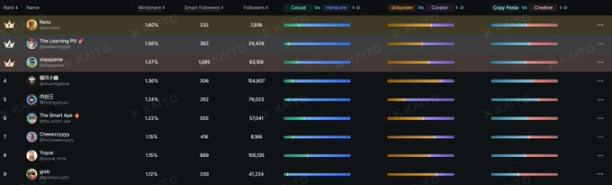
这确实感觉像赌场。你永远不知道你会得到多少。有时很慷慨,有时令人失望,但总是让人上瘾。

它在 CT 中带来了很多快乐,但也带来了失望和沮丧。有一点是肯定的:几乎每个人都认真对待这个游戏。包括我自己!

这推动我们所有人去构建游戏策略、支持网络、互动优化等等。这不再关乎真实的注意力,而是关乎表演注意力以赢得游戏。

但我知道,这对读者来说是有代价的,内容流变得同质化和重复,因此原创性失去了价值。

Kaito 明白这一点

很明显,Kaito 理解所有这些,他们最近的更新证明了这一点。

但我认为他们可以做更多来减少「注意力扼杀」效应:

考虑实际阅读时间,

奖励论点的独特性,

鼓励引用来源的多样性,

通过发布延迟来惩罚垃圾信息。

我不知道他们是否已经做了这些,但他们也可以更重视那些能维持深度注意力的内容。

他们可以奖励更长篇、更综合的内容,而不仅仅是病毒式同质化片段。

问题不在于衡量,而在于长期保护注意力,而这要困难得多。

结论

如今,Kaito 以及更广泛的「可货币化注意力」叙事正处于顶峰。

但它也显示出明显的疲劳迹象。在这个生态系统中,没有什么能永远持续;可以肯定的是,这种叙事最终会逐渐消退。就像注意力本身一样,它是暂时的。

Kaito 真正的挑战是尽可能长时间地保持其活力,而这正是他们通过更新和开发试图做的事情。

但就像化石燃料一样,我们找到了一种货币化稀缺资源的方法,然而我们消耗它的速度可能快于我们补充它的速度。

需要明确的是,我自己也在 Kaito 上玩这个注意力游戏。即使我只选择少数我喜欢并感到乐观的项目,这个游戏对我仍然重要。

我追踪我在排行榜上的位置,检查我每天的 Yaps,监测我的帖子对心智份额的影响,等等。所以我有足够的资格来谈论它。

对创作者来说,这是一个心理要求高但有回报的游戏。但归根结底,无论我在 Kaito 上的结果如何,我都试图退后一步,提醒自己真正重要的是继续提供价值,无论指标怎么说。

Lecturas Relacionadas

Kelp DAO's $400 Million Bad Debt Was Covered, But at a $12 Billion Cost to Aave

On May 26th, Kelp DAO successfully transferred its final batch of rsETH, completing the 37-day process of fully backing rsETH 1:1 after a security incident. However, the resolution came at a significant cost to Aave. The protocol's TVL plummeted by over $12 billion in the following month. Furthermore, a separate legal battle over 30,766 frozen ETH continues in court, posing ongoing reputational risk. The recovery was enabled by an unprecedented, one-time coalition dubbed "DeFi United," involving major contributions from Aave's founder, treasury, Consensys, Mantle, and others. Despite this, the event triggered a major outflow of funds, with whales like Justin Sun moving capital to competitors like Spark. Aave's path to regaining its position relies heavily on the successful execution of its multi-pronged strategy. Its new V4 protocol, designed for open, heterogeneous asset markets, faces delays due to internal governance disputes. Meanwhile, the V3 version remains the core revenue generator, and the permissioned Horizon fork is targeting institutional RWA (Real-World Assets) growth—a segment less impacted by the rsETH incident but dependent on traditional finance adoption timelines. The key takeaway is that while the immediate bad debt was covered, Aave paid a steep price in lost trust and capital. Recovering market share depends on accelerating V4's rollout and advancing its institutional RWA offerings, both of which face external and internal hurdles. The "DeFi United" safety net is unlikely to be replicable for future crises.

marsbitHace 33 min(s)

Kelp DAO's $400 Million Bad Debt Was Covered, But at a $12 Billion Cost to Aave

marsbitHace 33 min(s)

TechFlow Intelligence Report: Xiaomi Announces 200 Billion HKD Stock Buyback Plan, Spot Gold Falls Nearly 1%

TechFlow Report: Xiaomi announced a HK$200 billion stock buyback plan, while spot gold fell nearly 1%. A wider range of tech headlines includes Google unveiling its powerful video editing model Gemini Omni and the original "Attention is All You Need" authors advocating for a move beyond Transformer architecture. In other AI news, IBM reported its first successful use of a quantum computer to train an AI model, and Qwen3.5 released uncensored local model versions. The crypto/Web3 sector saw discussions on opaque stablecoin products and DEX fee changes. Major tech companies are under scrutiny: Uber's COO publicly questioned the ROI of AI investments, Motorola was accused of hijacking Amazon app links for affiliate codes, and Google faced criticism for using web data to fuel its AI. U.S. markets are focused on high S&P 500 valuations (31.8x P/E) and an intense concentration of capital in semiconductor stocks, with warnings about the sustainability of the AI data center boom. Geopolitical tensions, featuring simultaneous U.S. airstrikes on Iran and peace talks, caused significant oil price volatility. Other notable developments include Ferrari's first pure EV priced at 4.35 million yuan and Boston Dynamics' Atlas robot learning soccer from videos. The underlying theme suggests the AI narrative is shifting from boundless potential to requiring tangible results, while traditional geopolitical risks remain a powerful force in markets.

marsbitHace 36 min(s)

TechFlow Intelligence Report: Xiaomi Announces 200 Billion HKD Stock Buyback Plan, Spot Gold Falls Nearly 1%

marsbitHace 36 min(s)

Coin & Stock Barometer: Bitcoin Miner MARA Holdings Spends Over $860,000 on Bulletproof Vehicle Services for Executives; Bitmine Included in Preliminary List for FTSE Russell 1000 Index (May 19)

Crypto Market Wrap & Key Corporate Updates (May 19) The crypto market saw a decline followed by a minor rebound, while U.S. crypto-related stocks fell broadly. In corporate news: **MARA Holdings**, a Bitcoin miner, disclosed spending over $869,000 on vehicle ballistic armor services for its CEO and CFO under its security program. The board cited higher risks associated with the company's public disclosure of holding substantial Bitcoin assets. According to BitcoinTreasuries.NET, Elon Musk's **SpaceX and Tesla** collectively hold 30,221 BTC ($2.3B), which would rank them as the fifth-largest public company holder if combined. **DDC Enterprise Limited** increased its Bitcoin holdings by 200 BTC, bringing its total to 2,583 BTC. The firm stated it plans to continue accumulating BTC based on liquidity, not short-term price movements. Bitcoin treasury company **Nakamoto** announced a 1-for-40 reverse stock split to regain compliance with Nasdaq's minimum bid price requirement. The company reported a Q1 2026 net loss of $238.8M, partly due to a $102.5M unrealized loss on its Bitcoin holdings. **Tether** acquired SoftBank's stake in **Twenty One Capital (XXI)**, increasing its control. Tether's CEO expressed strengthened confidence in XXI's long-term Bitcoin strategy. Fundstrat's **Tom Lee** stated that **Bitmine (BMNR)** has been included in the preliminary list for the FTSE Russell 1000 Index. Concurrently, two new wallets suspected to be linked to Bitmine withdrew 60,000 ETH ($126M) from Bitgo and Kraken. Solana treasury company **Solmate Infrastructure** announced a registered direct offering of shares to raise approximately $11.4 million. **AI Financial**, a WLFI treasury company, reported a Q1 2026 net loss of $271.5M and raised substantial doubt about its ability to continue as a going concern, partly due to unrealized losses on its WLFI token holdings. **SUI Group** disclosed it holds over 108.7 million SUI tokens (~$115M), with its market cap to net asset value ratio at 0.91x. *Disclaimer: This summary is for informational purposes only and does not constitute investment advice.*

marsbitHace 52 min(s)

Coin & Stock Barometer: Bitcoin Miner MARA Holdings Spends Over $860,000 on Bulletproof Vehicle Services for Executives; Bitmine Included in Preliminary List for FTSE Russell 1000 Index (May 19)

marsbitHace 52 min(s)

China's AI Fronts: From Yan'an to Midway

This article analyzes the competitive landscape of China's AI industry through a dual-front war analogy: the "Eastern Front" of business model competition and the "Western Front" of global strategic positioning. **The Eastern Front: The Scramble for Supply Lines and Monetization** The "Eastern Front" examines the contrasting strategies of three Chinese tech giants—Tencent, Alibaba, and ByteDance—in the face of AI's high marginal costs. Tencent integrates AI as a catalyst within its existing ecosystems (advertising, gaming, cloud) for monetization, prioritizing high-value scenarios over user growth. Alibaba bets on a full-stack, self-developed approach from chips to applications, aiming to control costs and ecosystem, though this requires immense patience and resources. ByteDance, with Doubao as its flagship, pursues a traditional traffic-driven, "super app" strategy but faces severe monetization challenges as its massive user base incurs unsustainable operational costs. The central challenge for all is building a reliable "supply line" (sustainable funding/profit) and achieving efficient monetization, moving beyond being mere "token factories." **The Western Front: "Preserving Land" vs. "Preserving People"** The "Western Front" frames a global strategic divergence. The U.S. model ("preserving land") focuses on closed-source, high-premium models (e.g., Anthropic) targeting lucrative enterprise markets. China's strategy ("preserving people") leverages open-source models (e.g., Alibaba's Qwen, DeepSeek) and extremely low pricing to attract global developers and capture long-tail markets, akin to a "surround the cities from the countryside" approach. The goal is to make Chinese models the default infrastructure, locking in future ecosystem value. However, the critical test is whether this open-source ecosystem can achieve a commercial闭环, converting developer adoption into tangible revenue (e.g., via cloud services), and bridging the monetization gap with Western models that charge for value, not just tokens. **Conclusion: The Long March from Factory to Brand** The article concludes that China's AI industry possesses technology, users, and scenarios but must integrate them to create and capture value. Its ultimate success depends on navigating both fronts: companies must establish sustainable monetization on the Eastern Front, while the industry's Western strategy must evolve from simply "preserving people" (developer adoption) to truly "preserving both people and land" — transforming open-source ecosystem dominance into commercial success and premium brand value. This journey from being a "token factory" to a "value highland" will require strategic patience and the ability to outlast competitors in a prolonged contest.

marsbitHace 1 hora(s)

China's AI Fronts: From Yan'an to Midway

marsbitHace 1 hora(s)

Trading

Spot
Futuros

Artículos destacados

Cómo comprar KAITO

¡Bienvenido a HTX.com! Hemos hecho que comprar Kaito (KAITO) sea simple y conveniente. Sigue nuestra guía paso a paso para iniciar tu viaje de criptos.Paso 1: crea tu cuenta HTXUtiliza tu correo electrónico o número de teléfono para registrarte y obtener una cuenta gratuita en HTX. Experimenta un proceso de registro sin complicaciones y desbloquea todas las funciones.Obtener mi cuentaPaso 2: ve a Comprar cripto y elige tu método de pagoTarjeta de crédito/débito: usa tu Visa o Mastercard para comprar Kaito (KAITO) al instante.Saldo: utiliza fondos del saldo de tu cuenta HTX para tradear sin problemas.Terceros: hemos agregado métodos de pago populares como Google Pay y Apple Pay para mejorar la comodidad.P2P: tradear directamente con otros usuarios en HTX.Over-the-Counter (OTC): ofrecemos servicios personalizados y tipos de cambio competitivos para los traders.Paso 3: guarda tu Kaito (KAITO)Después de comprar tu Kaito (KAITO), guárdalo en tu cuenta HTX. Alternativamente, puedes enviarlo a otro lugar mediante transferencia blockchain o utilizarlo para tradear otras criptomonedas.Paso 4: tradear Kaito (KAITO)Tradear fácilmente con Kaito (KAITO) en HTX's mercado spot. Simplemente accede a tu cuenta, selecciona tu par de trading, ejecuta tus trades y monitorea en tiempo real. Ofrecemos una experiencia fácil de usar tanto para principiantes como para traders experimentados.

137 Vistas totalesPublicado en 2025.02.21Actualizado en 2025.03.21

Cómo comprar KAITO

Discusiones

Bienvenido a la comunidad de HTX. Aquí puedes mantenerte informado sobre los últimos desarrollos de la plataforma y acceder a análisis profesionales del mercado. A continuación se presentan las opiniones de los usuarios sobre el precio de KAITO (KAITO).

活动图片