SEC extends deadline on Canary HBAR ETF decision to November

TheCryptoTimesPublicado a 2025-09-08Actualizado a 2025-09-08

After months of back-and-forth, the SEC has once again delayed its verdict on the proposed Canary HBAR ETF, granting itself until November 8, 2025 to make a final call.

The original request, submitted by Nasdaq back in February, aimed to launch the ETF under its commodity-based trust rulebook, specifically Rule 5711(d). A revised version landed in March, scrapping the first draft and restarting the process. That amendment was then published for public comment just days later, igniting interest and scrutiny from all corners of the crypto market.

After multiple review phases, including a prior extension in April and formal proceedings initiated in June, the Commission is now using its authority under Section 19(b)(2) of the Securities Exchange Act to take more time to analyze the application.

This latest delay means the SEC will now decide by November 8 whether to approve or reject the proposal, marking the maximum allowable extension under current regulations. The agency cited the need for “sufficient time” to assess the details and public comments submitted on the proposed listing.

Broader implications for crypto ETFs

If approved, the Canary HBAR ETF would be one of the first Hedera Hashgraph (HBAR)-linked exchange-traded funds to trade on a U.S. exchange, joining the broader wave of crypto-based ETF applications awaiting regulatory clarity. What happens next could ripple far beyond Hedera. If the SEC greenlights this product, it might set a precedent for how other non-Bitcoin, non-Ethereum ETFs are handled moving forward.

But for now, the Canary application sits on the same regulatory conveyor belt as other stalled filings. From Grayscale’s Ethereum Trust to VanEck’s Solana pitch, the agency’s logjam of crypto ETF proposals continues to grow, fueling frustration across the digital asset industry.

The SEC’s latest extension doesn’t just delay a decision, it extends uncertainty for altcoin-linked financial products trying to break into public markets. With Bitcoin and Ethereum slowly carving out institutional lanes, tokens like HBAR remain in regulatory limbo.

Canary’s case now represents something bigger: a stress test for how open U.S. regulators truly are to letting the next tier of crypto assets access traditional finance. Whether it gets approved, or buried under bureaucracy, will say a lot about where the lines are being drawn.

Also Read: SEC delays Grayscale Ethereum Trust ETF decision again


Mobile Only ImageMobile Only Image

Criptos en tendencia

Lecturas Relacionadas

Just now, DeepSeek V4 updates with DSpark, improving inference speed by 80%

DeepSeek has updated its DeepSeek V4 model with the DSpark speculative decoding framework, achieving a significant 60-85% speedup in generation for Flash models and 57-78% for Pro models while maintaining the same overall throughput. This engineering-focused update, rather than a core architectural change, introduces DSpark to address latency and throughput bottlenecks in high-concurrency production environments. DSpark combines high-throughput parallel generation with adaptive load-aware verification. Its key innovations include a semi-autoregressive generation architecture to model dependencies within token blocks and a hardware-aware confidence-scheduled verification system. This system uses a confidence head to predict token acceptance probabilities, allowing it to dynamically optimize verification length per request and allocate compute only to tokens with the highest expected payoff. The asynchronous scheduler is designed for real-world deployment, ensuring zero-overhead scheduling and continuous CUDA graph replay while preserving the target model's output distribution. In tests across mathematical reasoning, code generation, and daily dialogue, DSpark outperformed state-of-the-art models like Eagle3 and DFlash, increasing average acceptance length by 26.7%-30.9% and 16.3%-18.4% respectively on Qwen3 target models. DeepSeek also open-sourced DeepSpec, a full-stack codebase for training and evaluating speculative decoding draft models, providing a standardized toolkit that includes data preparation tools, model implementations, training code, and evaluation scripts.

marsbitHace 3 hora(s)

Just now, DeepSeek V4 updates with DSpark, improving inference speed by 80%

marsbitHace 3 hora(s)

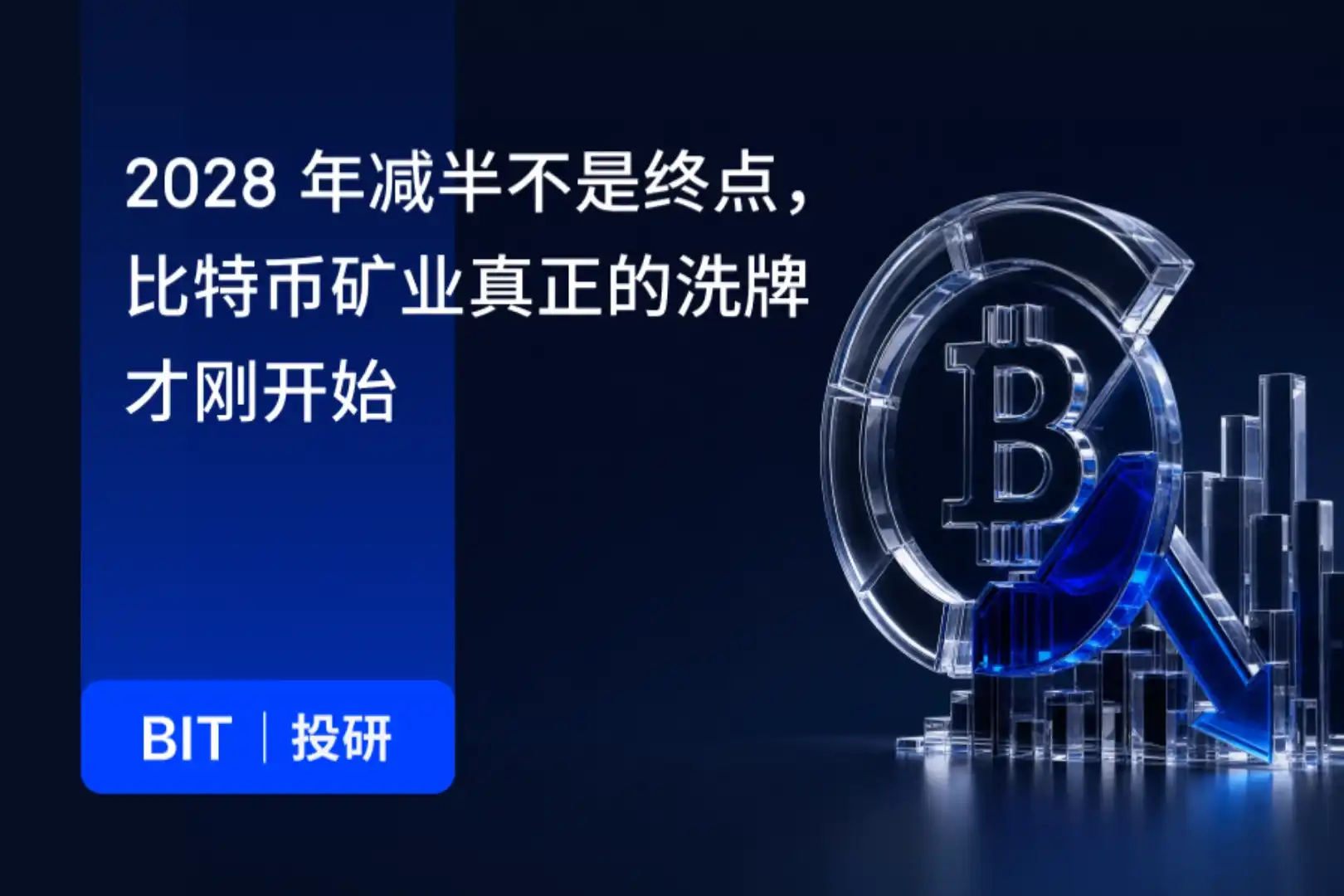
BIT Research: The 2028 Halving Is Not the End, the Real Shake-Up of the Bitcoin Mining Industry Is Just Beginning

The Bitcoin mining industry is undergoing its most complex structural adjustment since inception. Despite Bitcoin's price holding near $61,000 and the network hash rate approaching a record 1 ZH/s, miner profitability is deteriorating. The industry is operating close to its breakeven point, with the 2028 halving expected to accelerate consolidation. The challenges extend beyond the halving's subsidy reduction; the industry's revenue model has yet to successfully transition towards a fee-driven structure. Increasingly, mining companies are evolving from simple Bitcoin producers into infrastructure and energy operators, including providers of AI/HPC computing power. Competition is shifting from pure hash rate expansion to business model upgrades. Economic pressure is evident. The theoretical daily mining revenue at current prices is around $78 million, yet the actual figure is only about $33 million—a 136% gap. Transaction fees remain low at roughly $220k daily, far below historical implied levels. With a current estimated industry-wide breakeven price near $65,000, mining alone is struggling to generate ideal profits. The 2028 halving is projected to push the fundamental production cost floor to approximately $93,289. This will likely accelerate a shift towards consolidation among larger, well-capitalized miners with diversified revenue streams. Competitive advantage will belong to institutionalized players with access to low-cost energy, AI/HPC hosting operations, and stronger balance sheets. In essence, Bitcoin mining is transitioning from a "mining business" to an "infrastructure business." Future profitability and resilience will depend less on block rewards and more on diversified income sources like energy management and computational infrastructure services. For investors, the key question is not the halving itself, but which miners can successfully navigate this business model transformation.

marsbitHace 4 hora(s)

BIT Research: The 2028 Halving Is Not the End, the Real Shake-Up of the Bitcoin Mining Industry Is Just Beginning

marsbitHace 4 hora(s)

This is How God Karpathy Uses Claude?

Andrej Karpathy, a prominent figure in AI, has reportedly joined Anthropic, leading to a noticeable decrease in his open-source contributions and social media activity. A document claiming to be his personal "CLAUDE.md" file—a set of instructions for the Claude AI to follow within a specific codebase—has been circulating online. While its authenticity is unverified, the content aligns closely with Karpathy's publicly shared principles on effective AI-assisted programming. The document outlines key rules for AI coding assistants, emphasizing the importance of reading existing code thoroughly before writing new code to maintain consistency. It advises against over-engineering, advocating for simple, surgical modifications that match the project's existing style. Other guidelines include clarifying assumptions upfront, writing meaningful tests, thoughtful debugging, and carefully considering dependencies. The core message is that these principles help prevent common AI coding failures, such as introducing unnecessary abstractions, style drift, or making invisible architectural decisions. The community has noted that even experts like Karpathy require detailed instructions to guide AI effectively, akin to managing a junior developer. A related GitHub repository, "andrej-karpathy-skills," which encapsulates these ideas, is reported to significantly reduce Claude's code error rate. Ultimately, the advice stresses that the best CLAUDE.md is tailored to one's own tech stack and coding practices.

marsbitHace 4 hora(s)

This is How God Karpathy Uses Claude?

marsbitHace 4 hora(s)

Trading

Spot

Artículos destacados

Cómo comprar HBAR

¡Bienvenido a HTX.com! Hemos hecho que comprar Hedera Hashgraph (HBAR) sea simple y conveniente. Sigue nuestra guía paso a paso para iniciar tu viaje de criptos.Paso 1: crea tu cuenta HTXUtiliza tu correo electrónico o número de teléfono para registrarte y obtener una cuenta gratuita en HTX. Experimenta un proceso de registro sin complicaciones y desbloquea todas las funciones.Obtener mi cuentaPaso 2: ve a Comprar cripto y elige tu método de pagoTarjeta de crédito/débito: usa tu Visa o Mastercard para comprar Hedera Hashgraph (HBAR) al instante.Saldo: utiliza fondos del saldo de tu cuenta HTX para tradear sin problemas.Terceros: hemos agregado métodos de pago populares como Google Pay y Apple Pay para mejorar la comodidad.P2P: tradear directamente con otros usuarios en HTX.Over-the-Counter (OTC): ofrecemos servicios personalizados y tipos de cambio competitivos para los traders.Paso 3: guarda tu Hedera Hashgraph (HBAR)Después de comprar tu Hedera Hashgraph (HBAR), guárdalo en tu cuenta HTX. Alternativamente, puedes enviarlo a otro lugar mediante transferencia blockchain o utilizarlo para tradear otras criptomonedas.Paso 4: tradear Hedera Hashgraph (HBAR)Tradear fácilmente con Hedera Hashgraph (HBAR) en HTX's mercado spot. Simplemente accede a tu cuenta, selecciona tu par de trading, ejecuta tus trades y monitorea en tiempo real. Ofrecemos una experiencia fácil de usar tanto para principiantes como para traders experimentados.

414 Vistas totalesPublicado en 2024.12.11Actualizado en 2026.06.02

Cómo comprar HBAR

Discusiones

Bienvenido a la comunidad de HTX. Aquí puedes mantenerte informado sobre los últimos desarrollos de la plataforma y acceder a análisis profesionales del mercado. A continuación se presentan las opiniones de los usuarios sobre el precio de HBAR (HBAR).

活动图片