从《捕风追影》说起:决定上万亿加密资产的 2048 个单词

深潮Publicado a 2025-08-29Actualizado a 2025-09-01

使用可信钱包、离线备份助记词、绝不泄露给他人。

作者:Tyler

最近看了成龙大哥的口碑新作《捕风追影》,里面有个桥段挺有意思——上百亿港币的加密资产,被锁在一个 12 个单词的助记词钱包里,结局只剩最后一个单词未知。

我看完去试了下,结果发现第 10 位和第 12 位并不在标准助记词库里,显然编剧是故意这么写,避免有人照着剧情复原钱包搞诈骗,毕竟链上类似的骗局并不罕见:

骗子会故意泄露一个「带余额」的钱包地址(典型在 Tron 链上,利用 Owner 机制),诱导大家转入 Gas,守株待兔,资金一旦转入就再也拿不回来了。
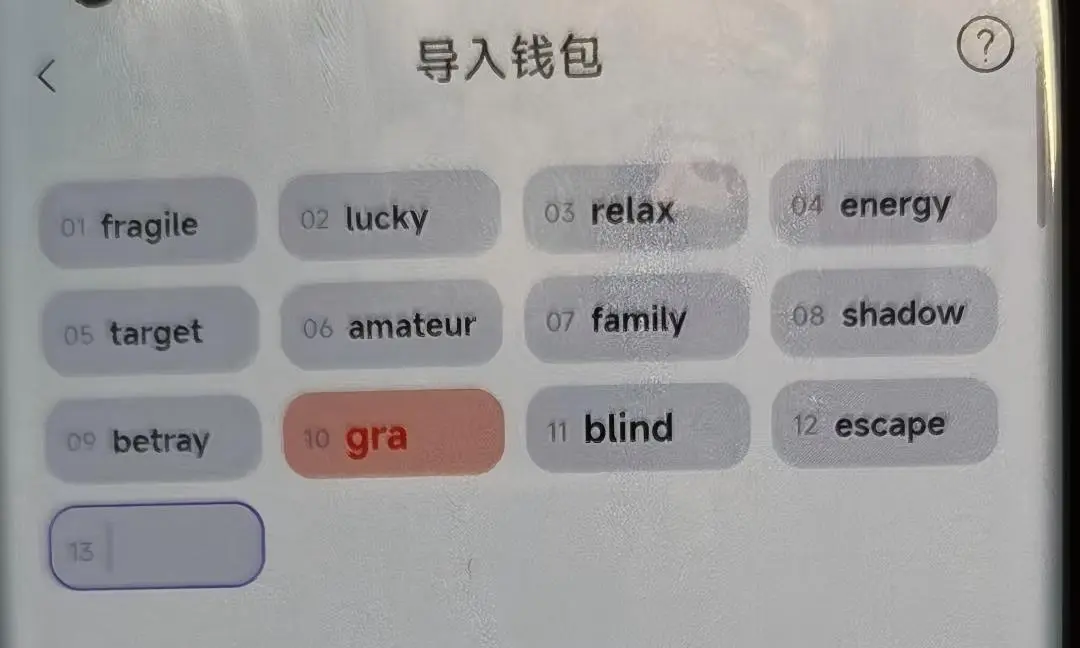
但这里有趣的一点在于,电影里说只差最后一个单词不知道。可在真实世界里,助记词遵循 BIP39 标准,一共就 2048 个单词,也就是说,暴力破解最后一位,顶多也就 2048 种可能,如果再缩小范围,比如电影中已知开头字母是「es」,那可能性更少,一分钟就能试完。

不过,电影之外更值得重温的问题是:助记词、私钥、公钥,到底是什么关系?为什么丢了助记词就等于丢了所有资产?

一、助记词:私钥:公钥/地址 = 「钥匙串」:「钥匙」:「门牌号」

助记词是遵循 BIP39 标准的备份方式,从 2048 个英文单词的词库中,通过算法随机选取并组合而成的 12、18 或 24 个单词。

这组助记词经过 PBKDF2 算法处理后,会生成一个种子(Seed),再由这个 Seed 按照 BIP32/BIP44 等路径标准,派生出一系列私钥,进而对应一系列的公钥/地址。

一组助记词 → 生成一系列私钥 → 生成一系列公钥 → 对应一系列地址

换句话说:

  • 助记词 = 钥匙串,和私钥往往是一对多的关系,理论上一组助记词可以衍生出成千上万个私钥;

  • 私钥 = 钥匙,每一把私钥对应一个地址的使用权;

  • 公钥/地址 = 门牌号,可以公开,别人能用它给你转账;

所以可以将助记词视为你的「钥匙串」,而每个私钥就像其中一把能开门的钥匙,用来签名、证明你对某个钱包地址的控制权——当你发起一笔交易时,就是用私钥来签名,告诉全网:「这笔转账是我授权的」。

二、那能不能自己挑选助记词?

那是不是有朋友就会觉得:我能不能自己来凑 12 个单词?比如生日、最喜欢的英文单词、偶像名字,这样更有个性。

答案是:可以,但极度危险。

因为计算机生成的随机数是真随机,而人类挑单词时几乎都带有模式(常见词、习惯用词、顺序偏好),这会大幅缩小搜索空间,让你的助记词更容易被猜中。
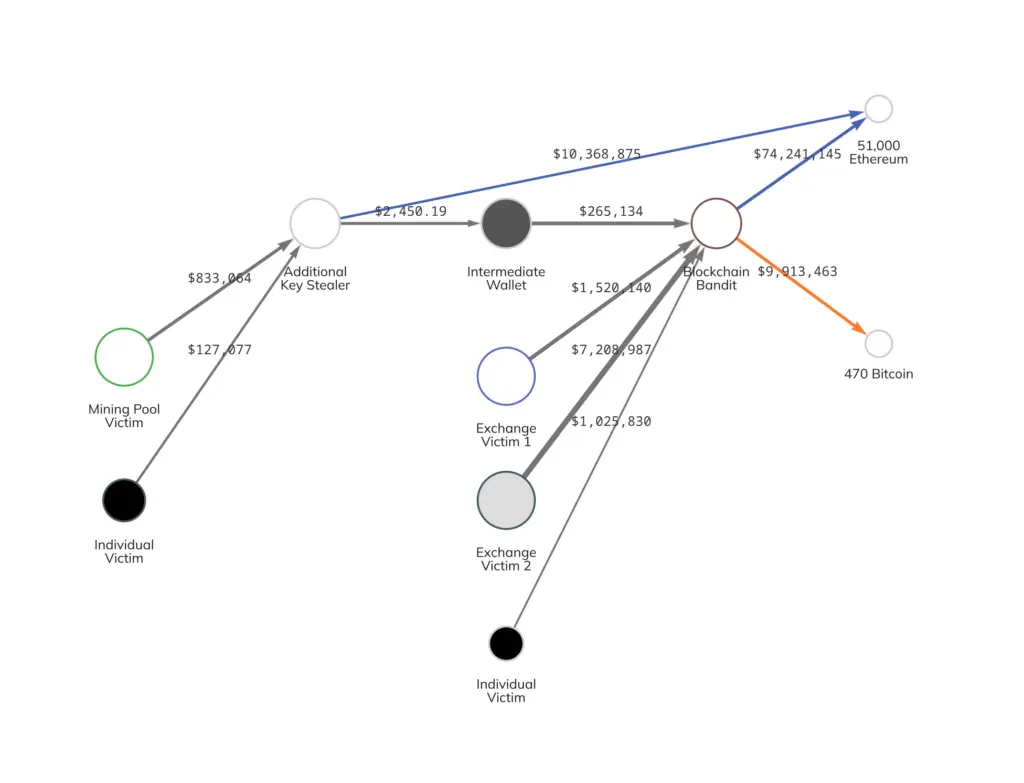
之前就出过「伪随机钱包」的安全事件,有些钱包生成助记词时使用了伪随机算法,结果熵远远不足,被黑客暴力遍历直接穷举破解——2015 年黑客组织 Blockchain Bandit 就利用故障的随机数生成器和程序码漏洞,系统性地搜寻弱安全私钥,成功扫出了 70 多万个脆弱钱包地址,并盗走了其中超过 5 万枚 ETH。

当然有些极客会用骰子(得确保骰子也足够均匀)摇随机数,再映射到 BIP39 单词库,这才算手工安全,但对大多数人来说,没必要搞这么复杂,反而容易出错。

三、能不能暴力撞出 V 神或其他巨鲸的钱包?

这个问题我当年也脑补过,幻想自己哪天生成了一个钱包地址,结果一看里边有上百万枚 ETH,瞬间财富自由,直接偷家某位巨鲸。

不得不说,光想就挺诱人。但现实是:概率几乎等于零。

为什么?因为助记词的可能组合数量已经夸张到超出人类想象:

  • 12 个单词:有效组合数约 2¹²⁸ ≈ 3.4 × 10³⁸

  • 24 个单词:有效组合数约 2²⁵⁶ ≈ 1.16 × 10⁷⁷

这个数量级是什么概念?

我们都知道地球上的沙子多到数不清,但科学家们估算过一个近似值,假设地球上的所有沙滩、沙漠加起来,沙子的总数大约是 7.5×10¹⁸ 粒,这也意味着:

  • 12 个单词的有效组合数,相当于地球全部沙子总数的 4.5 × 10¹⁹ 倍

  • 24 个单词的有效组合数,更是地球上沙子总数的 1.5 × 10⁵⁸ 倍

换句话说,就好像地球上每一粒沙子,都变成一颗「新地球」,每个新地球里还有沙滩和沙子,然后你要在所有这些沙子里,一次性随机找到你事先标记好的那一粒。

这已经远远超出人类可以想象的规模。

所以,暴力破解钱包的概率,不是「极低」,而是在已知的物理学和计算能力下,等同于零,想靠「撞库」发财,还不如去买彩票,中奖概率高得多。

回到电影的那个设定:如果真有人只差一个助记词单词,那确实有可能通过暴力遍历去尝试。

最后,关于钱包/助记词/私钥的几点安全小贴士:

  1. 优先使用经过时间和市场检验、开源代码审计的非托管钱包,如 MetaMask、Trust Wallet、SafePal 等,有条件的直接使用硬件钱包;

  2. 助记词和私钥,永远不要截图、不要存网盘、不要复制粘贴、不要发给别人;

  3. 最好纸笔抄写(可以考虑使用不锈钢助记词板,防潮、防火、防腐蚀),放在安全的地方,且 2~3 处多点备份;

  4. 公钥/地址可以放心公开,它就是你的门牌号,但要注意识别钓鱼链接;

  5. 建议用干净的设备管理钱包,不要随便装来历不明的插件或 App;

  6. 记住一句话:任何人向你要助记词,100% 是骗子。

Lecturas Relacionadas

Morning News | Coinbase Partners with Standard Chartered to Expand Multi-Currency Fiat Channels; Sharplink and Forward to be Included in Russell Indices; JPMorgan May Issue Stablecoin in the Future

Daily Crypto Recap: Key Developments Institutional adoption continues: Coinbase partners with Standard Chartered to expand multi-currency fiat rails for institutions via Coinbase Prime, supporting AUD, SGD, CAD, CHF, EUR, and GBP. Meanwhile, Sharplink and Forward Industries, companies holding significant ETH and SOL reserves respectively, are set to be included in the Russell indexes, providing indirect crypto exposure to traditional index investors. Regulatory and compliance moves are in focus. Hong Kong's monetary authority announced new measures for investment accounts of mainland Chinese investors, including retroactive document checks to January 2023. Prediction market Polymarket is considering implementing KYC requirements to address sanctions and legal risks. Major financial players signal deeper involvement. JPMorgan Chase CEO Jamie Dimon suggested the bank might issue a stablecoin in the future. Concurrently, Falcon Finance and Anchorage Digital launched fUSD, a compliant, institution-focused stablecoin. Market sentiment presents a mixed picture. Bitmine's Tom Lee predicts an incoming crypto "supercycle," driven by Wall Street tokenization and AI agents, with Ethereum as a key beneficiary. However, a prominent trader cautions that the current period of investor losses may not be long enough to confirm a bear market bottom, and TD Cowen analysts note diminished chances for U.S. crypto market structure legislation this year due to a worsening political climate. Other notable news includes a16z crypto's observation that most tokenized assets are merely "digitized" and not actively used in DeFi, South Korea's crypto trading volume falling to about 8% of KOSPI's, and the Chinese Supreme Court stating it will research judicial rules for virtual currency cases.

链捕手Hace 1 hora(s)

Morning News | Coinbase Partners with Standard Chartered to Expand Multi-Currency Fiat Channels; Sharplink and Forward to be Included in Russell Indices; JPMorgan May Issue Stablecoin in the Future

链捕手Hace 1 hora(s)

Sitting on a Trillion-Dollar Market, Why Hasn't Real Estate Tokenization Taken Off?

For years, real estate tokenization has been hailed as a breakthrough technology poised to democratize property investment. In theory, it promises fractional ownership of premium assets, rapid transactions, and enhanced liquidity. Yet, in practice, it has failed to gain traction, accounting for less than 0.1% of the global real estate market. The core issue is not a lack of tokens, but the absence of a robust legal, operational, and compliant framework that grants them credibility as financial instruments. The industry initially erred by prioritizing technology over investor needs, creating products with unclear ownership and unreliable liquidity. Key infrastructure remains missing: legally sound ownership structures, compliant transfer mechanisms, professional servicing, and interoperability with traditional finance. This regulatory ambiguity and operational complexity deter institutional investors, who already have access to established, well-governed investment channels. A mature model would feature low minimum investments in institutional-grade assets, transparent rental income distribution, and genuine liquidity through regulated secondary markets. While regulatory progress in regions like the UAE and growth in other tokenized asset sectors (like treasuries) are positive signs, the focus must shift from issuing tokens to building foundational systems. The investment proposition of tokenized real estate is not to create new returns, but to improve access, efficiency, and liquidity for existing income-generating properties. For mainstream adoption, the sector must demonstrate tangible economic advantages over traditional models, not just technical novelty. The next phase depends on proving scalable, compliant operations with auditable track records. The barrier is no longer technology, but infrastructure and regulation. The vision remains unfulfilled until this gap is bridged.

marsbitHace 1 hora(s)

Sitting on a Trillion-Dollar Market, Why Hasn't Real Estate Tokenization Taken Off?

marsbitHace 1 hora(s)

Large Language Models Ace All Exams, Yet Move Farther from AGI: What Does This Paper Reveal?

The article discusses the ongoing challenge of defining and achieving Artificial General Intelligence (AGI). It notes that industry leaders have set vague, often profit- or time-based benchmarks for AGI, while the concept itself lacks a consensus definition—a situation the article compares to a "Rorschach test." It highlights a recent 2025 paper by researcher Michael Timothy Bennett, who proposes a new, measurable definition. Bennett frames AGI not as mimicking human performance on tests, which current large language models (LLMs) have already mastered, but as an "artificial scientist." A true AGI, according to this view, should be able to widely and efficiently adapt to new environments and tasks within real-world constraints (like computational and energy limits), focusing on the *discovery of new knowledge* rather than the replication of existing data. The author contrasts this with the current dominant approach of "scale-maxing"—massively scaling up data, parameters, and compute. While powerful, this method leads to models that fail on out-of-distribution problems and lack core intelligent abilities: they are passive learners, cannot reason causally, and cannot actively experiment or balance exploration with exploitation. The article argues that Bennett's framework offers a crucial shift. It makes AGI a quantifiable engineering problem and proposes new evaluation "adaptation benchmarks" that test an AI's ability to actively learn in novel scenarios. The conclusion is that achieving AGI will require a fundamental reset—a fusion of multiple methodologies beyond simple scaling, moving AI from mimicking patterns to embodying the scientific spirit of inquiry and discovery.

marsbitHace 2 hora(s)

Large Language Models Ace All Exams, Yet Move Farther from AGI: What Does This Paper Reveal?

marsbitHace 2 hora(s)

Trading

Spot
Futuros
活动图片