谷歌做的区块链,算 Layer1 吗?

深潮Publicado a 2025-08-26Actualizado a 2025-08-27

GCUL 究竟是一条真正的 Layer1 公链,还是更接近传统意义上的联盟链?

撰文:Nicky,Foresight News

近日,谷歌 Web3 战略负责人 Rich Widmann 通过社交媒体宣布,谷歌云正式推出其区块链网络 Google Cloud Universal Ledger(GCUL),并将其定义为「Layer1 区块链」。围绕其技术定位的讨论随之浮现:GCUL 究竟是一条真正的 Layer1 公链,还是更接近传统意义上的联盟链?

官方定位与核心特性
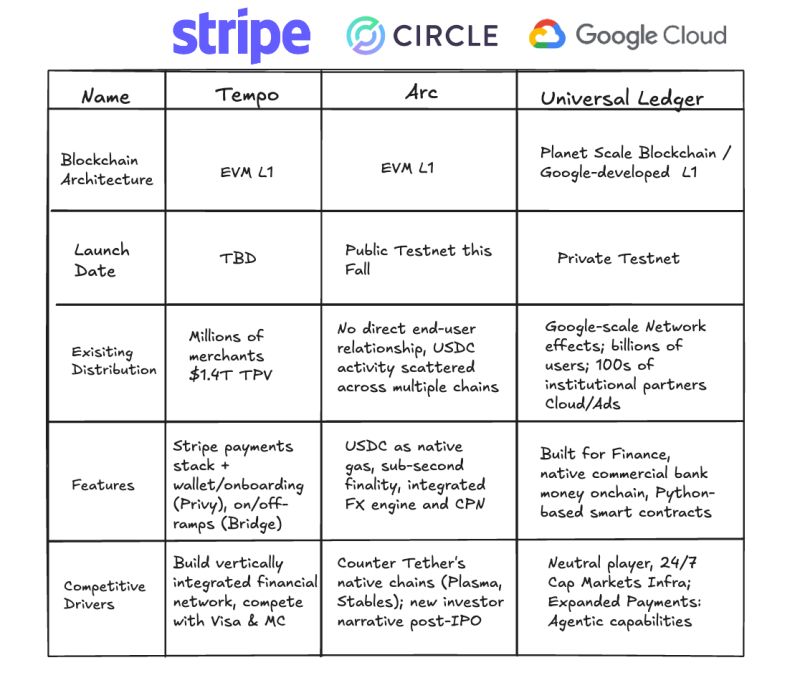
根据官方描述,GCUL 被设计为一个「高性能、可信中立且支持 Python 智能合约」的分布式账本平台,目前处于私有测试网阶段,主要面向金融机构提供服务。谷歌云强调,GCUL 旨在简化商业银行货币账户的管理,并通过分布式账本技术实现多货币、多资产的转账和结算,同时支持可编程支付和数字资产管理。

在官方发布的《稳定币之外:数字货币的演变》一文中,谷歌进一步阐释了 GCUL 的定位:它并非要「重新发明货币」,而是通过升级基础设施来解决传统金融系统的碎片化、高成本和低效率问题。GCUL 被包装为一项服务,通过 API 接口提供,强调其易用性、灵活性和安全性,尤其是在合规性(如 KYC 验证)和私有化部署方面的优势。

值得注意的是,GCUL 的早期测试已与芝加哥商品交易所(CME Group)展开合作。双方于 2025 年 3 月宣布启动分布式账本试点,探索批发支付与资产代币化的解决方案。

CME 首席执行官 Terry Duffy 表示,GCUL 有望在「24/7 交易趋势下」提升抵押品管理、保证金结算等环节的效率;谷歌云金融服务总经理 Rohit Bhat 则强调,此次合作是「传统金融机构通过现代基础设施实现业务转型的典型案例」。

Layer1 与联盟链:定义与分歧

在区块链领域,Layer1 通常指底层基础公链,如以太坊、Solana 等,其核心特征包括去中心化、无需许可和公开透明。任何用户均可自由参与网络验证、交易或部署智能合约,且链上数据对所有人可见。

相比之下,联盟链(Consortium Blockchain)是一种需许可(Permissioned)的分布式账本,由特定组织或机构共同维护,节点准入受控,数据访问权限可定制。典型应用包括 Hyperledger Fabric、蚂蚁链等。联盟链的优势在于合规可控、性能较高,但牺牲了开放性和抗审查性。

GCUL 更符合哪种模式?

从目前已披露的信息看,GCUL 表现出明显的联盟链特征:

  • 私有与许可性:GCUL 明确运行在「私有且需许可的网络」上,节点准入和账号权限由管理机构控制。

  • 目标用户:专注于金融机构(如 CME Group),而非公众自由参与。

  • 合规优先:设计初衷包含 KYC 验证、交易费用符合外包规定等传统金融合规要求。

  • 技术架构:尽管支持智能合约(基于 Python),但其底层基础设施由谷歌云采取中心化的方式维护,与「去中心化」的 Layer1 理念存在差异。

然而,谷歌云官方仍坚持将其称为「Layer1」,并强调「可信中立」和「基础设施中立」 — 即任何金融机构均可使用,而非仅限于特定利益集团。这种表述试图在叙事上模糊公链与联盟链的边界。

第三方观点:质疑与观望

行业从业者对 GCUL 的定位提出了不同看法:

  • BODL Ventures 合伙人刘锋认为,GCUL 更符合「联盟链」特征,与去中心化、无需许可的公链存在本质区别。

  • Dragonfly 合伙人 Omar 表示,此前谷歌对 GCUL 的表述较为模糊,如今团队明显倾向于将其包装为「Layer1」,但实际技术细节尚未完全公开。

  • Helius CEO Mert 指出,GCUL 目前仍是「私有且需许可」的系统,与公链的开放模型不同。

尽管存在质疑,也有观点认为 GCUL 可能代表一种「渐进式创新」。例如,谷歌与 CME 集团的合作试点显示,机构对分布式账本技术在结算、抵押品管理等场景的应用存在需求。GCUL 若能整合谷歌的技术能力和金融合规经验,或许能在传统金融与区块链之间找到一条实用化路径。

免责声明:本文基于公开信息分析,GCUL 的具体技术架构和运营模式仍需以谷歌官方后续披露为准。

Lecturas Relacionadas

a16z: RWA Has Passed the Proof of Concept, but the Real Challenges Are Just Beginning

a16z highlights that the tokenized real-world asset (RWA) market, excluding stablecoins, has grown tenfold in under two years to roughly $340 billion. This surge is primarily driven by US Treasury bonds and gold, offering investors yield on idle stablecoins and providing institutions with more efficient settlement and collateral flows. However, the core insight is that most tokenized assets today are simply digital certificates for off-chain holdings—used for ownership and transfer but not deeply integrated into DeFi as composable financial building blocks. For instance, only about 5% of tokenized bonds ($8B) are actively used in DeFi protocols. Smaller categories like reinsurance tokens show much higher DeFi utilization (84%), indicating they were designed for on-chain composability from the start. The market remains concentrated, with US Treasuries and commodities comprising two-thirds of the total. Gold dominates the commodities segment. While Ethereum holds over half the market, activity is spreading across multiple chains like BNB Chain and Solana. Predictions for the market's future size vary widely (from $2 trillion to over $30 trillion by 2030/2034), reflecting different definitions of what constitutes tokenization. All agree on significant growth. The current market is minuscule compared to traditional finance (e.g., tokenized bonds are 0.01% of the global bond market). The key takeaway is that the initial "proof-of-concept" phase for moving familiar assets on-chain is proving successful. The next, harder challenge is moving more complex financial instruments onto blockchains and enabling true on-chain composability, where these assets become programmable components within a native digital financial system, rather than just digitized records.

marsbitHace 18 min(s)

a16z: RWA Has Passed the Proof of Concept, but the Real Challenges Are Just Beginning

marsbitHace 18 min(s)

The Wind of 'Proactive' AI Blows into Silicon Valley: Hark Secures $700 Million in Funding

Hark, an AI startup founded in late 2025, has raised $700 million in Series A funding at a $6 billion valuation. Led by Parkway Venture Capital with participation from NVIDIA, AMD Ventures, Intel Capital, Qualcomm Ventures, and Salesforce Ventures, the company aims to develop next-generation human-computer interfaces using a combination of proprietary foundational models and custom-built AI-native hardware. Founded by serial entrepreneur Brett Adcock, Hark envisions a system of multimodal devices equipped with agentic capabilities, end-to-end voice models, and personalized memory. This "active" AI approach seeks to move beyond passive chatbots, creating collaborative companions that anticipate needs and interact naturally within the real world. Adcock's experience with Figure, a humanoid robotics company, informs this hardware-focused venture. The article argues that while current AI is powerful, it remains confined to screens and traditional interfaces like chat. The next paradigm shift requires dedicated hardware that is always-on, possesses persistent memory, and enables intuitive interaction, potentially rivaling the impact of the iPhone. Hark is assembling a team with talent from Apple, Meta, Google, and Tesla to tackle this complex engineering challenge across models, hardware, and interaction design. Finally, the piece suggests Chinese startups may have an advantage in this "active" AI hardware space due to strong manufacturing ecosystems, a vast domestic market, and supportive government policies, framing the competition as one that requires integrated progress in models, operating systems, and devices.

marsbitHace 22 min(s)

The Wind of 'Proactive' AI Blows into Silicon Valley: Hark Secures $700 Million in Funding

marsbitHace 22 min(s)

Competitors Going Public, Kimi Can't Sit Still

Competitors Go Public, Kimi Feels the Pressure Yue Zhi An Mian (Moonshot AI), the company behind the AI assistant Kimi, has begun dismantling its VIE and red-chip structure, clearing a key obstacle for a potential Hong Kong IPO. This marks a significant shift from six months ago when founder Yang Zhilin stated the company was in "no hurry" to list. The move comes as rivals like Zhipu AI and MiniMax have successfully listed on the Hong Kong Stock Exchange in early 2026, experiencing massive surges in market value. This has reset valuation logic for AI companies, turning "going public" from an end goal into a competitive necessity. Analysts suggest Kimi is both seizing a favorable market window and responding to competitive pressure. Kimi's valuation has skyrocketed from around $3 billion at its 2023 founding to over $20 billion by May 2026. Capital is betting on its potential as a future AI platform and gateway, though some caution this "emotional valuation" depends on sustained technological leadership and successful commercialization. Traditionally focused on core model R&D over user growth, Kimi has recently pivoted strategy. While its monthly active users declined through 2025, it shifted focus to Agent development and reducing marketing spend. The release of its K2.5 model in early 2026 reportedly generated substantial revenue, with annual recurring revenue reaching $200 million by April, driven by subscriptions and API services. A $2 billion D-round financing in May signaled investor approval of this commercial shift. However, listing will bring new pressures. Experts predict a listed Kimi would face stricter scrutiny on financial controls, compliance, and R&D efficiency. The narrative must evolve from pure technological breakthroughs to demonstrating clear commercialization paths, sustainable income, and a defensible valuation, balancing model superiority with business performance.

marsbitHace 42 min(s)

Competitors Going Public, Kimi Can't Sit Still

marsbitHace 42 min(s)

Trading

Spot
Futuros
活动图片