复盘 Monad Card 活动:一场面向加密推特的“反内卷”实验

深潮Publicado a 2025-08-26Actualizado a 2025-08-27

去中心化提名,让 Monad 公平起步。

作者:Happy

编译:深潮TechFlow

我认为,许多 TGE 前的团队常犯的一个错误,就是过度依赖 Kaito boards 或 Zealy 活动等增长手段来获取关注度。

过去我对此一直持批评态度,坦率讲,我觉得这些其实是负作用更大。

凡是被宣传的东西,都会被操控。凡是被衡量的东西,都会被滥用。

你吸引来的往往是最糟糕的唯利是图的用户,并会阻碍自然发帖,因为参与所带来的声誉损害往往超过潜在的回报。

另一方面,Monad Cards 采取了相反的方式。

它们会分发给那些在更广泛加密领域中建立影响力的 CT 用户,而不是专门发帖讨论 Monad 的帖子。

这之所以有效,有几个原因:

  • 要长期保持社交影响力,比反复发某一个项目的内容更难作假;

  • 让成功的 CT 用户在不“出卖灵魂”的情况下,也能真正拥有一定的利益绑定(或许);

  • 让他们因自己对加密领域的更广泛贡献而感到真正被奖励和认可;

  • 激励他们主动发关于 Monad 的内容,以展示自己的相关性;

  • 允许他们提名那些可能被忽视的人。

在我看来,最后一点最为重要。

通过允许这些用户去提名他人,你赋予了他们权力、信任与责任。

从长远看,这也有助于避免社交空投中常见的一类 FUD ——“这都是分给内部人的。”

说实话,这种批评在历史上往往是有道理的,即使并非出于主观意图。

人类总是容易受到无意识偏见的影响,而空投的标准通常是保密的,并且由少数人掌控。这样几乎不可避免地会让奖励最终落到团队“最喜欢”的人手中。

但在这里,情况并非如此。通过将决策过程去中心化到整个 CT,你就消除了大部分这种偏见。

如果你在这个领域活跃了一段时间,即使你自己发帖不多、社交影响力不大,你很可能也在某个群聊里认识一些有影响力的人。所以如果你得不到提名,这更多是你自身能力的问题,而不是可以归咎于团队的事情。

而且很明显,团队也努力把这种理念嵌入到自己的社区中。

他们推出了识别应用(recogniser app),用户只需回答一个问题的“是/否”:你是否认识这位社区成员?

这是在消除决策过程中的偏见、增加更多去中心化数据点的又一步。

在加密圈外的人看来,这些或许只是些微不足道的小事,但我认为它们对一条链的起源故事有着超乎寻常的影响。

在我看来,加密世界里,“公平”发行的认知,是未来能否获得文化成功的最大预测因素。

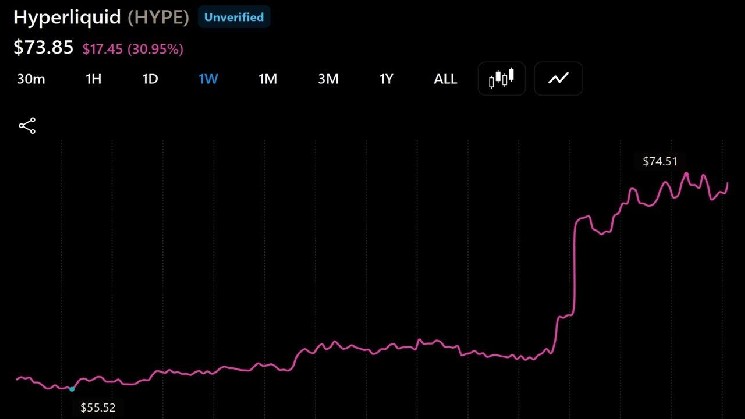
毕竟,这个行业的文化正是源于那些最公平的发行——比特币、以太坊,以及更近的 Hyperliquid。

当然,这些措施本身并不能解决 Monad 的所有问题,但它们在很大程度上回应了 CT 最大的抱怨——相比其他在更宽松监管环境下融资的新链,普通用户想在 Monad 上获得“利益绑定”的机会实在太难。

没有任何活动能让所有人满意,但这次活动却让 Monad 的口碑发生了转变,为其未来的发展奠定了更坚实的基础。

Lecturas Relacionadas

JPMorgan Research Report Analysis: Moderna's INT Trial Meets Endpoints, but Market Already Priced In

On August 19, J.P. Morgan (JPM) published a research report analyzing Moderna's recent Phase III trial success for its Individualized Neoantigen Therapy (INT), developed in partnership with Merck, in adjuvant melanoma. The trial met its primary endpoint of significantly improved recurrence-free survival and the key secondary endpoint of distant metastasis-free survival. While JPM acknowledged the strong clinical value of these results, particularly the prevention of distant metastasis, the bank stated that this success was widely anticipated, with an 85% prior probability of success, and is already reflected in Moderna's current market valuation. Following the announcement, Moderna's stock rose in pre-market trading. However, JPM maintained its Underweight rating and $40 price target, implying approximately 36% downside from the current price of ~$63. The core rationale is that the success in adjuvant melanoma, a relatively small market in immuno-oncology, is fully priced in. Moderna's future valuation hinges entirely on INT's ability to demonstrate similar efficacy across broader cancer indications. JPM's valuation model incorporates only a modest risk-adjusted value (~$3/share) for the melanoma approval. Approximately $15/share of its target price is attributed to INT's potential in other cancer types. The report identifies upcoming data readouts in non-melanoma cancers (e.g., lung, head & neck, renal) as the critical variable that will determine the platform's ultimate value. Upside risks include better-than-expected data in these new indications, while downside risks involve clinical failures, regulatory delays, or commercial underperformance. In conclusion, JPM views the pre-market stock move as driven by short covering and trading sentiment rather than a fundamental re-rating. The bank remains bearish, arguing that Moderna must now prove INT's efficacy as a platform technology beyond melanoma to justify its current market cap.

marsbitHace 7 min(s)

JPMorgan Research Report Analysis: Moderna's INT Trial Meets Endpoints, but Market Already Priced In

marsbitHace 7 min(s)

Treasury Department Directly Intervenes to Suppress Long-Term Interest Rates

The article discusses the U.S. Treasury's recent direct intervention to suppress long-term bond yields through buyback operations. While distinct from traditional Yield Curve Control (YCC), this move is interpreted as direct government intervention in its own financing costs. The author emphasizes the short-term tactical nature of this action and contrasts it with the Federal Reserve's upcoming, potentially divergent, policy stance at Jackson Hole. The core issue is framed as a long-term U.S. strategic dilemma: managing high deficit levels. The analysis argues that deficit reduction cannot realistically come from spending cuts or traditional industries, but must rely on achieving higher economic growth driven by technological breakthroughs. Current monetary tightening, while possibly curbing yields and inflation in the short term, is seen as potentially counterproductive to this necessary long-term investment in technology and supply chain resilience. The piece draws historical parallels, placing the current intervention between the 2000-2002 Treasury buybacks (for liquidity) and larger-scale Fed-led "Operation Twist" maneuvers. The effectiveness of the Treasury's action is deemed limited without Federal Reserve cooperation, which would signify a more significant policy shift. Ultimately, the author views such technical, bureaucratic interventions as treating symptoms rather than the underlying disease of the U.S. economy's structural challenges and "K-shaped" divergence. The conclusion suggests that sustained yield suppression by the Fed, combined with specific geopolitical outcomes, could serve as a catalyst for a more profound discussion on broader U.S. and dollar trajectory.

marsbitHace 7 min(s)

Treasury Department Directly Intervenes to Suppress Long-Term Interest Rates

marsbitHace 7 min(s)

Trading

Spot
活动图片