解读 Flipr: 让预测市场在 X 上出圈,每笔交易都是一条推文

深潮Publicado a 2025-08-20Actualizado a 2025-08-21

X 平台上的预测交易机器人,让投注变成社交内容。

预测市场正逐渐受到关注,但大多数平台仍然难以接触,并与日常互联网使用脱节。而 Flipr 则采取了截然不同的方式:用户可以直接在 X 上进行交易,将每一次下注转化为易于分享、互动和反驳的内容

通过默认公开交易,Flipr 将市场参与转变为一种社交体验。交易的可见性成为核心功能,用户不仅仅是进行预测,他们还展示预测,并吸引其他人参与其中。

这种设计创造了强大的反馈循环:用户下注,下注内容出现在时间线上,其他人可以复制、反驳或引用这些内容。这种互动吸引了更多用户和交易,从而推动更多费用和奖励的产生。Flipr 的产品通过公开使用而实现增长。

工作原理

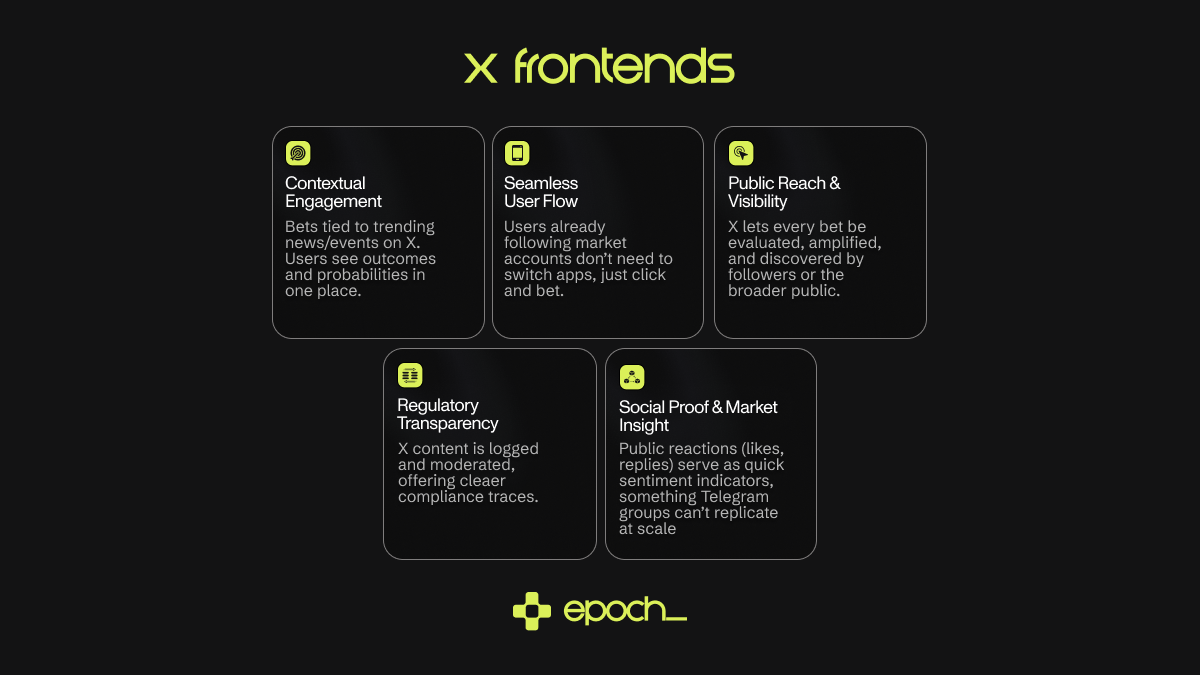
Flipr 目前已接入 Polymarket,并将在不久后接入 Kalshi。但与传统平台不同的是,Flipr 并没有构建自己的界面,而是将 X 作为前端。用户只需在推文中标记 @fliprbot 并说明交易方向和金额即可完成交易。例如:@fliprbot bet $100 yes。

这种简单的设置减少了新用户的使用障碍,无需访问网站、连接钱包或学习新界面。用户可以直接通过 X 存入资金、进行交易并跟踪结果。

这种方式还支持更具表达性的交易形式。用户可以实时互动,建立声誉,并以公开的形式分享自己的观点。当更多的内容流入可交易的动态时,产品的发现和使用也变得更加便捷。

Mindshare Mining 活动

2025 年 7 月 5 日,Flipr 启动了 Mindshare Mining,一项为期六周的活动,以此奖励在 X 上交易和发布有关 Flipr 信息的用户。活动期间将总计分发1000万枚 FLIPR 代币,奖励按评分系统每周发放。

与传统奖励计划仅关注交易量不同,Mindshare Mining 追踪以下五个关键指标:

  • 交易规模:交易金额越大,获得的积分越多;

  • 发布时间:每周较早发布的内容价值更高;

  • 连续发布:持续发布内容可获得更高的奖励;

  • 垃圾内容控制:过度发布会受到惩罚;

  • 互动性:更多的互动可以提升评分。

这一设计鼓励用户进行有意义的活动。几次时机恰当、高质量的交易和帖子可能比单纯的交易量更具优势。系统旨在奖励优质内容,而非简单的互动刷量或垃圾内容。Flipr 还在公开市场上购买了 1% 的供应量,并通过 Mindshare Mining 活动将其回馈给社区。

行业增长

为了更好地理解 Flipr 的潜力,可以参考以下行业基准数据:

Polymarket

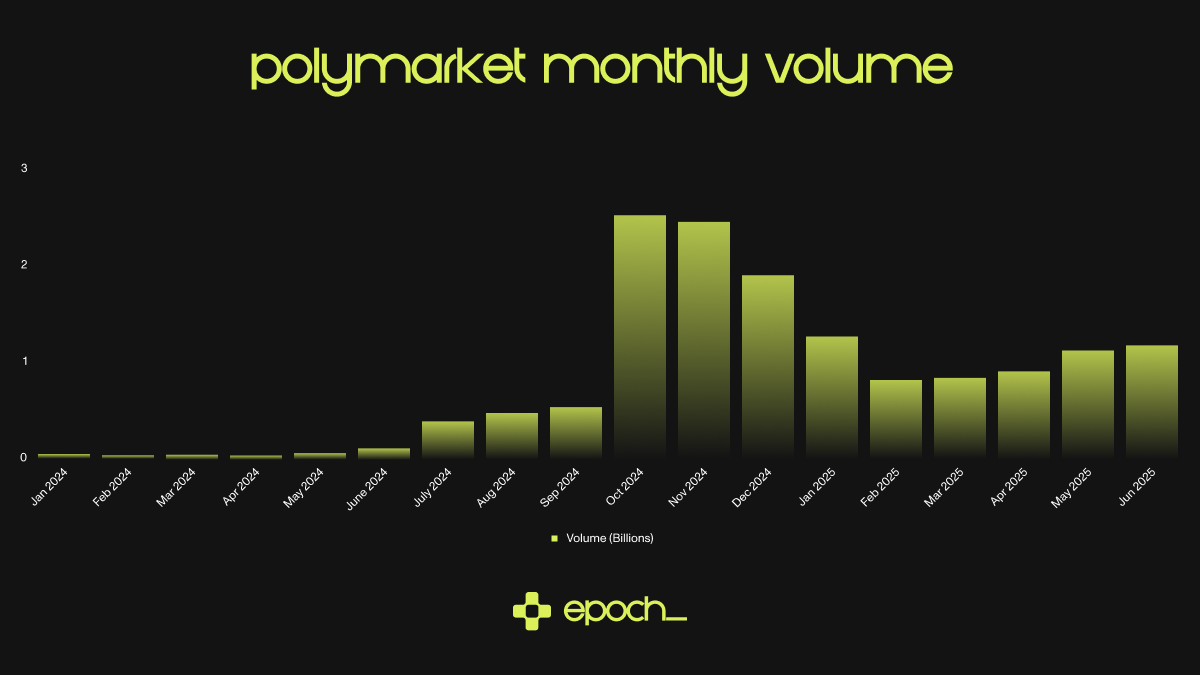
  • 2024 年交易量超过 90 亿美元,其中美国大选期间峰值达到 26.3 亿美元;

  • 2024 年12 月活跃交易员数量约为 314,500 人;

  • 继续保持主导地位,占加密原生预测平台市场份额的 70%以上;

  • 仅在 2025 年 5 月的交易量就达到 11 亿美元,显示出稳定的市场活动;

  • 总融资额达 7400 万美元,公司估值达到 10 亿美元。

Kalshi

  • 2024 年交易量增长至约 19.7 亿美元,相较 2023 年增长近 10 倍;

  • 2024 年预计营收达 2400 万美元,同比飙升 1200%;

  • 2025 年年中完成融资 1.85 亿美元,公司估值达到 20 亿美元;

  • 在美国商品期货交易委员会(CFTC)的批准下运营,使其在美国零售市场完全合法。

这些平台合计处理了超过100亿美元的预测交易,展示了一个仍处于主流周期早期但增长迅猛的垂直领域。

Kalshi 的重要性

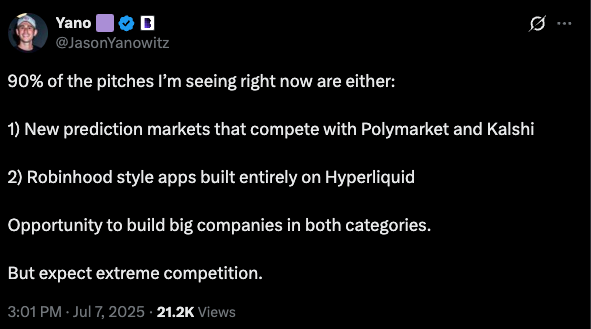
预测市场正经历显著的增长趋势。Polymarket 已证明了这一趋势,而 Kalshi 的融资估值是 Polymarket 的两倍,许多新项目也正在涌现以与其竞争。然而,Flipr 并不选择直接竞争,而是采取互补策略,提供一种更智能的、类似测试版敞口(beta-style exposure)方式来接触 Polymarket 和 Kalshi。与 Kalshi 的整合暗示了未来可能的合作前景。
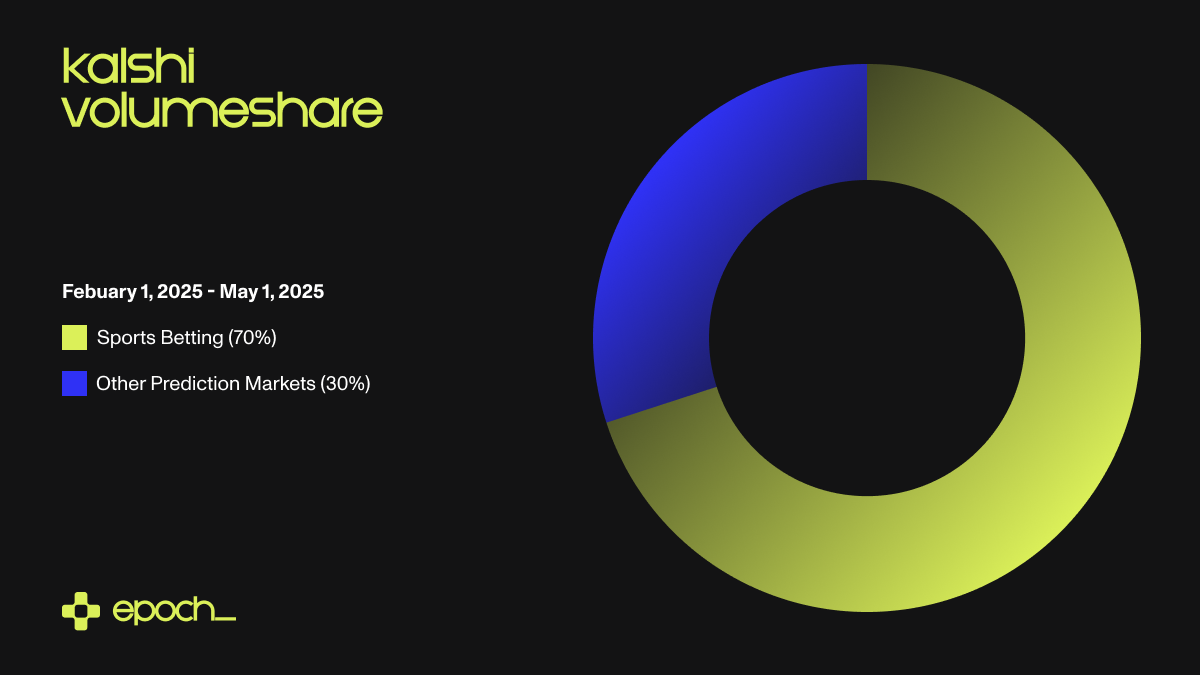
对于美国的预测市场用户来说,监管仍然是一个主要挑战。Polymarket 作为一个无国界平台,目前在用户数量上处于领先地位,但美国用户无法参与其中。相比之下,Kalshi 对美国用户完全开放。值得注意的是,体育博彩现已占总交易量的 75%,其中 3 月交易量达 5.13 亿美元,4 月为 4.53 亿美元。
传统体育博彩平台如 DraftKings 和 FanDuel 面临劣势:由于需要逐州获得游戏批准,它们在 11 个州尚未开放运营,并且通常每次投注的庄家优势为 4-5%。而 Kalshi 作为一个联邦监管的衍生品交易所,绕过了州级限制,在所有 50 个州均可使用,每次投注仅收取 1%的手续费。

与 Kalshi 的整合

Flipr 正在与 Kalshi 整合,Kalshi 是美国仅有的受 CFTC 监管的预测市场之一,最近融资 1.85 亿美元,估值达到 20 亿美元,其平台在大多数州对散户用户合法开放。然而,它面临的挑战是用户可访问性,其用户体验仍主要面向专业或高端交易者。

Flipr 提供了一个更加开放的入口。通过在 X 上构建轻量化界面,Flipr 将 Kalshi 市场的内容展示在用户日常浏览的同一信息流中。这降低了新用户的使用门槛,同时为 Kalshi 和 Polymarket 提供了更广泛的分发渠道。

Flipr 和 Kalshi 团队之间的公开互动表明双方正在积极合作。如果完全整合,Flipr 有可能作为一个受监管的美国平台的社交前端,通过创作者活动、公开交易和 KOL 的参与推动平台使用。

展望(Flipr 与 Pcule)

Flipr 并非试图从头开始重建预测市场。相反,而是构建了一个附加层,使预测市场更加易用、更加可见、更具社交属性。

与 Polymarket 和 Kalshi 专注于基础设施建设不同,Flipr 的重点在于扩大覆盖面。其产品设计也与这一目标一致:交易成为内容,互动推动分发,用户既参与市场也参与讨论。

这一策略使 Flipr 成为预测市场的社交层。它吸引新用户,奖励公开信念,并以简单、友好的方式连接现有平台。

尽管这一领域正在快速发展,大多数预测市场平台仍显得孤立或难以接触。Flipr 通过在用户已经活跃的平台——X 上与他们接触,并提供无缝且透明的参与体验,改变了这一局面。

与专注于后端基础设施和工具的 PCULE 不同,Flipr 更关注前端体验(社交)。这一区别至关重要:X 已被证明是实时投注活动的理想平台。Flipr 利用 X 的约 1.5 亿日活跃用户,他们已经在关注实时新闻和事件,从而降低了参与门槛并提高了发现效率。
结论

通过整合 Kalshi 和 Polymarket,Flipr 正在将自己定位为预测市场投注的首选机器人。由于 Polymarket 和 Kalshi 都没有发行代币,而 Flipr 当前市值仅为 400 万美元(截至撰写本文时),它以低于 1000 万美元估值的潜力项目脱颖而出。

主要风险在于用户的接受度:X 的用户是否会广泛采用 Flipr 来进行投注?

如果你的答案是肯定的,那么其未来增长空间十分可观——尤其是考虑到本文研究中提到的交易量。

鉴于 X 的用户群体中很大一部分来自美国,这一机会显得更加吸引人。Flipr 和 Kalshi 团队在 X 上的互动也表明双方关系密切,可能暗示着令人期待的发展或 Kalshi 的未来推动。

 

Lecturas Relacionadas

From Suppliers to Shareholders: The Big Three Memory Chip Giants Jointly Invest in Anthropic, AI Supply Chain Power Structure Undergoing Reshuffle

For the first time, memory chip giants Micron, Samsung, and SK hynix have jointly invested in the same AI company, Anthropic, as part of its massive $65 billion Series H funding round. This strategic move, positioning the three rival HBM suppliers as "strategic infrastructure partners," highlights a fundamental shift in the AI industry's power dynamics. With HBM (High Bandwidth Memory) being a critically scarce resource essential for AI model training and inference, securing a stable supply has become a key competitive differentiator. By making these chipmakers shareholders, Anthropic aims to lock in this vital component for its rapid expansion, which includes securing major compute commitments from Amazon, Google, and others. For the memory trio, this investment represents a strategic bet on defining the future of AI hardware. Each company gains: SK hynix reinforces its dominant position in the NVIDIA supply chain; Samsung diversifies its client base beyond NVIDIA; and Micron leverages its geopolitical significance as the sole US-based HBM maker. Their collective move signals that competition in AI is evolving beyond model capability to encompass control over the entire compute supply chain—from chips and memory to power and networking. This vertical integration trend, where infrastructure providers become direct stakeholders in AI firms, marks the industry's maturation as AI transforms from a research project into essential global infrastructure, setting the stage for a new era of ecosystem competition.

marsbitHace 18 min(s)

From Suppliers to Shareholders: The Big Three Memory Chip Giants Jointly Invest in Anthropic, AI Supply Chain Power Structure Undergoing Reshuffle

marsbitHace 18 min(s)

Investment Philosophy of Gavin Baker, an Early Nvidia Investor: Long AI Infrastructure Bottlenecks, Short Overall Market Risk

Gavin Baker, an early investor in Nvidia and founder of Atreides Management, outlines his investment philosophy: going long on AI infrastructure bottlenecks while hedging against broader market risk. He argues AI is not a bubble but a supercycle driven by constraints in power, wafers (semiconductors), and compute efficiency (tokens per watt). True alpha, he believes, lies not in application-layer companies like OpenAI but in "picks and shovels" providers—companies solving physical bottlenecks in GPU connectivity (e.g., Astera Labs), memory (Micron), inference chips (Cerebras, Positron), advanced manufacturing (TSMC, ASML), and energy supply. His portfolio reflects this barbell strategy: concentrated bets on key infrastructure players alongside a significant put position on the QQQ ETF to hedge overall market downside. Baker contends this cycle differs from the dot-com bubble because demand is fueled by the strong balance sheets of hyperscalers (Google, Meta, Amazon, Microsoft), not debt, and physical supply constraints (e.g., chip manufacturing capacity) prevent runaway overinvestment. He highlights the growing importance of inference (vs. pre-training), vertical/small language models, sovereign infrastructure deployment speed, and the convergence of energy and space (e.g., orbital compute). His long-term view is that performance-per-watt and token cost reduction will dictate winners as AI scaling hits fundamental physical limits.

marsbitHace 1 hora(s)

Investment Philosophy of Gavin Baker, an Early Nvidia Investor: Long AI Infrastructure Bottlenecks, Short Overall Market Risk

marsbitHace 1 hora(s)

Apple Re-invented Image Compression with AI: Same Quality, One-Third the File Size

Apple’s PICO: An AI-Powered Image Codec That Cuts File Size by Two-Thirds at Equal Perceived Quality In 2025, JPEG AI became the first international standard for learned image compression. However, it, like most codecs, still prioritizes mathematical metrics like PSNR over true perceptual quality—what the human eye finds pleasing. Apple researchers have introduced PICO (Perceptual Image Codec), a neural codec designed to optimize for human perception. It tackles key practical challenges: 1) Speed: A novel "one-shot context model" accelerates entropy encoding without sacrificing compression efficiency. 2) Artifacts: A dedicated TextFidelity loss preserves text clarity, and a TilingArtifact loss eliminates color seams between image tiles processed in parallel. 3) Control: It avoids the "hallucinations" common in GAN-based perceptual models. In a large-scale human evaluation (74,925 comparisons), PICO achieved the same perceived quality as standards like AV1, VVC, and JPEG AI while using only 30-43% of the bitrate. It also outperforms other learned perceptual codecs by 20-40%. Remarkably, it runs in 230ms (encode) and 150ms (decode) on an iPhone 17 Pro Max. While less efficient on synthetic graphics, PICO represents a significant shift from optimizing mathematical scores to directly targeting human visual experience, making high-quality perceptual compression practical for consumer devices. The work builds on expertise from WaveOne, whose team joined Apple and previously advanced neural video compression.

marsbitHace 2 hora(s)

Apple Re-invented Image Compression with AI: Same Quality, One-Third the File Size

marsbitHace 2 hora(s)

Trading

Spot
Futuros
活动图片