PUMP 反弹超 60%,Group Coins 或成这场 Meme 竞赛的胜负手

深潮Publicado a 2025-08-11Actualizado a 2025-08-12

PumpFun 正在迅速采取措施试图夺回市场份额。

撰文:@insomniac_ac

编译:AiddiaoJP,Foresight news

背景

Pumpfun 与 Solana 竞争对手 LetsBonk.fun 正深陷一场 Meme 币的军备竞赛,双方不断推出新功能来吸引交易者。

LetsBonk.fun 于 2025 年 4 月推出,每日活动量在 7 月中旬迅速超越 Pumpfun,达到每日 28,000 枚代币发行的峰值,而 Pumpfun 的低谷仅为 3,500 枚。
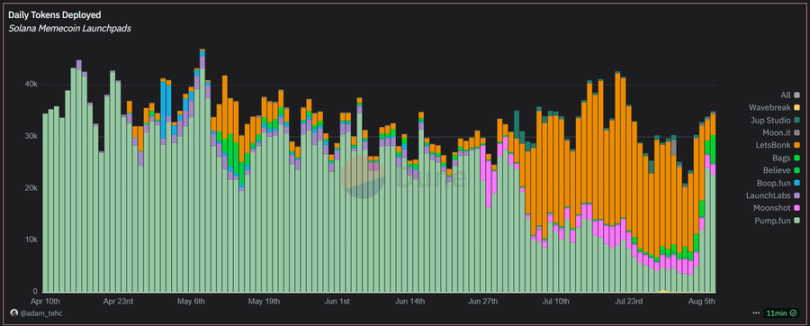
当时 LetsBonk 在交易量(每日 1.79 亿美元 vs. 5200 万美元)和手续费收入(过去 30 天内 1451 万美元 vs. 2329 万美元)方面也处于领先地位。

然而,最近 Pumpfun 出现了逆转,24 小时内创建了超过 15,000 枚代币,超越了竞争对手。
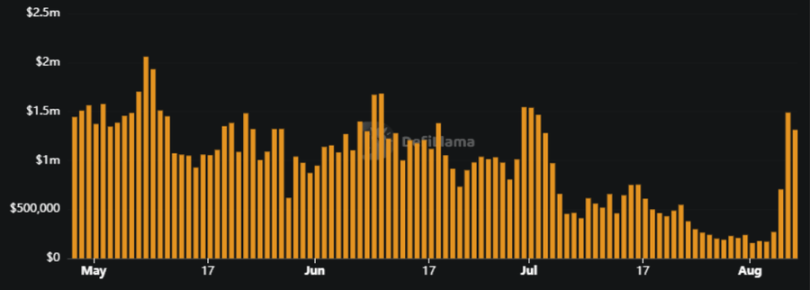
Pumpfun 收入
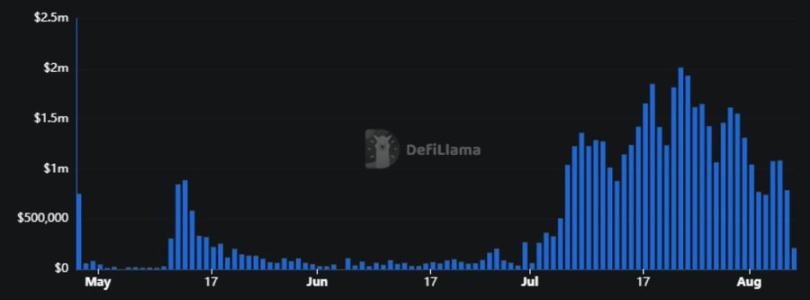
LetsBonk 收入

围绕 Solana 的 BONK 代币构建 LetsBonk 以「社区优先」的理念进行营销。它推出了一种治理代币,并为创作者提供 1% 的交易手续费分成,远高于 Pumpfun 后来提供的 0.05%。团队明确将手续费重新投入生态,例如 LetsBonk 手续费的 50% 用于回购并销毁 BONK,8% 存入储备金,这一举措深受用户欢迎。

到了 7 月,社区情绪开始反对 Pumpfun 的「圈钱」策略,许多早期用户在 7 月 12 日 PUMP 代币首次代币发行后抛售,尽管此次 ICO 筹集了高达 5 亿美元的资金。代币价格在推出后立即从历史高点暴跌超过 50%,迫使 Pumpfun 启动数亿美元的回购计划来稳定价格。

面对压力,Pump.fun 调整了策略尝试赢回市场份额。5 月它开始与代币创作者分享 0.05% 的交换手续费,这一举措旨在抑制即时 rug-pulls,并奖励持续的社区建设。

8 月 8 日最新更新更是朝着这一方向迈出了大胆的一步。

Pumpfun 宣布推出「Group Coins」(团队代币),这是一套功能集,支持基于团队的代币发行,为 Meme 币创作者提供的协作工具。此次更新引入了「创建小队」(多个开发者可以共同发行代币)、用于项目资金的多签钱包,以及竞争性发行类别(例如新代币的排行榜或竞赛)。

目标是让混乱的 Meme 市场更具结构和信任度,同时从根本上解决 Pumpfun 长期存在的「一波流」问题,如拉地毯骗局、不活跃的代币、交易量稀释等。通过让团队发行代币并要求多签控制,Pumpfun 旨在遏制单人诈骗代币,并鼓励由社区驱动的长期项目。这也是 Pumpfun 试图通过营造社交和协作氛围,与 BONKBot 的生态系统形成差异化竞争。

值得注意的是,「Group Coins」更新紧随 Pumpfun 的其他重大举措(手续费分成更新和 PUMP 代币发行)之后。这是其重新吸引那些涌向 LetsBonk 的创作者和交易者更广泛战略的一部分。如果早期的批评是 Pumpfun 的开发者只是将手续费收入囊中而忽视了社区,那么最近的这些变化直接回应了这一说法。例如,Pumpfun 现在与创作者分享收入,并暗示未来可能会与 PUMP 代币持有者分享收入。

通过为「创建小队」提供多签安全保障,该平台传递了对合法性的承诺;没有人希望遭遇拉地毯骗局,而多签团队可以帮助过滤不良行为者。简而言之,Pumpfun 正在通过将社区激励和保障措施注入其模式来追赶对手,而 LetsBonk 从一开始就优先考虑了这些。

Solana 的 Meme 币社区立即注意到了 Pumpfun 的「Group Coins」公告,许多人认为这是一个聪明的转变。Pumpfun 的联合创始人 @a1lon9 几天前曾预告「将有一个关于有机社区代币的重大公告」,而实际更新确实带来了一丝乐观情绪。

一些 推特上的交易者称赞团队发行的想法是「将更多合法团队引入 Meme 币」。也有人希望多签控制能恢复一些信任,成为对狂野西部式拉地毯文化的解药。

Pumpfun 的代币价格甚至在消息公布后的几天内上涨了 15%,部分得益于至少一位「鲸鱼」的押注:8 月 5 日,链上侦探发现一位鲸鱼购买了 10.6 亿枚 PUMP 价,值 330 万美元,并在更新前开设了 3 倍多头头寸。这种大额押注表明,内部人士预计 Pump.fun 将通过这些变化重新赢得用户和交易量。

与此同时,怀疑者也不乏其人。社区中有人开玩笑说「Group Coins」不过是「Group Rugs」,暗示不诚实的开发者可能会联手诈骗。在 X 上,有影响力的交易者 Byzantine General 严厉批评 Pumpfun 的衰落是「失败」和「一代人的失误」,并怀疑新功能能否完全挽回损失。「他们曾经拥有所有的市场份额,却彻底搞砸了……不知怎么就把市场丢了,真是可笑,」他直言不讳地指出。

从这个角度来看,Pumpfun 的声誉不会在一夜之间修复。批评者还指出,LetsBonk 仍然为创作者提供更丰厚的激励(1% 的手续费分成 vs. Pumpfun 的 0.05%),因此 Pumpfun 可能需要做得更多才能赢回顶级 Meme 创作者。

展望与预测

那么,这一切对 Pumpfun 与 BONKBot 的未来竞争意味着什么?短期内,Pumpfun 的「Group Coins」更新可能会缩小两者之间的差距。目前,Pumpfun 已经在每日代币发行量上重新领先,这表明一些创作者正在回归 Pumpfun。

如果新功能按预期运作,团队发行功能可能会加速这一趋势。我们可能会看到更多由团队(如影响者联盟、开发者合作、DAO 式社区)形成的 Meme 项目选择 Pumpfun 作为启动平台。这发挥了 Pumpfun 在数量上的传统优势,同时增加了一层质量控制。

换句话说,如果多签小队流行起来,Pumpfun 代币的平均「严肃性」可能会上升。更多合法项目和更少的一次性骗局可能会吸引那些原本坚持使用 LetsBonk 的交易者。这是 Pumpfun 试图将其形象从「赌场」转变为更具社区驱动性的事物,同时不完全失去投机属性。
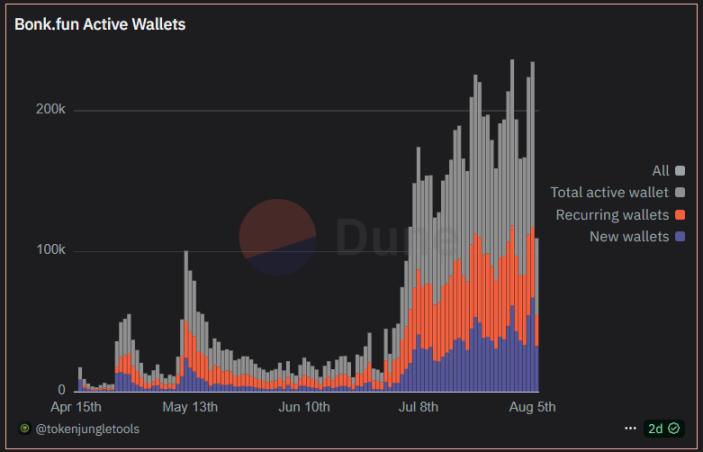
LetsBonk 每日活跃钱包

然而,BONKBot 并未停滞不前。LetsBonk 仍然拥有一个硬核社区和品牌,并且在过去几个月里一直比 Pumpfun 更具创新性。

Pumpfun 的迟来回应解决了一些问题,但 BONKBot 可能会以同样的方式回击。如果 Pumpfun 的 PUMP 代币开始为持有者提供额外福利,如手续费折扣或收入分成以及这些新的发行功能,LetsBonk 可能会通过发行一种进一步激励其社区的代币来应对,例如空投或为使用其平台的创作者和交易者提供更大奖励。

事实上,LetsBonk 已经将其手续费的 50% 用于回购和销毁 BONK 并支持验证者,从而间接奖励其生态系统。为了跟上步伐,Pumpfun 可能需要考虑增加创作者奖励或为 PUMP 持有者引入新的激励措施。竞争压力正在加剧,这是一场功能和回馈的「军备竞赛」,最终将使 Solana 的 Meme 币交易者受益,社区将获得更好的条件。
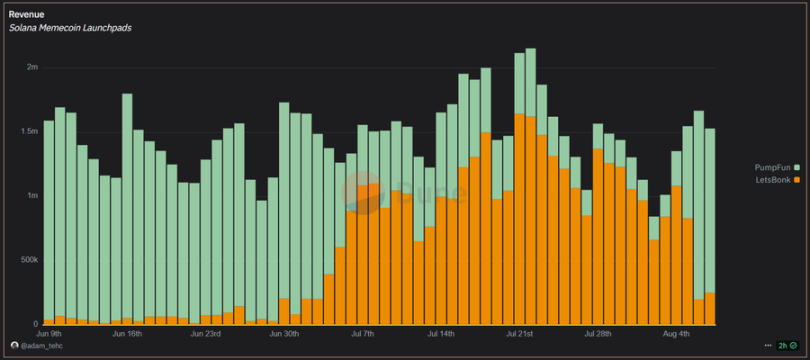
Pumpfun 与 LetsBonk 收入比较

从交易者的角度来看,Pumpfun 的短期前景谨慎乐观。该平台显然正在努力重获信誉,如果「Group Coins」能促成一些头条新闻级别的代币发行,这将验证 Pumpfun 的策略是正确的。

未来几周我们可能会看到 Pumpfun 的市场份额逐步回升至 50% 以上。一些交易者已经开始为这一逆转布局。PUMP 的价格走势 8 月至今上涨约 30% 以上,这表明,人们对 Pumpfun 的信心正在增强。此外更多的结构升级可能会吸引更多流动性:此前因拉地毯风险而回避 Pumpfun 的大玩家,如果多签团队成为常态,可能会尝试入场。

另一方面 BONKBot 的前景依然强劲。它在用户信任和社区情绪方面仍处于领先地位。许多交易者真心喜欢 BONK 生态系统的氛围和透明度。即使 Pumpfun 在数量上重新占据优势,LetsBonk 仍然拥有忠诚的用户。

Pumpfun 的新功能不仅需要带来更多的代币发行,还需要提升活跃交易量和用户留存率,才能真正在长期竞争中击败 BONKBot。我们必须观察 Pumpfun 代币的平均生命周期(和交易量)是否会随着团队发行而增加。如果没有,而更新仅仅是催生了「团队拉高出货」,那么 Pumpfun 可能仍未解决其核心问题,而 BONKBot 可能会继续在交易量和手续费收入等关键指标上领先。

总结

Pumpfun 与 BONKBot 的竞争核心在于社区激励与平台信任度的比拼。BONKBot 凭借高额手续费分成(1%)和生态回购机制早期占据优势,而 Pumpfun 近期通过「Group Coins」(多签团队发行)和微薄分成(0.05%)试图挽回流失用户。

Pumpfun 的「Group Coins」更新是这场竞争的关键时刻。它表明 Pumpfun 正在从纯粹的速度和「圣诞树式」发行转向更接地气的策略,可以说是借鉴了 BONKBot 的社区优先策略。

对于 Solana 的 Meme 币交易者来说,这是一个好消息:竞争正在迫使每个平台改进发行方式、引入更公平的奖励机制并推动更多创新。如果 Pumpfun 能够抓住这一势头,它现在有机会缩小与 BONKBot 的差距。未来几周请密切关注 ,社区情绪已经从彻底的敌意转变为希望与怀疑并存。

归根结底,Pumpfun 的最新举措可能会在 2025 年底前拉平与 BONKBot 的竞争格局。预计 Solana 的 Meme 币市场将保持波动和高度竞争,但相比几个月前可能会更加健康。

如果「Group Coins」成功,单人圣诞树式骗局的时代可能会逐渐消失,我们将看到更多由团队驱动的 Meme 项目争夺下一个百倍收益,为交易者在 Pumpfun 和 BONKBot 上提供新的机会。

随着「团队代币」时代的展开,我们将继续关注相关进展。但就目前而言,这场竞赛远未结束,而对于身处其中的我们来说,这是看涨的信号。

Lecturas Relacionadas

Three Years Later: Looking Back at My Predictions About ChatGPT in 2023

Three Years Later: Revisiting My 2023 Predictions on ChatGPT In March 2023, shortly after ChatGPT's launch, I made 20 predictions about its future. Now, in mid-2026, I've used AI agents to fact-check each one against the latest data. Overall, most major directional forecasts were correct, with only one outright error (incorrectly stating GPT-4 had 100 trillion parameters). Key successes included predicting that RAG and retrieval architectures would become the standard for handling knowledge and hallucinations, that natural language interfaces (LUI) would create a massive new industry layer beyond the models themselves, and that China would develop viable large language models, significantly closing the performance gap with Western counterparts within about three years. Predictions about the absence of mass unemployment, the rise of a new "robot network" for agent communication, and ChatGPT not possessing consciousness also held true in their core arguments. However, the "devil was in the details." Errors frequently involved specific numbers, timelines, or overlooking distributional effects. I tended to overestimate the speed of adoption (e.g., for agent networks) while underestimating the ultimate scale of capabilities or costs (e.g., AI winning IMO gold without tools, or the extreme capital required for frontier models). Other misjudgments included: underestimating how AI would reinforce, not dissolve, information filter bubbles; incorrectly assuming AI-generated content would easily circumvent copyright (it has instead triggered record-breaking settlements); and misidentifying where value would be captured (it accrued overwhelmingly to the compute layer, like Nvidia, not just the application or model layers). Key lessons from reviewing these predictions are: 1) Directional and mechanistic insights are far more reliable than precise numbers or absolute statements. 2) There's a consistent bias to overestimate short-term speed but underestimate long-term magnitude. 3) Errors often lie in missing distributional impacts within a generally correct aggregate trend. 4) Predictions phrased with nuance and caveats aged the best. 5) Some fundamental debates (e.g., on machine consciousness or the ultimate value chain) remain unresolved even after three years. This exercise is less about scoring the past and more about establishing rules for clearer thinking about the next three years of AI.

marsbitHace 12 min(s)

Three Years Later: Looking Back at My Predictions About ChatGPT in 2023

marsbitHace 12 min(s)

Three Years Later: Looking Back on My 2023 Predictions for ChatGPT

Looking Back After Three Years: Revisiting My 2023 Predictions on ChatGPT In March 2023, shortly after ChatGPT's debut and before GPT-4's release, I made over twenty predictions about AI's future based on limited information and intuition. Now, in May 2026, I revisited those forecasts using an AI-driven analysis with 41 Opus 4.8 agents to cross-reference them with the latest data. The assessment used symbols: ✅ Correct, 🟢 Mostly Correct, 🟡 Partially Correct, ❌ Incorrect. Overall, the directional judgments held up well, with only one major factual error regarding GPT-4's rumored parameter size (incorrectly cited as 100T). However, nuances and degrees of accuracy revealed more. **What Was Largely Correct:** Predictions about mechanisms and directions proved accurate. The rise of RAG (Retrieval-Augmented Generation) as the standard architecture for combating AI hallucination was confirmed, as was the transformative potential of LUI (Language User Interface) in creating a new industry layer atop GUIs. The emergence of "robot networks" (agent-to-agent communication protocols) and China's rapid catch-up in developing capable large models (closing the performance gap with top models to ~2.7%) were also on point. The analysis affirmed that LLMs lack consciousness and that the Turing Test merely measures perceived intelligence. **What Was Off Target:** Errors often involved specific numbers, over-optimistic timelines, or misjudged distributions. The prediction that value would primarily accrue to the application layer was half-right but missed NVIDIA's dominance as the profitable infrastructure layer. Forecasts about AI circumventing copyright issues and fostering a "global common ground" by averaging human viewpoints were incorrect; instead, major copyright settlements occurred and AI personalization is increasing. Estimates for model training costs ("$5-10 billion cap") were significantly off, underestimating frontier costs and overestimating replication costs. The notion that LLMs could never do complex math without tools was disproven by later models winning IMO gold. **Key Patterns from the Review:** 1. **Direction over precision:** Judgments about mechanisms and trends were more reliable than specific numbers or definitive statements. 2. **Timing bias:** There was a tendency to overestimate short-term speed but underestimate long-term magnitude and transformation. 3. **The distribution blind spot:** Aggregate-level correctness often masked uneven impacts (e.g., on young professionals' employment). 4. **The value of qualifiers:** Predictions framed with caution (e.g., "reportedly," "for now," "prototype in 2-3 years") aged better. 5. **Some debates continue:** Issues like the nature of "emergent abilities" or machine consciousness remain unresolved. This three-year review highlights that while seeing the big picture is crucial, humility regarding specifics, timelines, and disparate impacts is essential for future forecasting.

链捕手Hace 2 hora(s)

Three Years Later: Looking Back on My 2023 Predictions for ChatGPT

链捕手Hace 2 hora(s)

AI Bubble Warning: AI Investments Are Negative Returns for Most Tech Giants

The article issues a stark warning about a potential AI investment bubble. It notes that while the AI boom shares similarities with the TMT bubble of the late 1990s, its scale is vastly larger, currently driving 93% of U.S. GDP growth. Major hyperscale cloud providers like Microsoft, Alphabet, Amazon, Meta, and Oracle are planning to invest trillions in AI data centers over the coming years. However, calculations based on analyst projections for 2025-2030 reveal a concerning math problem: expected capital expenditure growth far outpaces projected revenue growth. Even under an extremely optimistic scenario of zero costs, the implied return on investment for most of these tech giants (except Amazon) is deeply negative. This suggests that the current trajectory could lead to one of history's largest shareholder value destruction events. The piece outlines two potential escapes: AI generating vastly more revenue than currently anticipated—a near-impossible task—or a significant cutback in the planned investment splurge. The latter scenario could trigger a domino effect, severely impacting the entire tech supply chain (from Nvidia to TSMC), potentially pushing the U.S. economy into recession, and causing a major stock market downturn. The author suggests upcoming high-profile IPOs by companies like OpenAI and Anthropic might represent a transfer of risk from early investors to public market participants. While the peak of the hype cycle might sustain investment through 2026, the fundamental financial dilemma remains unresolved, setting the stage for a potential market correction in 2027 or 2028, similar to the years following Alan Greenspan's "irrational exuberance" warning.

marsbitHace 3 hora(s)

AI Bubble Warning: AI Investments Are Negative Returns for Most Tech Giants

marsbitHace 3 hora(s)

From Tokens to Machine Labor: AI is Shifting from Tool to "Worker"

The article "From Token to Machine Labor: AI is Evolving from Tool to 'Worker'" argues that the business model for AI is shifting beyond simply selling computational resources (tokens, GPU hours) or model access. Instead, a new "machine labor market" is emerging, where the core economic transaction is the purchase of economically useful work directly performed by software. The central thesis is that AI pricing will evolve through four stages: 1) raw tokens, 2) standardized LLM capabilities (e.g., text generation), 3) industry-specific labor markets (e.g., legal review, radiology), and finally 4) a programmable results market where tasks like resolving a support ticket are bid on and priced based on outcome. In this future, buyers will care less about *which* model or GPU completes a task and more about whether the work meets specified standards for accuracy, latency, and cost. This transition reframes the impact of AI on human labor. Rather than simple replacement, it suggests a re-coordination where machines handle standardized, verifiable work, freeing humans for roles involving oversight, context management, responsibility, and final judgment. In some cases, this "last 1%" of human input becomes more valuable as it enables the other 99% to be automated. Furthermore, as AI reduces the cost of work, demand may expand, creating larger markets (e.g., 24/7 customer service) rather than just cheaper versions of existing ones. The article concludes that while infrastructure (GPUs, models, tokens) remains crucial upstream, the market is converging on a simpler, tradeable unit: machine labor that can be defined, measured, priced, and procured based on contractible specifications.

marsbitHace 3 hora(s)

From Tokens to Machine Labor: AI is Shifting from Tool to "Worker"

marsbitHace 3 hora(s)

Xiaomi MiMo's 99% Price Cut is Not Marketing! Luo Fuli Posts on X to Refute Critics

The price of Xiaomi's MiMo-V2.5 series API has been permanently reduced by up to 99%, specifically for the "Input (Cache Hit)" cost, which covers users re-reading historical context in long conversations. MiMo's head, Luo Fuli, published a detailed technical blog to clarify that this drastic price cut stems from genuine engineering breakthroughs, not a marketing stunt or a simple price war. The core of the achievement lies in six key engineering optimizations. First, the model architecture adopts a Hybrid Sliding Window Attention (SWA), reducing the memory footprint (KVCache) to 1/7th of a traditional model. Second, a dual-pool memory management system actually utilizes these savings, allowing a single GPU to handle over 5 times more concurrent users. Third, an upgraded prefix caching mechanism achieves a cache hit rate of 93-95% for repeated reads, meaning most such requests bypass GPU computation entirely. Fourth, a self-developed distributed cache (GCache) utilizes idle SSD space on existing GPU servers, eliminating additional storage costs. Fifth, an intelligent scheduling system (LLM-Router) efficiently routes requests to maximize cache reuse and performance. Sixth, Multi-Token Prediction (MTP) accelerates the model's text generation ("output") side. Together, these systemic optimizations dramatically lower the real computational cost per request, enabling the 99% price reduction for cached inputs while reportedly maintaining positive gross margins. Luo Fuli's disclosure aims to shift the narrative from "price war" to a demonstration of substantive AI engineering progress.

marsbitHace 5 hora(s)

Xiaomi MiMo's 99% Price Cut is Not Marketing! Luo Fuli Posts on X to Refute Critics

marsbitHace 5 hora(s)

Trading

Spot
Futuros

Artículos destacados

Qué es MEME 2.0

Memecoin 2.0: El Ascenso de $MEME 2.0 en el Mundo de las Criptomonedas Introducción En el panorama siempre cambiante de las criptomonedas, ha surgido un nuevo contendiente. Memecoin 2.0, simbolizada como $MEME 2.0, lleva el concepto de las monedas meme a un emocionante nuevo nivel. Como un subproducto del Memecoin original, este proyecto ha capturado la atención de la comunidad cripto al cambiar el enfoque de los incentivos financieros típicos a una experiencia comprometida y entretenida. Operando en la blockchain de Ethereum, Memecoin 2.0 redefine audazmente la participación de la comunidad en la esfera cripto. ¿Qué es Memecoin 2.0, $MEME 2.0? En su núcleo, Memecoin 2.0 es un proyecto de criptomoneda que prioriza el espíritu comunitario y la diversión asociada con la cultura meme. A diferencia de las criptomonedas convencionales, que se concentran en casos de uso prácticos y beneficios tangibles, Memecoin 2.0 se distingue al abrazar el lado más liviano de la moneda digital. El proyecto existe sin promesas de utilidad, un mapa estructurado o retornos financieros, enfocándose en cambio en fomentar una comunidad vibrante centrada en memes y en el disfrute compartido. Al hacerlo, aprovecha la creciente tendencia de la cultura meme en el espacio en línea, convirtiéndose en un jugador único en el mundo de los activos digitales. Creador de Memecoin 2.0, $MEME 2.0 A pesar de la extensa investigación sobre los orígenes de Memecoin 2.0, la identidad explícita de su creador sigue siendo desconocida. Esta anonimidad no es inusual en la comunidad cripto, donde muchos proyectos son liderados por individuos o grupos que prefieren permanecer en las sombras. La falta de información disponible públicamente sobre el creador podría verse como un movimiento estratégico, poniendo el foco en la participación comunitaria en lugar de la notoriedad individual dentro del espacio. Inversores de Memecoin 2.0, $MEME 2.0 La información sobre los inversores o el respaldo financiero de Memecoin 2.0 es escasa. Esta ausencia de detalles puede sugerir que el proyecto es autofinanciado o que su enfoque en la comunidad en lugar de las estructuras de inversión tradicionales ha atraído a un tipo diferente de apoyo. Dado que el mundo de las monedas meme generalmente involucra una participación más de base en lugar de inversión institucional, este enfoque está alineado con la ética de los proyectos impulsados por la comunidad. ¿Cómo Funciona Memecoin 2.0, $MEME 2.0? Memecoin 2.0 opera completamente en la blockchain de Ethereum, capitalizando sus robustas características de seguridad y escalabilidad. Al aprovechar las fortalezas de Ethereum, Memecoin 2.0 puede ofrecer un entorno seguro para las interacciones de los usuarios, asegurando que las transacciones sean tanto eficientes como rentables. Uno de los atributos únicos de Memecoin 2.0 radica en su estructura impulsada por la comunidad. El valor y la popularidad del token $MEME 2.0 derivan de la participación activa de sus usuarios, en vez de de una utilidad inherente. Este diseño refuerza el enfoque del proyecto en el aspecto de entretenimiento de las criptomonedas, lo que implica que la risa y la participación comunitaria son las verdaderas monedas que impulsan su éxito. Además, el proyecto encaja dentro del ecosistema más amplio de las monedas meme, donde el valor de cada moneda meme oscila basado en la cultura, tendencias y la participación de la comunidad, en lugar de principios económicos tradicionales. Cronología de Memecoin 2.0, $MEME 2.0 Para entender mejor la evolución y los hitos de Memecoin 2.0, aquí hay una cronología que destaca eventos significativos en su historia: 2024: Se reconoce la creación de Memecoin 2.0 como una ramificación del Memecoin original, estableciéndose dentro del contexto próspero de las monedas meme mientras opera en la blockchain de Ethereum. 13 de julio de 2024: Memecoin 2.0 se posiciona oficialmente como una moneda meme centrada en la comunidad en la red de Ethereum, enfatizando su enfoque centrado en el entretenimiento que invita a los usuarios a participar y crecer. Puntos Clave Sobre Memecoin 2.0, $MEME 2.0 Varios rasgos críticos definen a Memecoin 2.0: Enfoque Centrado en la Comunidad: La misión principal de Memecoin 2.0 es crear una experiencia comunitaria divertida y atractiva, capitalizando en el disfrute colectivo derivado de la cultura memética. Construido sobre Ethereum: Operar en la blockchain de Ethereum proporciona al proyecto una infraestructura esencial que garantiza seguridad y escalabilidad. Falta de Utilidad o Hoja de Ruta: En un notable desvío de las criptomonedas tradicionales, Memecoin 2.0 no promete características utilitarias ni retornos financieros, reafirmando su compromiso con la participación comunitaria y el compromiso social. Enfoque en la Cultura Memética: Al abrazar los aspectos humorísticos y culturales del fenómeno meme, Memecoin 2.0 proporciona una plataforma para que los usuarios interactúen con cripto tanto fuera de línea como en línea. Contexto Adicional: La Importancia de las Monedas Meme Las monedas meme han surgido como una clase distinta de criptomonedas, a menudo impulsadas por el humor y un enfoque desenfadado para el comercio. Estas monedas generalmente carecen de una utilidad significativa o hojas de ruta de desarrollo, atrayendo a los usuarios con la promesa de diversión, interacción comunitaria y relevancia cultural. En el panorama del ecosistema cripto más amplio, las monedas meme reviven la importancia de la participación comunitaria, revirtiendo enfoques únicamente motivados por el lucro. Proyectos como Memecoin 2.0 inauguran una era donde el entretenimiento puede armonizar con las aspiraciones financieras, convirtiendo la blockchain en un parque de diversiones para la creatividad y la interacción social. Conclusión Memecoin 2.0, o $MEME 2.0, encarna una nueva ola de criptomonedas que prioriza la participación comunitaria sobre estructuras financieras rígidas. Con un enfoque en el humor y la interacción social, capitaliza sobre la fascinación que rodea la cultura meme. Al operar en la blockchain de Ethereum, Memecoin 2.0 aprovecha las capacidades de la tecnología mientras se mantiene firme en su compromiso con el valor de entretenimiento de la moneda digital. A medida que el espacio alrededor de las criptomonedas continúa evolucionando, Memecoin 2.0 sirve como un testimonio de la noción de que el futuro de los activos digitales podría depender, en gran medida, de experiencias compartidas, risas y sólidas conexiones comunitarias. En el mundo impredecible de las criptomonedas, quizás la alegría pueda ser tan valiosa como la ganancia financiera tradicional.

95 Vistas totalesPublicado en 2024.04.04Actualizado en 2024.12.03

Qué es MEME 2.0

Cómo comprar MEME

¡Bienvenido a HTX.com! Hemos hecho que comprar Memeland (MEME) sea simple y conveniente. Sigue nuestra guía paso a paso para iniciar tu viaje de criptos.Paso 1: crea tu cuenta HTXUtiliza tu correo electrónico o número de teléfono para registrarte y obtener una cuenta gratuita en HTX. Experimenta un proceso de registro sin complicaciones y desbloquea todas las funciones.Obtener mi cuentaPaso 2: ve a Comprar cripto y elige tu método de pagoTarjeta de crédito/débito: usa tu Visa o Mastercard para comprar Memeland (MEME) al instante.Saldo: utiliza fondos del saldo de tu cuenta HTX para tradear sin problemas.Terceros: hemos agregado métodos de pago populares como Google Pay y Apple Pay para mejorar la comodidad.P2P: tradear directamente con otros usuarios en HTX.Over-the-Counter (OTC): ofrecemos servicios personalizados y tipos de cambio competitivos para los traders.Paso 3: guarda tu Memeland (MEME)Después de comprar tu Memeland (MEME), guárdalo en tu cuenta HTX. Alternativamente, puedes enviarlo a otro lugar mediante transferencia blockchain o utilizarlo para tradear otras criptomonedas.Paso 4: tradear Memeland (MEME)Tradear fácilmente con Memeland (MEME) en HTX's mercado spot. Simplemente accede a tu cuenta, selecciona tu par de trading, ejecuta tus trades y monitorea en tiempo real. Ofrecemos una experiencia fácil de usar tanto para principiantes como para traders experimentados.

206 Vistas totalesPublicado en 2024.12.12Actualizado en 2025.03.21

Cómo comprar MEME

Discusiones

Bienvenido a la comunidad de HTX. Aquí puedes mantenerte informado sobre los últimos desarrollos de la plataforma y acceder a análisis profesionales del mercado. A continuación se presentan las opiniones de los usuarios sobre el precio de MEME (MEME).

活动图片