【Introduction】Absolutely horrifying! An Australian influencer with 3 million followers actually used AI to fabricate an entire orphanage out of thin air. Fake trophies, fake refugees, fake charity—a textbook-level AI charity scam is wildly harvesting public goodwill.
An Instagram account with nearly 3 million followers.
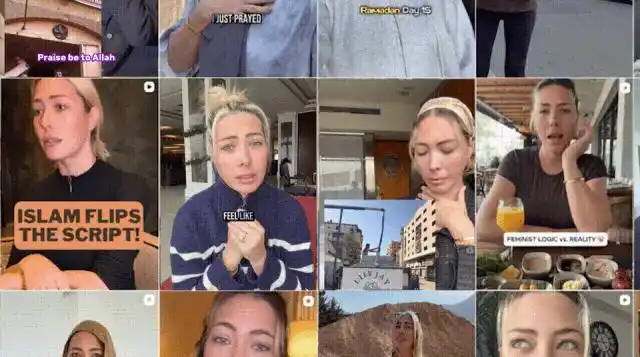
In the footage, a blonde woman in a headscarf beams with joy, surrounded by a group of African children, each holding a lollipop.
She cheers at the camera, "Praise be to Allah, the orphanage is open"!
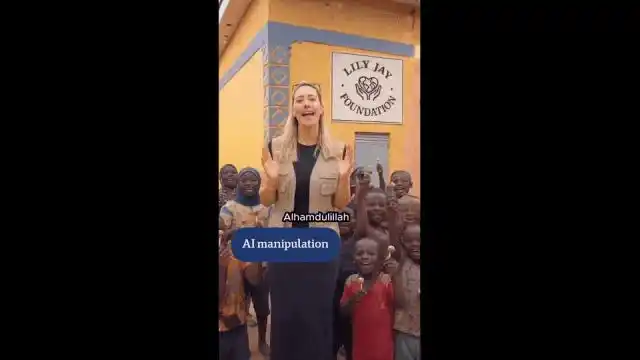
She has built mosques, delivered bread to Gaza refugees, built new homes for orphans in Uganda—the "Lily Jay Foundation" logo on the banner behind her is particularly eye-catching.
Millions of Muslims regarded her as an idol, offering real money to support her "worldwide charity".
And then?
The woman announcing the orphanage opening was not the real Lily Jay. Those children holding lollipops were fake. The foundation banner behind her was also fake.
Every single frame was AI-generated.
Recently, ABC's verification program ABC NEWS Verify peeled back the layers of this "Charity Goddess" to reveal a complete AI forgery production line.
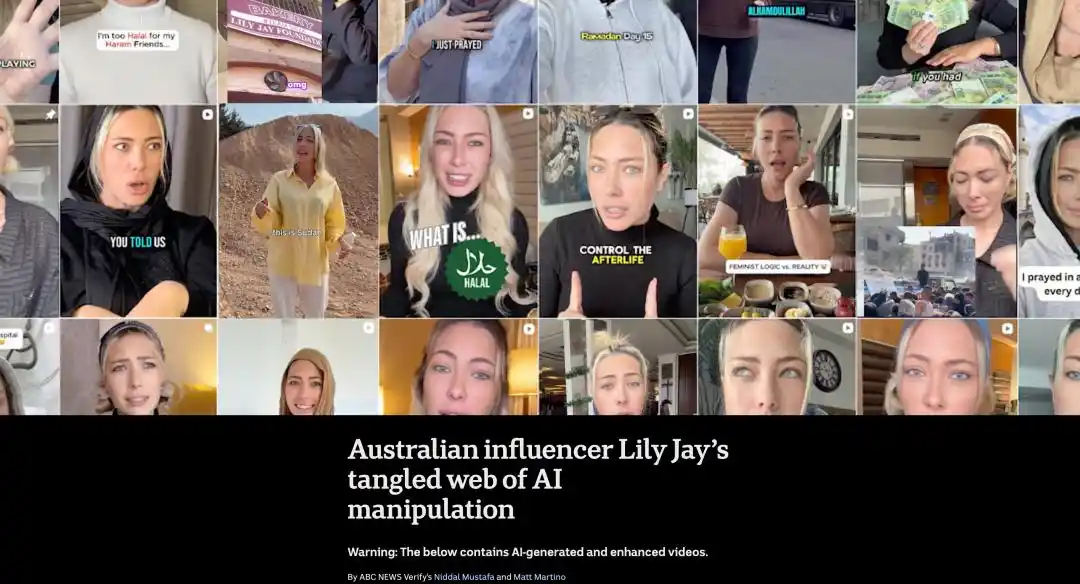
Charity Goddess, Amassing 3 Million Followers
Lily Jay, an Australian influencer.
On social media, she prominently documented her conversion to Islam.
Her blonde hair often tucked under a headscarf, paired with enthusiastic videos about faith, garnered her nearly 3 million loyal followers among Muslims worldwide.
Subsequently, she established the "Lily Jay Foundation", which also received overwhelming support.
The foundation claimed that since last September, it had been doing good in four locations: Nepal, Gaza, Uganda, and Sudan: building mosques, distributing food, and providing education.
At the end of each video, she solicited public donations.
Thus, a perfect persona—loving faith, loving charity, and personally on the front lines—was established.
Charity Scenes, Full of Flaws
But a lie cannot be hidden forever.
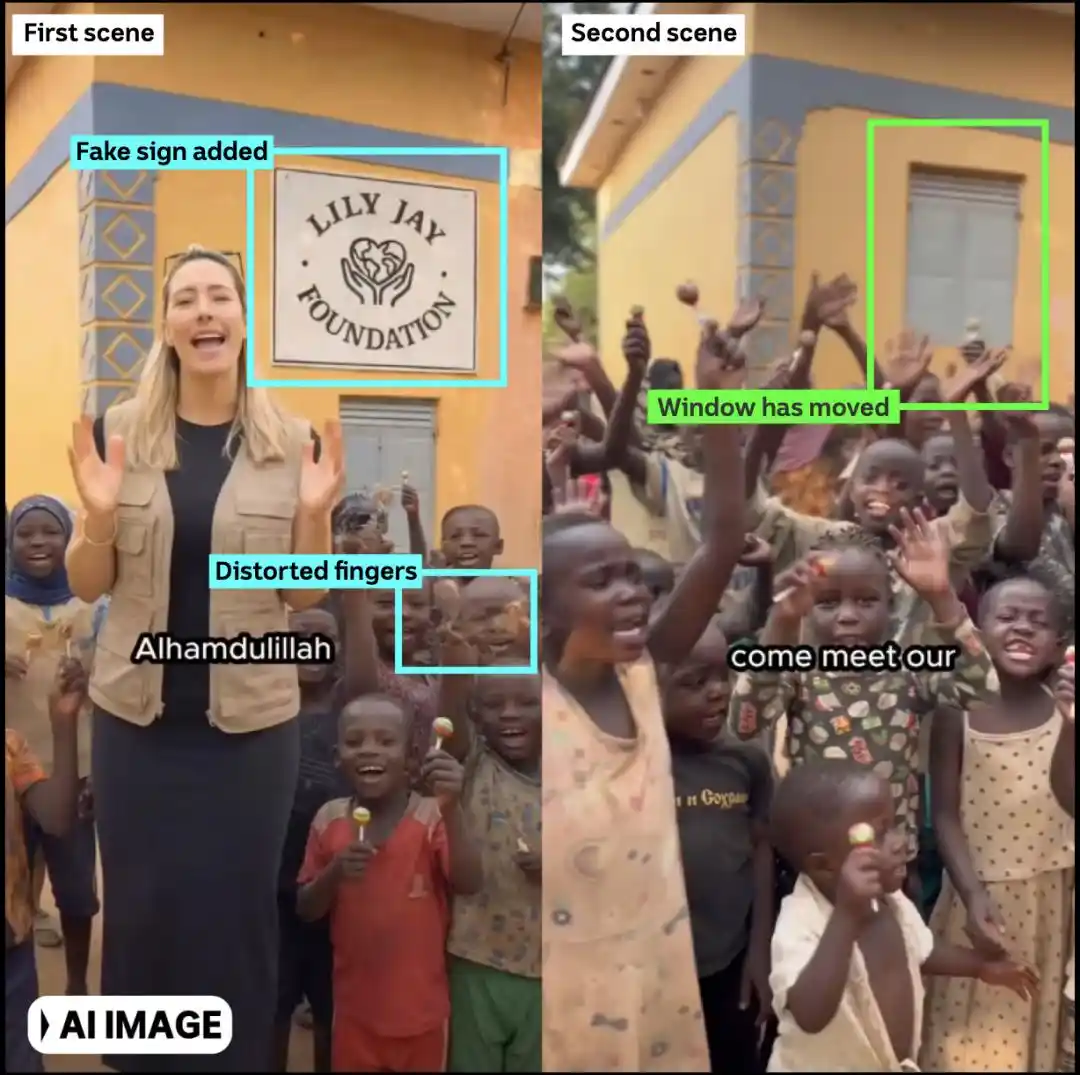
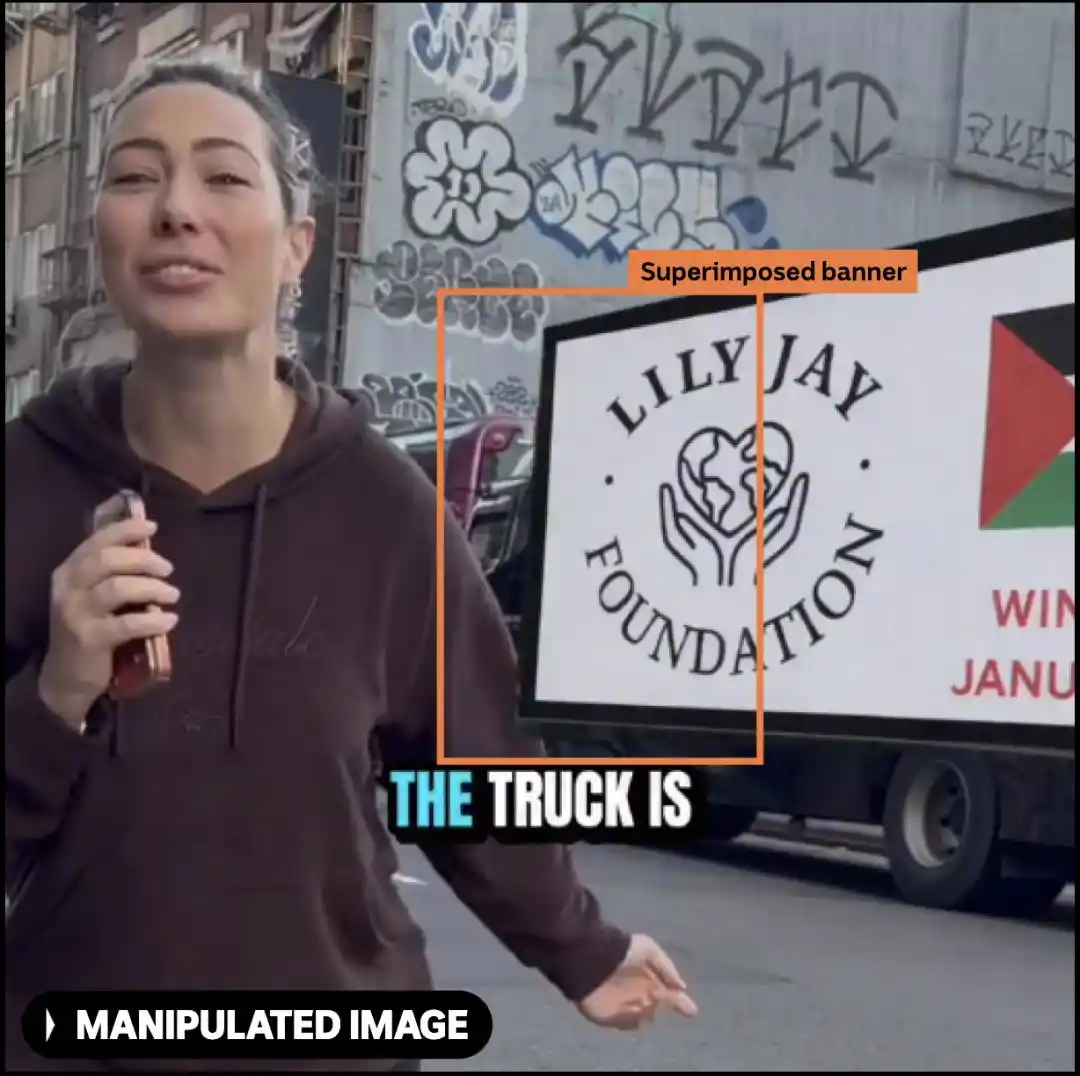
In that Uganda orphanage video, the cheering woman, the children with lollipops, and the banner behind them were all fabricated by AI from nothing.
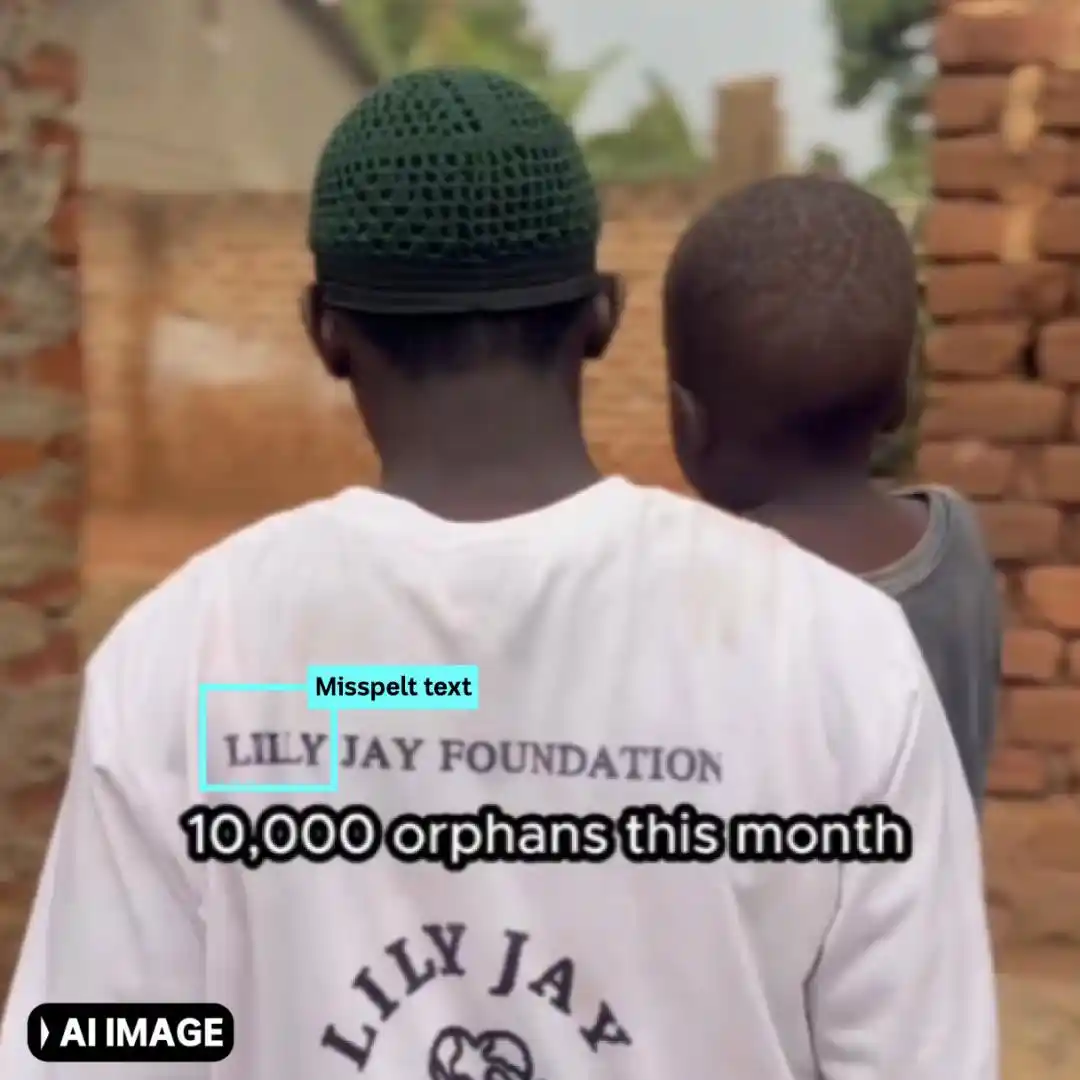
What's more damning, a letter L inexplicably appeared on the back of a t-shirt worn by a "foundation staff member". This is the most typical spelling error of AI-generated images.
Following the leads, more and more flaws emerged.
In Uganda, opening an orphanage without registration is illegal.
The local registration agency initially explicitly told ABC: No such orphanage exists, whether under the foundation's name or the orphanage name "Ada Nur" listed on the official website.
Days after ABC sent inquiries, a registration for "Lilly Foundation Limited" suddenly appeared, but its status was—"non-compliant".
Then there was that glossy trophy.
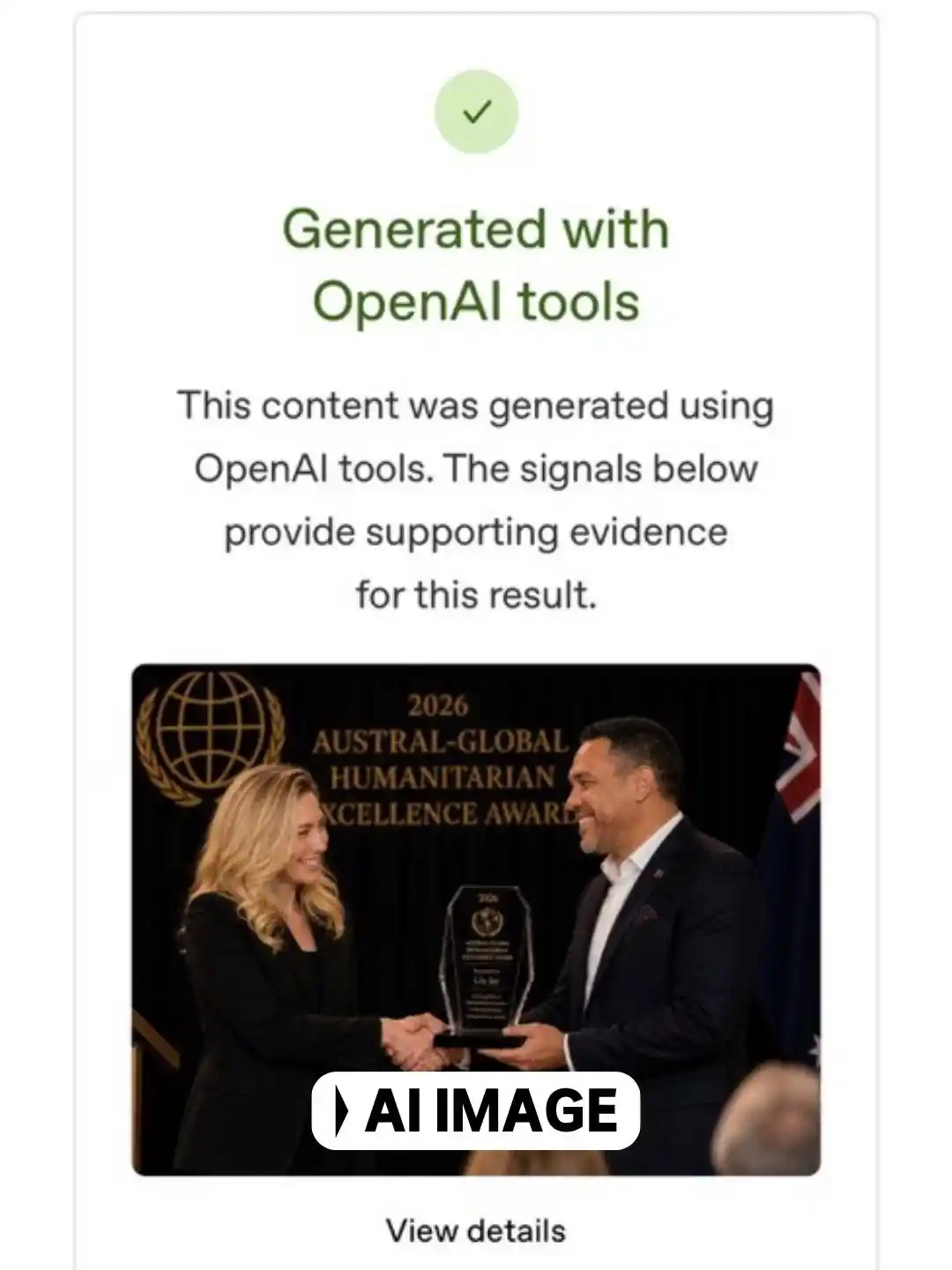
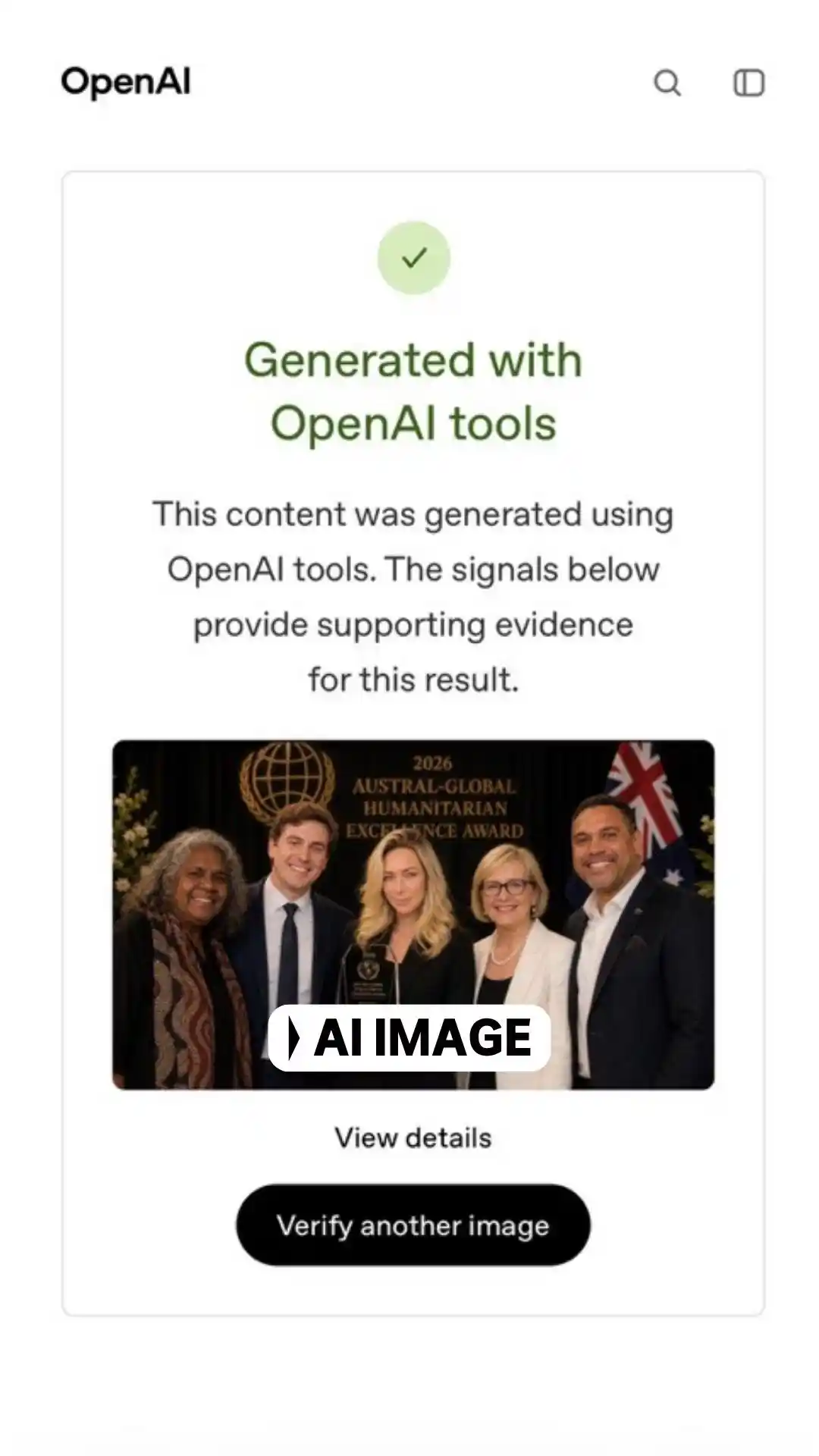
In May this year, a press release announced Lily Jay had won the "2026 Austral-Global Humanitarian Excellence Award", accompanied by two photos of her receiving the award.
Analysis found both images carried ChatGPT's SynthID invisible watermark—entirely AI-generated.
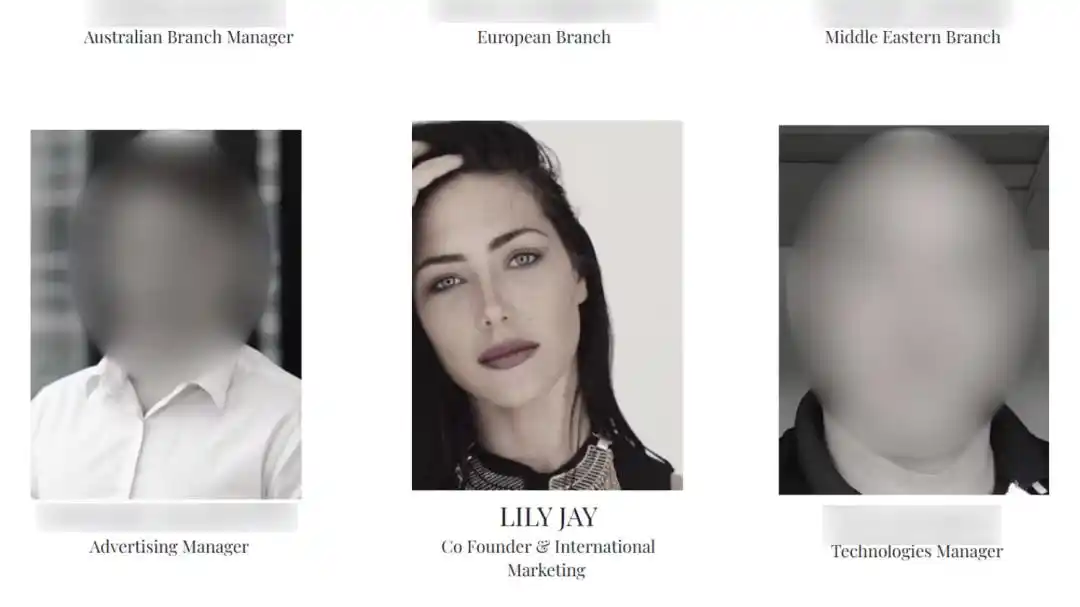
The PR company Real Media Group, which issued this press release, referred to her as a "client" on one hand, while listing her as a "co-founder" on their team page.
As for that "bakery" supposedly operating in Gaza, dedicated to delivering humanitarian supplies, ABC could neither locate it nor find any corroborating evidence.
Humanitarian agencies that have worked in Gaza for years had never heard of it.
A Carefully Crafted Scam
If you think this was just a few staged videos, you're being naive.
Hidden in the most inconspicuous corner of the foundation's website is a confession: it is not a charity organization at all.
And the real Lily Jay—born Lily Jay Hinson, 31, from Australia.
She worked in music and dance earlier before transitioning into an Islamic influencer. Her personal social accounts flaunt a life of luxury: business class flights, luxury cars, and expensive jewelry.
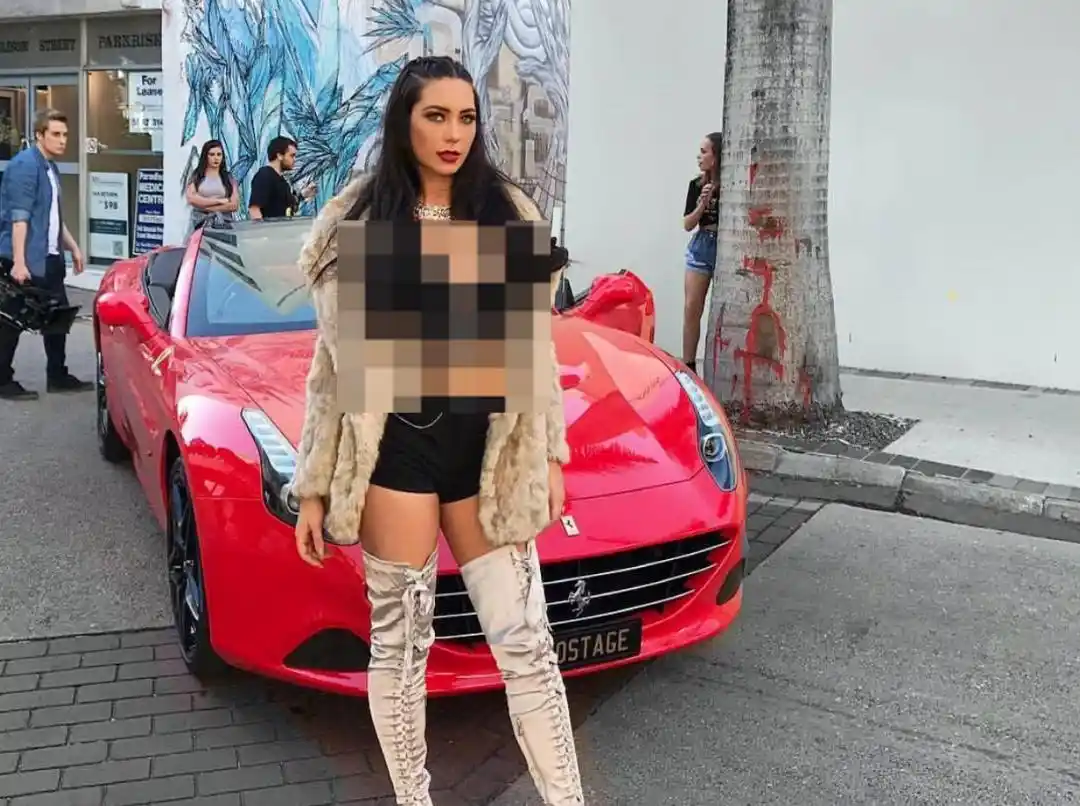
More suspiciously, her personal account operates from Cyprus, while the foundation account is registered in Kosovo.
Scouring company records, she isn't even a director of the foundation.
Three other individuals are the directors, one of whom has ties to that PR company Real Media Group. When ABC called, he acknowledged being a director, then hung up. The company's website soon went offline.
Most telling were the operations after ABC's inquiry: Australian visitors were redirected to a local page where the donation button and the disclaimer "This entity is not a charity" both vanished.
However, accessing from overseas, the donation channel remained open. The orphanage video and fake award pages were quietly erased.
Tim Costello, former CEO of World Vision Australia, put it bluntly: Photos of children in orphanages are most effective at prying open donors' hearts.
Why is an unregistered charity identity dangerous? Because by law, legitimate charities must disclose every income and expense, reassuring the public to entrust their kindness to them.
These very rules are what scammers most want to bypass.
This is the most terrifying part. Today, AI is only used to fabricate an orphanage and defraud a donation.
But when deepfake techniques spread to the softest areas like charity and trust—real footage, fake inserts, real backgrounds packaged in the same video—even platforms struggle to discern truth from falsehood.
Your Kindness, Being Priced by AI
The most dangerous aspect of the Lily Jay Foundation is how willing millions of people were to believe it was real.
AI didn't deceive anyone.
AI merely created an illusion that perfectly fit people's "desire to believe in kindness"—a devout believer, a group of children awaiting rescue, a cross-border relief effort.
All of it "feels too good", so rational judgment collectively shuts down.
Costello said something heavy: People donate voluntarily to express love. So, you should never betray it, never.
The next "Lily Jay" might already be on the way.
She might not go by that name, not wear a headscarf, not talk about faith.
But she will surely appear precisely where you most want to believe in kindness, using the story you most want to hear, in exchange for your most precious thing—your trust.
In an era where AI can mass-produce "reality", the only defense is to ask one more question: Is this real?
Reference: https://www.abc.net.au/news/2026-07-05/lily-jay-foundation-posts-ai-generated-misleading-videos/106866422
This article is from the WeChat public account "New Zhiyuan", author: ASI Apocalypse; Editor: Taozi






