全球稳定币监管现分歧:香港设限,美国开闸

比推Publicado a 2025-08-07Actualizado a 2025-08-07

8月1日,备受市场瞩目的香港稳定币条例终于正式施行。

面对市场火热的炒作氛围,监管不出意外又给稳定币泼了一盆冷水。仅从内容来看,香港的稳定币条例限制颇多,所涵盖的实名验证要求以其严苛度成功使该条例获得“全球最严稳定币法案”称号。无独有偶,就在一个月前,素来与香港打擂台的新加坡也因颁布“全球最严加密新规”而受到广泛热议。

与两者相对的是,就在香港稳定币条例施行的前一天,美国证券交易委员会发布名为“Project Crypto”的新计划,其中激情描绘了美国未来的加密蓝图,释放出强烈的积极信号。

大洋两岸的监管呈现冰火两重天之势,加密的格局分化,也从此刻开始加速。

8月1日,香港《稳定币条例》正式生效,这一里程碑事件,不仅是香港虚拟货币领域的一大步,更标志着全球首个针对法币稳定币的全面监管框架落地实施,具有极其深远的影响。

回顾条例内容,该条例要求任何在香港发行法币稳定币的机构,或在境外发行锚定港元价值的稳定币发行方,均需施行强制持牌制,申请实体实缴股本不得低于2500万港元。在储备资产方面,明令全额储备,即发行方必须将100%储备资产配置于高流动性资产,如现金和短期国债,同时这些资产需独立托管于持牌银行,每类稳定币须有独立储备资产组合,确保其与其他储备资产组合分隔。反洗钱也为重中之重,发行方需建立完善的反洗钱机制,每日公开储备资产审计报告,并禁止支付利息以防止变相吸储。在赎回方面,用户可无条件按面值赎回法币,发行方必须在1个工作日内处理赎回请求。

从总体要求而言,该条例于6月时的草案并无显著差异,但在实施细则上,却只能用严苛来形容。在条例正式生效的前夕,7月29日,香港金融管理局针对新条例监发布了一系列配套监管文件,包含《持牌稳定币发行人监管指引》咨询总结及该指引;《打击洗钱及恐怖分子资金筹集指引(持牌稳定币发行人适用)》咨询总结及该指引;与发牌制度及申请程序相关的《稳定币发行人发牌制度摘要说明》;《原有稳定币发行人过渡条文摘要说明》。
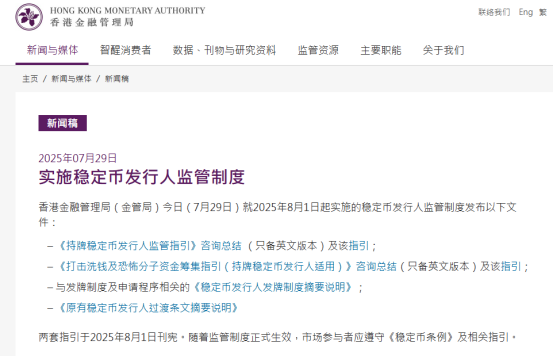
根据要求,金管局将在2025 年 8 月 1 日至 9 月 30 日期间接受首轮稳定币发行人牌照申请,并为企业设置了6个月的过渡期。创新与法制同步推进,体现出香港政府包容审慎的一贯态度,但针对KYC条款,市场却炸开了锅。

在《打击洗钱及恐怖分子资金筹集指引(持牌稳定币发行人适用)》中,金管局要求持牌稳定币发行人采取有效措施识别和核实稳定币持有人的身份,客户需接受完整的客户尽职审查(CDD)程序并定期审查(如姓名、出生日期、身份证件号码等,至少保留 5 年),非客户持有人通常不需直接核实身份,但当监控发现与非法活动、制裁名单或可疑来源相关的钱包地址,且持牌人无法证明其风险缓解措施(如区块链分析工具)足以防范 ML/TF 风险时,持牌人需进一步调查并核实相关持币者的身份。
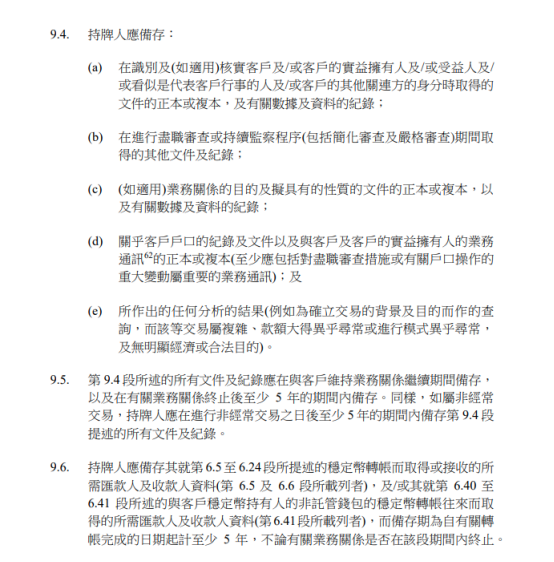
简而言之,为满足反洗钱风险,稳定币发行方不仅要验证用户身份、保留5年以上的实名数据,且不得为匿名用户提供服务,甚至在初期对每一名稳定币持有者也负有身份核实义务。金管局对此也作出了解释,助理总裁(法规及打击洗黑钱)陈景宏指出,鉴于目前业界的持续监察工具未能令金管局采信其可有效减低洗钱风险,且国际组织如国际清算银行强调防范稳定币洗钱的重要性,金管局将采取“风险为本但谨慎”的监管方式。

然而,从场景来看,尤其是在实体场景的跨境支付中,几乎不可能对离岸账户中匿名持有者的身份进行实时验证,更遑论需涵盖大规模支付体系中的每一位持有者。从实际出发,在一定程度上,此举基本将除银行机构外的其他类型申请者排除在外。值得注意的是,在这一法规下,香港稳定币也基本告别了DeFi协议交互,毕竟现有交互钱包都为匿名制,横向对比可开放使用的USDT、USDC,香港稳定币的竞争力将大幅度降低。

对内压实发行方责任,对外同样管辖明确。在《稳定币发行人监管框架》中,明确表明了持牌人必须遵守相关司法管辖区的法律与规管要求,换而言之,除了遵守香港本土的法律法规,海外的合规性也在考量范围内。发行人需要具备跨境运营的完整风控体系,禁止向存在稳定币禁令的国家及地区提供服务,其中甚至提到了持牌机构对VPN的识别,即使用VPN绕过监管将被阻止,可以看出,内地使用者仍将难以接入这一体系。另一方面,发行人还需确保境外营销与运营合规,并持续监测境外地区政策变化,构建动态调整的合规体系。
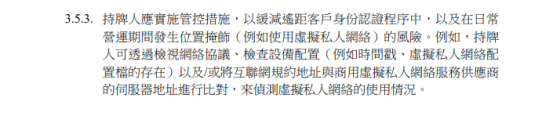
从一整套流程来看,超高门槛是持牌机构的关键词,但即便在如此高的申请要求下,香港稳定币还也对所属稳定币的重要功能都进行了限制,不仅对DeFi、匿名钱包、开放协议等加密功能封锁,海外经济体的使用也予以严厉规范,稳定币链上自由流通基本化为泡影,在本就市场规模受限的背景下,香港稳定币的发展,显然将迎来更大的阻碍。从发行方来看,强制实名与高强度的反洗钱力度,将牌照控制权完全转接给了大型银行与金融巨头,不仅中小型企业申牌无望,互联网企业也难言乐观,也正是于此,此前一度有谣言称京东将取消牌照申请。而据财新报道,香港或把首批稳定币牌照范围缩小为三到四家,目前含中银香港、交银香港、建设银行(亚洲)、信银国际等在内的多家中资银行在港分行及中资券商在港分支机构均对稳定币业务跃跃欲试。

如此严苛的实施路径,香港稳定币条例被称为“全球最严稳定币法规”着实不冤。有趣的是,上一次被市场公认最严条例的地区,还是和香港并称为“双子星”的新加坡。今年6月新加坡金融管理局(MAS)发布数字代币服务提供商(DTSP)最终政策指南,由于“无牌即退”以及“全产业链管辖”的严格条例,也让市场掀起了一波Web3退“坡”潮。

然而,若视野投射至大洋彼岸,美国的态度,却与上述两者形成了鲜明的对比。

7月31日,正好就在香港稳定币条例生效的前一天,美国证券交易委员会(SEC)的新任主席Paul Atkins,就给币圈点燃了一把火。当天,Paul Atkins发布名为“Project Crypto”的新政,提出了让美国金融市场全面上链的雄伟构想,明确表示将实现美国“全球加密之都”的愿景。

从具体措施来看,一是摒弃原有先管辖后循法的传统模式,将明确加密资产的重新分类标准,为空投、ICO、Staking 等常见链上经济活动提供清晰的披露规范、豁免条件和安全港机制,将根据不同的资产性质针对性采用不同的监管模式;二是赋予Defi等去中心化应用的制度正当性,为不依赖中心化中介的链上软件开发者提供明确路径,保护去中心化软件的开发者,让去中心化软件在金融市场拥有一席之地;三是打造“超级应用(Super-Apps)”,将现有纷繁复杂的牌照制度予以合并,促使证券中介机构能在一个平台、一张牌照下提供多样化的产品与服务,证监会将制定规则框架推动这一构想落地,例如起草监管框架允许证券与非证券类型的加密资产在SEC注册的平台上共存交易、放宽某些资产在非注册交易所(如仅持州牌照平台)上的上市条件;四是制度与服务保障,引入“创新豁免机制”,以商业可行性为而核心,允许不完全符合现有规则的新兴商业模式与服务快速推向市场,但该类服务提供者需遵循定期向 SEC 报告的承诺、引入白名单或认证池功能,以及仅允许符合合规功能标准(如 ERC3643)的证券代币进行流通等要求。
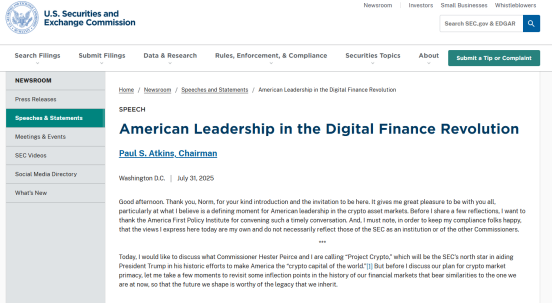
从设计蓝图而言,美国监管逻辑已然完全改变,从原有的打击式监管转变至包容性执法,并进一步向全链条、全框架政策支持迈进,从源头属性到重点应用、从平台构建到服务保障全都囊括在内,反映出美国正在围绕“加密资产”形成一整套系统性的监管框架,这套框架,正是美国发展加密产业的坚实基础与客观保障。监管计划已然打响第一枪,美国证券交易委员会(SEC)在最新指南中表示,某些流动性质押活动不涉及证券,从事流动性质押活动的人员无需根据证券法向该机构注册。

两相对比,虽然同为监管政策,美国与新加坡、香港可谓大相径庭,前者释放高度积极信号,后者则在创新之余呈现更多防御姿态,此点或许与区域特征有关。香港、新加坡两者疆幅有限,且都定位为金融中心,表现出桥头堡或是区域窗口等性质,因此对其而言,稳定与秩序尤为重要,若出现洗钱问题,对地区品牌杀伤力也更强,会产生极大的负外部效应;而美国自主能力更强,对新兴事物发展具备话语权,可在一定程度上主导全球秩序,因此对于特定行业开放程度也更高。受此影响下,市场也正在闻风而动,已然有部分香港、新加坡的加密项目表示有意迁往美国发展。

不难预见,加密行业的“美国中心”式格局将进一步被增强,美国市场也将成为决定加密项目发展的重要战场。而其他地区,或许注定只能以差异化走出附属之路。

说明: 比推所有文章只代表作者观点,不构成投资建议

Lecturas Relacionadas

Interview with 7 Ordinary Professionals: After AI Arrived, How Are You Doing?

This article interviews seven professionals from diverse fields like Web3, bulk chemical trading, digital agriculture, and traditional wholesale to examine the impact of AI on their work. Key themes emerge from the discussions. AI has become integral to their workflows, primarily for increasing efficiency in tasks such as coding, content creation, research, and data analysis. Individuals across roles, from developers to managers, report that AI tools like ChatGPT and Claude have significantly reduced workloads and accelerated learning, creating opportunities for "super individuals" or one-person teams. However, this efficiency comes with a double-edged sword. It intensifies competition, pushing professionals to constantly learn new tools and adapt, leading to widespread anxiety about job security and a heightened pressure to keep pace. Interviewees anticipate significant job reductions in roles like administrative support, finance, HR, customer service, and some creative fields. A recurring view is that AI acts as a "great equalizer," amplifying the capabilities of those who use it effectively while leaving others behind, potentially deepening polarization. Despite AI's capabilities, interviewees identify enduring human strengths. AI struggles with tasks requiring deep contextual understanding, complex judgment in areas like risk assessment and system stability (especially in finance/Web3), nuanced human communication, and handling exceptions in logistics and manufacturing. These areas remain firmly in the human domain. Consequently, many professionals are refocusing their career strategies. They plan to evolve from task executors into "complex system owners," "super coordinators" managing AI agents, or specialists in high-level areas like business context, risk control, product design, and personal branding. In summary, the article portrays AI not as an optional tool but as a transformative force reshaping job demands. While it automates routine work, it also creates new forms of pressure and competition. The future, as seen by these professionals, belongs to those who can strategically integrate AI to augment uniquely human skills like judgment, responsibility, and strategic oversight.

marsbitHace 13 min(s)

Interview with 7 Ordinary Professionals: After AI Arrived, How Are You Doing?

marsbitHace 13 min(s)

Satoshi Nakamoto Sued? $83.7 Billion Worth of BTC Up for 'Legal Claim'

An anonymous individual known as Noah Doe, along with two Wyoming LLCs, has filed a lawsuit in the New York Supreme Court. They are attempting to use New York's "lost and found" laws to claim legal ownership of approximately 837 billion USD worth of Bitcoin held in 39,069 dormant addresses. Crucially, this list includes addresses believed to belong to Bitcoin's creator, Satoshi Nakamoto (holding around 837 billion USD), alongside other long-inactive addresses from Mt. Gox and early Bitcoin holders. The plaintiff's legal strategy hinges on classifying these public Bitcoin addresses as "lost property." They submitted a USB drive containing only the public addresses to the New York Police Department, sent OP_RETURN notifications on the Bitcoin blockchain, and issued press releases. Their argument is that after these efforts and a waiting period, they should be granted ownership. A key, and highly controversial, claim is an unnamed "independent expert" valuing each address at under 10 USD, allowing for a faster legal process. Analysts from Galaxy point out major flaws in the case. The plaintiff never physically possessed the Bitcoin or private keys. The "under 10 USD" valuation is considered unrealistic, and allowing anonymous companies to claim such vast assets is highly unusual. Even if the plaintiff wins, they would only receive a court declaration of ownership, not the actual private keys to move the Bitcoin. The real danger lies in this court document acting as a "cloud on title." If any of these Bitcoins are later transferred to a regulated exchange or custodian, the plaintiff could present the judgment to freeze the assets, forcing the true owner into lengthy and de-anonymizing litigation to prove ownership. The outcome is uncertain, but the case highlights potential legal risks for dormant cryptocurrency holdings.

marsbitHace 18 min(s)

Satoshi Nakamoto Sued? $83.7 Billion Worth of BTC Up for 'Legal Claim'

marsbitHace 18 min(s)

Is Satoshi in Legal Trouble? $83.7 Billion Worth of BTC Might Be 'Legally Claimed'

An anonymous plaintiff, “Noah Doe,” and two shell companies have filed a lawsuit in New York Supreme Court, seeking a declaratory judgment granting them ownership of 39,069 dormant Bitcoin addresses containing approximately 3.8 million BTC (worth ~$293.5 billion). Their claim is based on New York’s lost property law, arguing these addresses are abandoned assets. The plaintiff “found” the addresses, stored them on a USB drive, and delivered it to a police station, followed by chain notifications (OP_RETURN) and a press release. Notably, the list includes addresses linked to Bitcoin creator Satoshi Nakamoto (holding ~1.1 million BTC), a Mt. Gox hacker address, a provably unspendable burn address, and other long-inactive wallets. The plaintiff’s “independent expert” controversially values each address at under $10 to invoke a fast-track legal process. Critical issues question the lawsuit's validity: the lost property law is designed for physical items, not publicly viewable blockchain addresses; the valuation is implausible; and the plaintiff’s anonymity is contested. Even if successful, the plaintiff would only receive a paper judgment, not the private keys. However, such a ruling could create a “title defect,” allowing them to challenge future transactions of these coins on regulated platforms, potentially freezing assets and forcing anonymous holders to reveal themselves in legal disputes. The court is unlikely to grant a broad default judgment given the novel and high-stakes nature of the claim.

Odaily星球日报Hace 20 min(s)

Is Satoshi in Legal Trouble? $83.7 Billion Worth of BTC Might Be 'Legally Claimed'

Odaily星球日报Hace 20 min(s)

Deconstructing the U.S. Stock Quantum Computing Sector: IonQ, Rigetti, D-Wave, Which of These Concept Stocks is Worth Betting On?

**Title:** Analyzing the US Quantum Computing Race: IonQ, Rigetti, D-Wave – Which Concept Stock is Worth Betting On? **Summary:** The podcast discusses the resurgence of quantum computing as a national priority for both the US and China, driven by its potential to break current encryption, revolutionize drug discovery, finance, and logistics. The core challenge is commercializing the technology, which is hampered by high error rates in quantum bits (qubits). Quantum error correction, requiring thousands of physical qubits per reliable logical qubit, is key but years away. The analysis compares three main publicly traded US quantum computing firms: * **IonQ (Ion Trap):** Considered the most financially stable with the fastest commercial progress (2025 revenue: $130M, +202%) and high-quality clients. Its valuation is very high, pricing in significant future growth. * **Rigetti (Superconducting):** Seen as the highest-risk, highest-potential-reward bet. It has the smallest revenue but recently launched a 108-qubit system. Its valuation multiples are extreme, making it highly sensitive to news. * **D-Wave (Quantum Annealing):** Has the most unique positioning with real-world enterprise clients today (e.g., Mastercard, Volkswagen) solving optimization problems. Its recent acquisition moves it into general-purpose quantum computing ("dual-platform"), adding execution risk. Major tech giants like Google, IBM, and Microsoft are also heavily invested, pursuing various technical approaches. Nvidia is positioning itself as the essential bridge between classical and quantum computing. The investment phase is likened to AI in 2018-2020: promising underlying technology with accelerating breakthroughs but a commercial inflection point still 3-7 years away, suggesting potential for a market correction ("bubble washout"). For investors, suggested approaches include gaining exposure through tech giants with quantum divisions (e.g., Google, IBM) or using niche ETFs like WQTM for pure-play quantum exposure, rather than direct stock picks in the highly volatile pure-play companies at this early stage.

marsbitHace 47 min(s)

Deconstructing the U.S. Stock Quantum Computing Sector: IonQ, Rigetti, D-Wave, Which of These Concept Stocks is Worth Betting On?

marsbitHace 47 min(s)

Trading

Spot
Futuros
活动图片