Elon Musk Poses Chilling Question: Can Quantum Computers Hack Bitcoin?

bitcoinistPublicado a 2025-08-03Actualizado a 2025-08-03

Resumen

Elon Musk is raising new questions about Bitcoin’s long-term safety in the face of rapid advances in quantum computing. The...

Trusted Editorial content, reviewed by leading industry experts and seasoned editors. Ad Disclosure

Elon Musk is raising new questions about Bitcoin’s long-term safety in the face of rapid advances in quantum computing. The Tesla and SpaceX CEO turned to his AI chatbot, Grok, to find out how likely it is that Bitcoin’s SHA-256 hashing algorithm could be cracked by powerful quantum machines.

His question came just as IBM revealed major plans for its next-generation quantum system called Blue Jay, which is expected to reach 2,000 global qubits by 2033.

Grok Predicts Low Risk, At Least For Now

According to Grok, the risk of Bitcoin’s encryption getting cracked by quantum computers is very low over the next five years. The AI estimates the chance remains close to zero during that period.

But when looking out to 2035, the probability goes up slightly—though it still stays under 10%. These numbers are based on expert assessments and current quantum capabilities.

Musk’s concerns are not coming out of nowhere. Companies like Google and Microsoft are developing their own quantum platforms—Willow and Majorana 1—which have sparked debate over whether cryptocurrencies like Bitcoin could one day be vulnerable to attacks from these ultra-powerful systems.

Right now, most quantum systems only have around 1,000 qubits. That’s far below the millions of error-corrected qubits scientists believe are necessary to break Bitcoin’s cryptographic defenses.

Grok added that stronger algorithms like SHA-3 or SHA-512 could be used as replacements if needed in the future.

Bitcoin is currently trading at $113,744. Chart: TradingView

Quantum Computers Vs. Blockchain

Meanwhile, according to a recent analysis by global auditing firm Deloitte, quantum computers could soon threaten the security of the Bitcoin blockchain, with around 25% of Bitcoins currently at risk of being stolen through quantum attacks.

Eventually, quantum computers might become powerful enough to break the entire transaction process, the analysts said. To prevent this, the Bitcoin network would need to adopt post-quantum cryptography—an emerging but complex solution currently being explored by cryptographers worldwide.

Image: The Quantum Insider

IBM’s Blue Jay Adds Pressure

IBM’s new system, Blue Jay, will have more than a billion gate operations—something much beyond the capabilities of today’s computers.

It’s part of the company’s larger effort to be at the forefront of quantum computing by the early 2030s. With other industry giants such as Google and Microsoft not far behind, the competition is heating up.

Tesla And SpaceX Both Hold Bitcoin

Musk’s curiosity isn’t just academic. Tesla currently owns 11,500 Bitcoins, worth about $1.3 billion at current prices. SpaceX also holds a sizable amount, reportedly around $850 million worth of BTC. Musk himself has confirmed that he holds Bitcoin in his personal portfolio.

With the extent of those holdings, it is no wonder that Musk would like to get ahead of potential threats. His tweet is seemingly relaxed, but it indicates increased awareness in the tech world about how quantum advances might affect the world of crypto and finance.

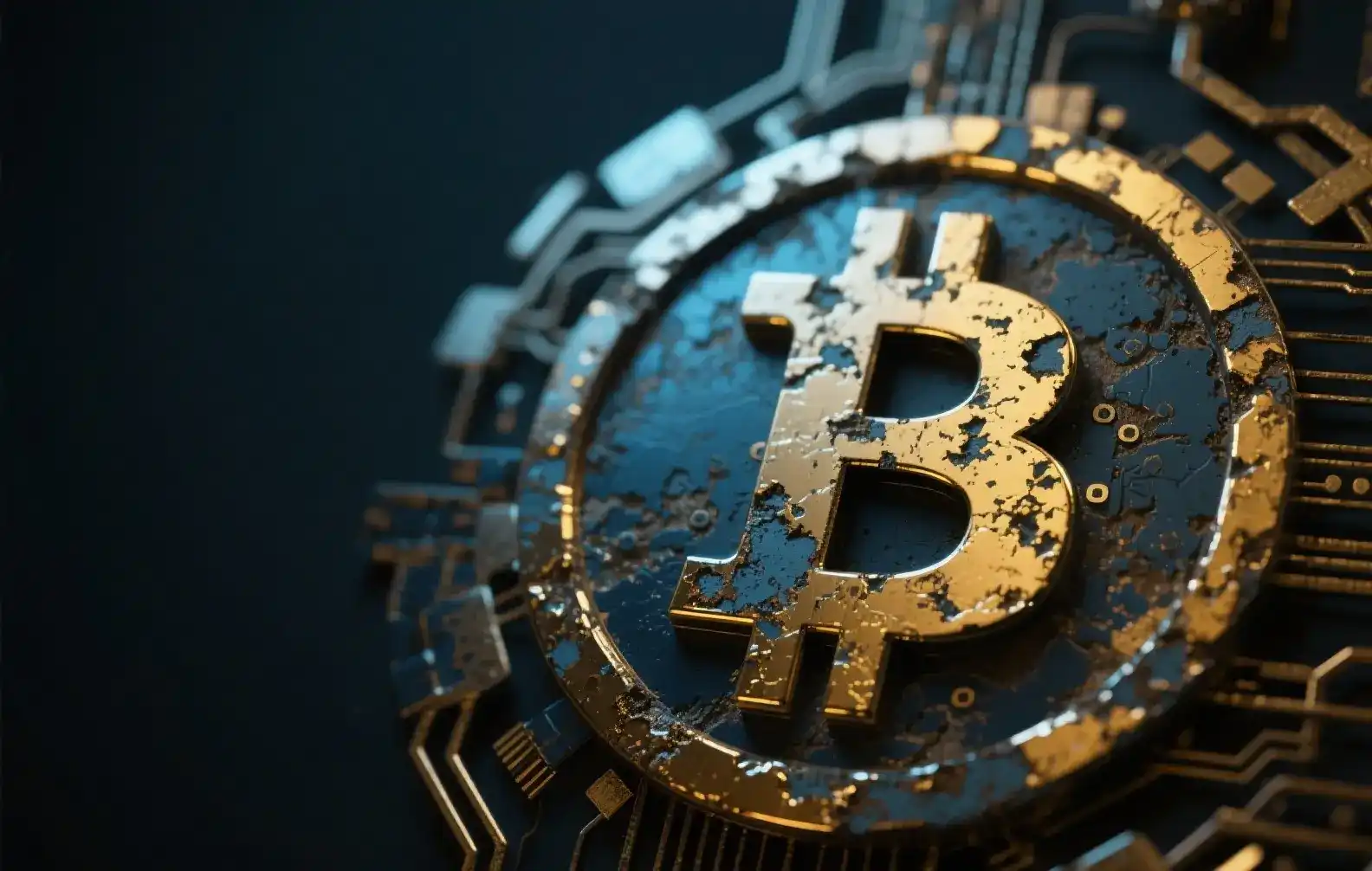
Featured image from ABB, chart from TradingView

Editorial Process for bitcoinist is centered on delivering thoroughly researched, accurate, and unbiased content. We uphold strict sourcing standards, and each page undergoes diligent review by our team of top technology experts and seasoned editors. This process ensures the integrity, relevance, and value of our content for our readers.

Christian, a journalist and editor with leadership roles in Philippine and Canadian media, is fueled by his love for writing and cryptocurrency. Off-screen, he's a cook and cinephile who's constantly intrigued by the size of the universe.

Criptos en tendencia

Lecturas Relacionadas

BIS Report Compliance Observations: The True Risks of Stablecoins Go Beyond 'De-pegging'

The BIS report, "Anchoring trust in money: innovation beyond stablecoins," highlights that the primary risks of stablecoins extend beyond potential de-pegging. It argues that the core challenge is whether stablecoins can be integrated into a financial system that is identifiable, monitorable, accountable, and regulatable. While acknowledging efficiency gains like faster payments and programmability, BIS emphasizes that money requires an institutional framework—including legal certainty, liquidity support, and financial integrity controls—which many stablecoins currently lack. The report details compliance risks, noting that while blockchain transactions are transparent, address visibility does not equate to identity or purpose clarity. This creates a systemic risk as pseudonymity, non-custodial wallets, and cross-chain bridges can undermine AML/CFT controls. Furthermore, these risks can spill over into the traditional financial system through on- and off-ramps. The future direction, per BIS, is not to prohibit innovation but to embed regulatory rules—such as identity verification and transaction screening—directly into the technological infrastructure of tokenized finance. The key takeaway for compliance is that any new financial instrument must clearly address questions of customer identification, transaction monitoring, accountability, and cross-border rule consistency to be viable as a mainstream payment tool.

marsbitHace 1 hora(s)

BIS Report Compliance Observations: The True Risks of Stablecoins Go Beyond 'De-pegging'

marsbitHace 1 hora(s)

When US Giants Collectively "Defect" to Chinese AI Models

When Silicon Valley Giants Turn to Chinese AI Models to Cut Costs A surprising trend is emerging: major U.S. tech companies are significantly reducing AI costs by switching to Chinese models. Coinbase, the largest U.S. cryptocurrency exchange, reportedly halved its AI spending after migrating to China's GLM-5.2 and Kimi 2.7 models, despite increasing usage. They achieved this through a sophisticated three-part strategy: implementing an automatic routing system to select the most cost-effective model per task, boosting cache hit rates from 5% to 60% to reuse computations, and employing "context engineering" to provide AI with more precise, less cluttered information. They are not alone. AI startup Lindy switched from Claude to DeepSeek, saving millions, while Snowflake's tests found GLM-5.2 solved 66% of coding tasks compared to Claude Opus's 67%—but at a fraction of the cost (output pricing is 5-7 times lower). While the top Western models may offer slightly better stability, the massive price differential is leading many businesses to reconsider their value proposition. This shift signals a deeper change in the AI industry, moving beyond pure performance benchmarks to a fierce cost competition. As pressure mounts, even OpenAI and Anthropic have begun slashing prices. For users, this means more choices, lower costs, and a crucial lesson: using multiple models based on task complexity, optimizing with caching, and keeping contexts lean are now key to leveraging AI efficiently and affordably.

marsbitHace 1 hora(s)

When US Giants Collectively "Defect" to Chinese AI Models

marsbitHace 1 hora(s)

BIS Report Compliance Watch: The Real Risks of Stablecoins Are Not Just 'De-pegging'

BIS Report Compliance Observations: The real risks of stablecoins go beyond "depegging" The BIS report "Anchoring trust in money: innovation beyond stablecoins" argues that while stablecoins and tokenization offer efficiency gains, their primary risk lies in fitting into an identifiable, monitorable, accountable, and regulatable financial system. Money's trust stems not just from technology but from institutional arrangements: a common unit of account, guaranteed redemption at par, liquidity support, regulatory frameworks, and financial integrity requirements. Stablecoins, operating on permissionless blockchains with pseudo-anonymity and non-custodial wallets, create systemic compliance gaps: unclear customer identity, incomplete fund origins, unexplained transaction purposes, fragmented cross-chain paths, and ambiguous liability. On-chain transparency does not equal compliance transparency. Public addresses don't reveal identity or intent. While blockchain analytics aid law enforcement, they cannot replace routine, large-scale AML/CFT controls. Effective compliance requires a closed-loop process encompassing customer onboarding, transaction monitoring, investigation, reporting, and audit. Stablecoin risks are not confined to the blockchain; they re-enter the traditional financial system via on/off-ramps, exchanges, and payment institutions. This forces banks to monitor client accounts for activity linked to virtual assets. The future direction is not to prohibit innovation but to embed rules into the technology. Tokenized finance should integrate with the existing two-tier monetary system, embedding compliance—like customer identification, pre-transaction screening, and auditable data trails—directly into the transaction flow. For compliance professionals, the key takeaway is that any new financial instrument must answer core questions: Who identifies the customer? Who monitors transactions? Who handles exceptions? Who is liable? Compliance is not the antithesis of innovation but the essential infrastructure for its sustainable growth.

链捕手Hace 1 hora(s)

BIS Report Compliance Watch: The Real Risks of Stablecoins Are Not Just 'De-pegging'

链捕手Hace 1 hora(s)

Trading

Spot

Artículos destacados

Cómo comprar ELON

¡Bienvenido a HTX.com! Hemos hecho que comprar Dogelon Mars (ELON) sea simple y conveniente. Sigue nuestra guía paso a paso para iniciar tu viaje de criptos.Paso 1: crea tu cuenta HTXUtiliza tu correo electrónico o número de teléfono para registrarte y obtener una cuenta gratuita en HTX. Experimenta un proceso de registro sin complicaciones y desbloquea todas las funciones.Obtener mi cuentaPaso 2: ve a Comprar cripto y elige tu método de pagoTarjeta de crédito/débito: usa tu Visa o Mastercard para comprar Dogelon Mars (ELON) al instante.Saldo: utiliza fondos del saldo de tu cuenta HTX para tradear sin problemas.Terceros: hemos agregado métodos de pago populares como Google Pay y Apple Pay para mejorar la comodidad.P2P: tradear directamente con otros usuarios en HTX.Over-the-Counter (OTC): ofrecemos servicios personalizados y tipos de cambio competitivos para los traders.Paso 3: guarda tu Dogelon Mars (ELON)Después de comprar tu Dogelon Mars (ELON), guárdalo en tu cuenta HTX. Alternativamente, puedes enviarlo a otro lugar mediante transferencia blockchain o utilizarlo para tradear otras criptomonedas.Paso 4: tradear Dogelon Mars (ELON)Tradear fácilmente con Dogelon Mars (ELON) en HTX's mercado spot. Simplemente accede a tu cuenta, selecciona tu par de trading, ejecuta tus trades y monitorea en tiempo real. Ofrecemos una experiencia fácil de usar tanto para principiantes como para traders experimentados.

185 Vistas totalesPublicado en 2024.12.12Actualizado en 2025.03.21

Cómo comprar ELON

Discusiones

Bienvenido a la comunidad de HTX. Aquí puedes mantenerte informado sobre los últimos desarrollos de la plataforma y acceder a análisis profesionales del mercado. A continuación se presentan las opiniones de los usuarios sobre el precio de ELON (ELON).

活动图片