流动性幻觉:当货币泡沫掩盖文明的结构性崩塌

深潮Publicado a 2025-07-28Actualizado a 2025-07-29

当下形势并非想象的那么乐观。

撰文:arndxt, 加密 KOL

编译:Felix, PANews

当下正处于极度金融化的周期末期。

一种山寨币一个月内能涨十倍,但在一天内又可能跌去 20%,而 CT 却会表现得惊讶不已。当下身处泡沫市场,但泡沫只是表面现象。更深层次的问题在于流动性、扭曲以及一个在自身矛盾的重压下逐渐崩塌的文明。
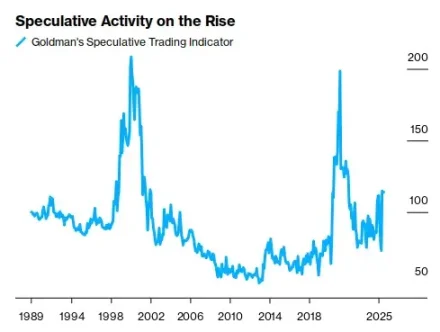
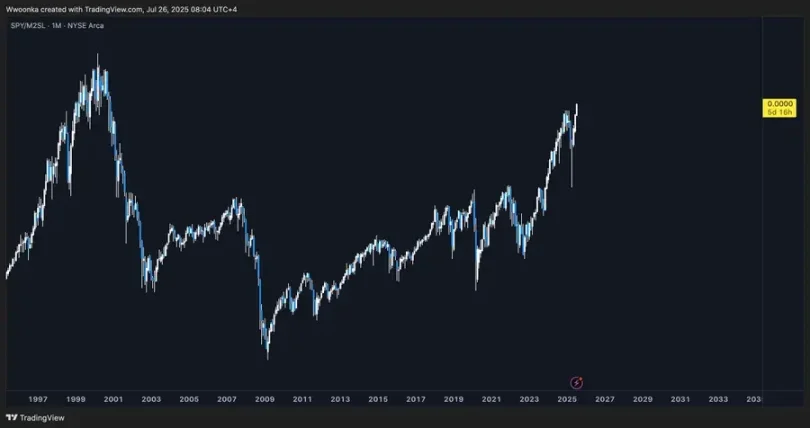
标普 500 指数创下新高,人们欢呼雀跃。但若退一步看,所谓的历史新高不过是流动性幻觉,以一种没有任何支撑、被一切通胀所驱动的货币来衡量。经通胀调整后,自 2000 年代以来,标准普尔指数毫无进展。这并非「增长」,而是货币供应量的图表。
而且美联储下周不会降息。乐观情况是九月,如果经济形势恶化,或许十二月还会降息一次。但利率调整已无法解决任何问题。现在面对的是结构性问题,只有三件事真正重要:

1.债务体系的缓慢瓦解

现代货币秩序已走到尽头。其建立在不断扩张的债务基础之上,如今它面临着无法解决的内部矛盾。旧的策略(刺激措施、救助计划、政策转向)都依赖于一个关键的错觉:债务越多,繁荣程度越高。

但这种错觉正在瓦解。生产率增长停滞不前。人口结构与这种体系背道而驰。劳动年龄人口基数正在缩小,抚养比正在扩大,消费越来越多地依赖信贷而非收入。这台机器正在老化,不再能自我修复。

索罗斯的超级泡沫论,常被误读为市场分析,实际上是对认识论的批判——错误的叙事如何支撑错误的体系。2008 年本应戳破这个神话。但它没有。新冠疫情做到了,因为代价是道德上的。事实证明,政府无法从最字面、生物学意义上保护其公民。许多政府认为,生存并非人人平等。

其结果是合法性衰败。如今的机构更像是靠监控、补贴和心理战支撑起来的门面。爱泼斯坦案并非异常,而是真实架构的短暂揭示:一个犯罪、治理和资本相互交织的体系。美国不再掩饰其腐败,而是将其货币化。

2. 智能封装

围绕通用人工智能(AGI)的讨论仍停留在天真的乐观主义中。大多数人仍然认为人工智能会像 Excel 或 AWS 一样被广泛普及,成为一种生产力工具,并通过订阅来盈利。

这是不切实际的幻想。

如果机器获得了自我改进的能力,能够模拟复杂系统,并设计出新型武器,无论是生物、化学还是信息武器,它都不会是开源的。

核技术并未实现民主化。CRISPR 技术也不能随意使用。每一种强大的技术最终都会成为国家治理的工具,超级智能也不例外。

Sam Altman 所暗示的,以及黄仁勋通过涉足合成生物学所悄然传达的,并非关于消费者生产力,而是关于对后人类轨迹的掌控。跨国制药 Moderna 就是一个案例,接下来的产品不会在 CVS 药店出售。

公众将无法访问 AGI。公众只会与被阉割的 AGI 片段打交道,这些片段被封装在用户界面中。真正的系统将被隐藏、设限,并被训练以服务于战略目的。但这不会阻止大多数人抱有其他想法。然而,信念无法与基础设施抗衡。

3.时间作为新货币

迄今为止,金钱可以买到舒适、安全和社会地位,但买不到时间。这种情况正在改变。随着人工智能解码基因组和合成生物学的加速发展,当下正在迈向长寿成为工程优势领域的时代。

但别把这误认为是一场公共卫生革命。真正的寿命延长、认知增强和胚胎优化将极其昂贵,受到严格监管,并且在政治上具有争议性。各国政府已经因人口老龄化而不堪重负。它们不会鼓励长生。

因此,富人不仅会更富有,还会在生物学上与众不同,而且不是隐喻意义上的。改变人类蓝图的能力将造就一个新的经济阶层:那些能够凭借生物技术专利摆脱死亡曲线的人。

这样的未来无法规模化,这是一条特权之路。长寿将成为终极奢侈品,定价只为少数人服务。这就是为什么大多数「长寿基金」表现不佳。回报是生存,而生存无法规模化。

分岔路:前方的三种文明

当下正在分化成不同的轨道,每条轨道都有其自身的政治经济:

  • 麻醉大众(数字芬太尼):由人工智能生成的多巴胺循环、社交媒体、虚拟色情、无限滚动。过度刺激、营养不良、政治上无关紧要。这是大多数人的体验。廉价且可大规模推广的麻醉手段。

  • 认知阶层(生物升华):生物和智力上都得到增强的少数群体。他们不追求经济回报,而是寻求对生物学和死亡的掌控。他们人数更少、更富有,且越来越难以触及。

  • 新阿米什人(有意识的拒绝)选择第三条退出的道路:那些断开连接、在机器之外寻找意义,并试图在一个旨在抹去人类经验的世界中保留人类经验的人。精神上富足,战略上注定失败。

第一类人为第二类人提供资金。第三类人则反抗两者。

大多数人会「顺流而下」(盲从),勉强浮出水面,浑然不知自己已成为产品而非参与者。但对于那些预见未来的人而言,选择退出不再是中立的,而是一种反抗。

破碎世界中的清晰战略

市场充斥着噪音。加密货币、股票、收益游戏,它们是可选的工具,而不是救赎。真正的游戏关乎生死存亡。问题在于谁能逃脱崩溃,以及在何种条件下逃脱。

  • 货币体系的设计正在不断退化。

  • 超级智能不会成为你的生产力助手。

  • 生物技术将隔离时间本身。

  • 爱泼斯坦证明了权力是孤立的,而非可问责的。

如果你理解了这一点,问题就不在于如何「战胜市场」。而在于如何在一个不再服务于参与者的系统中,为不对称做好准备。

你不会在价格走势中认清,而是会在系统思维中认清。

大多数人不会抬头仰望。大多数人直到为时已晚才会相信。即使为此付出一切代价。因为在茫然中死去,比身无分文死去更糟糕。

Lecturas Relacionadas

Gate Research Institute: Analysis of Chart Patterns and Breakout Trading Strategies

Gate Research Institute: Chart Pattern Analysis and Breakout Trading Strategies Chart patterns are crucial tools in technical analysis for observing market supply and demand shifts, trend continuations, and reversals. This analysis involves a comprehensive evaluation of trend, volume, support/resistance, time cycles, and breakout validity, not just rote pattern recognition. Patterns are broadly categorized into reversal patterns (e.g., Double Tops/Bottoms, Head and Shoulders) and continuation patterns (e.g., Flags, Triangles, Rectangles). An effective breakout, key for trading, requires clear support/resistance, prolonged consolidation, a prevailing trend backdrop, and volume confirmation. However, breakouts are not guaranteed, as false breakouts are common. Risk must be managed through position sizing, stop-loss orders, pullback confirmations, and profit-taking in stages. Key pattern types discussed include: * **Rectangle Patterns:** Indicate market indecision within parallel support and resistance, with breakouts projecting a move equal to the pattern's width. * **Flag & Pennant Patterns:** Short-term continuation patterns following sharp price moves ("flagpoles"). * **Triangle Patterns:** Symmetrical, Ascending (bullish bias), and Descending (bearish bias) triangles, representing consolidation before a directional move. * **Head and Shoulders Patterns:** Major reversal patterns signaling trend exhaustion. The article details breakout trading strategies, defining valid breakouts by price closing beyond a key level with increased volume and minimal immediate re-entry into the prior range. It contrasts range trading with breakout trading and outlines entry methods (immediate entry, pullback entry, scaling in), stop-loss placement (based on pattern failure), and profit-taking techniques (target-based, structure-based, trend-following). It further classifies breakout outcomes: 1. **Valid Breakouts:** Strong, sustained moves in the breakout direction. 2. **Pullback Breakouts:** Price breaks out, retests the breakout level as support/resistance, then resumes the trend—offering a lower-risk entry. 3. **False Breakouts:** Price briefly breaches a level but quickly reverses back into the prior range, a common risk managed by strict stop-losses. Key validation tools for breakouts include volume analysis, the principle of support/resistance role reversal, and momentum indicators like ATR, Moving Averages, Bollinger Bands, and RSI. In conclusion, while chart patterns and breakout analysis provide a structured framework, their effectiveness relies on multiple confirming factors—trend context, volume, and proper risk management. They should be integrated into a broader trading system rather than used as standalone signals.

marsbitHace 25 min(s)

Gate Research Institute: Analysis of Chart Patterns and Breakout Trading Strategies

marsbitHace 25 min(s)

Joseph Chalom: Ethereum is Becoming the "Settlement Layer of Trust" for Global Finance

In a speech titled "The Industrialization of Trust," Sharplink CEO Joseph Chalom (former BlackRock digital assets head) discussed the future transformation of global finance. Drawing from 20 years at BlackRock, where he led the launch of Bitcoin/ETH ETFs and tokenized funds, Chalom highlighted the immense hidden costs of establishing trust in traditional finance—estimated at over $9.3 trillion annually in the US alone due to fragmented systems, multi-day settlements, and countless reconciliations. He argued that Ethereum is emerging as the global financial "settlement layer for trust," with its robust, decentralized infrastructure securing over $300 billion in on-chain assets and most stablecoins and tokenized assets. The future, he stated, will be driven by three accelerating pillars: stablecoins (evolving beyond crypto gateways to become efficient cross-border payment rails), tokenized assets (enabling 24/7 trading and reshaping capital markets), and DeFi (providing automated, accessible financial services). A potential game-changer, Chalom added, is the fourth pillar: "Agentic Finance," where AI agents autonomously execute programmable financial transactions via smart contracts and stablecoins. He envisions individuals soon having AI-powered "CFOs in their pockets" to optimize idle capital and manage tokenized portfolios. This shift, facilitated by Ethereum's trustless settlement, could multiply on-chain transaction volume 1000x within a year, moving finance toward a seamless, digitized future.

marsbitHace 25 min(s)

Joseph Chalom: Ethereum is Becoming the "Settlement Layer of Trust" for Global Finance

marsbitHace 25 min(s)

STRC Severely Unpegged, What Risks Is the Market Pricing In?

The article analyzes the recent significant de-pegging of Strategy's perpetual preferred stock, STRC, whose price fell to approximately $89, far below its $100 face value. This discount has pushed its simple yield to around 12.9%, creating a paradox. The stock was designed as a high-yield instrument trading near par, and Strategy maintains an 11.5% annual dividend, even recently switching to semi-monthly payments to support the price. The author explores several reasons why the high yield hasn't attracted enough buying pressure to restore the par value. A key factor is potential reverse deleveraging from carry trades, where leveraged investors may be forced to sell due to margin calls as the price falls, creating a self-reinforcing downward spiral. Additionally, the tokenization and integration of STRC into DeFi protocols (like Apyx, Saturn, Pendle) have introduced faster, more transparent, and potentially more volatile price adjustment mechanisms through leverage and yield-splitting products. The emergence of a competing product, Strive's SATA, offering a 13% yield with daily dividends, has also changed the yield benchmark, challenging STRC's unique high-yield narrative. Furthermore, the market is questioning the distinction between Strategy's substantial Bitcoin reserves, which provide long-term balance sheet coverage, and the certainty of stable near-term cash flow for dividends. Ultimately, the price dip represents a stress test for this type of BTC-backed, high-yield financing tool. The future path of STRC depends on whether Strategy acts to reinforce the $100 peg (e.g., by adjusting dividends), whether DeFi-related leverage unwinds further, and how investors ultimately price the risks of leverage, competition, and cash flow uncertainty against the offered yield.

marsbitHace 36 min(s)

STRC Severely Unpegged, What Risks Is the Market Pricing In?

marsbitHace 36 min(s)

LIT Token Hits Six-Month High: How Long Can the Buyback Flywheel Keep Burning Fuel?

The LIT token of decentralized perpetual exchange Lighter surged to a six-month high above $1.90 on June 18th, with a market cap of $425 million. After a price correction earlier this year, the recent rebound is attributed to its core "buyback flywheel" mechanism. All protocol fee revenue is used for programmatic, hourly market buybacks of LIT. Since its TGE in December 2025, approximately 15 million LIT (6% of circulating supply) has been repurchased for around $21 million. Additional price support comes from the LLP (Lighter Liquidity Pool), where providers must stake LIT worth 10% of their deposited USDC, locking significant token supply. However, challenges persist. Trading volume has declined amidst a sluggish market, with total volume at $1.68 trillion, significantly lower than leading competitor Hyperliquid's $4.37 trillion. While Lighter focuses on perpetual contracts, RWA, and Pre-IPO markets, Hyperliquid has expanded into prediction markets and boasts a U.S. spot ETF, attracting institutional investment and influencer endorsements like from Arthur Hayes. In contrast, LIT currently lacks similar high-profile backing. With 75% of LIT's total 1 billion supply still locked (team and investor tokens begin a 3-year linear unlock in December 2026), there is no immediate unlock selling pressure. The token's future performance hinges on sustaining trading volume growth, successful product iteration, and executing its transparent buyback strategy against a dominant competitor.

Foresight NewsHace 56 min(s)

LIT Token Hits Six-Month High: How Long Can the Buyback Flywheel Keep Burning Fuel?

Foresight NewsHace 56 min(s)

Trading

Spot
Futuros
活动图片