Tether Eyes US Comeback With Institutional Focus, IPO Off the Table

ccn.comPublicado a 2025-07-24Actualizado a 2025-07-24

Key Takeaways

  • Tether plans to re-enter the U.S. market, focusing on institutional clients and payment infrastructure.
  • The company previously faced EU delistings due to MiCA compliance issues.
  • Tether CEO Paolo Ardoino says the firm is building a new U.S. strategy amid fresh competition and regulation.

Tether is preparing to re-enter the U.S. market with a renewed focus on institutional adoption, following a pivotal meeting between CEO Paolo Ardoino and President Donald Trump during the signing of the GENIUS Act—America’s first major stablecoin regulation.

The timing is notable. The GENIUS Act, which lays the foundation for a regulated stablecoin framework, could accelerate Tether’s plans to expand stateside while avoiding the compliance issues it recently faced in the European Union.

Tether Looks to Avoid Another Compliance Crisis

Tether’s flagship stablecoin USDT commands more than 70% of the global market, but its dominance has come under pressure.

After the EU’s MiCA regulations came into force, several exchanges delisted USDT due to compliance concerns, particularly Tether’s refusal to offer fully transparent, third-party audits of its reserves.

Tether doesn’t want to repeat that experience in the U.S., a market it still dominates and sees as a key growth area.

Speaking to Bloomberg, Ardoino confirmed that the company is working on a U.S.-focused strategy that will prioritize institutional services, including stablecoin-based payments, interbank settlements, and crypto trading.

Circle Sets the Compliance Bar High

As Tether gears up for a U.S. launch, it faces stiff competition from compliant rivals like Circle, the issuer of USDC.

Unlike Tether, Circle has actively pursued and secured regulatory approvals in both the U.S. and Europe.

Circle holds a Money Transmitter License in 46 U.S. states and has been registered with FinCEN since 2015.

It also became the first firm to obtain a BitLicense from New York regulators and has a full e-money license in France under MiCA.

This compliance-first approach has allowed Circle to scale rapidly, and its parent company’s stock value increased tenfold following its IPO.

IPO? Not for Tether

Despite speculation that Tether might follow Circle into public markets, Ardoino dismissed IPO rumors, reiterating that the company’s focus is on stability and regulatory alignment rather than listing.

Still, Tether will need to restructure if it hopes to comply with U.S. regulations.

The company’s current setup is incompatible with the transparency requirements of the new stablecoin law.

That means Tether may need to spin up a separate U.S. entity with stricter reporting and reserve guidelines.

While Tether does publish quarterly financial breakdowns—including large holdings in U.S. Treasuries, cash equivalents, and Bitcoin—it continues to face criticism for the lack of full, independent audits.

What’s Next?

With regulatory clarity finally emerging in the U.S. and institutional demand for stablecoin infrastructure growing, Tether’s re-entry comes at a critical time.

However, whether the firm can meet the rising bar for transparency and compliance remains to be seen.

If it does, Tether could re-establish its dominance in one of crypto’s most important markets—without repeating the missteps that have cost it ground elsewhere.

Was this Article helpful? Yes No

Lecturas Relacionadas

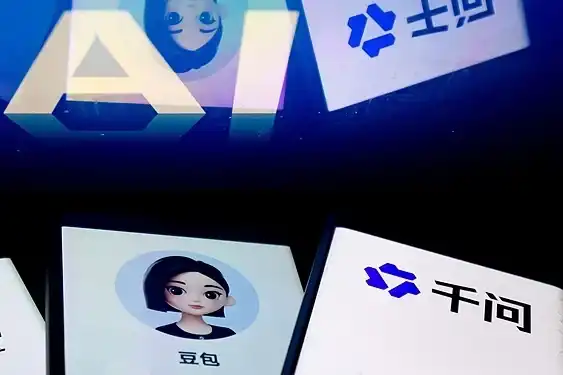
Doubao and Qwen Will Discontinue Agent Functionality on July 15

On July 4th, Doubao and Tongyi Qianwen announced the impending shutdown of their user-created "AI Agent" features. Doubao confirmed its agent feature will be taken offline on July 15, directing users to ByteDance's CatBox app for similar needs. On the same day, Tongyi Qianwen notified users, specifying that personalized interactive agents and user-built agent functions will cease on July 10, with all agent features and services completely deactivated by July 15. After this date, access to agent configurations and historical chat records will be lost. This adjustment impacts core user scenarios like role-playing, personal assistants, and vertical tool agents. The shutdown date coincides with the official implementation of China's "Interim Measures for the Administration of Artificial Intelligence Human-like Interactive Services" on July 15. The new regulations impose strict rules on "human-like emotional interaction services," requiring platforms to implement measures like anti-addiction systems, minor verification, and content moderation. This move is widely seen as a proactive step by the platforms to align with regulatory timelines and mitigate compliance risks. Additionally, commercial challenges are a key driver. Analysis suggests that casual, human-like chat agents generate high-frequency, low-value interactions, leading to high computational costs with poor monetization. As the AI application market shifts from user growth to proving value, sustaining such "high-cost, low-efficiency" user-generated content becomes difficult. Both platforms have outlined transition plans. Doubao will allow data viewing and self-backup for a period after shutdown, with data scheduled for permanent deletion by October 15. Tongyi Qianwen similarly advised users to save important content via copying or screenshots before the deadline. This strategic retreat from C-end agent features signals a broader market shift. Compliance capability and sustainable business models are replacing user scale and feature richness as the new core competitive dimensions. Tongyi Qianwen's recent move to fully open its Agent and Skill platforms to third-party enterprises and developers further underscores a strategic pivot from low-value C-end services to high-value B-end enterprise scenarios.

marsbitHace 3 hora(s)

Doubao and Qwen Will Discontinue Agent Functionality on July 15

marsbitHace 3 hora(s)

Why Did Codex and ChatGPT Merge? What's Next for Codex? OpenAI Core Leader Answers Everything

In 2026, OpenAI's Codex saw explosive growth, with weekly active users surging over 5x to 5 million since January, driven largely by the February launch of its desktop app. Codex desktop lead Andrew Ambrosino explains key shifts behind its evolution. A core change is the inversion of development costs: implementation is now cheap, while curation and taste—judging which of many AI-generated prototypes is valuable—have become the new scarcities. Ambrosino defines taste as a blend of aesthetics, systems thinking, direction, and semantic coherence in interaction. He notes AI still struggles with design because evaluating it requires human cultural context and abstract reasoning about how components relate—capabilities beyond current models. Timing is critical: the same Codex app would have failed months earlier; success hinges on the model's capabilities at launch. Roles are blurring within his team, with engineers, designers, and PMs overlapping significantly. However, Ambrosino cautions against eliminating specialized roles entirely, as each field retains deep expertise. On AI-assisted development, the focus has shifted from measuring code written by AI to distinguishing between supervised and unsupervised generation. A current challenge is teaching models to simplify code, not just add complexity. The merger of Codex and ChatGPT stems from observed user behavior: non-developers adopted Codex for general knowledge work despite its developer-centric interface. This revealed a collapsing boundary between specialized tools and universal assistants. The vision is a "home base" that orchestrates tasks across external professional tools (like Excel or Premiere Pro) via connectors, rather than rebuilding everything internally. An internal example showed Codex helping edit video by interacting with Premiere Pro's files and even writing a plugin for it. The future direction is a unified, extensible platform that serves as a central hub for automating and managing work across any specialized tool the user employs.

marsbitHace 3 hora(s)

Why Did Codex and ChatGPT Merge? What's Next for Codex? OpenAI Core Leader Answers Everything

marsbitHace 3 hora(s)

Trading

Spot
活动图片