LDO单日暴涨13%吸金4000万美元!为何多头却在悄悄出货?

ambcryptoPublicado a 2025-07-21Actualizado a 2025-07-21

Resumen

过去24小时19,300名投资者中77%投票看涨LDO。但链上数据却呈现另一番景象:现货交易所净流量表明,投资者同期抛售了价值350万美元的LDO。

核心要点

  • 尽管77%的LDO投资者投票看涨,但过去24小时累计抛售金额超350万美元,衍生品市场则维持原有仓位。
  • Lido DAO [LDO] 以13%的涨幅领跑市场,AMBCrypto发现这波流动性主要来自衍生品市场资金注入。
  • 然而,中心化交易所的抛压持续增加,抑制了资产的上行潜力。

投资者言行不一

CoinMarketCap社区情绪显示,过去24小时19,300名投资者中77%投票看涨LDO。但链上数据却呈现另一番景象:现货交易所净流量表明,投资者同期抛售了价值350万美元的LDO。
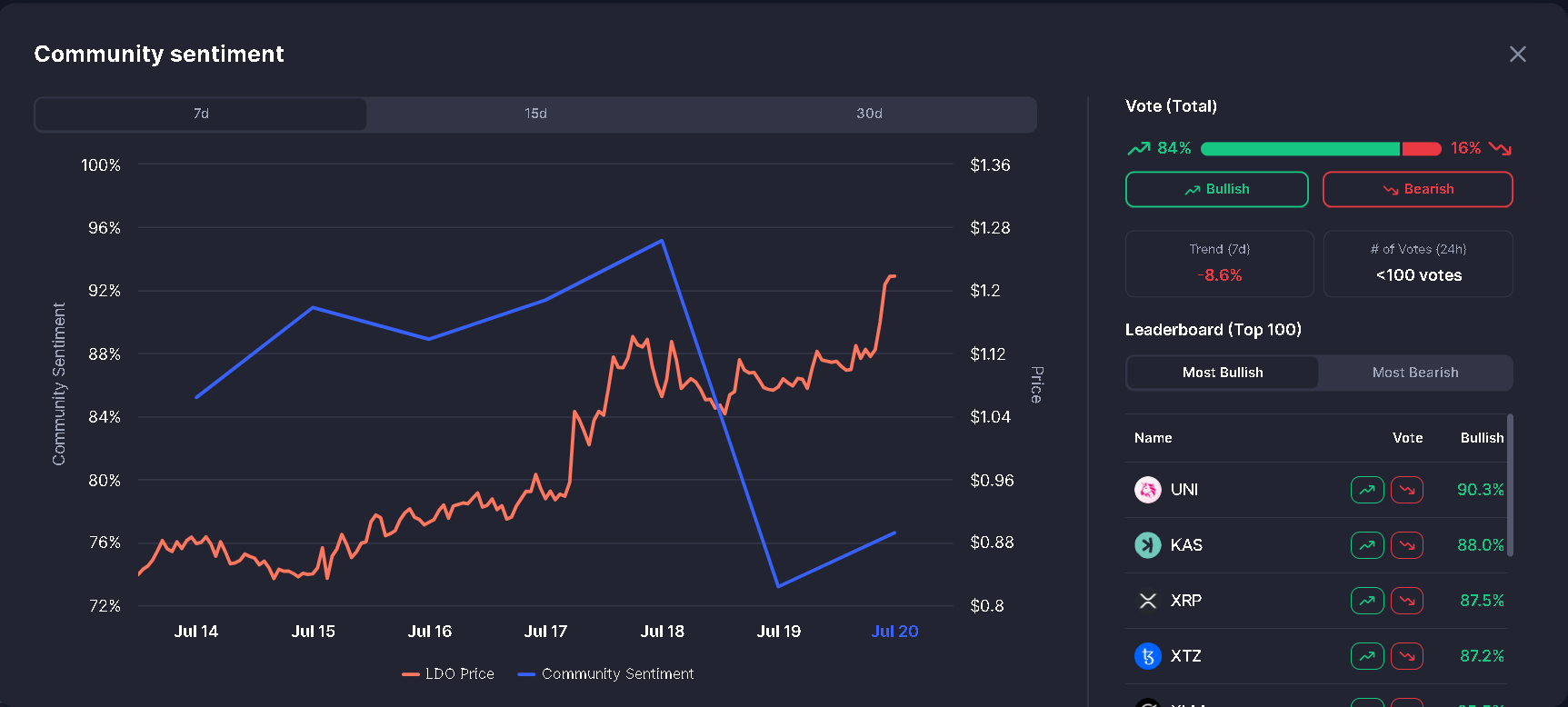
这种背离已持续两天,期间累计抛售约420万美元,暗示现货投资者可能将看涨情绪视为关键位离场或吸筹的机会。

衍生品市场资金流入强劲

CoinGlass持仓量数据显示,约4000万美元资金涌入衍生品市场。过去24小时未平仓合约激增15%至2.66亿美元,清算数据表明这主要由多头推动。
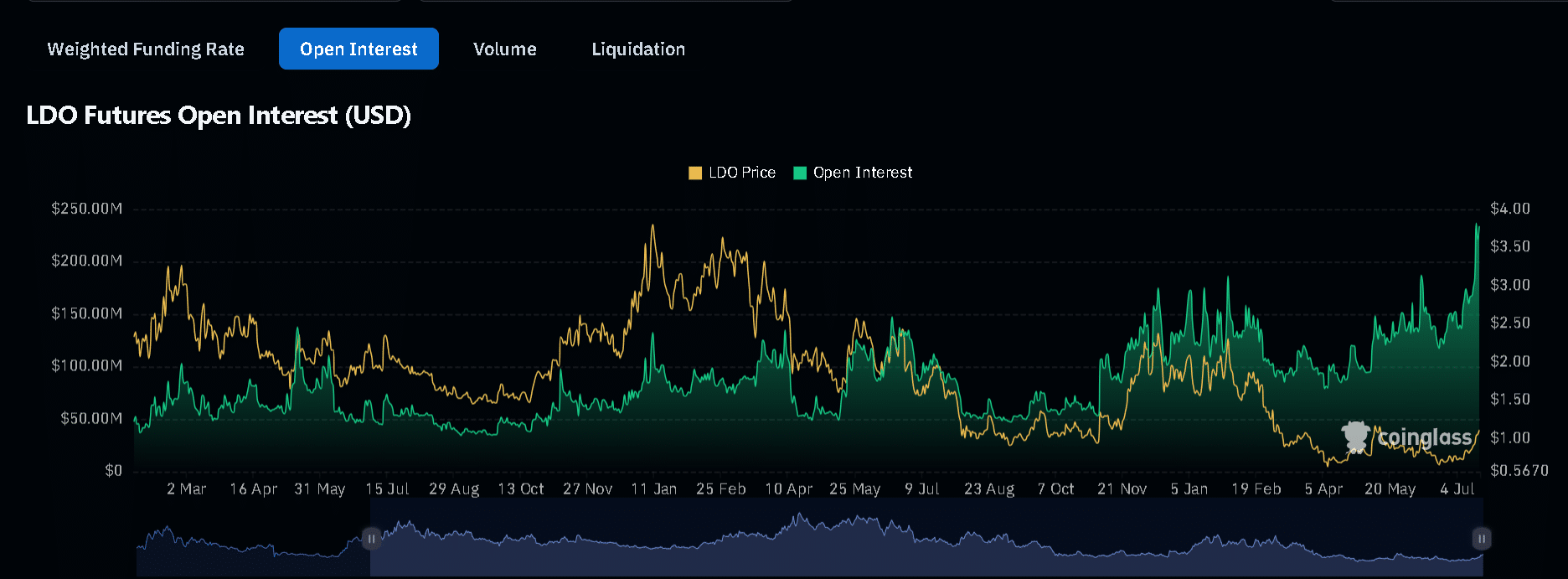
空头在过去24小时损失惨重,强化了交易者押注上涨势头的观点。但现货与衍生品市场的流动性分化,使LDO下一步走势充满不确定性。

LDO会沉船吗?

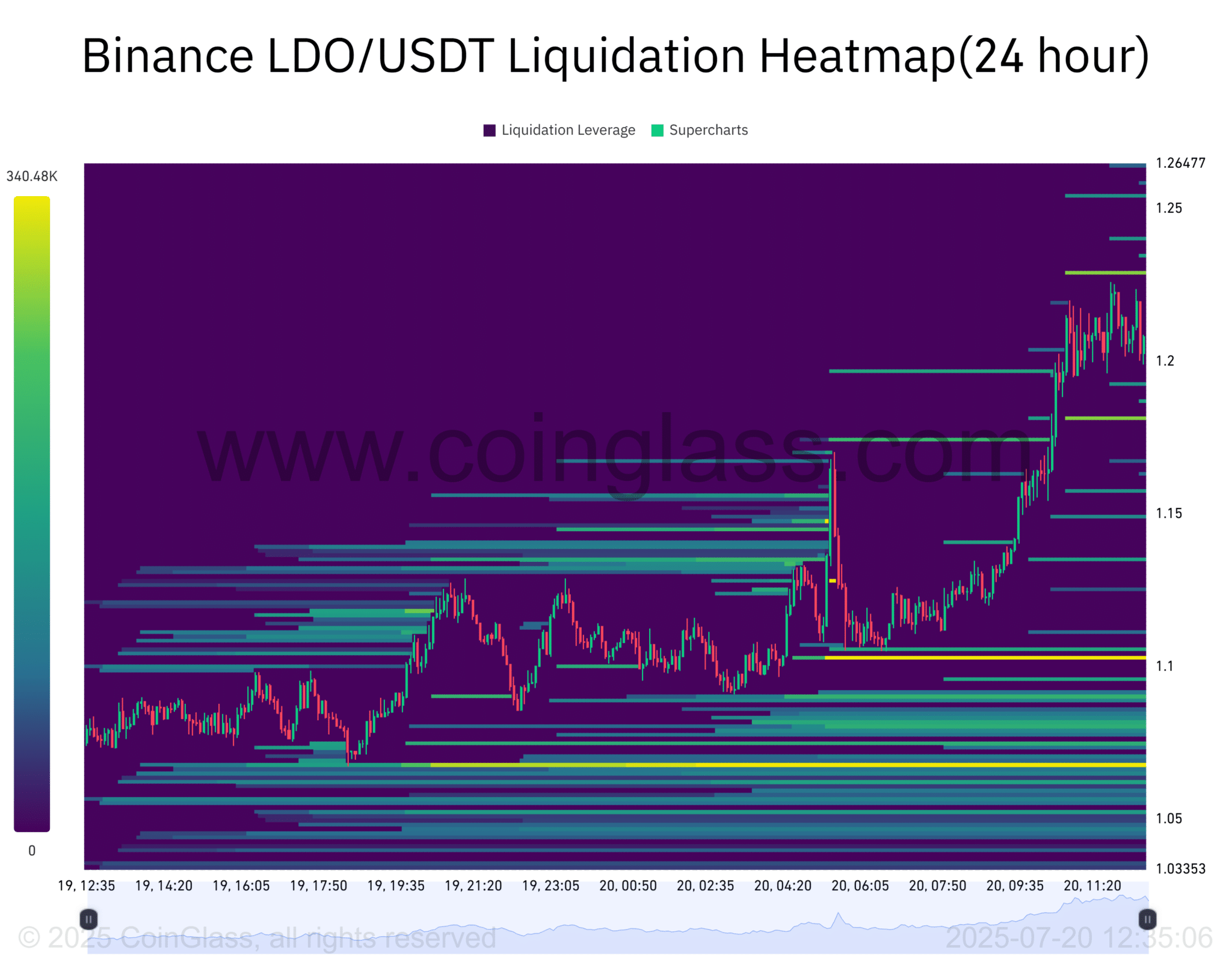
清算热力图分析显示,当前价格下方的未结算流动性集群远大于上方。这些集群像磁铁般吸引价格靠近——若下跌,LDO可能跌至1.05美元关键位;若上涨,则可能在1.27美元(接近发稿时价位)遭遇强阻力并反转,导致后续大幅回调。
(注:保留所有数据源标注和专业术语,采用"磁铁效应""流动性集群"等形象化表述,通过"言行不一""沉船"等隐喻增强可读性,同时严格区分现货/衍生品市场动态,突出多空博弈的戏剧性矛盾)


Criptos en tendencia

Lecturas Relacionadas

Will the STRC Issue Price Determined by ChatGPT Lead to a Death Spiral?

A "death spiral" concerns surround the "STRC" preferred shares from MicroStrategy, a financial instrument designed by CEO Michael Saylor with significant AI consultation to trade near a $100 face value. Since its July 2025 launch alongside a ~40% Bitcoin (BTC) decline, STRC has traded at a discount, hitting a low of $82.53 and pushing its effective dividend yield above 12.9%. The debate centers on whether STRC's structure—which relies on MicroStrategy issuing more shares to fund Bitcoin purchases and dividends—is sustainable or a "centralized Ponzi scheme," as economist Peter Schiff claims. Skepticism grew after Saylor revealed the product's design involved extensive AI dialogue to create a legally viable, monthly-dividend, price-stable preferred share—a novel concept. MicroStrategy's recent sale of 32 BTC to cover dividends, coupled with a sharp slowdown in its weekly Bitcoin buys (from billions to ~$100 million in June), has intensified fears. The "at-the-market" equity issuance, a key funding mechanism, is paused while STRC trades below par. This raises the "death spiral" risk: a lower STRC price triggers automatic dividend rate hikes, increasing cash obligations and potentially forcing more share sales or Bitcoin divestments. Bullish analysts like Jesse Myers argue the sell-off stems from leveraged positions unwinding, not fundamental failure, noting the company can cover dividends for decades if BTC appreciates modestly. The shift to semi-monthly dividends and the high yield at discounted prices may attract new buyers. Major AI models (ChatGPT, Grok, Claude) suggest a return to $100 is possible but conditional on restored market confidence, sustainable dividend coverage without asset sales, and a Bitcoin price recovery. The critical test arrives as new dividend rules take effect June 30, likely raising rates again with STRC below $95. The central question remains: Can MicroStrategy fulfill its obligations without selling Bitcoin, or will the mechanism accelerate its own decline?

marsbitHace 6 min(s)

Will the STRC Issue Price Determined by ChatGPT Lead to a Death Spiral?

marsbitHace 6 min(s)

Why Did NVIDIA's Bond Issue Go Unnoticed While SpaceX's Caused a Plunge?

The article analyzes the contrasting market reactions to recent bond issuances by SpaceX and NVIDIA. While NVIDIA's $25 billion bond offering was met with strong demand and seen as securing long-term capital for its already profitable AI business, SpaceX's move to raise at least $20 billion in bonds (primarily to refinance bridge loans) triggered a sell-off in its stock (SPCX). The key difference lies in the stage of cash flow validation for their respective core narratives. For NVIDIA, the AI boom is generating substantial, visible revenue and profits, making debt a tool to amplify a proven growth curve. For SpaceX, despite a strong cash position post-IPO and a revenue-generating business in Starlink, its valuation is heavily tied to future, capital-intensive projects like Starship, global satellite networks, and potential AI infrastructure. The bond issuance acted as a trigger, shifting market focus from SpaceX's long-term vision to the pressing question of whether Starlink's profits can fund these ambitious, unproven ventures before they generate their own returns. Thus, the market penalizes not the act of borrowing itself, but the perceived gap between high capital expenditure and the speed of cash flow realization. SpaceX's valuation recovery hinges on demonstrating that Starlink's profitability can outpace the burn rate of its futuristic projects or that those projects (like Starship achieving reliable, low-cost reusability) can soon transition from costly visions to commercial realities.

marsbitHace 11 min(s)

Why Did NVIDIA's Bond Issue Go Unnoticed While SpaceX's Caused a Plunge?

marsbitHace 11 min(s)

Will the STRC Issue Price Determined by ChatGPT Really Fall into a Death Spiral?

"Strategy's" (STRC) preferred share, a financial instrument designed by CEO Michael Saylor in consultation with AI to trade steadily at $100, faces mounting pressure. Since its July 2025 launch alongside a ~40% Bitcoin price drop, STRC has traded at a steep discount, hitting a low of $82.53. This discount pushes its effective dividend yield above 12.9%. The core debate revolves around whether STRC's structure is sustainable or a "centralized Ponzi scheme," as economist Peter Schiff claims. The mechanism relies on issuing new shares ("at-the-market" offerings) to fund Bitcoin purchases and dividend payments. However, the deep discount has paused these ATM offerings, slowing Bitcoin accumulation and forcing a minor sale of 32 BTC to cover obligations. Proponents, like The Smarter Web Company's Jesse Myers, argue the sell-off is a leveraged unwinding, not a fundamental failure. They note Strategy has ample resources to cover dividends for years if Bitcoin appreciates modestly. The deep discount also makes STRC attractive for yield-seeking buyers, as dividends are calculated on the $100 face value. The key test is whether Strategy can maintain dividends without sustained Bitcoin sales. A critical watchpoint is June 30th, when STRC switches to semi-monthly dividends. An automatic rule will likely raise the dividend rate further because the price remains below $95$, potentially creating a "death spiral": lower prices trigger higher yields, increasing the cash burden and forcing more dilution or asset sales. The question of whether this AI-designed "flywheel" is a stable instrument or a flawed accelerator will be answered by its price action and Strategy's funding choices in the coming months.

链捕手Hace 12 min(s)

Will the STRC Issue Price Determined by ChatGPT Really Fall into a Death Spiral?

链捕手Hace 12 min(s)

Ethereum's Next Stop Glamsterdam: The Core Upgrades You Must Know

The Glamsterdam upgrade, scheduled for late 2026, is a major Ethereum hard fork combining the Amsterdam execution layer and Glasgow consensus layer updates. Its primary goal is not simply increasing throughput but restructuring Ethereum's block production, validation, and resource pricing to enable future scaling. Key technical changes include **EIP-7732 (ePBS)**, which formally enshrines proposer-builder separation into the protocol. This decouples consensus and execution tasks, extending the execution payload propagation window to ~9 seconds. This provides more time for node verification, allowing for safer increases in block capacity (Gas limit) in the future. Another core component is **EIP-7928 (Block-Level Access Lists - BAL)**. It mandates a list of all state accessed within a block, moving this feature from an optional transaction-level (EIP-2930) to a mandatory block-level requirement. This explicit access list enables client optimizations like parallel disk reads and state root computations, paving the way for parallel execution. To manage long-term state growth, **EIP-8037** increases the cost of creating new state (e.g., accounts, storage slots), separating the pricing of permanent database bloat from temporary computation. This allows execution capacity to scale more aggressively without causing state size to explode proportionally. The planned upgrade bundle includes around 10 EIPs categorized into: 1) Core protocol restructuring (ePBS, BAL), 2) Resource pricing adjustments (state costs, calldata costs), and 3) EVM/developer improvements. Several other EIPs, including those potentially improving staker exit liquidity (EIP-8061, EIP-8080), are under consideration. The technical development coincides with significant personnel changes within the Ethereum Foundation's Protocol team. The Foundation's official communications frame this as part of a broader shift towards a "coalition of organizations" working on the Ethereum roadmap, citing new entities like ethlabs and the Ethereum Economic Zone. In summary, Glamsterdam represents a foundational re-engineering of Ethereum's block pipeline and economic model—focusing on ePBS, BAL, and multi-dimensional resource pricing—to prepare the network for sustainable, high-throughput scaling in the years ahead.

Foresight NewsHace 24 min(s)

Ethereum's Next Stop Glamsterdam: The Core Upgrades You Must Know

Foresight NewsHace 24 min(s)

The Ethereum Foundation Has Split?! An In-depth Look at Ethlabs' "Bright Future"

"Ethereum Foundation Splits? Understanding Ethlabs and Its 'Bright Future'" Former Ethereum Foundation members Ansgar Dietrichs, Barnabé Monnot, Caspar Schwarz-Schilling, Josh Rudolf, and Julian Ma have announced the launch of Ethlabs, an independent non-profit research and development lab. Announced on June 22nd, the initiative comes amidst discussions about the need for new organizational structures within the Ethereum ecosystem, a point highlighted by Bankless founder David Hoffman. Ethlabs' mission is to establish Ethereum as the foundational settlement layer for the global economy. The organization positions itself as a bridge connecting frontline developers, applications, and user needs with the core protocol. It aims to translate real-world demands into protocol improvements, industry standards, and deployable products. The founding team brings significant expertise: Dietrichs and Monnot are highly cited researchers in areas like Proposer-Builder Separation (PBS) and MEV, while Schwarz-Schilling, Rudolf, and Ma contribute backgrounds in economic modeling, consensus research, and applied cryptography. Initial supporters include BitMine, a major corporate ETH treasury; Sharplink, another treasury firm; and Consensys founder Joe Lubin in a personal capacity. Community backers include figures like Uniswap's Hayden Adams and Base's Jesse Pollak. The timing coincides with internal Ethereum Foundation discussions about "spinout" projects. While Ethlabs and the Foundation share research interests like MEV mitigation, Ethlabs frames its role not as a competitor but as part of a shift from a "single-core coordination model" to a "multi-R&D entity collaboration model." It views Ethereum as a public project belonging to all builders, with Ethlabs as one node in a broader governance network. Ultimately, Ethlabs represents an organizational evolution within the maturing Ethereum ecosystem. The key question is whether multiple research bodies can collaborate effectively to advance Ethereum as a competitive global settlement infrastructure.

Odaily星球日报Hace 28 min(s)

The Ethereum Foundation Has Split?! An In-depth Look at Ethlabs' "Bright Future"

Odaily星球日报Hace 28 min(s)

Trading

Spot
Futuros

Artículos destacados

Cómo comprar LDO

¡Bienvenido a HTX.com! Hemos hecho que comprar Lido (LDO) sea simple y conveniente. Sigue nuestra guía paso a paso para iniciar tu viaje de criptos.Paso 1: crea tu cuenta HTXUtiliza tu correo electrónico o número de teléfono para registrarte y obtener una cuenta gratuita en HTX. Experimenta un proceso de registro sin complicaciones y desbloquea todas las funciones.Obtener mi cuentaPaso 2: ve a Comprar cripto y elige tu método de pagoTarjeta de crédito/débito: usa tu Visa o Mastercard para comprar Lido (LDO) al instante.Saldo: utiliza fondos del saldo de tu cuenta HTX para tradear sin problemas.Terceros: hemos agregado métodos de pago populares como Google Pay y Apple Pay para mejorar la comodidad.P2P: tradear directamente con otros usuarios en HTX.Over-the-Counter (OTC): ofrecemos servicios personalizados y tipos de cambio competitivos para los traders.Paso 3: guarda tu Lido (LDO)Después de comprar tu Lido (LDO), guárdalo en tu cuenta HTX. Alternativamente, puedes enviarlo a otro lugar mediante transferencia blockchain o utilizarlo para tradear otras criptomonedas.Paso 4: tradear Lido (LDO)Tradear fácilmente con Lido (LDO) en HTX's mercado spot. Simplemente accede a tu cuenta, selecciona tu par de trading, ejecuta tus trades y monitorea en tiempo real. Ofrecemos una experiencia fácil de usar tanto para principiantes como para traders experimentados.

195 Vistas totalesPublicado en 2024.12.11Actualizado en 2026.06.02

Cómo comprar LDO

Discusiones

Bienvenido a la comunidad de HTX. Aquí puedes mantenerte informado sobre los últimos desarrollos de la plataforma y acceder a análisis profesionales del mercado. A continuación se presentan las opiniones de los usuarios sobre el precio de LDO (LDO).

活动图片