下一任美联储主席,两个“凯文”激斗,贝森特坐山观虎

marsbitPublicado a 2025-07-08Actualizado a 2025-07-09

Federal Reserve

在特朗普的高调选拔中,下一任美联储主席的角逐正成为一场戏剧化的权力游戏。

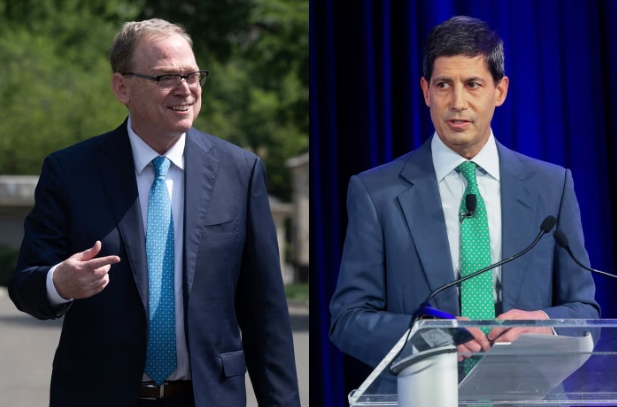
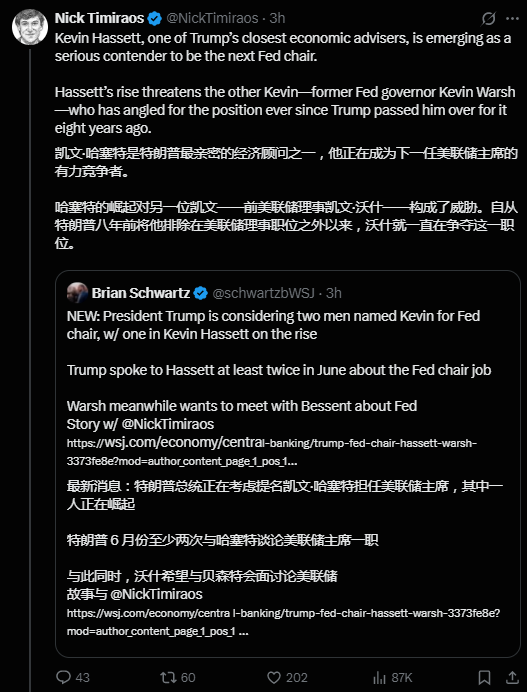
据媒体报道,美国国家经济委员会主任凯文·哈塞特(Kevin Hassett)和前美联储理事凯文·沃什(Kevin Warsh)——两位“凯文”正在激烈竞争美联储主席这一关键职位。

据媒体援引知情人士透露,哈塞特的势头正在迅速崛起,而沃什这位早期热门人选则开始面临质疑。

最新动态显示,哈塞特作为特朗普核心经济顾问,已在6月与总统至少两次会面讨论美联储主席一职;而沃什虽是早期热门,却因未获特朗普内圈信任及其“鹰派”背景而面临质疑。

有“新美联储通讯社”之称的资深联储报道记者Nick Timiraos也发推表示,哈塞特正和沃什就这一职位展开激烈竞争。
Federal Reserve

与此同时,美国财长贝森特被传可能既想担任财政部长,又觊觎美联储主席之位,甚至有传言称特朗普曾提出让他身兼两职。


哈塞特:经济圈“老臣”,似为迎合特朗普“转变立场”

63岁的哈塞特是一位学术派经济学家,曾在上世纪90年代就职于美联储,拥有深厚的理论背景。

过去八年间,他一直是特朗普经济团队的核心成员,曾在特朗普第一任期内两度任职,并适应性地调整立场以迎合特朗普。

据知情人士向媒体透露,哈塞特近期从“不感兴趣”转为明确表示若获提名将接受主席之位。

他的公开立场也出现明显转变。他曾宣称自己的工作是"提醒人们尊重美联储的独立性",但最近成为鲍威尔最严厉的批评者之一,指控美联储基于党派立场而非经济数据做决定。

在6月末的一次电视采访中,哈塞特曾称鲍威尔“与民主党联手”帮助竞选对手:

“鲍威尔在大选前夕降息以帮助哈里斯。”

而在去年秋天,哈塞特曾对美联储9月降息给出了善意的评价,称政策制定者应该根据其决策时掌握的信息进行评级,称此次降息“根据当时掌握的数据来看非常合理”。


沃什:精英背景,正试图重塑鹰派形象

55岁的沃什曾是美联储理事,拥有高端金融圈背景,与亿万富翁Ronald Lauder家族联姻,并与传统共和党人如Paul Ryan关系密切。

作为前总统布什的顾问,沃什过去十年是自由贸易的积极支持者,这既是他的优势,也是特朗普对其信任的障碍。

最近几周,沃什试图重新包装其长期支持的通胀导向或"鹰派"货币政策。

在多次演讲和周一的福克斯采访中,沃什建议如果与贝森特合作缩减其持有的约6.2万亿美元国债和抵押贷款支持证券,美联储可以更激进地降息。

报道称,他本月计划前往华盛顿与贝森特会面讨论主席职位,其与特朗普的长期联系和电视形象可能成为加分项。


贝森特:身处微妙位置,即是顾问也是候选人

财政部长贝森特在这场主席角逐中扮演着独特角色。

据知情人士透露,特朗普曾向贝森特表示希望他成为下一任美联储主席,甚至一度提出让他兼任财政部长和美联储主席,尽管后者是否为认真提议尚不明朗。

贝森特本人曾建议特朗普考虑现任美联储理事沃勒和鲍曼为主席候选人,这两位均为特朗普任命,但目前被视为小概率人选。

媒体分析称,贝森特这一表态可能进一步加剧美联储内部的分歧,尤其考虑到沃勒和鲍曼近期表示可能在本月会议上投票支持降息,与鲍威尔立场相左。

贝森特对鲍威尔的态度也颇具戏剧性。

4月时,他曾称美联储独立性是“需珍藏的珠宝盒”,但到了6月末,他却对投资者嘲讽鲍威尔谨慎的降息策略,称其如“摔倒后总是低头走路的老者”。

据知情人士透露,他还关注鲍威尔在主席任期结束后是否会继续留任理事至2028年1月,认为这是鲍威尔维护美联储独立性的最后筹码。


特朗普对主席人选的明确期待:降息优先

特朗普与现任主席鲍威尔的矛盾是这场角逐的导火索。

此前,他已多次公开表示不满,认为美联储未能有效应对其关税政策可能引发的通胀风险,同时指责高利率政策阻碍经济增长。

特朗普还明确表示,期望下任美联储主席能迅速开启降息,这比他首个任期时的条件更加明确。

市场分析人士指出,这种公开对立可能进一步削弱美联储的独立性,若新主席过于迎合特朗普的降息需求,可能引发市场对通胀预期的担忧。

鲍威尔作为美联储主席的任期将于明年5月结束,他作为美联储理事会成员的任期将持续至2028年1月,市场猜测特朗普可能会在鲍威尔卸任前提前宣布继任者。

媒体透露,特朗普顾问们曾探讨的一种可能性是,用明年2月一个空缺的理事席位将哈塞特安排进美联储董事会,随后再决定由他或沃勒接任主席。

Lecturas Relacionadas

Coldcard Theft Reflection: Source Code Visibility Does Not Equal Security

The article examines the open-source vs. closed-source debate in crypto, prompted by a theft of over $100M in Bitcoin from Coldcard hardware wallets. It clarifies key terminology: true "Free and Open Source Software" (FOSS) grants four essential freedoms (use, study, share, modify), while "source available" code, like Coldcard's firmware, may have usage restrictions. The piece argues that visible source code alone does not guarantee security; actual safety depends on the economic incentives for thorough, ongoing review by skilled individuals. Using Bitcoin Core as a model, the article describes a successful, transparent open-source development culture built on public review and consensus. It contrasts this with the Coldcard case, where a critical bug in a lightly-reviewed, source-available library went undetected for years, highlighting a "tragedy of the commons" scenario where assumed but absent scrutiny creates vulnerability. The economics of licensing are crucial: restrictive licenses can limit the pool of motivated commercial reviewers. Finally, the article explores AI's impact. It cites the Bitcoin Red Team's use of AI to rapidly audit codebases and find vulnerabilities at scale, demonstrating a powerful new tool for security. However, AI also floods projects with low-quality code, straining maintainers. The piece concludes that in high-stakes crypto, only well-audited projects—whether open or closed-source—can withstand evolving threats, with AI both challenging and aiding security practices.

marsbitHace 7 min(s)

Coldcard Theft Reflection: Source Code Visibility Does Not Equal Security

marsbitHace 7 min(s)

Mysterious "Ox Alpha" Large Model Goes Viral with Limited-Time Free Access

A mysterious anonymous AI model named "Ox Alpha," nicknamed "Cow is Coming" by Chinese netizens, has appeared on OpenRouter, sparking widespread speculation. The model offers a 1 million token context, supports text, image, and video inputs, can call tools, and is currently free. Its standout feature is strong coding ability. Initial tests on the DeepSWE benchmark, which evaluates real-world software engineering tasks, showed an 80% pass rate on a subset of tasks, reportedly nearing top-tier code models. However, follow-up tests yielded a 63% score, with variations attributed to different task sets and configurations. The model's true developer is a major topic of debate. The prevailing theory points to Zhipu AI's unreleased GLM-5.3 Flash or its multimodal variant. Evidence cited includes identical visual token consumption patterns with GLM-5V-Turbo for videos, a consistent offset in text token counts compared to GLM-5.3, and similar behavioral traits like refusing audio processing. Zhipu has a precedent of anonymous testing. Simultaneously, another anonymous model, "korrine," appeared on Code Arena, with guesses ranging from Moonshot's Kimi K3.1 to models from Qwen or MiMo, adding to the industry's guessing game. This trend of anonymous "undercover" testing allows for unbiased performance evaluation in platforms like Arena and provides real-world, high-pressure testing through tools like OpenRouter before official release. It also serves as an effective marketing tactic, prolonging discussion through suspense. If Ox Alpha is indeed a "Flash" model, its performance raises expectations for the full-scale version's potential.

marsbitHace 4 hora(s)

Mysterious "Ox Alpha" Large Model Goes Viral with Limited-Time Free Access

marsbitHace 4 hora(s)

Trading

Spot
活动图片