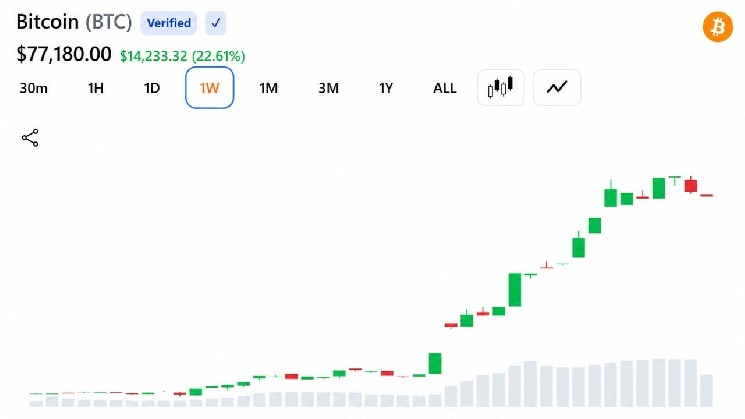
Обеспеченные биткоинами кредиты помогают купить недвижимость и сэкономить на налогах

cryptonews.ruPublicado a 2025-04-16Actualizado a 2025-06-16

Все больше ранних пользователей криптовалюты, предпринимателей и обеспеченных людей, чье богатство хранится в цифровом виде, обращается к таким инструментам, так как они не подходят под традиционные критерии получения финансирования на недвижимость, сообщил Маурисио Ди Бартоломео, соучредитель Ledn.

Модели кредитования, основанные на залоге в биткоине, позволяют заемщикам использовать свои активы без реализации. Поскольку получение кредита обычно не считается налогооблагаемым событием, клиенты получают ликвидность, сохраняя доступ к потенциальному росту стоимости своих активов.

«Заимствование с использованием биткоина в качестве залога не приводит к уплате налогов на прирост капитала в большинстве юрисдикций, потому что взятие кредита под обеспечение актива не является реализацией — вы не продаете свои биткоины», — сказал Ди Бартоломео.

Биткоин-кредиты все чаще финансируют покупку домов

Чтобы получить кредит, клиенты блокируют свои BTC по модели LTV (займ относительно стоимости) около 50% и получают фиат или стейблкоины. По словам Ди Бартоломео, среднее время выдачи средств составляет 9,6 часов. Эти деньги могут пойти как на первоначальный взнос, так и на полную оплату недвижимости.

Схема также гибкая: проценты и комиссии начисляются в течение срока действия, но ежемесячные выплаты не обязательны. Заемщики могут вернуть средства в любой момент без штрафов, а если коэффициент LTV остаётся ниже 60%, то кредит можно рефинансировать. Также есть возможность забрать часть обеспечения, если стоимость биткоина растет.
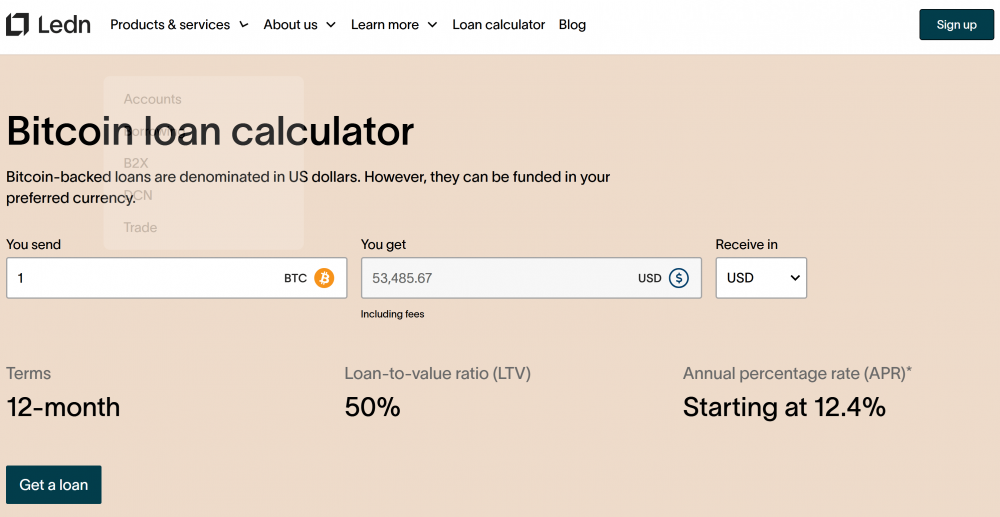

Калькулятор кредита с биткоин-обеспечением от Ledn. Источник: Ledn

География спроса и волатильность остаются ключевыми факторами

Ди Бартоломео отметил, что кредиты под залог биткоина набирают популярность в Латинской Америке, США и части Европы.

«Главное преимущество биткоина как обеспечения — его международность», — сказал он.

Однако волатильность остаётся главной проблемой таких операций. Если цена биткоина падает, а LTV растёт, клиенты получают уведомления о необходимости предоставить дополнительное обеспечение.

Если LTV достигает уровня 80%, то кредитор автоматически продает часть биткоинов, чтобы покрыть риск. При этом сделка по недвижимости уже завершена, и ликвидация лишь закрывает долг, оставляя остаток клиенту.

Биткоин как обеспечение: кредитоспособность не требуется

Традиционные банки часто избегают работы с криптовалютой из-за регуляторной неопределённости и рисков. Однако такие компании, как Ledn, предлагают решения, которые минуют необходимость проверки кредитоспособности.

Заемщики предоставляют обеспечение в пропорции 2:1, а система позволяет мгновенно ликвидировать активы, если цена падает.

«Мы считаем, что биткоин — самое надежное обеспечение в мире. Он работает круглые сутки, ликвиден, и его можно отправлять куда угодно в режиме реального времени», — добавил Ди Бартоломео.

Ledn сообщила, что за первый квартал 2025 года выдала более $300 млн в розничных кредитах. К концу года компания планирует превысить отметку в $1 млрд. В 2024 году её клиенты заработали в восемь раз больше на росте цены биткоина, чем заплатили в виде процентов по кредитам. Более 1000 BTC было освобождено в качестве избыточного обеспечения после роста курса.

Рост интереса к биткоин-кредитам

По словам Ди Бартоломео, всё больше состоятельных людей рассматривают криптоактивы как способ доступа к крупным покупкам. Они не хотят продавать биткоины, которые, по их мнению, будут расти в цене, и предпочитают использовать их как обеспечение для приобретения твердых активов, таких как дома.

«Они хотят сохранить доступ к своему наиболее доходному активу и одновременно позволить себе новую недвижимость без продажи своих BTC», — сказал он.

В мае генеральный директор Xapo Bank Шеймус Рокка сообщил, что доверие к биткоину как к обеспечению растет. В марте прошлого года банк запустил продукт, который позволяет клиентам брать кредиты в долларах США, используя биткоин в качестве залога.

Квалифицированные клиенты могут получить займы до $1 млн, сохраняя свои криптоактивы. Продукт стал доступен всем пользователям платформы.
Lecturas Relacionadas

Foundation Steps Back, Ethlabs Steps Forward: Ethereum Undergoes Its Largest Restructuring in History

On June 23rd, the Ethereum ecosystem witnessed two major shifts, signaling a significant governance realignment. First, former Ethereum Foundation researchers established Ethlabs, a new independent non-profit. Backed by major ETH holders like Bitmine and SharpLink, Ethlabs aims to address practical needs for institutional adoption, including faster settlement, native asset issuance, cross-chain transactions, and mainnet scaling. Secondly, the Ethereum Foundation announced a major restructuring, laying off 54 employees (20% of its staff) to become a leaner entity focused on protocol governance and maintenance rather than being the primary builder. This move represents a pivotal correction. Criticisms had mounted over the Foundation's perceived slowness, lack of clear strategy, and over-reliance on Vitalik Buterin's influence. Ethlabs emerges as a more execution-oriented, "industrialized" layer focused on market adoption—bridging the gap between research and real-world use. Notably, Vitalik Buterin is absent from its list of supporters, interpreted as an intentional step to avoid excessive personal endorsement and allow the organization to build independent credibility. The Ethereum Foundation's downsizing and redefinition mark a retreat from its former central coordinating role. It now aims to share the "privilege of stewarding Ethereum" with other emerging groups like Ethlabs, the Ethereum Applications Guild, and The Ethereum Economic Zone. Analysts frame this dual shift as the Foundation ensuring Ethereum remains "correct" (credibly neutral), while Ethlabs must prove it remains "effective" (competitive and attractive for capital and adoption). This addresses community "shareholder-like anxiety" about ETH's market performance. While risks exist—such as concerns over shifting from Foundation centrality to large-holder influence—the consensus is that the greater risk for Ethereum was inaction, caught between technical idealism and organizational inertia. These steps aim to create a more multi-stakeholder, execution-driven future for the network.

链捕手Hace 3 hora(s)

Foundation Steps Back, Ethlabs Steps Forward: Ethereum Undergoes Its Largest Restructuring in History

链捕手Hace 3 hora(s)

Second Half of U.S. Crypto Policy: The Clarity Act Aims for 60 Votes, CFTC's "One-Person Commission" Becomes Biggest Variable

In a pivotal year for US crypto policy, the "CLARITY Act" is advancing in the Senate but faces a high hurdle, needing 60 votes to pass. Key challenges include bridging partisan divides on ethics and swaying undecided Republican senators within a tight legislative calendar of only about 40 working days. The policy "second half" involves intense negotiations on a broader framework for Web3 and DeFi, including crypto tax reforms and the Blockchain Regulatory Certainty Act. A significant uncertainty is the understaffed CFTC, operating with four commissioner vacancies, which complicates regulatory clarity. Meanwhile, the departure of key "crypto champions"—SEC Commissioner Hester Peirce and Senator Cynthia Lummis—will impact ongoing policy efforts. Industry experts are cautiously optimistic but realistic. Sara K. Weed notes that while progress is being made, CLARITY is unlikely to pass this Congress, pushing agencies like the SEC and CFTC to provide more guidance. Sulolit Mukherjee suggests meaningful crypto tax legislation is more likely to be attached to larger must-pass bills. Rashan Colbert discusses the jurisdictional debate over prediction markets, emphasizing the need for a regulatory framework that fosters their development as financial tools rather than treating them broadly as gambling. The clock is ticking, but opportunities remain for substantive progress through continued bipartisan dialogue and pragmatic efforts.

marsbitHace 6 hora(s)

Second Half of U.S. Crypto Policy: The Clarity Act Aims for 60 Votes, CFTC's "One-Person Commission" Becomes Biggest Variable

marsbitHace 6 hora(s)

Dan Koe's New Essay: Escaping the Fate of the Wage Slave, How to Survive the AI Replacement Wave?

Dan Koe argues that the true threat in the AI era isn't technology itself, but a reliance on others for one's livelihood and happiness. The core problem is "wage slavery"—spending life on unfulfilling work. To survive and thrive, one must escape this by building their own enterprise. The key is developing five elements: Agency (initiative), Taste (discernment), Persuasion, Persistence, and Iteration. These boil down to problem-solving skills and experiential knowledge, which cannot be learned passively but only through doing your own projects. The solution is to become "unemployable" by shifting your identity. This requires: 1) Radically changing your environment to force growth, 2) Choosing a medium (like content creation) that provides real feedback through trial and error, and 3) Mastering either code or, preferably, media (content). Content creation is more valuable because its subjective nature and need for human perspective create a durable advantage over generic AI output. To start, define your life's work by answering foundational questions about your innate knowledge, unique abilities, and contrarian beliefs. Then, immediately act by publishing your first piece of content. The cycle of creating, receiving feedback, and iterating is the essential path to developing the skills needed for an independent, meaningful career and financial resilience.

marsbitHace 7 hora(s)

Dan Koe's New Essay: Escaping the Fate of the Wage Slave, How to Survive the AI Replacement Wave?

marsbitHace 7 hora(s)

Research Report Analysis: Morgan Stanley Details SanDisk SNDK, The Truth About Cloud Data Center Pricing Power and AI Inference Benefits

Morgan Stanley raised its price target for SanDisk (SNDK) from $1100 to $1750 on June 22, maintaining an Overweight rating. The upgrade is driven by AI inference demand reshaping the NAND market, particularly for KV Cache and context window storage in cloud data centers. These cloud clients exhibit price inelasticity and sign long-term contracts, granting SanDisk significant pricing power. SanDisk's New Business Model (NBM) agreements, covering over one-third of FY27 bit shipments with 3-5 year terms and fixed price/price collar structures, are crucial. They are projected to sustain gross margins around 80% even at floor prices, providing a buffer against cyclical downturns. Morgan Stanley forecasts gross margins to surge from 30.3% in FY25 to 86.7% in FY27e. With NAND supply expected to remain tight into 2026/2027 and cloud/data centers becoming the largest end-market, SanDisk holds supply-side pricing power. The company targets 15-19% bit growth via technology transitions, not capacity expansion. Revenue is projected to grow ~6.6x from FY25 to FY27, with EPS rising from $2.74 to $14.73, driven by high-margin cloud business. Key upside catalysts include faster enterprise SSD adoption and edge AI growth. Downside risks involve slower industry growth, competitor capex increases, market share loss, and competition from Chinese players like YMTC. The investment thesis rests on AI-driven structural demand, NBM's margin protection, and sustained supply tightness. The $1750 target implies ~28x FY27e P/E.

marsbitHace 7 hora(s)

Research Report Analysis: Morgan Stanley Details SanDisk SNDK, The Truth About Cloud Data Center Pricing Power and AI Inference Benefits

marsbitHace 7 hora(s)

Trading

Spot
Futuros
活动图片