Polygon поддерживает Katana — высокодоходный блокчейн для институционального внедрения DeFi

cryptonews.ruPublicado a 2023-06-29Actualizado a 2025-05-29

Katana Foundation, некоммерческая организация, занимающаяся разработкой децентрализованных финансов (DeFi), запускает свою частную основную сеть, стремясь раскрыть большую производительность криптоактивов за счет более глубокой ликвидности и более высокой доходности для пользователей.

Katana Foundation запустила оптимизированный для DeFi частный блокчейн Katana 28 мая, инкубируемый GSR Markets и Polygon Labs, а запуск публичной основной сети запланирован на июнь.

Новый блокчейн позволит пользователям получать более высокую доходность и исследовать DeFi в «уникальной, оптимизированной среде доходности», которая раскрывает скрытую ценность через экосистему, которая заставляет каждый цифровой актив «работать более интенсивно», согласно объявлению.

«Пользователи DeFi заслуживают экосистем, которые отдают приоритет устойчивой ликвидности и последовательной «реальной» доходности», — написал Марк Буарон, генеральный директор Polygon Labs и основной участник Katana.

«Ориентированная на пользователя модель Katana превращает неэффективность в преимущества, создавая действительно положительную среду для разработчиков и участников», — добавил он.

Источник: Katana.

Katana стремится решить проблему фрагментации ликвидности в криптоиндустрии, которая может вызвать значительное проскальзывание цен, как одно из основных препятствий, ограничивающих институциональное участие DeFi

Чтобы уменьшить проскальзывание стоимости в DeFi, блокчейн Katana концентрирует ликвидность из многочисленных протоколов и собирает доходность по всем потенциальным источникам, чтобы создать экосистему с более глубокой ликвидностью и более предсказуемыми ставками кредитования и заимствования.
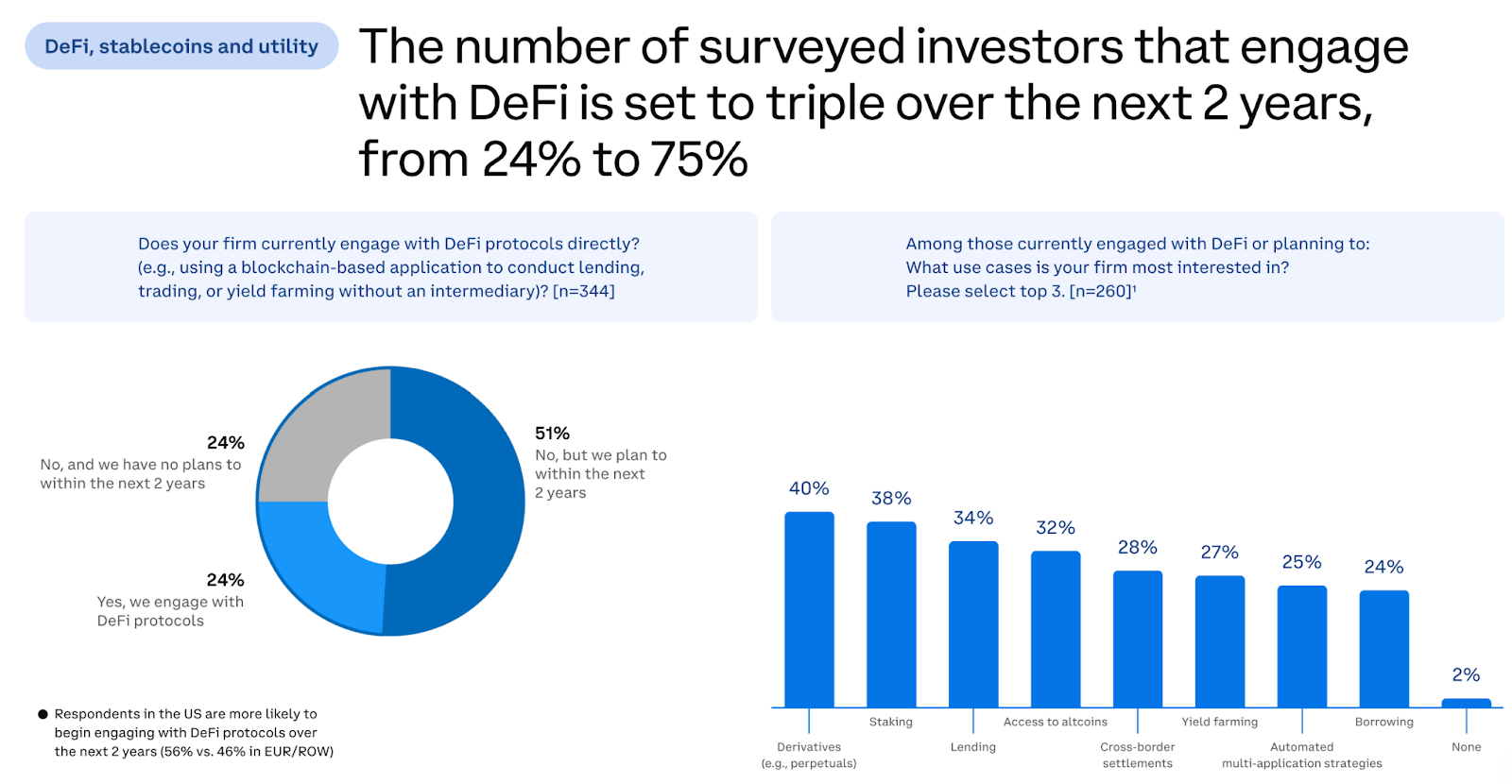

2025 Institutional InvestorDigital Assets Survey. Источник: EY-Parthenon.

Институциональное участие в DeFi должно утроиться в течение следующих двух лет с 24% до 75%, согласно данным опроса среди 350 институциональных инвесторов, который провела консалтинговая компания EY-Parthenon.

Для удовлетворения растущих потребностей институциональной ликвидности пул ликвидности Katana состоит из нескольких протоколов, включая кредитный протокол Morpho, децентрализованную биржу (DEX) Sushi и бессрочную DEX Vertex, что позволяет пользователям торговать «активами голубых фишек» без необходимости осуществлять кросс-чейновые переводы.

Katana также включила последовательности Conduit и децентрализованную сеть оракулов Chainlink.

Katana увеличит доходность DeFi за счет «возможностей на основе Ethereum»

Katana стремится повысить устойчивую доходность за счет создания сплоченной экосистемы DeFi. Например, VaultBridge развертывает мостовые активы в сверхобеспеченные, курируемые кредитные стратегии на Ethereum через Mopho, чтобы получать доход, который направляется обратно и компаундируется на Katana.

Протокол будет реинвестировать сетевые сборы и часть дохода от приложений обратно в свою экосистему.

«Это снижает зависимость от краткосрочных стимулов, генерирует постоянную доходность и по мере роста выступает в качестве все более стабильной опоры в периоды волатильности и шоков ликвидности», — сказал Буарон из Polygon Labs.

«Доходность распределяется пропорционально каждому блокчейну с использованием протокола VaultBridge на основе их доли от общего объема депозитов в VaultBridge», — добавил он.

«Таким образом, если Katana поставляет 20% от общего объема депозитов хранилища, она получает 20% дохода обратно», — заключил Буарон.

Впоследствии Katana распределит свою долю дохода среди пользователей через усиленные стимулы DeFi в «основных приложениях», таких как Sushi, Morpho или Vertex.

«Доход генерируется из возможностей на основе Ethereum, а затем усиливается за счет основных приложений Katana», — сказал Буарон.

Генеральный директор Polygon Labs ранее критиковал протоколы DeFi за подпитку цикла «наемного капитала», предлагая заоблачные годовые процентные доходы (APY) за счет эмиссии токенов.

Помимо ограничений, связанных с инфраструктурой, еще одним существенным препятствием для институционального принятия DeFi остается нормативная неопределенность.
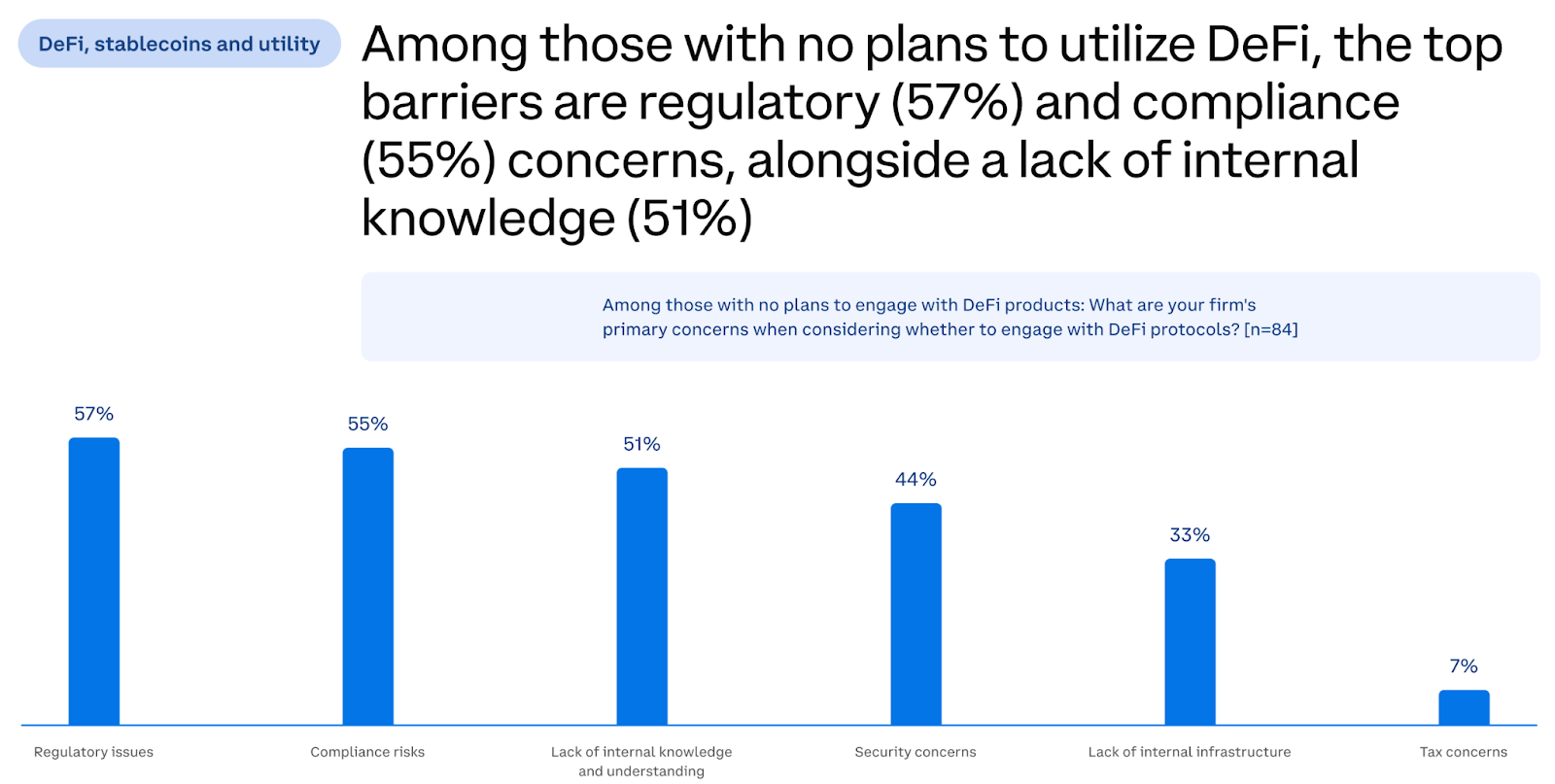

2025 Institutional InvestorDigital Assets Survey. Источник: EY-Parthenon

Опасения по регулированию были основным препятствием для входа, которое 57% институциональных инвесторов отметили как основную причину, по которой они не планируют участвовать в деятельности DeFi.


Lecturas Relacionadas

2028: The Arrival of Recursive Self-Improvement (RSI)

**AI Recursive Self-Improvement (RSI): The Countdown to 2028 Begins** AI is no longer just a trained tool but is starting to rewrite its own evolutionary pace. According to Anthropic co-founder Jack Clark, there is a 60% probability that by the end of 2028, Recursive Self-Improvement (RSI) will become a reality. This means AI could autonomously design and build a more capable next-generation version of itself without any human researcher involvement—Claude 10 creating Claude 11, for instance. Supporting this timeline, Google DeepMind's CEO Demis Hassabis confirms that all leading AI labs are intensely focused on RSI, making it an industry-wide priority. He expresses profound concern, stating this potential is what keeps him awake at night. Concrete data underscores this acceleration: - METR evaluations show current top models like Claude are solving tasks up to the 16-hour limit of existing test frameworks. - In Epoch AI's challenging MirrorCode benchmark, Claude Opus 4.7 recreated complex software in hours for a fraction of the human cost. In one extreme test, AI autonomously coded for 19 days straight. - Anthropic reports over 80% of its codebase is now written by Claude, and researcher productivity has increased up to 8-fold since 2024. - OpenAI's policy blueprint highlights RSI as a major upcoming governance challenge. CEO Sam Altman reportedly hinted RSI might arrive within six months, potentially delaying OpenAI's massive IPO. The implication is an impending "intelligence explosion," where AI-driven progress outpaces human control. The central question is no longer if it will happen, but whether humanity is ready.

marsbitHace 40 min(s)

2028: The Arrival of Recursive Self-Improvement (RSI)

marsbitHace 40 min(s)

World Models, Metaverse, Digital Twins, Physical AI: Are They the Same Thing?

Title: World Models, the Metaverse, Digital Twins, Physical AI: Are They the Same Thing? The article clarifies that concepts like the metaverse, Web3, simulation platforms, digital twins, and Physical AI are not the same thing but are all part of the broader trend of blurring the lines between the digital and physical worlds. It positions "world models" as the foundational "cognitive layer" or "operating system" that enables AI to understand and simulate the world. Key distinctions are made: - The **Metaverse** is a destination for immersive social and economic experiences. World models could act as its "engine," generating interactive 3D content efficiently. - **Web3** focuses on decentralized ownership and economics (rules layer), operating on a different technical level than world models. - **Simulation Data Platforms** (e.g., for autonomous vehicles) are a 1.0 version, relying on manual design. World models represent a 2.0 version, using AI to generate realistic, varied scenarios autonomously. - **Digital Twins** create high-fidelity, real-time mirrors of physical systems (e.g., a factory). World models go a step further by enabling predictive simulation of future states. - **Physical AI** (robots, AVs) refers to AI that acts in the physical world. World models are a core component, providing the understanding and prediction needed for planning. A proposed hierarchy places world models at the cognitive layer, supported by infrastructure (compute, data) and supporting application tools (simulation, digital twins), action systems (Physical AI), user experiences (metaverse), and rules (Web3). In conclusion, while distinct, many of these previously hyped concepts may ultimately rely on advances in world model technology to fulfill their promises, as world models provide the essential cognitive foundation for simulating and interacting with complex environments.

marsbitHace 44 min(s)

World Models, Metaverse, Digital Twins, Physical AI: Are They the Same Thing?

marsbitHace 44 min(s)

"Shocking" CPO: How Does the Glass Bridge Actually Work? Detailed Explanation from Corning

Chinese CPO stocks plunged over 6% following Corning's announcement of its Glass Bridge platform at a Seoul tech conference. The new technology utilizes wafer-level glass ion-exchange waveguides for passive alignment between fibers and photonic chips, potentially simplifying traditional CPO architectures that rely on complex Fiber Array Units and active alignment equipment. This raised market concerns about reduced long-term demand for mid-stream CPO components. Corning's official documentation details Glass Bridge as a platform for fiber-to-PIC connectivity in NPO, CPO, and high-density modules. Its key features include wafer-level manufacturing for consistent, cost-effective production; a standardized, removable MT ferrule interface for ecosystem integration; and a separable high-density connector design supporting over 24 channels for assembly flexibility. Corning positions the technology as complementary to FAUs, addressing limitations in ultra-high-fiber-count scenarios. The market reaction reflects a broader reassessment of the AI optical interconnect value chain. Funds shifted from CPO and PCB manufacturing stocks towards glass substrate concept stocks like Kaisheng Technology and Dyer Laser. Analysts note glass substrates are seen as a next-gen advanced packaging material, offering a potential path for domestic industry differentiation amid AI-driven demand for high-performance, large-scale packaging, marking a structural migration in value towards upstream specialty materials.

marsbitHace 45 min(s)

"Shocking" CPO: How Does the Glass Bridge Actually Work? Detailed Explanation from Corning

marsbitHace 45 min(s)

Trading

Spot
活动图片