Звезда NBA пожалел о выборе в пользу $82 млн наличными вместо биткоинов в 2015 году

cryptonews.ruPublicado a 2024-11-21Actualizado a 2025-05-21

  • Тристан Томпсон рассказал об утрате возможности заработать $32 млрд из-за контракта в долларах вместо биткоинов.
  • В 2015 году игрок NBA получил $82 млн наличными, когда первая криптовалюта стоила $270.
  • Однако он заявил, что не планирует выпускать собственную криптовалюту.

Бывший звездный игрок NBA и участник реалити-шоу Тристан Томпсон признался, что до сих пор не решается подсчитать, сколько бы мог заработать, если бы в 2015 году получил свой контракт на $82 млн в биткоинах. Об этом говорится в интервью Cointelegraph Magazine.

«С тем, что я знаю сейчас, я бы точно настаивал на оплате в биткоинах. Это было бы как самое безумное спортивное пари в истории США», — сказал Томпсон со смехом.

На момент подписания контракта с Cleveland Cavaliers в октябре 2015 года, биткоин стоил примерно $270. Если бы средства поступили в первой криптовалюте, их стоимость на момент подготовки материала достигала бы почти $32,5 млрд. Даже при минимальных инвестициях Томпсон уже мог бы быть миллиардером.

Впрочем, баскетболист признал: не уверен, что выдержал бы колебания крипторынка.

«Кто знает, как бы я повел себя в моменты медвежьего рынка или падений во время COVID-19? Имел бы я тогда достаточно знаний, чтобы пережить это?» — размышляет Томпсон.

Несмотря на упущенную возможность, Тристан не отошел от криптосферы. Сегодня он

  • ведет собственный криптоподкаст Courtside Crypto;
  • является амбассадором платформы криптобетинга Sportsbet.io;
  • работает советником проекта искусственного интеллекта TraceyAI, обучающего фанов баскетбола аналитике игры.

Томпсон также пытается повысить интерес к биткоину среди своих коллег по NBA.

«Первое, что я говорю ребятам: начните с OG [original gangster] — с биткоина. Потому что когда он движется, все остальное следует за ним», — объясняет он.

Он восхищается примером друга, игрока NFL Оделла Бекхэма-младшего, который в 2021 году получил зарплату в биткоинах. К этому приобщались и другие звезды NBA — Клей Томпсон и Андре Игуодала.

Несмотря на популярность мемкоинов среди знаменитостей, Тристан категорически против запуска личных криптовалют:

«Я никогда не хочу запускать токен с моим именем. Это всегда влечет за собой темное облако. Слишком много знаменитостей пришли сюда только чтобы заработать, а не чтобы помочь развивать индустрию», — сказал он.

Кроме того, Томпсон продолжает активно инвестировать, следит за Crypto Twitter, и даже сожалеет, что пропустил запуск токена TRUMP, связанного с президентом США Дональдом Трампом.

«Я как раз ужинал с Энтони Эдвардсом, когда токен вышел. Не увидел уведомление и очень сожалел», — засмеялся он.

Напомним, что цену первой криптовалюты прогнозируют до $1 млн через три года, в частности такого мнения придерживается соучредитель биржи BitMEX Артур Хейс.

Lecturas Relacionadas

Doubao and Qwen Will Discontinue Agent Functionality on July 15

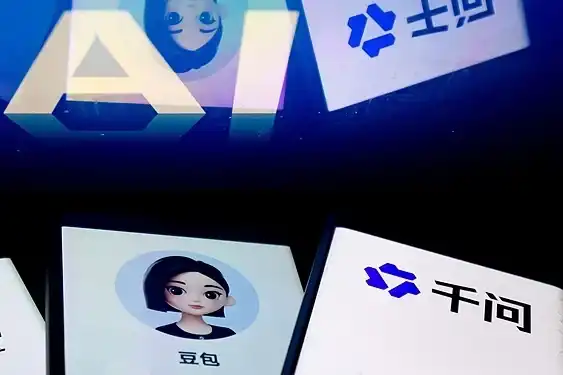
On July 4th, Doubao and Tongyi Qianwen announced the impending shutdown of their user-created "AI Agent" features. Doubao confirmed its agent feature will be taken offline on July 15, directing users to ByteDance's CatBox app for similar needs. On the same day, Tongyi Qianwen notified users, specifying that personalized interactive agents and user-built agent functions will cease on July 10, with all agent features and services completely deactivated by July 15. After this date, access to agent configurations and historical chat records will be lost. This adjustment impacts core user scenarios like role-playing, personal assistants, and vertical tool agents. The shutdown date coincides with the official implementation of China's "Interim Measures for the Administration of Artificial Intelligence Human-like Interactive Services" on July 15. The new regulations impose strict rules on "human-like emotional interaction services," requiring platforms to implement measures like anti-addiction systems, minor verification, and content moderation. This move is widely seen as a proactive step by the platforms to align with regulatory timelines and mitigate compliance risks. Additionally, commercial challenges are a key driver. Analysis suggests that casual, human-like chat agents generate high-frequency, low-value interactions, leading to high computational costs with poor monetization. As the AI application market shifts from user growth to proving value, sustaining such "high-cost, low-efficiency" user-generated content becomes difficult. Both platforms have outlined transition plans. Doubao will allow data viewing and self-backup for a period after shutdown, with data scheduled for permanent deletion by October 15. Tongyi Qianwen similarly advised users to save important content via copying or screenshots before the deadline. This strategic retreat from C-end agent features signals a broader market shift. Compliance capability and sustainable business models are replacing user scale and feature richness as the new core competitive dimensions. Tongyi Qianwen's recent move to fully open its Agent and Skill platforms to third-party enterprises and developers further underscores a strategic pivot from low-value C-end services to high-value B-end enterprise scenarios.

marsbitHace 1 hora(s)

Doubao and Qwen Will Discontinue Agent Functionality on July 15

marsbitHace 1 hora(s)

Why Did Codex and ChatGPT Merge? What's Next for Codex? OpenAI Core Leader Answers Everything

In 2026, OpenAI's Codex saw explosive growth, with weekly active users surging over 5x to 5 million since January, driven largely by the February launch of its desktop app. Codex desktop lead Andrew Ambrosino explains key shifts behind its evolution. A core change is the inversion of development costs: implementation is now cheap, while curation and taste—judging which of many AI-generated prototypes is valuable—have become the new scarcities. Ambrosino defines taste as a blend of aesthetics, systems thinking, direction, and semantic coherence in interaction. He notes AI still struggles with design because evaluating it requires human cultural context and abstract reasoning about how components relate—capabilities beyond current models. Timing is critical: the same Codex app would have failed months earlier; success hinges on the model's capabilities at launch. Roles are blurring within his team, with engineers, designers, and PMs overlapping significantly. However, Ambrosino cautions against eliminating specialized roles entirely, as each field retains deep expertise. On AI-assisted development, the focus has shifted from measuring code written by AI to distinguishing between supervised and unsupervised generation. A current challenge is teaching models to simplify code, not just add complexity. The merger of Codex and ChatGPT stems from observed user behavior: non-developers adopted Codex for general knowledge work despite its developer-centric interface. This revealed a collapsing boundary between specialized tools and universal assistants. The vision is a "home base" that orchestrates tasks across external professional tools (like Excel or Premiere Pro) via connectors, rather than rebuilding everything internally. An internal example showed Codex helping edit video by interacting with Premiere Pro's files and even writing a plugin for it. The future direction is a unified, extensible platform that serves as a central hub for automating and managing work across any specialized tool the user employs.

marsbitHace 2 hora(s)

Why Did Codex and ChatGPT Merge? What's Next for Codex? OpenAI Core Leader Answers Everything

marsbitHace 2 hora(s)

Trading

Spot
活动图片