Here’s Bitcoin miners’ plan to survive the crypto-crisis (to make ends meet)

AmbcryptoPublicado a 2022-06-21Actualizado a 2022-06-21

Resumen

Bitcoin ‘s ongoing bearish streak has significantly affected not just holders, but even miners. Bitcoin miners turned into net sellers of Bitcoin, with miner inventories dropping to new lows. Miners might not necessarily turn bearish “en masse,” although some did look to offload excess inventory. Or, is it really the case?

Bitcoin [BTC]‘s ongoing bearish streak has significantly affected not just holders, but even miners. Bitcoin miners turned into net sellers of Bitcoin, with miner inventories dropping to new lows. Miners might not necessarily turn bearish “en masse,” although some did look to offload excess inventory. Or, is it really the case?

An outcome with nothing concrete…

Bitcoin miners have been distributing their holdings of BTC during the recent sell-off, albeit at a slower pace compared to how it was earlier this year.

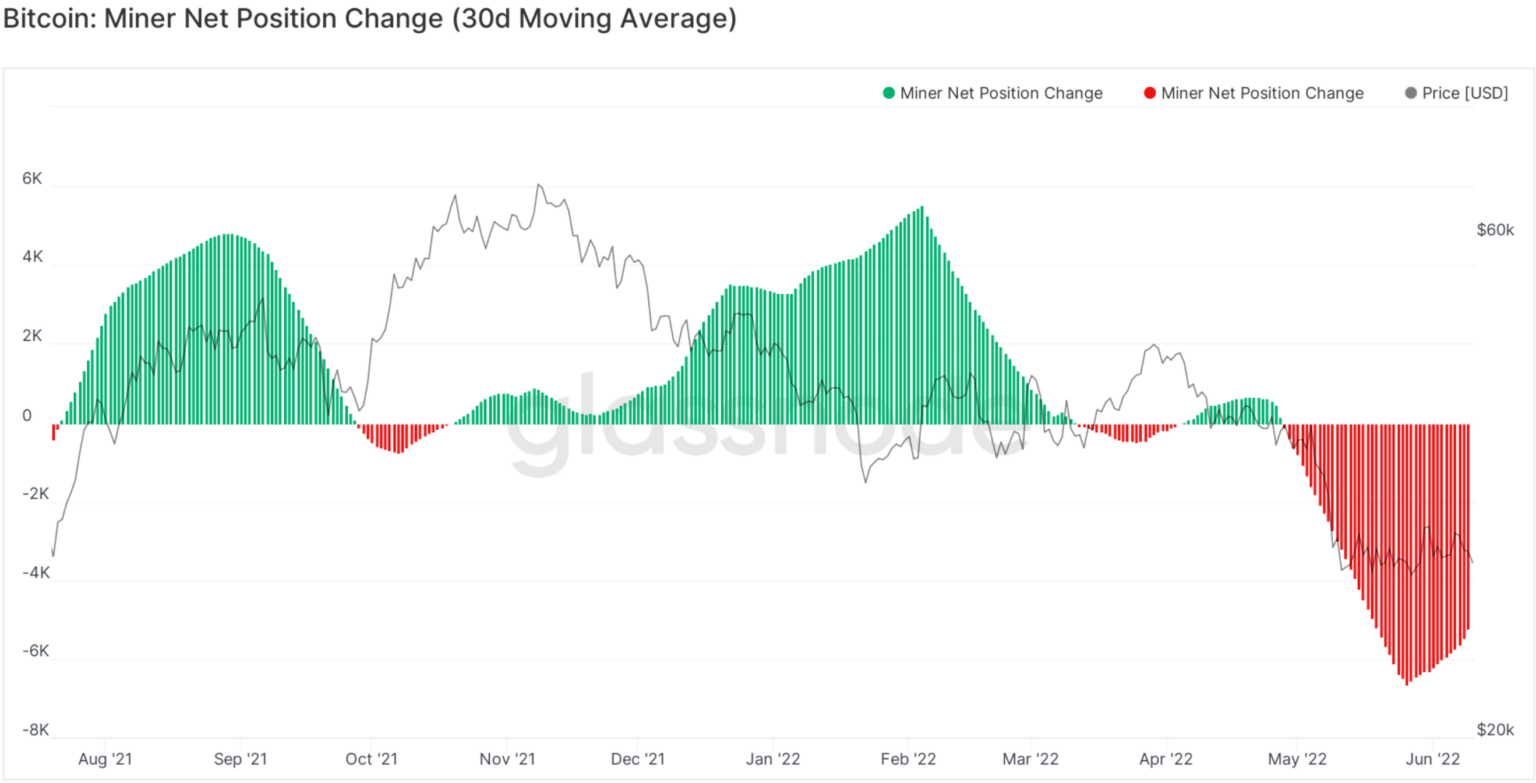
The chart attached herein shows the 30-day change of BTC supply held in miner addresses, according to data compiled by Glassnode.
Source: Glassnode

Here, the red dip hinted at Bitcoin miners becoming net sellers, after being net HODLers for months. Indeed, May and June both saw this changing narrative.

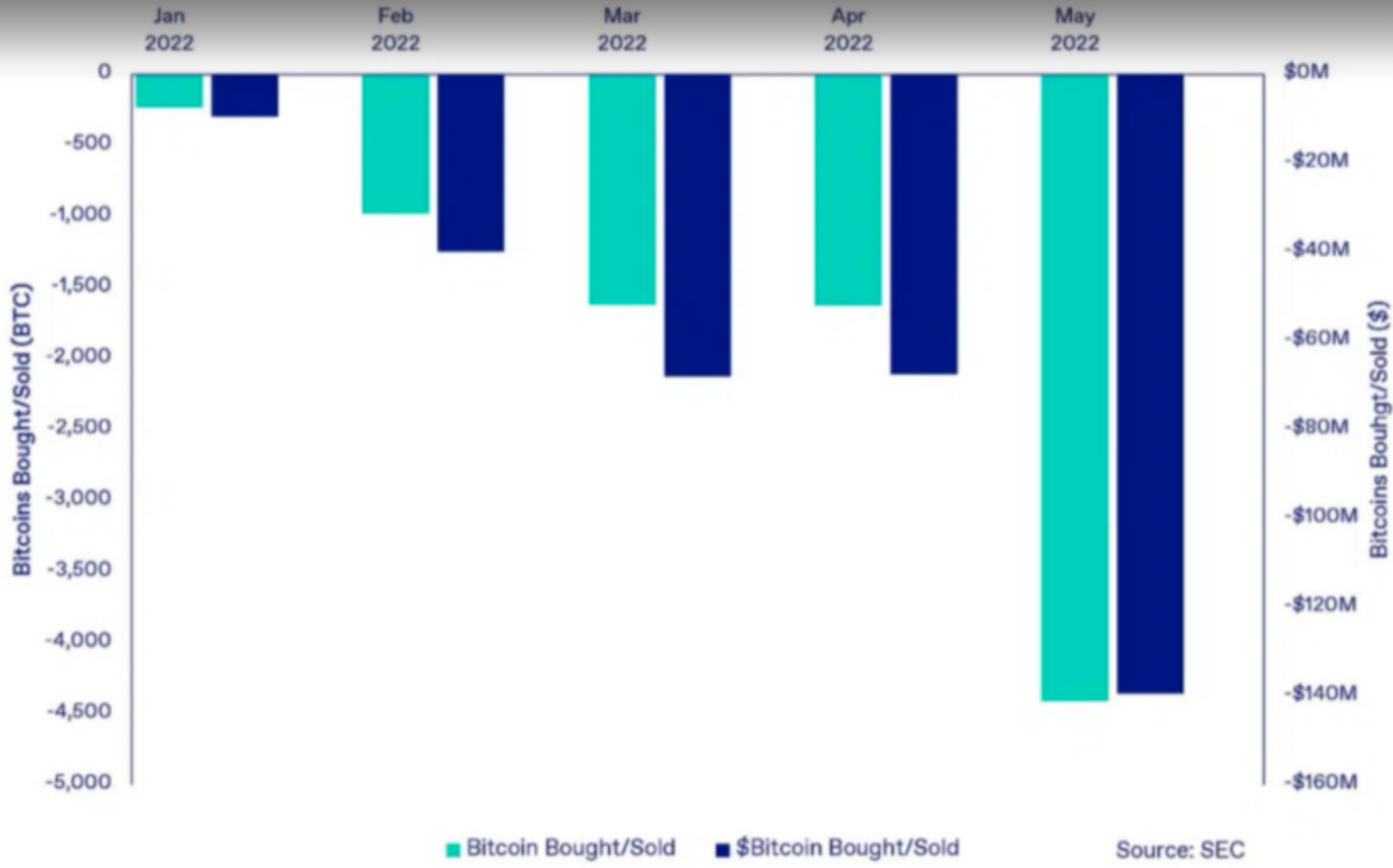
In May 2022, public mining companies sold 4,411 Bitcoins. This figure is four times more than the average for January to April 2022. Financial statements of public mining companies showed that they had to quadruple BTC sales to make ends meet.
Source: NYDIG

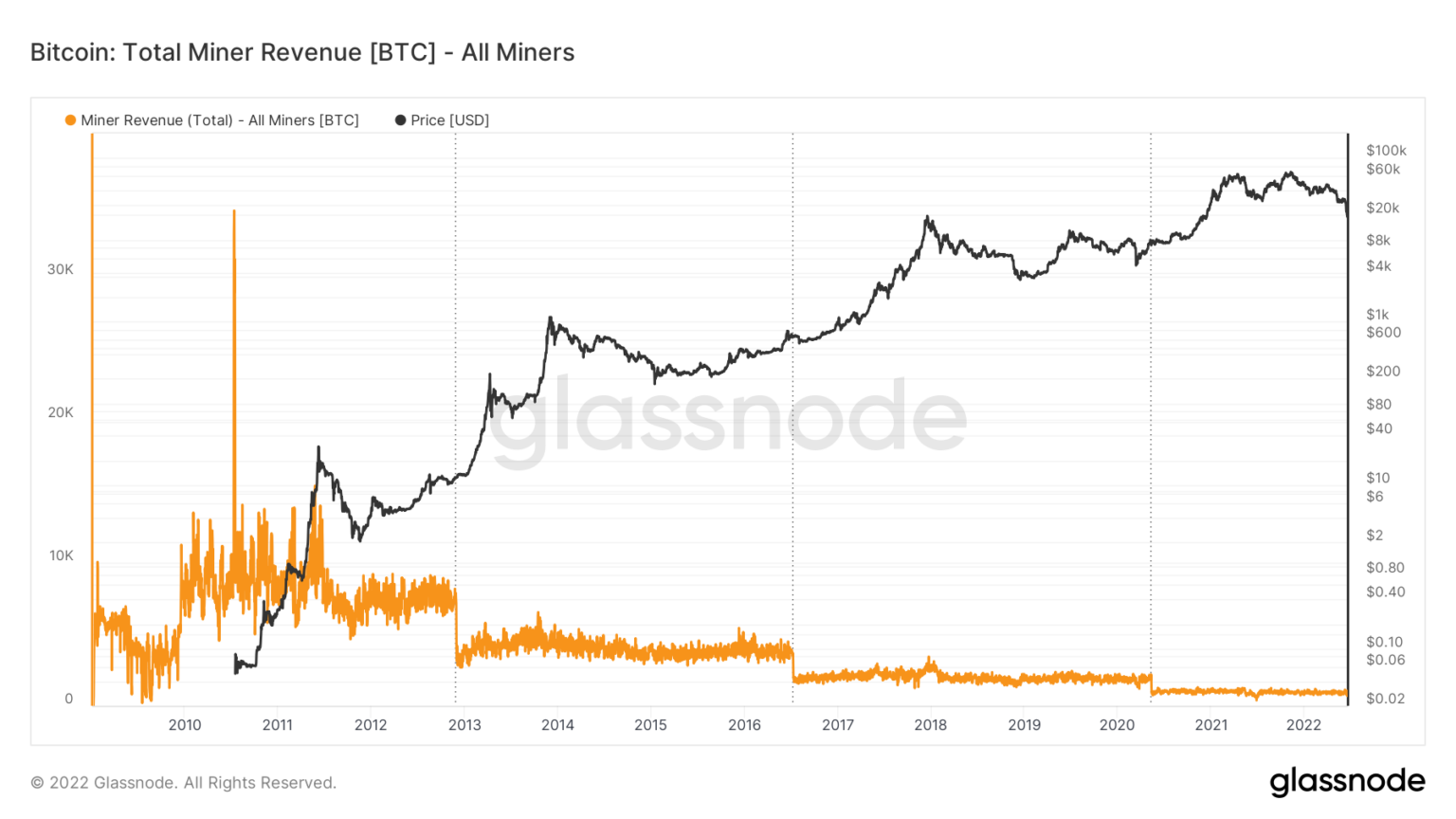
The decline in BTC miners’ revenue could be a key reason behind this scenario. Miners’ balances have recently declined at a peak rate of 5k to 8k BTC per month (or roughly $150 million to $240 million worth of BTC at $30k).

Currently, the total miner revenues barely amount to even close to what it was before. This is evident in the graph below –
Source: Glassnode

In addition, electricity prices are rising, given the inflation scars. Furthermore, the profits of miners fell along with cryptocurrency rates. Ergo, this effort at distribution is to offset further losses.

Also, Bitcoin mining hashrate observed a fall during the month of June as miner revenues continue to stay low. The “mining hashrate” is an indicator that measures the total amount of computing power connected to the Bitcoin blockchain. Miners have started to disconnect their machines, perhaps because of low or no profitability levels.

Fighting their own demons

Currently, miners’ position changes might or might not lead to BTC price swings. Even so, the crypto has struggled to keep up amidst the sea of chaos, FUDs, and regulatory scars.

At press time, however, the king coin did note an 8% hike on CoinMarketcap after trading around the $20k-mark.

Deepening bearish narratives, such as extreme sell-offs, could inject further corrections though.


Lecturas Relacionadas

$9.4 Billion: The Largest Robotics Funding This Year Has Emerged

Munich-based humanoid robotics company Neura has completed a $1.4 billion (approximately RMB 94.9 billion) Series C funding round, valuing the company at around $7 billion and positioning it among the global leaders in the sector. The investment round is notable not just for its size—reportedly the largest in robotics this year—but also for its strategic backers, which include tech giants like NVIDIA and Amazon, alongside established industrial players such as German engineering firms Bosch and Schaeffler. This mix of investors signals a significant shift in the industry's focus from technological demonstrations and general-purpose narratives toward practical, industrial deployment and commercialization. Neura's approach centers on developing humanoid robots for defined, high-value industrial tasks rather than pursuing a general-purpose model. Its early validation comes from a partnership with BMW, where its robots are being tested on actual production lines. The involvement of Bosch and Schaeffler, companies deeply embedded in global manufacturing, underscores a growing belief that humanoid robots are transitioning from labs to viable factory-floor solutions. The article highlights two converging trends driving investment: advancements in AI and large language models, which enhance robots' perception and decision-making in unstructured environments, and mounting pressure from labor shortages and rising costs in major manufacturing regions. The funding landscape is now bifurcating between companies like Figure AI, focusing on versatile general-purpose robots, and firms like Neura, targeting specific vertical industrial applications with clearer, shorter paths to ROI. While technical hurdles remain, the core challenges for widespread adoption are increasingly seen as engineering and commercial in nature: managing the high integration and customization costs for different factory environments and establishing robust, localized maintenance and service networks. The record investment in Neura, particularly from industrial capital, indicates the industry's growing confidence in moving from proving feasibility to solving the practical problems of scalability, reliability, and building sustainable business models around humanoid robots in real-world settings like automotive manufacturing and hazardous labor environments.

marsbitHace 12 hora(s)

$9.4 Billion: The Largest Robotics Funding This Year Has Emerged

marsbitHace 12 hora(s)

Trading

Spot
Futuros
活动图片