SEC перенесла решение по Litecoin-ETF

cryptonews.ruPublicado a 2025-03-06Actualizado a 2025-05-06

Комиссия по ценным бумагам и биржам США (SEC) перенесла принятие решения по заявке Canary Capital на создание биржевого фонда (ETF) на базе Litecoin (LTC)

SEC призвала общественность дать комментарии по соответствию заявки Canary Capital на LTC-ETF всем нормативным требованиям. В ответ на это цена Litecoin снизилась на 6%.

Перспективы ETF на Litecoin

Несколько месяцев назад аналитики предполагали, что у Litecoin-ETF больше шансов на одобрение со стороны SEC, чем у других биржевых фондов на базе альткоинов. Вероятность того, что регулятор даст «зеленый свет» LTC, достигала 85%. Однако Комиссия перенесла сроки утверждения предложения Canary Capital — то же самое ранее случилось с заявками от других управляющих активов на запуск XRP- и DOGE-ETF.

«Комиссия призывает заинтересованных лиц высказать мнение о предлагаемом изменении правил. В частности, комментаторы должны оценить, достаточно ли предложение защищено от манипуляций и мошенничества, а также указать на любые новые риски, которые SEC ранее не рассматривала», — говорится в сообщении регулятора.

Перенос сроков — необязательно негативный сигнал. В настоящее время SEC рассматривает более 70 заявок на запуск альткоин-ETF. Возможно, задержки — стандартная часть процедуры. Тем не менее рынок отреагировал негативно.
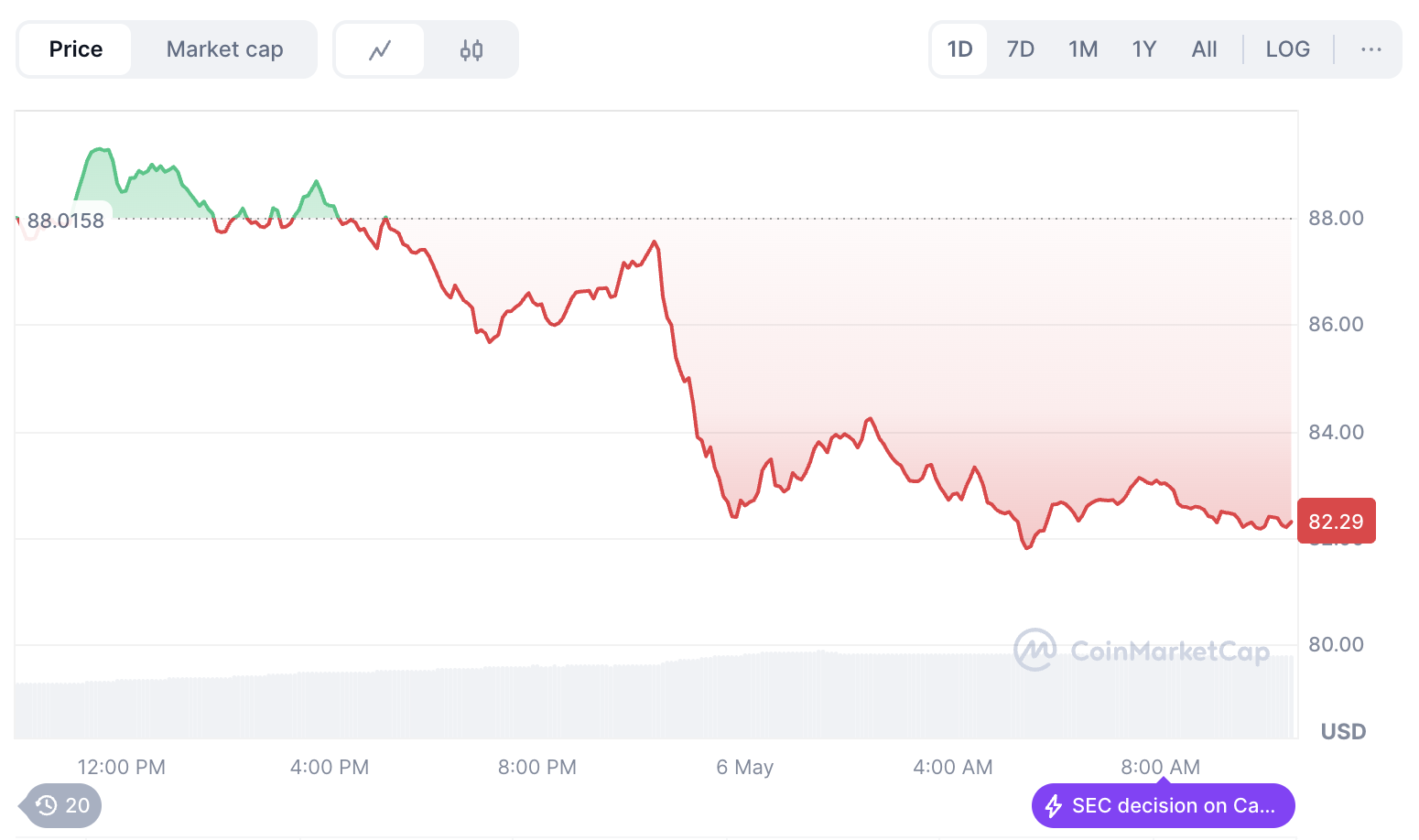
По данным CoinMarketCap, за последние сутки цена LTC снизилась на 6,5%. На момент написания этого материала альткоин торгуется по $82,28 при капитализации в размере $6,2 млрд. На платформе Polymarket шансы на запуск Litecoin-ETF во втором квартале тоже упали с почти 50% до 24%. Однако вероятность одобрения в 2025 году в целом осталась прежней.
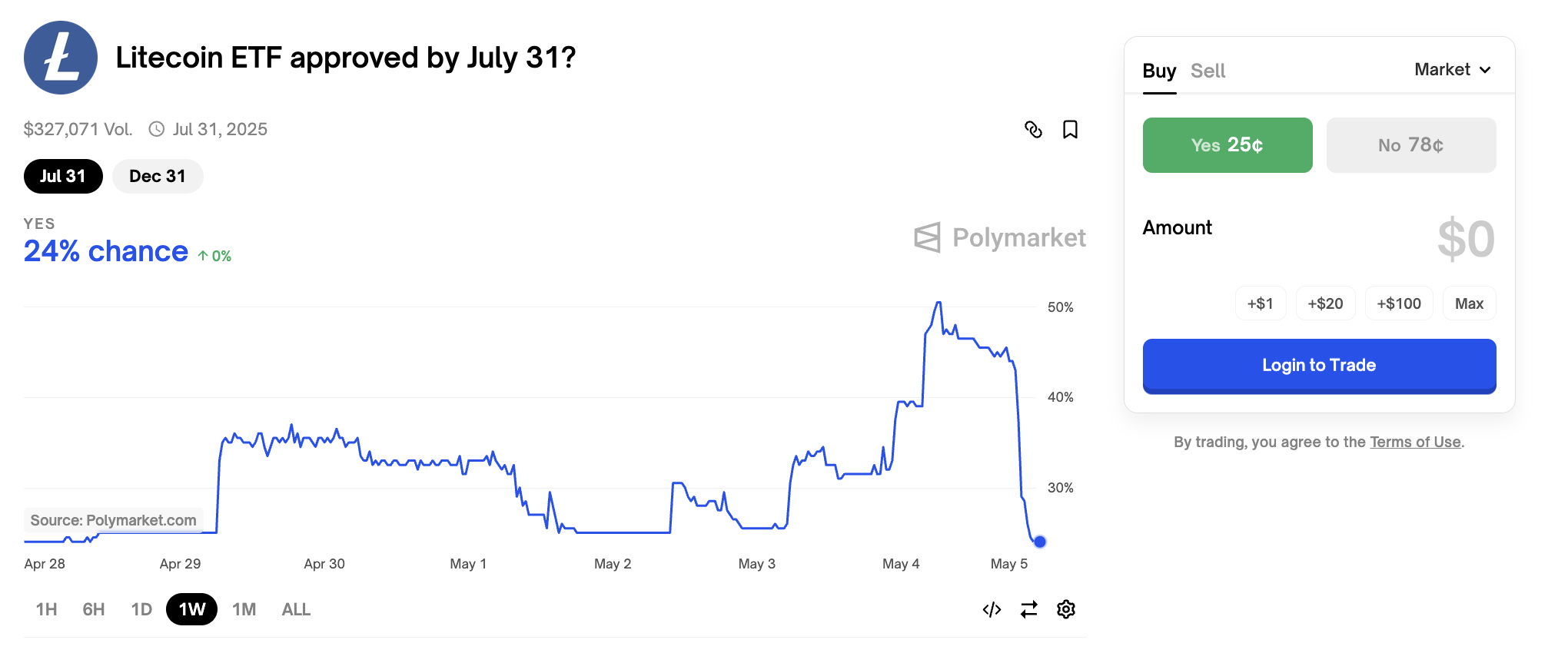
Вероятность одобрения ETF на Litecoin во втором квартале 2025 года. Источник: Polymarket

Аналитик по ETF в Bloomberg Джеймс Сейффарт предсказал перенос сроков. По его словам, запрос комментариев — не сигнал к отказу. SEC может просто действовать осторожно.


Criptos en tendencia

Lecturas Relacionadas

Just now, DeepSeek V4 updates with DSpark, improving inference speed by 80%

DeepSeek has updated its DeepSeek V4 model with the DSpark speculative decoding framework, achieving a significant 60-85% speedup in generation for Flash models and 57-78% for Pro models while maintaining the same overall throughput. This engineering-focused update, rather than a core architectural change, introduces DSpark to address latency and throughput bottlenecks in high-concurrency production environments. DSpark combines high-throughput parallel generation with adaptive load-aware verification. Its key innovations include a semi-autoregressive generation architecture to model dependencies within token blocks and a hardware-aware confidence-scheduled verification system. This system uses a confidence head to predict token acceptance probabilities, allowing it to dynamically optimize verification length per request and allocate compute only to tokens with the highest expected payoff. The asynchronous scheduler is designed for real-world deployment, ensuring zero-overhead scheduling and continuous CUDA graph replay while preserving the target model's output distribution. In tests across mathematical reasoning, code generation, and daily dialogue, DSpark outperformed state-of-the-art models like Eagle3 and DFlash, increasing average acceptance length by 26.7%-30.9% and 16.3%-18.4% respectively on Qwen3 target models. DeepSeek also open-sourced DeepSpec, a full-stack codebase for training and evaluating speculative decoding draft models, providing a standardized toolkit that includes data preparation tools, model implementations, training code, and evaluation scripts.

marsbitHace 6 hora(s)

Just now, DeepSeek V4 updates with DSpark, improving inference speed by 80%

marsbitHace 6 hora(s)

BIT Research: The 2028 Halving Is Not the End, the Real Shake-Up of the Bitcoin Mining Industry Is Just Beginning

The Bitcoin mining industry is undergoing its most complex structural adjustment since inception. Despite Bitcoin's price holding near $61,000 and the network hash rate approaching a record 1 ZH/s, miner profitability is deteriorating. The industry is operating close to its breakeven point, with the 2028 halving expected to accelerate consolidation. The challenges extend beyond the halving's subsidy reduction; the industry's revenue model has yet to successfully transition towards a fee-driven structure. Increasingly, mining companies are evolving from simple Bitcoin producers into infrastructure and energy operators, including providers of AI/HPC computing power. Competition is shifting from pure hash rate expansion to business model upgrades. Economic pressure is evident. The theoretical daily mining revenue at current prices is around $78 million, yet the actual figure is only about $33 million—a 136% gap. Transaction fees remain low at roughly $220k daily, far below historical implied levels. With a current estimated industry-wide breakeven price near $65,000, mining alone is struggling to generate ideal profits. The 2028 halving is projected to push the fundamental production cost floor to approximately $93,289. This will likely accelerate a shift towards consolidation among larger, well-capitalized miners with diversified revenue streams. Competitive advantage will belong to institutionalized players with access to low-cost energy, AI/HPC hosting operations, and stronger balance sheets. In essence, Bitcoin mining is transitioning from a "mining business" to an "infrastructure business." Future profitability and resilience will depend less on block rewards and more on diversified income sources like energy management and computational infrastructure services. For investors, the key question is not the halving itself, but which miners can successfully navigate this business model transformation.

marsbitHace 7 hora(s)

BIT Research: The 2028 Halving Is Not the End, the Real Shake-Up of the Bitcoin Mining Industry Is Just Beginning

marsbitHace 7 hora(s)

Trading

Spot

Artículos destacados

Cómo comprar LTC

¡Bienvenido a HTX.com! Hemos hecho que comprar Litecoin (LTC) sea simple y conveniente. Sigue nuestra guía paso a paso para iniciar tu viaje de criptos.Paso 1: crea tu cuenta HTXUtiliza tu correo electrónico o número de teléfono para registrarte y obtener una cuenta gratuita en HTX. Experimenta un proceso de registro sin complicaciones y desbloquea todas las funciones.Obtener mi cuentaPaso 2: ve a Comprar cripto y elige tu método de pagoTarjeta de crédito/débito: usa tu Visa o Mastercard para comprar Litecoin (LTC) al instante.Saldo: utiliza fondos del saldo de tu cuenta HTX para tradear sin problemas.Terceros: hemos agregado métodos de pago populares como Google Pay y Apple Pay para mejorar la comodidad.P2P: tradear directamente con otros usuarios en HTX.Over-the-Counter (OTC): ofrecemos servicios personalizados y tipos de cambio competitivos para los traders.Paso 3: guarda tu Litecoin (LTC)Después de comprar tu Litecoin (LTC), guárdalo en tu cuenta HTX. Alternativamente, puedes enviarlo a otro lugar mediante transferencia blockchain o utilizarlo para tradear otras criptomonedas.Paso 4: tradear Litecoin (LTC)Tradear fácilmente con Litecoin (LTC) en HTX's mercado spot. Simplemente accede a tu cuenta, selecciona tu par de trading, ejecuta tus trades y monitorea en tiempo real. Ofrecemos una experiencia fácil de usar tanto para principiantes como para traders experimentados.

934 Vistas totalesPublicado en 2024.12.11Actualizado en 2026.06.02

Cómo comprar LTC

Discusiones

Bienvenido a la comunidad de HTX. Aquí puedes mantenerte informado sobre los últimos desarrollos de la plataforma y acceder a análisis profesionales del mercado. A continuación se presentan las opiniones de los usuarios sobre el precio de LTC (LTC).

活动图片