再次被曝“割韭菜”!币圈似乎已成特朗普家族提款机

金十数据Publicado a 2025-05-06Actualizado a 2025-05-06

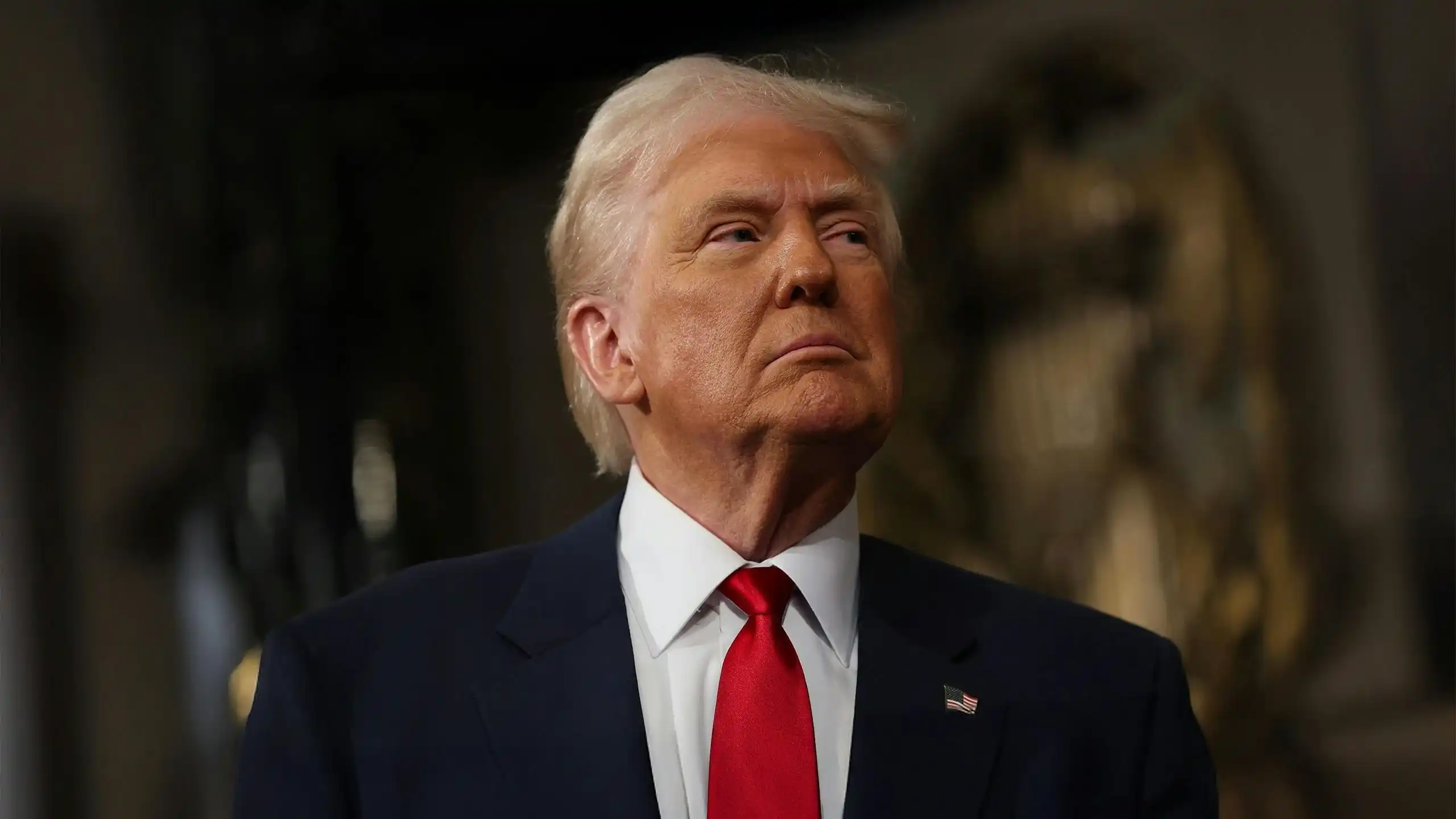
外媒的一项分析发现,特朗普的妻子梅拉尼娅·特朗普的加密货币代币$MELANIA在上线之前的几分钟内,一小群交易员通过购买该代币赚取9960万美元意外之财

梅拉尼娅在她丈夫特朗普就职美国总统前几小时,即1月19日晚些时候在社交媒体帖子中公布了$MELANIA币。然而,在她的帖子发布前的两分半前,二十几个数字钱包购买了价值260万美元的代币。

当梅拉尼娅的帖子导致该代币价格飙升时,这些潜在的“内幕”交易员赢得大额利润,随后这些钱包迅速出售了大部分代币,81%的销售发生在12小时内。

之所以能够发现这一“抢跑”行为 ,是因为加密货币交易可以在被称为“区块链”的数字账本上追踪,但控制持有和交易代币钱包的实体或个人通常保持匿名。

$MELANIA迷因币是一种除了投机工具之外没有其他功能的加密代币,其在特朗普推出他自己的$TRUMP代币后约两天推出。这两种币的推出正值特朗普家族及其商业伙伴支持各种加密货币项目。特朗普政府对加密货币的监管比拜登政府更具包容性

迷因币发行流程简单,如果市场兴趣激增,其价格可以从接近零的价格急剧上涨,给早期买家获得巨额利润的机会。加密货币爱好者将利用这一特点大额、早期购买的账户称为“狙击手(snipers)”。

根据美国金融法规,迷因币不被视为证券,这意味着项目发起人不受旨在保护散户投资者的联邦信息披露和内幕交易规则的约束。

其中一个购买$MELANIA迷因币的钱包在项目公开前的64秒内,单笔花费68.1万美元“梭哈”该迷因币。在24小时内,该账户通过出售大部分持仓获利3900万美元。并在接下来的3天内通过出售剩余部分进一步获利440万美元。

根据总计,潜在的24个“内幕”账户购买了发行期间预定出售的2亿枚$MELANIA代币中的1670万枚。

$TRUMP推出时,没有大户提前抢跑,第一次销售是在宣布该代币的Truth Social帖子发布后的42秒进行。对于$MELANIA,发行前开始的销售热潮仍在继续。另有22个账户在发行后42秒内购买了价值约90万美元的代币。

外媒此前追踪了涉及$TRUMP的交易,显示其发行方至少获利3.5亿美元,这既包括代币销售收入也包括做市费用。$MELANIA由一个完全不同的公司和个人群体组织,采用不同的流程。外媒分析表明,发行该币的实体(与在正式公布前交易该币的钱包是分开的)迄今已从费用和一级销售中提取了6470万美元的利润

上月,由于特朗普宣布大额持有者将有资格参加白宫晚宴,$TRUMP币价格飙升,使得项目组织者仍持有的8亿枚$TRUMP币名义上价值90亿美元。$MELANIA币目前交易价格为0.33美元。按当前价格计算,项目组织者仍持有的8亿枚$MELANIA币(最初未公开出售)名义上价值2.659亿美元。

根据其官网,$MELANIA币由MKT World LLC负责营销,这是一家在特拉华州注册的公司,自2021年起,这位第一夫人就将其用于各种项目。该项目的官方条款没有明确MKT World是否是该币的发行方,也没有说明如何与参与的其他实体分配利润。

一位来自德克萨斯州的28岁加密货币企业家Hayden Davis表示他参与了$MELANIA的发行。Davis曾被列为加密货币公司Kelsier的首席执行官,他也参与了$LIBRA迷因币的发行,该代币在2月曾获得阿根廷总统米莱的短暂背书,后因价格飙升和暴跌演变成币圈丑闻。

第一个在发行前购买$MELANIA币的账户在发行前141秒梭哈了4万美元。该账户随后在两小时内出售了其持仓的86%,获利250万美元。加密货币分析平台Bubblemaps的调查结果显示,该钱包是通过一个曾用于涉及Davis的项目账户获得资金的。在接受独立加密货币记者采访时,Davis表示:“Melania团队没有从中获利。我们没有提取任何流动性,零。”

然而,Davis的公司网站已被关闭,并且在$LIBRA丑闻发生后已停止公开发表声明。
Lecturas Relacionadas

Trump's 25-Year Financial Report: Family Earns Over $1 Billion Annually from Crypto, While Retail Investors Lose Money on $TRUMP

Former President Donald Trump's family earned approximately $1.2 billion from cryptocurrency ventures in 2025, according to a financial disclosure report. This revenue stream, outlined in a 927-page filing, now surpasses income from most of his long-established real estate holdings. The crypto earnings originated from two main sources: over $500 million from the sale of products like "governance tokens" by World Liberty Financial, a DeFi project co-owned by the Trump family, and roughly $635 million in royalties from the Trump-themed meme coin $TRUMP, issued by CIC Digital LLC. While Trump's entities profited, retail investors faced significant losses. The $TRUMP token, which peaked above $74 shortly after its January 2025 launch, has plummeted to around $1.68. World Liberty Financial's token has also fallen roughly 80% since its debut. Reports indicate that the majority of meme coin buyers have lost money, with Trump-linked entities still holding about 80% of $TRUMP's supply under vesting plans. The disclosure highlights a stark contrast: Trump's crypto and real estate businesses flourished—with new international property deals bringing in tens of millions—even as his administration shifted to crypto-friendly policies, relaxing the stringent regulatory stance of the previous Biden administration. The White House maintains that Trump acts only in the public interest, with his businesses placed in a trust managed by his sons, denying any conflict of interest. However, the report notes the difficulty of assessing such conflicts, particularly regarding foreign business dealings with countries that later received favorable U.S. policy decisions.

marsbitJusto ahora

Trump's 25-Year Financial Report: Family Earns Over $1 Billion Annually from Crypto, While Retail Investors Lose Money on $TRUMP

marsbitJusto ahora

From 'Address Clustering' to 'Evidence Standards': Why is Chainalysis Redefining Blockchain Tracing?

**Summary:** In June 2026, Chainalysis introduced the **Blockchain Tracing Ontology (BTO)**, a proposed data framework aiming to establish standardized, transparent, and verifiable models for blockchain analysis. This initiative addresses a core industry issue: despite public blockchain data, different firms often produce inconsistent results (e.g., differing entity labels for the same address) due to non-uniform methodologies, particularly in **address clustering**. This lack of standardization poses challenges for judicial investigations, AML, and enforcement. The BTO is not a new clustering algorithm but a **common "language" or conceptual framework**. It moves beyond the simplistic "cluster" model by introducing a hierarchical structure: **Entity → Wallet → Wallet Segment → Address**, which better reflects complex organizational wallet management. A key shift is from presenting mere results to ensuring **process trust and explainability**. The framework emphasizes documenting the **Evidence** and **Confidence** behind each analytical claim—specifying the on-chain/off-chain data, rules applied, and certainty levels—enabling third-party verification. This focus is partly informed by legal precedents like the **Bitcoin Fog** case, where Chainalysis's methods underwent rigorous judicial scrutiny (Daubert hearing), highlighting the need for reproducible, scientifically sound analysis. The proposal clarifies that on-chain analysis identifies address relationships and flow patterns, not real-world identities, which still require off-chain evidence (e.g., KYC data). Ultimately, Chainalysis envisions steering the industry from an "experience-driven" to a **"standards-driven"** future, where competition centers on **data quality, analytical transparency, and judicial admissibility** rather than just label coverage. Widespread adoption could facilitate cross-agency collaboration, reduce disputes, and provide a more reliable foundation for global compliance and enforcement.

marsbitHace 28 min(s)

From 'Address Clustering' to 'Evidence Standards': Why is Chainalysis Redefining Blockchain Tracing?

marsbitHace 28 min(s)

The 'Conference Circuit' for the Second Half of the Year Begins! A Complete Overview of the 2026 Web3 Global Summit Schedule

"Web3 Global Summit Calendar for the Second Half of 2026" provides a comprehensive list of major Web3 and blockchain conferences worldwide, focusing on events from July to December 2026. The schedule starts in July with IVS in Kyoto, WebX in Tokyo, Canada Crypto Week in Toronto, and Malaysia Blockchain Week in Kuala Lumpur. August features Conviction in Ho Chi Minh City, Coinfest Asia in Bali, and Bitcoin Hong Kong. September is the most intense month, with notable events like NFT NYC in New York, ETHRome in Rome, Money20/20 in Saudi Arabia, European Blockchain Convention in Barcelona, and Korea Blockchain Week in Seoul. The fourth quarter begins with the significant TOKEN2049 Singapore in October, which will be the sole TOKEN2049 event of the year following the cancellation of the Dubai edition. November includes Devcon 8 and Bitcoin Amsterdam in Amsterdam, Digital Asset Summit and Solana Breakpoint in London. The year concludes in December with Blockchain Life in Dubai and Bitcoin MENA in Abu Dhabi. The article also lists key events from the first half of the year (January to June, marked as concluded) for reference, including Consensus Hong Kong, ETHDenver, and Paris Blockchain Week. The guide serves as a resource for planning attendance at these industry gatherings across Asia, Europe, North America, and the Middle East.

Foresight NewsHace 38 min(s)

The 'Conference Circuit' for the Second Half of the Year Begins! A Complete Overview of the 2026 Web3 Global Summit Schedule

Foresight NewsHace 38 min(s)

Video Edition Nano Banana Arrives: Built-in Gemini World Knowledge, Original Banana Generates Images in Just 4 Seconds

Google has unveiled two new multimodal AI models: Gemini Omni Flash and Nano Banana 2 Lite. Gemini Omni Flash is a video generation and editing model that leverages Gemini's world knowledge. It allows for conversational video editing using natural language prompts, maintains scene consistency, and integrates text/graphics with video actions. Priced at $0.10 per second of output, its current limitations include a 10-second video cap. Nano Banana 2 Lite (gemini-3.1-flash-lite-image) is an optimized image generation model focused on speed and cost. It produces a 1K resolution image in about 4 seconds at a cost of roughly $0.034, making it significantly faster and cheaper than its predecessor. It retains strong text rendering capabilities. A key highlight is the combined workflow: users can rapidly generate images with Nano Banana 2 Lite and then seamlessly feed them into Gemini Omni Flash to create videos. Google demonstrated this with three application demos: "Anywhere" for creating travel videos from photos, "Space Lift" for generating interior design walkthroughs, and "Omni Product Studio" for automating e-commerce ad creation from product photos. The release underscores Google's strategic focus on advancing multimodal AI for practical, commercial applications in areas like marketing, design, and content creation, despite competitive pressures in other AI domains.

marsbitHace 46 min(s)

Video Edition Nano Banana Arrives: Built-in Gemini World Knowledge, Original Banana Generates Images in Just 4 Seconds

marsbitHace 46 min(s)

Trading

Spot
活动图片